Manon Massé
Manon Massé is a Canadian politician and prominent figure in Quebec's left-wing political scene. She served as the Member of the National Assembly (MNA) for the central Montreal riding of Sainte-Marie-Saint-Jacques from 2014 to 2026 and was a co-spokesperson for the party Québec solidaire from 2017 to 2023. An openly lesbian feminist and long-time community activist, Massé was instrumental in founding Québec solidaire and became its first-ever candidate in 2006. Her political career, marked by advocacy for social justice, environmental action, and LGBTQ+ rights, concluded when she chose not to seek re-election in the 2026 provincial election.
Early life and community activism
Manon Massé was born on May 22, 1963, in Windsor, Quebec, to factory workers Fernande Migneault and Gilles Massé. She spent her first seven years in Windsor before her family relocated to Boucherville, a suburb of Montreal. She studied at Cégep Édouard-Montpetit and pursued a major in theology at the Université de Montréal. Massé's professional life began in grassroots community organizing and social movements. She worked with organizations like the Comité social Centre-Sud and the Fédération des femmes du Québec, dedicating herself to feminist causes and workers' rights. Her early activism included coordinating roles for significant events such as the 1995 Marche du pain et des roses and the 2000 Marche mondiale des Femmes.
This foundation in popular education became the soil from which her political career grew. Massé described this approach as collaborative, where people work together to develop understanding and determine actions to support or fight against injustice. Her work in the community, particularly in the area that would later become her riding, gave her a deep connection to the realities of working-class life, mirroring that of her parents. This period of over two decades in community organizing convinced her that existing political institutions were failing to address the needs of ordinary people. By the early 2000s, this frustration led her to a decisive conclusion that she would enter electoral politics to do the job herself, setting the stage for her co-founding of a new political party.
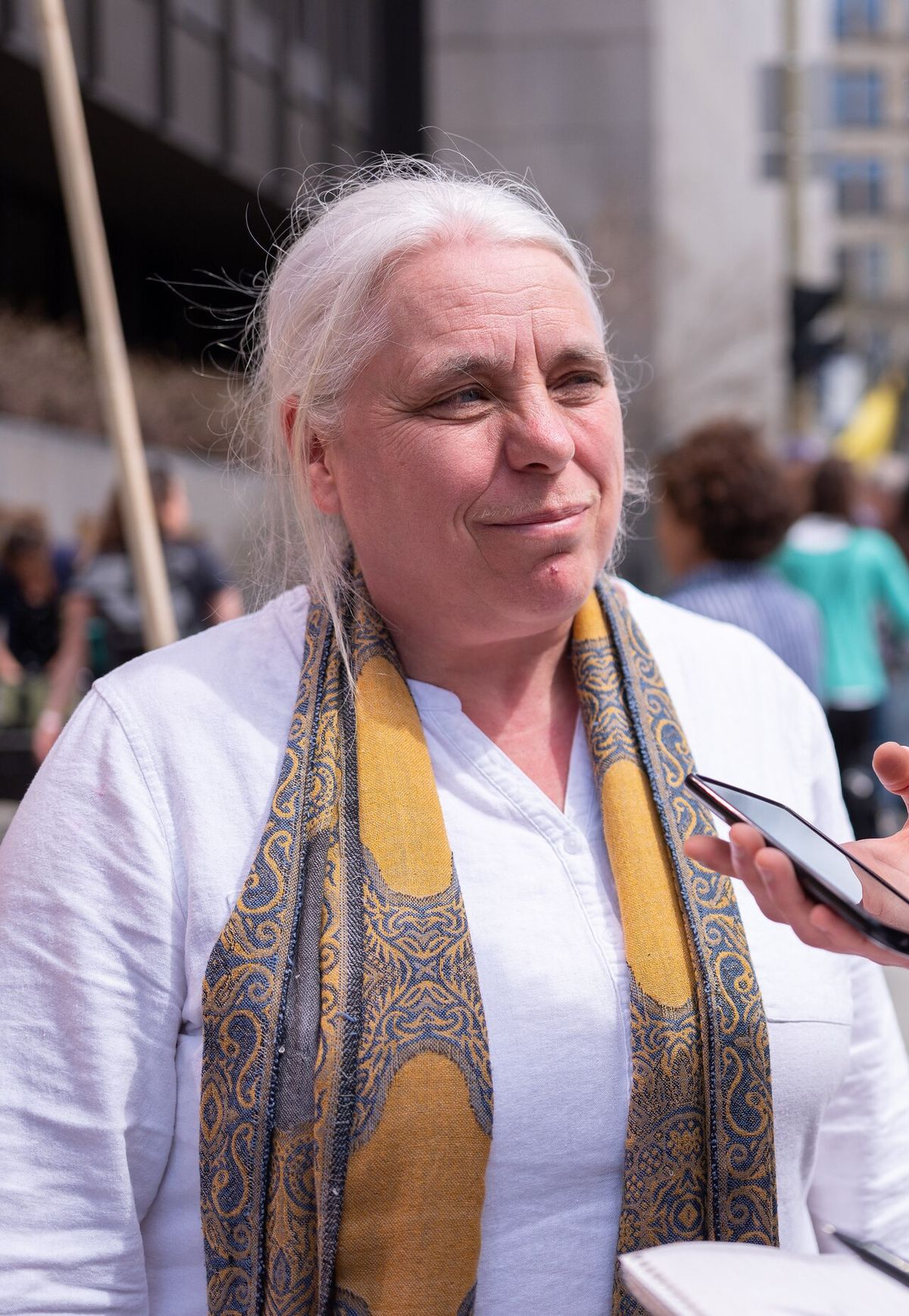
Founding Québec solidaire and early electoral bids
Manon Massé was a co-founder of the political movement Option citoyenne, which later merged to form Québec solidaire, a party advocating for social democracy, environmentalism, and Quebec sovereignty. She became the party's very first candidate, standing in a by-election in 2006 for the Sainte-Marie-Saint-Jacques riding she would later represent. In that initial foray, she secured 22 percent of the vote. Massé's path to the National Assembly was not immediate, as she faced several electoral defeats before her breakthrough. Her persistence reflected her deep commitment to the party's vision of a society with strong public services and fair wealth distribution.
Her dedication to international solidarity was also evident during this period. In 2011, she participated in the Freedom Flotilla II, representing Québec solidaire aboard the Canadian Boat for Gaza named Tahrir. This action showed her willingness to engage in global justice issues alongside her domestic political work. These years of campaigning and activism solidified her role as a foundational figure within Québec solidaire, preparing the ground for the party's future growth. Her repeated candidacies, though initially unsuccessful, were crucial in establishing a durable party presence in central Montreal and developing the grassroots network that would eventually lead to electoral success.
Election to the National Assembly and riding work
Manon Massé's political perseverance culminated in the 2014 Quebec general election, where she was elected as the MNA for Sainte-Marie-Saint-Jacques on her fifth attempt. Her victory was narrow, winning by a margin of just 91 votes over Quebec Liberal Party candidate Anna Klisko. Klisko requested a judicial recount, but the presiding judge rejected the request on April 11, 2014, citing insufficient evidence of irregularities in the election process. This win secured Québec solidaire its third seat in the legislature. The riding of Sainte-Marie-Saint-Jacques, which encompasses Montreal's Gay Village and diverse, densely populated central neighbourhoods, became the base from which she advocated for progressive policies for the next twelve years.
As an MNA, Massé focused on issues central to her riding and her activist background, including housing, social services, and the rights of marginalized communities. She served as the Official Opposition critic for several portfolios, reflecting the party's priorities and her expertise. Following the 2022 provincial election, her critic responsibilities were formally designated to include Relations with First Nations and Inuit, Social Services for people living with an intellectual disability or autism spectrum disorder, Social Solidarity and Community Action, Homelessness, and LGBTQ+ community issues. In the final year of her term, from December 2025 to August 2026, she held the role of Second Opposition Group Critic for Youth and for the LGBTQIA2S+ Community. Her work in the legislature consistently aimed to amplify voices that were often excluded from political discourse.
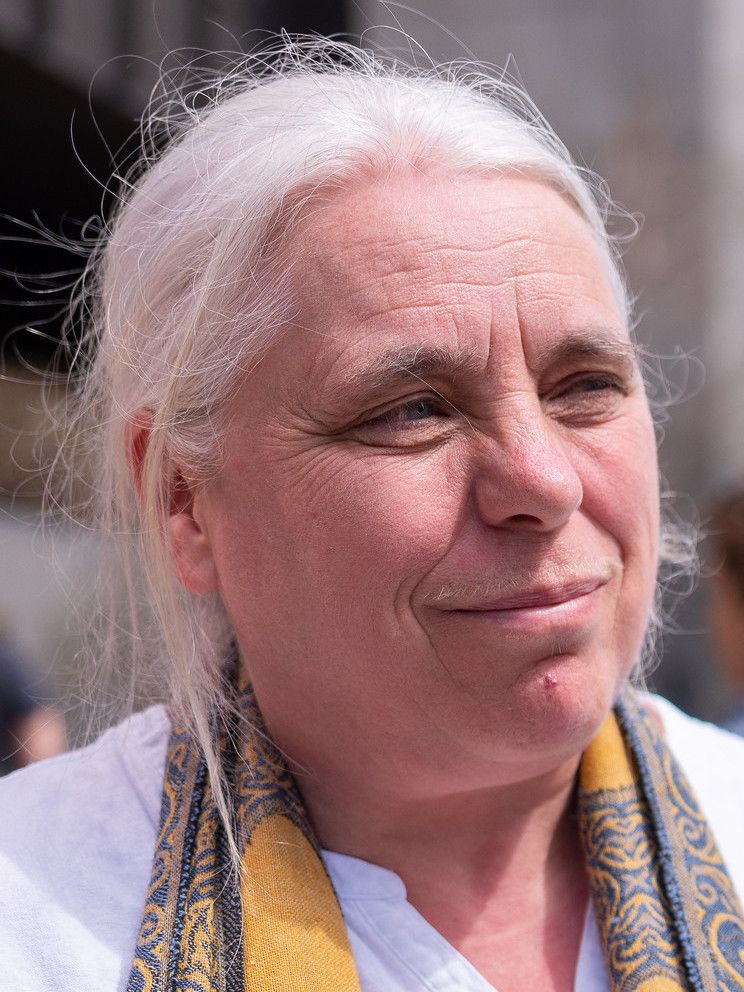
Leadership as Québec solidaire co-spokesperson
In May 2017, at a party conference, Manon Massé was elected co-spokesperson for Québec solidaire alongside activist Gabriel Nadeau-Dubois, continuing the party's tradition of shared leadership between a woman and a man. In this role, she became one of the party's most visible public figures and its proposed candidate for premier in the 2018 Quebec general election. That election was a historic breakthrough for Québec solidaire, as the party tripled its seat count from three to ten, achieving third-party status ahead of the Parti Québécois. This result represented the party's best performance to date. Massé's leadership was central to this growth, bringing issues like climate change, the green transition, and Indigenous affairs to the forefront of the party's platform.
Her international engagement continued in her leadership role, notably when she testified at the Supreme Court of Spain on April 29, 2019, due to her participation as an international observer in the 2017 Catalan independence referendum. After six years as co-spokesperson, Massé announced in May 2023 that she would step down from the role. She was succeeded by Émilise Lessard-Therrien in November 2023. Her tenure as co-spokesperson was a period of significant expansion and consolidation for Québec solidaire. She expressed confidence that the party would one day form the government of Quebec.
Policy focus and advocacy
Throughout her career, Manon Massé's political advocacy was defined by a consistent focus on feminism, environmentalism, and social inclusion. She argued that defending the rights of the most ostracized and discriminated-against communities ultimately defends everyone's rights. Her work on economic justice, such as advocating for a livable minimum wage, was explicitly framed through a feminist lens. As an openly lesbian politician, she became an important public figure for Quebec's 2S/LGBTQIA+ communities, using her platform to advance related policy issues within the National Assembly. She viewed political advocacy as a continuum that included community organizing, direct action, and parliamentary work, all aimed at challenging entrenched privilege.
Her approach was fundamentally inclusive, shaped by her belief in popular education and collaborative problem-solving. Massé maintained that the people experiencing a situation are the most qualified to find its solutions, a principle that guided her work as both an activist and an elected official. She was critical of political parties that sought to maintain systemic privileges, positioning Québec solidaire as a force to stop that and ensure the greater good. Even as she planned her departure from electoral politics, she emphasized that her commitment to activism and community work, particularly within queer communities, would continue. She framed her exit not as leaving politics but as leaving the specific institution of parliamentarism.
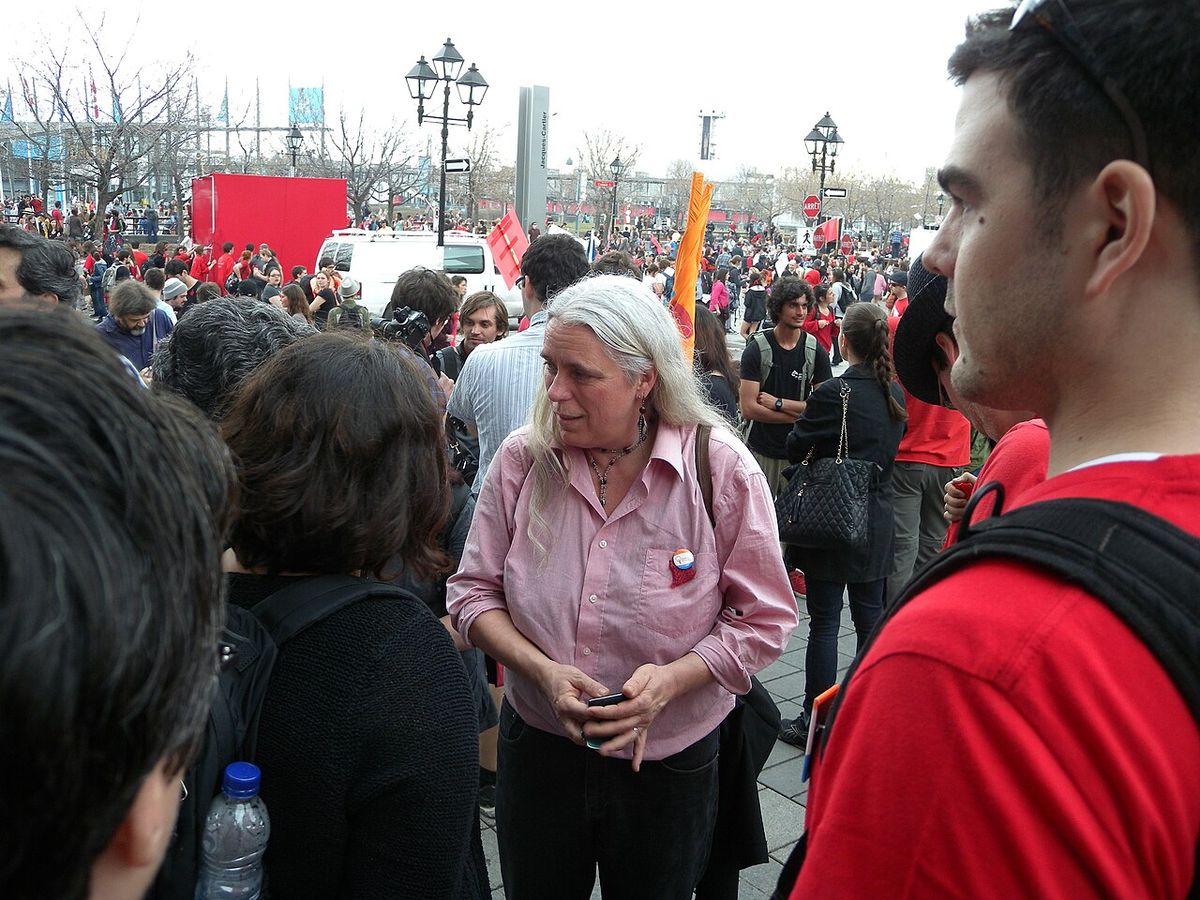
Departure from electoral politics
In May 2023, Manon Massé announced she would not be a candidate in the 2026 Quebec general election, bringing her twelve-year career as an MNA to a close. She confirmed she would remain in her seat and as a member of the Québec solidaire caucus until the election was called. Reflecting on her three full terms, she stated she had shaken things up and contributed to making Quebec more open, fair, and inclusive. Her decision followed that of her former co-spokesperson Gabriel Nadeau-Dubois, who also stepped down and chose not to run again. Massé's announcement marked the end of an era for Québec solidaire, as two of its most prominent founding figures transitioned out of frontline politics.
Massé was clear that her departure from the National Assembly did not signify a retreat from political and social engagement. She stated her commitment does not end with this departure but begins another step to continue carrying the voice of those who are not listened to. She expressed an intention to remain active in advocacy and community work, particularly focusing on queer communities. With an average MNA term being 4.5 years, her twelve-year tenure was notably lengthy, allowing her to leave a substantial imprint on her party and the issues she championed. Her final months in office were spent fulfilling her critic roles, preparing for a transition out of institutional politics while maintaining her activist identity.
Electoral history
Manon Massé's electoral record charts the rise of Québec solidaire from a fledgling movement to an established political party in Quebec. Her campaigns were always fought in the riding of Sainte-Marie-Saint-Jacques. She was the first candidate for Québec solidaire in the 2006 by-election, where she received 22 percent of the vote. She was elected to the National Assembly in the 2014 election, her fifth attempt, winning the party its third seat. Her margin of victory was 91 votes. The request for a judicial recount by her opponent was rejected by the presiding judge on April 11, 2014. She did not seek re-election in the 2026 general election.
Personal life and public identity
Manon Massé's public identity is deeply intertwined with her political activism. She is an openly lesbian politician, which has made her a visible representative for LGBTQ+ communities in Quebec. She shares her life with her partner, Ghislaine Goulet. Massé has consistently identified as a feminist, and her advocacy has been rooted in decades of work with women's organizations and social justice movements. Her personal narrative often references her working-class upbringing as the child of factory workers, which she credits with shaping her understanding of economic inequality and privilege. This background informed her lifelong commitment to popular education and collective action as tools for social change. Beyond her official duties, Massé remained engaged in community events and public discussions, often speaking at conferences and summits. She articulated a belief that the political left must band together in the face of direct attacks on rights and progress, moving past ideological purity to present a united front. Her personal motto, that she would stop doing politics only the day she dies, encapsulates her view of politics as a lifelong commitment to activism, whether inside or outside formal institutions.
Questions about Manon Massé
What is Manon Massé known for?
Manon Massé is best known as a long-time Québec solidaire MNA, former co-spokesperson of the party, and a prominent feminist and social justice activist in Quebec. She was the first candidate to ever run under the Québec solidaire banner in 2006 and was elected to represent Sainte-Marie-Saint-Jacques in the National Assembly in 2014. She served as co-spokesperson from 2017 to 2023, helping lead the party to its historic ten-seat result in the 2018 election. Her advocacy consistently focused on issues like LGBTQ+ rights, environmental action, Indigenous relations, and economic justice.
Why did Manon Massé leave politics?
Manon Massé announced in May 2023 that she would not seek re-election in the 2026 provincial election, ending her twelve-year tenure as an MNA. She framed her departure as a transition from institutional parliamentary politics rather than a retirement from political activism altogether. In her statement, she expressed pride in her work and confidence that Québec solidaire would one day form government. She indicated she would remain active in advocacy, particularly within queer communities, viewing this as the next step in her lifelong commitment to social justice.
What riding did Manon Massé represent?
Manon Massé represented the central Montreal riding of Sainte-Marie-Saint-Jacques in the National Assembly of Quebec from 2014 to 2026. This urban riding includes neighbourhoods such as the Gay Village, Centre-Sud, and parts of the city's downtown core. It was in this same riding that she launched her political career as Québec solidaire's first-ever candidate in a 2006 by-election. The area's diverse and densely populated character made it a fitting base for her work on issues like housing, homelessness, and the rights of marginalized communities.
Who did Manon Massé succeed as Québec solidaire co-spokesperson?
When Manon Massé was elected co-spokesperson in May 2017, she succeeded Françoise David. The party's structure traditionally features dual spokespersons, one woman and one man, serving concurrently. Massé was elected alongside Gabriel Nadeau-Dubois, who succeeded Amir Khadir. This leadership transition marked a generational shift within Québec solidaire, moving from its founding figures to activists who had risen to prominence through student and social movements.
Is Manon Massé married?
Manon Massé is not married but shares her life with her partner, Ghislaine Goulet. Massé is openly lesbian, and her relationship and identity have been part of her public profile as a politician and advocate for LGBTQ+ rights. She has spoken about the importance of visibility and representation for queer communities in politics. Details about her private family life beyond her partner are not part of the public record she has disclosed.
What were Manon Massé's main political responsibilities before she left?
In her final term, Manon Massé held several official critic roles for the Second Opposition Group, Québec solidaire. From December 9, 2025, to August 27, 2026, she served as the critic for Youth and for the LGBTQIA2S+ Community. Following the 2022 election, her assigned critic portfolios also included Relations with First Nations and Inuit, Social Services for people with intellectual disabilities or autism, Social Solidarity and Community Action, and Homelessness. These responsibilities reflected her expertise and the party's commitment to social justice, Indigenous reconciliation, and support for marginalized groups.
Sources and further reading
- Manon Massé (Wikipedia)
- Québec Solidaire's Manon Massé will step back after 12 ... (cbc.ca)
- Our Community: Manon Massé (cbrc.net)
- QS MNA Manon Massé won't run in next provincial election (montrealgazette.com)
Checked by the Nosy Mag desk. Last updated 2026-10-31.