Wendat people
The Wendat people, historically known as the Huron, are an Iroquoian-speaking Indigenous nation whose ancestral homeland, Wendake, was centred around Georgian Bay and Lake Simcoe in present-day southern Ontario. They formed a powerful confederacy that was a principal political and economic force in the Great Lakes region during the early 17th century, renowned as skilled farmers and traders. Following devastating epidemics and warfare with the Haudenosaunee Confederacy in the mid-1600s, the Wendat were dispersed. One major group relocated to the Quebec City area. Their descendants form the contemporary Wendat Nation in Wendake, Quebec, a community that, along with Wyandot groups in the United States, formally reestablished the Wendat Confederacy in 1999. The Wendat story is central to understanding the complex Indigenous and colonial history of Canada, and their ongoing cultural revitalization and treaty rights, affirmed by the Supreme Court of Canada, remain significant today.
Historical Homeland and Society
The ancestral homeland of the Wendat, known as Wendake, was located in a fertile area north and west of Lake Simcoe and south and east of Georgian Bay in what is now Simcoe County, Ontario. Archaeological evidence, including the excavated Draper Site and the large Mantle Site (renamed the Jean-Baptiste Lainé Site), shows they lived in substantial, fortified villages from at least the 15th century. The Mantle Site, occupied from 1587 to 1623, contained over 70 multifamily longhouses and a population estimated between 1500 and 2000 people. Villages were typically surrounded by defensive wooden palisades and were relocated every 10 to 15 years as local soil nutrients and firewood were depleted. The Wendat were a confederacy of several nations who spoke mutually intelligible languages.
The confederacy originally consisted of several nations. The Attinniaoenten (Bear people) and Hatingeennonniahak (Cord Makers) first confederated in the 15th century. The Arendaenronnon joined around 1590, and the Atahontaenrat (Deer people) joined around 1610. A fifth group, the Ataronchronon (people of the bog), may not have attained full nation status within the alliance. Wendat society was matrilineal, with clan membership and social status inherited through the mother's line, and they lived in longhouses that could shelter twenty or more families, with a typical village housing 900 to 1,600 people. Their economy was primarily agricultural, centred on the cultivation of corn, beans, and squash, known collectively as the "Three Sisters," with women responsible for most agricultural work while men hunted and fished. The Wendat were also sophisticated traders, maintaining networks with neighbouring nations like the Tionontati (Petun) and Neutral confederacies, often for commodities such as tobacco.
European Contact and the Fur Trade
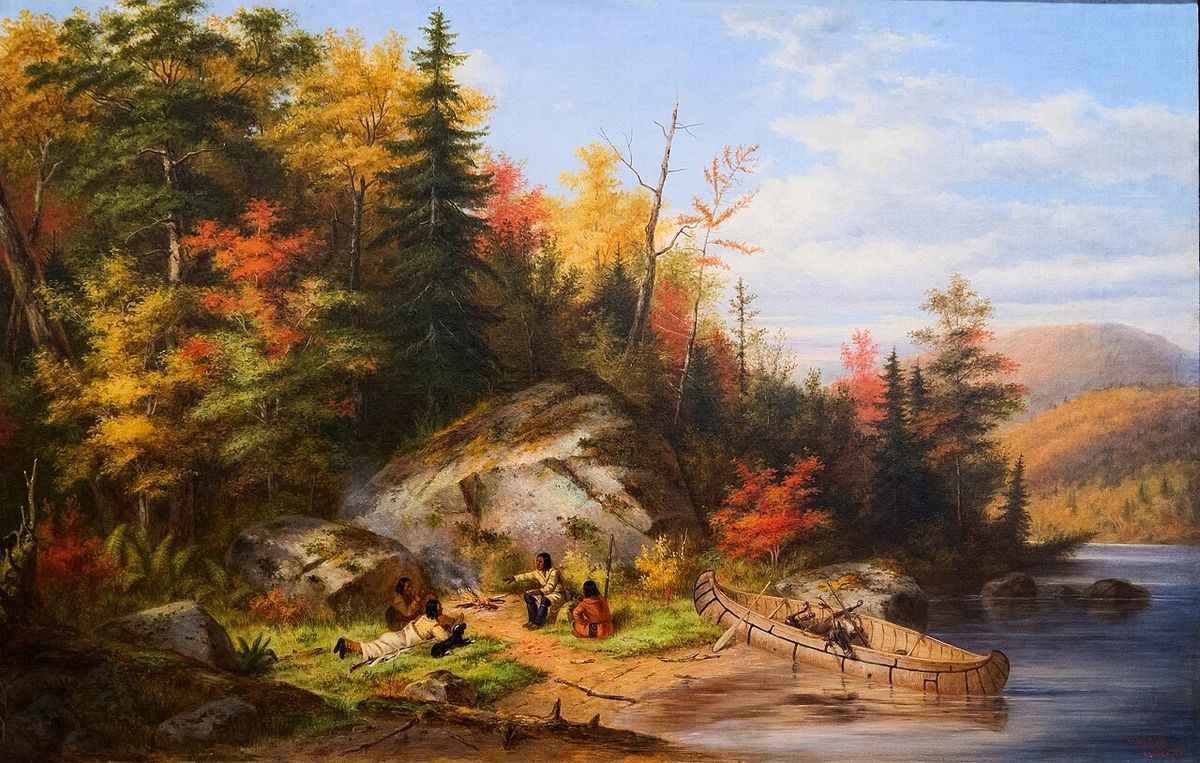
The Wendat first encountered Europeans when the French explorer Samuel de Champlain arrived in their territory in 1615. Champlain and subsequent French traders developed a fur trade network that relied heavily on the Wendat acting as middlemen between New France and Algonquian nations to the north. This alliance brought the Wendat into direct economic and military competition with the Haudenosaunee Confederacy to the south, who were allied with Dutch and later English traders. Early descriptions, such as those in the Jesuit Relations of 1639, noted the Wendat as strong and tall, with their only covering being a beaver skin mantle, shoes and leggings in winter, and adornments like bead necklaces and bracelets of porcelain. The initial period of contact also introduced Eurasian diseases to which Indigenous populations had no immunity.
Beginning around 1634, devastating epidemics of smallpox, measles, and influenza swept through Wendake, killing an estimated half to two-thirds of the population and reducing their numbers from possibly 30,000 to about 12,000 by the early 1640s. These losses had catastrophic social effects, devastating families and clans and disrupting their society's structure and traditions. French Jesuit missionaries arrived in Wendake in the early 17th century, establishing the mission of Sainte-Marie among the Hurons on the banks of the Wye River in 1639 to serve as a headquarters for conversion efforts. While some Wendat adopted Christianity, the introduction of European weapons intensified existing conflicts. The Haudenosaunee could obtain guns more readily from their Dutch trading partners, whereas the French often tied access to firearms to religious conversion. This disparity became a critical factor in the warfare that led to the Wendat's dispersal.
Dispersal and Migration
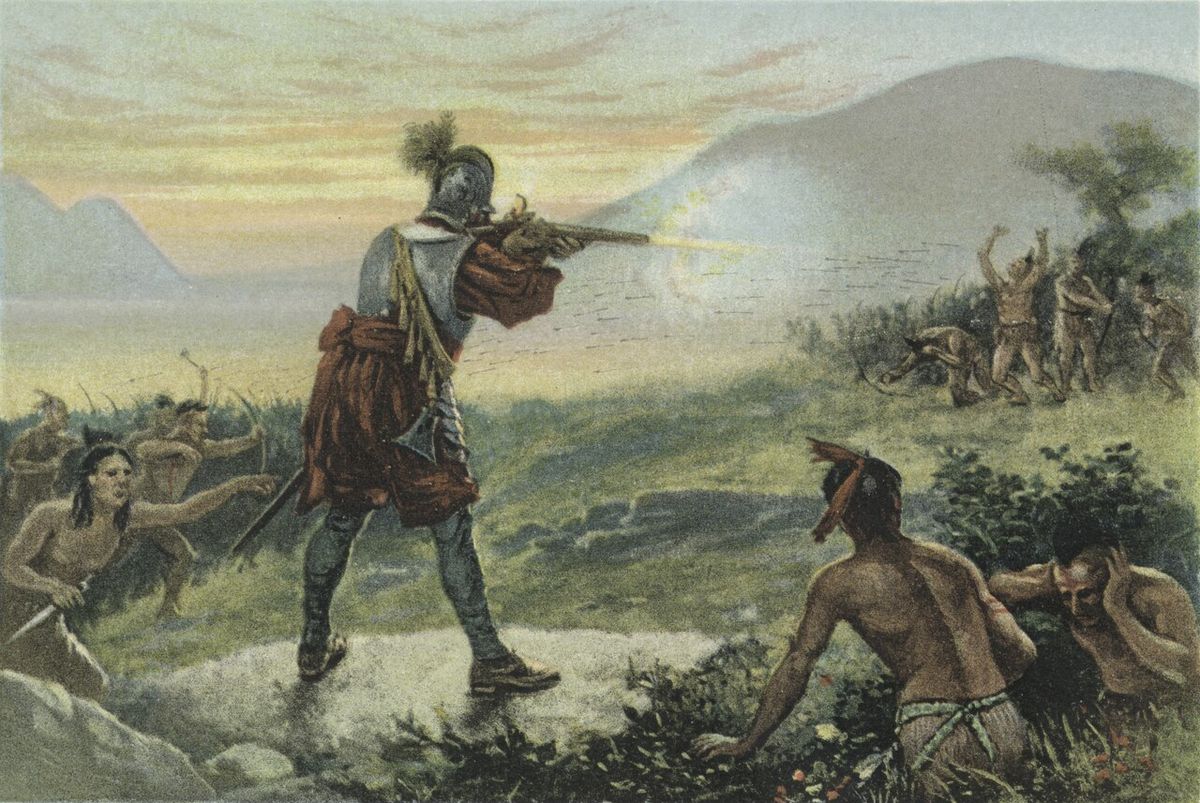
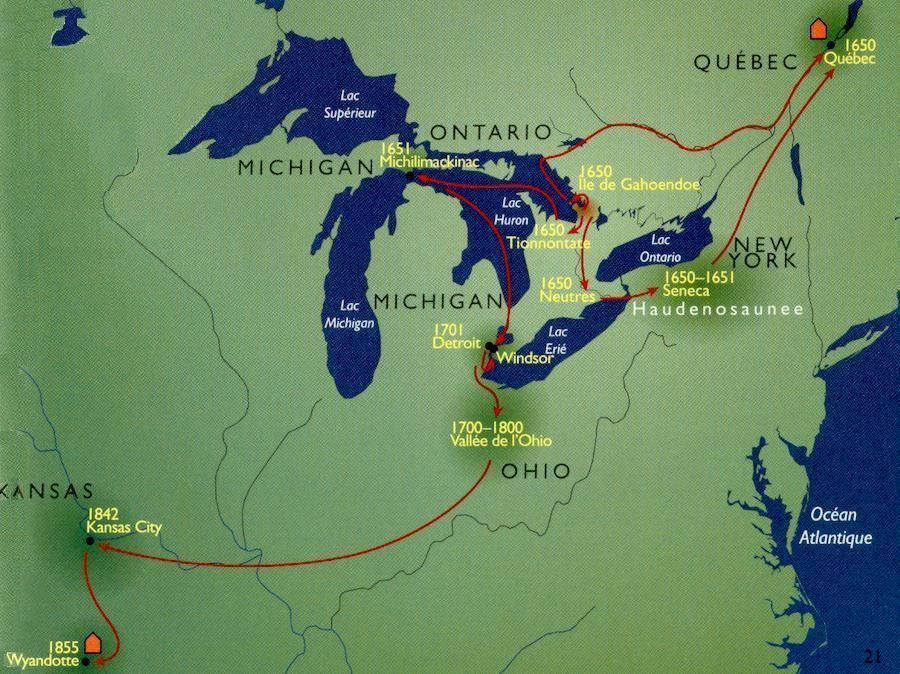
The Beaver Wars, a series of conflicts driven by competition over the fur trade, culminated in the dispersal of the Wendat in 1649 and 1650. On March 16, 1649, a Haudenosaunee war party of about 1,000 warriors attacked and burned the Wendat mission villages of St. Ignace and St. Louis in present-day Simcoe County, killing approximately 300 people, including several Jesuit missionaries who are now known as the North American Martyrs. The attack shattered Wendat resistance. Fearing further assaults, the surviving Wendat burned 15 of their own villages to deny resources to the enemy and fled as refugees. About 10,000 people fled to Gahoendoe (Christian Island) in Georgian Bay, where they suffered a terrible winter of starvation in 1649-50. By May 1, 1649, their homeland was effectively abandoned. Following this traumatic period, the Wendat fragmented into several groups.
- Wendat Nation (Quebec): A group of roughly 500 Wendat eventually relocated near Quebec City under French protection, settling at the village of Lorette, now known as Wendake, and absorbing other refugees to become the nucleus of the modern Wendat Nation in Quebec.
- Wyandot Formation: Other Wendat refugees joined the Iroquoian-speaking Tionontati Confederacy (Petun) to their west. After Haudenosaunee attacks in the fall of 1649, this combined group fled to the upper Lake Michigan region, settling first at Green Bay, then at Michilimackinac. Through this consolidation they became known as the Wyandot people.
- Assimilation: Many Wendat were slain or forcibly assimilated into the Haudenosaunee nations during the conflicts, a common practice in Iroquoian warfare. Archaeological evidence of this displacement has been uncovered at sites like the Rock Island II Site in Wisconsin.
The dispersal of the Wendat people in 1649 and 1650 marked the end of the Wendat Confederacy as a political force in its southern Ontario homeland for over three centuries. However, Wendat identity was not extinguished, and two significant surviving groups maintained their cultural heritage in new locations. One group relocated to Quebec, where their descendants form the present-day Wendat Nation, which has two First Nations reserves at Wendake, Quebec. The other Wendat group joined the Tionontati confederacy, who were also displaced by the Haudenosaunee, with the refugees coalescing into the Wyandot people. The Wendat Confederacy was formally reestablished in 1999 as an organization uniting the Wendat Nation and the three modern Wyandot nations.
The Wendat Nation in Quebec
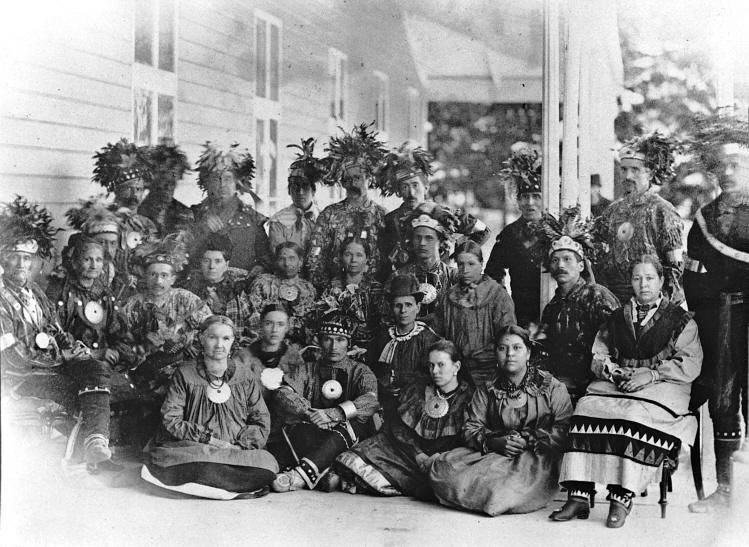
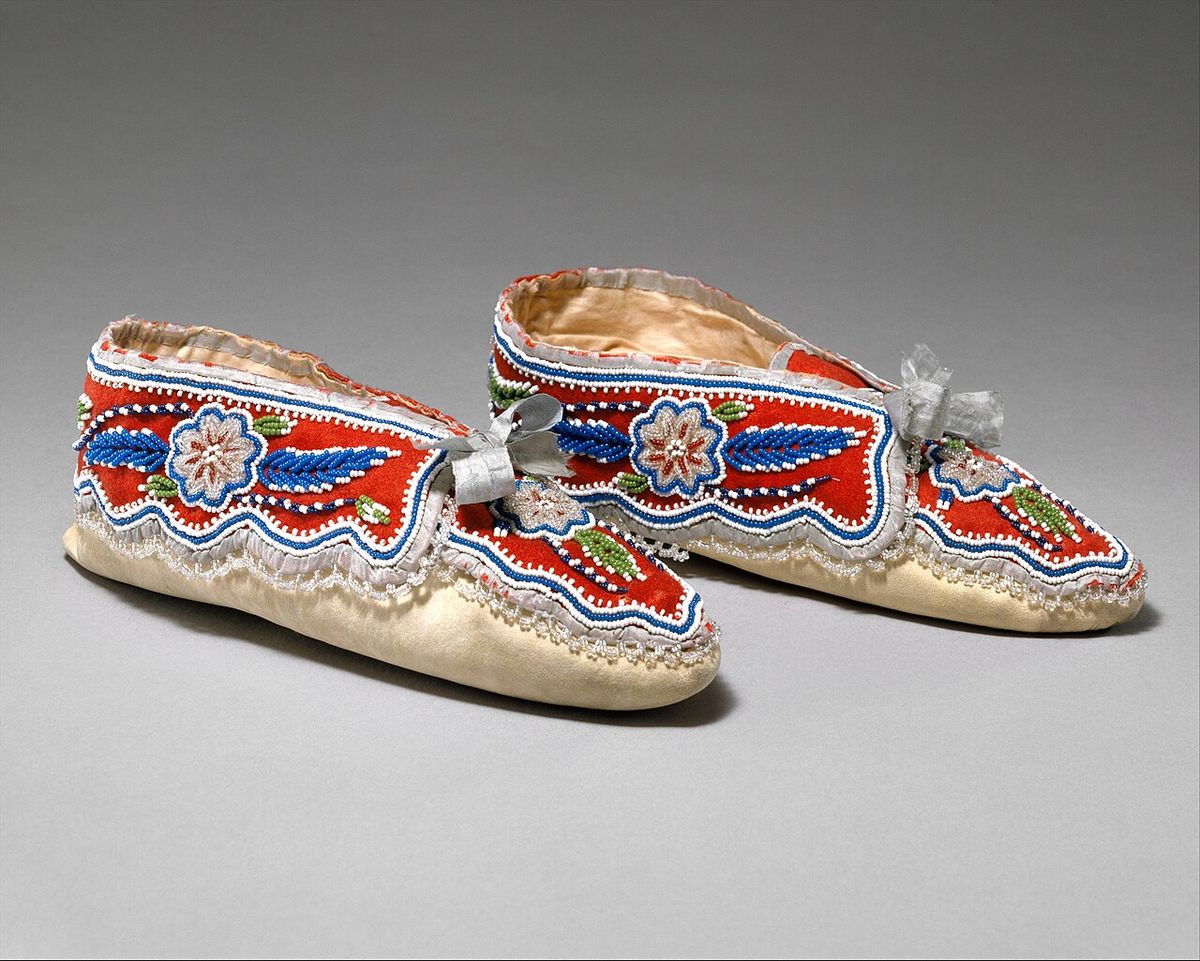
The Wendat community that settled near Quebec City is today the Wendat Nation, also known as the Huron-Wendat First Nation, with two reserves at Wendake now within the administrative limits of Quebec City. According to the 2021 census, the First Nation had 6,980 members. The community primarily speaks French as a first language with many being Roman Catholic, reflecting their long history of interaction with French culture. For decades, a leading source of income has been the production and sale of traditional crafts such as pottery, snowshoes, and summer and winter moccasins. The community also operates cultural sites like the Huron Traditional Site, a reconstruction of a Wendat village that offers guided tours. In recent years, there has been a concerted effort to revitalize the Wendat language among younger generations. The Huron-Wendat Museum in Wendake opened a new permanent exhibition titled "Wendat Endi’, Us the Wendat" which highlights important cultural figures and the Nation's resilience. In a significant step for reconciliation, the Huron-Wendat Nation and the Government of Canada signed a Framework Agreement to advance their relationship, showing the community's active engagement in both preserving tradition and shaping its future.
Treaty of 1760 and Legal Recognition
On September 5, 1760, just prior to the capitulation of Montreal to British forces, Brigadier-General James Murray signed a "Treaty of Peace and Friendship" with a Huron-Wendat leader then residing in the settlement of Lorette. The treaty text certified that the chief and his whole tribe were received under British protection, that no English officer was to molest them in returning to their settlement, and that they were allowed the free exercise of their religion, customs, and liberty of trading with the English. This treaty recognized the Wendat as a distinct nation and guaranteed that the British would not interfere with the nation's internal affairs. Its modern legal significance was affirmed in 1990 when the Supreme Court of Canada, ruling in R v Sioui, found that the Huron-British Treaty of 1760 was still valid and binding on the Canadian Crown. The court found that the treaty's guarantees benefited from continuing Canadian constitutional protection throughout the territory frequented by the tribe during the period the treaty was concluded, a decision that shows the enduring nation-to-nation relationship between the Wendat and the Crown.
Reestablishment of the Wendat Confederacy
For much of the 20th century, contemporary Wyandot groups in the United States and the Wendat Nation in Quebec independently worked to assert their culture and common Wendat ancestry. This culminated in a historic gathering on August 27, 1999, when representatives of the Wyandot groups from Kansas, Oklahoma, and Michigan joined with the Huron-Wendat and gathered at their historic homeland in Midland, Ontario. There they formally reestablished the Wendat Confederacy as an organization uniting the Wendat Nation and the three modern Wyandot nations. This act was a powerful symbolic and political reaffirmation of a shared identity that had survived dispersal across a continent. The reestablished confederacy now serves as a forum for cultural exchange and collective advocacy, representing a modern chapter in the long history of Wendat political organization.
Cultural Practices and Modern Life
Traditional Wendat culture was deeply connected to their agricultural lifestyle and clan system, with a matrilineal social structure where women held significant influence as the heads of the longhouses and controllers of agricultural production. The "Three Sisters" agricultural system was highly efficient, with corn stalks providing support for bean vines and squash leaves shading the ground to retain moisture and suppress weeds, while men contributed through hunting, fishing, and defense. This gendered division of labour was a fundamental aspect of their society, with women also making clothes, cooking, and processing game. In the modern era, the Wendat Nation in Wendake has successfully integrated contemporary economic activities with the preservation of tradition, as many community members work in diverse sectors while the production of traditional crafts remains an important cultural and economic pursuit.
Tourism centred on Wendake's cultural heritage, including the Huron Traditional Site and the Huron-Wendat Museum, plays a significant role in the local economy and cultural education. The community actively engages in language revitalization projects to ensure that Wendat knowledge and identity are passed on to future generations. Their history is marked by adaptation, as they have integrated various items, manufacturing techniques, and materials from the modern world while preserving the traditions and heritage of their ancestors. This dynamic continuity between past and present demonstrates the resilience and strong sense of identity that has characterized the Wendat Nation through centuries of change.
Questions about Wendat people
Where is the Wendat community located today?
The main Wendat community in Canada is the Wendat Nation, which is based on two First Nations reserves at Wendake, Quebec, now within Quebec City limits. In 2021, this First Nation had 6,980 members. Other descendant groups, known as the Wyandot people, live in the United States in Kansas, Oklahoma, and Michigan. In 1999, the Wendat Confederacy was reestablished as an organization uniting the Wendat Nation and these three modern Wyandot nations.
What caused the Wendat dispersal in the 17th century?
The Wendat dispersal resulted from a combination of devastating epidemics and warfare. Between 1634 and 1640, European diseases like smallpox and measles killed an estimated half to two-thirds of the population, crippling their society. Concurrently, they were engaged in the Beaver Wars with the Haudenosaunee Confederacy, who were competing for control of the fur trade. On March 16, 1649, a large Haudenosaunee war party attacked and destroyed key Wendat villages. Unable to defend their homeland, the surviving Wendat burned their remaining villages and fled. One group eventually found refuge near Quebec City and others joined neighbouring nations to form the Wyandot.
What is the difference between Huron and Wendat?
Wendat is the autonym used by the people, meaning 'Dwellers of the Peninsula' or 'Islanders' in their Iroquoian language. The name Huron was applied by early French explorers, possibly from the French word 'hure' meaning boar's head, as sailors thought the warriors' bristly hairstyles resembled a boar. An alternate etymology suggests it derived from an Iroquoian term. While Huron is a common historical term, the people refer to themselves as Wendat. The contemporary First Nation in Quebec is officially the Wendat Nation, and the reestablished confederacy uses the name Wendat.
What was the Wendat Treaty of 1760?
The Huron British Treaty of 1760 was a Treaty of Peace and Friendship signed on September 5, 1760, by Brigadier General James Murray and a Huron Wendat leader from Lorette. It placed the Wendat under British protection, guaranteed their safe return to their settlement, and promised the free exercise of their religion, customs, and liberty of trading with the English. The treaty recognized the Wendat as a distinct nation. In 1990, the Supreme Court of Canada ruled in R v Sioui that this treaty remains valid and binding on the Canadian Crown, providing continuing constitutional protection for Wendat practices throughout their traditional territory.
What is the Wendat Confederacy?
The Wendat Confederacy was an alliance of several Iroquoian speaking nations and was one of the principal Indigenous powers of the Great Lakes region in the early 17th century. It originally consisted of several nations including the Attinniaoenten (Bear) and Hatingeennonniahak (Cord Makers), who first confederated in the 15th century, with others joining later. The confederacy was forcibly disbanded in the 1650s after being defeated and dispersed by the Haudenosaunee during the Beaver Wars. In 1999, the Wendat Confederacy was reestablished as an organization uniting the Wendat Nation of Quebec and the three modern Wyandot nations from Kansas, Oklahoma, and Michigan.
What is the population of the Wendat Nation?
The Wendat Nation, based on two reserves in Wendake, Quebec, had 6,980 members in 2021. Historically, at the time of European contact in the 1610s to 1620s, the total Wendat population was estimated to be between 20,000 and 40,000 people. From 1634 to 1640, epidemics of Eurasian diseases like measles and smallpox drastically reduced their numbers to about 12,000. Further losses occurred during their dispersal by the Haudenosaunee in 1649. The modern Wendat Nation in Quebec is a descendant group of those who relocated near Quebec City after the dispersal.
Sources and further reading
- Wendat people (Wikipedia)
- 2. Contact, First Nations of Simcoe County (firstnations.innisfillibrary.ca)
- The history of Sainte-Marie among the Hurons (saintemarieamongthehurons.on.ca)
- Wendat Endi', Us the Wendat (museehuronwendat.ca)
- Wendat (Huron) (thecanadianencyclopedia.ca)
Checked by the Nosy Mag desk. Last updated 2026-10-20.