Tsimshian
The Tsimshian (Ts’msyen) are an Indigenous nation whose traditional territory spans the northwest coast of British Columbia and southern Alaska. Archaeological evidence shows 5,000 years of continuous habitation in the Prince Rupert region. Today, Tsimshian communities are centred in coastal British Columbia, particularly around Terrace and Prince Rupert, and on Annette Island in Alaska. The nation is known for its complex matrilineal clan system, rich artistic traditions including totem pole carving, and its ongoing efforts to negotiate modern treaties and revitalize the Sm'algyax language.
Historical Origins and Migration
Archaeological excavations at Prince Rupert Harbour have unearthed remains of cedar plank house villages that date back 5,000 years, establishing a deep historical presence. According to oral history, the Tsimshian originally lived on the upper reaches of the Skeena River near present-day Hazelton. After a series of disasters, a chief led a migration to the coast, where they founded Kitkatla Village, considered the first of the Southern Tsimshian villages and still regarded as the most conservative. The Nisga'a and Gitxsan remained in the upper Skeena and Nass River regions. Other Tsimshian groups moved down the Skeena, occupying the lower valley and coast, and developed a distinct dialect and identity. The Tsimshian maintained a seasonal pattern, with winter villages in the Prince Rupert Harbour area and summer villages along the lower Skeena to harvest salmon.
Contact with Europeans began in 1787 when Captain Charles Duncan and James Colnett arrived at Gitxaala (Kitkatla), though Russian fur traders may have visited earlier. The establishment of the Hudson's Bay Company fort at modern-day Lax Kw'alaams in 1834 drew nine Tsimshian tribal chiefs to the area for trade. The 19th century brought devastating epidemics, including the 1862 Pacific Northwest smallpox epidemic, which killed at least one in four Tsimshian people. The population dropped from an estimated 8,500 in 1835 to 4,500 by 1885. In 1887, missionary William Duncan led a group of 817 Tsimshian from Metlakatla, BC, to found New Metlakatla on Annette Island, Alaska, which later became the only Native reservation in that state. In 1895, the BC Tsimshian population was 3,550.
Social Structure and Clan System
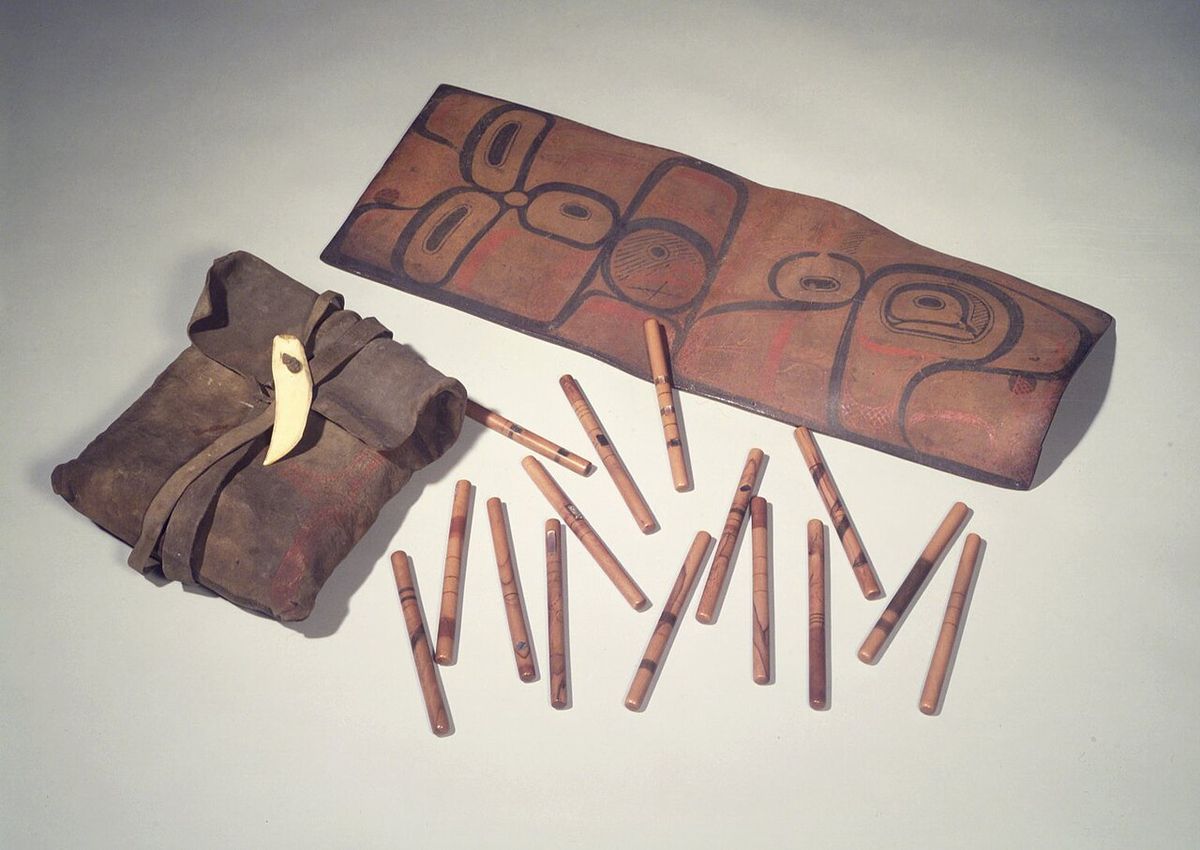
Tsimshian society is fundamentally matrilineal, meaning identity, clan affiliation, and property rights are transmitted through the maternal line. This kinship system dictates that hereditary chiefs obtain their rights through their mother's brother, though the protege must be rigorously trained for the role. The societal structure is organized into a moiety-based clan system, where every individual belongs to one of four primary clans, known as phratries. These clans form the foundation of social organization, legal traditions, and ceremonial life. Traditionally, marriage occurred between individuals from different clans to maintain social balance and alliances.
The four Tsimshian clans are the Gispwudwada (Killer Whale or Fireweed Clan), the Ganhada (Raven or Frog Clan), the Laxgibuu (Wolf Clan), and the Laxsgiik (Eagle Clan). Each clan has its own histories, crests, and responsibilities. The marriage ceremony was an extremely formal and prolonged affair, often involving several sequential ceremonies. Arranged marriages were common to protect and regulate access to territories and resources. Certain cultural taboos, particularly related to food restrictions for women and men during and after childbirth, were historically observed and some are still actively practiced today.
Culture, Economy, and Potlatch
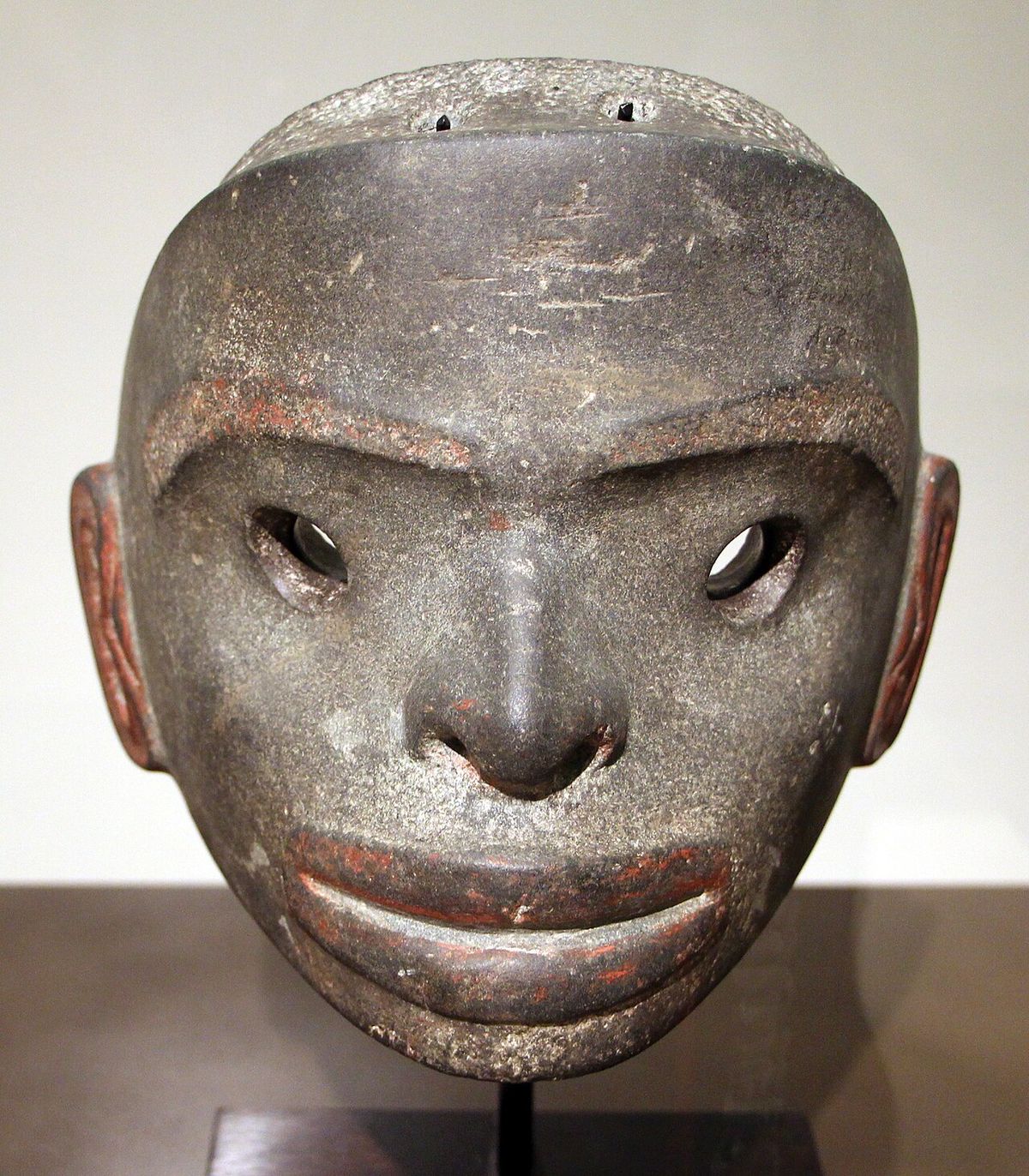
The traditional Tsimshian economy was centred on the abundant sea life of the Pacific Northwest, with salmon holding a paramount place in both nutrition and culture. This reliable food source enabled the development of permanent towns featuring large longhouses constructed from cedar posts and panels. The Tsimshian became skilled seafarers and artisans, fashioning most goods from western red cedar, including tools, clothing, roofing, and canoes. They are credited with inventing Chilkat weaving, a complex textile art form. The Tsimshian also used local plants like the berries of Vaccinium Vitis-idaea as food.
Religious beliefs centred on the Lord of Heaven, who was believed to send supernatural servants to aid people, with charity and bodily purification seen as the route to the afterlife. A central cultural institution is the potlatch, which the Tsimshian refer to specifically as a yaawk (feast). The feast system is the primary agency for social reproduction, expression of law, transmission of knowledge, and demonstration of a chief's obligation to steward resources. Today, potlatches are held to honour deaths, burials, and succession to name-titles. There are four distinct types of Tsimshian feasts, each governed by strict protocols, including specific rules for guests and the distribution of gifts or payments.
- Harvesting of salmon and other sea life formed the economic foundation.
- Construction of large cedar longhouses enabled permanent settlement.
- Use of western red cedar for tools, clothing, and art was ubiquitous.
- Invention of Chilkat weaving is attributed to the Tsimshian.
- The potlatch (yaawk) governs social, legal, and ceremonial life.
- Four distinct types of feasts are practiced with specific protocols.
Tsimshian First Nations and Communities
The Tsimshian people are organized into distinct First Nations, each with its own governance and community. In British Columbia, there are eight federally recognized Tsimshian First Nations with approximately 10,000 registered members. A subset of five of these nations are currently engaged in the modern treaty process through the Tsimshian First Nations Treaty Society. The Tsimshian estimate their total population, including those in Alaska and urban areas, to be around 45,000 people. These communities maintain strong connections to their traditional territories while balancing contemporary life.
The five nations negotiating through the Tsimshian First Nations Treaty Society are the Gitga'at First Nation at Hartley Bay, the Kitasoo/Xaixais First Nation at Klemtu, the Kitselas First Nation near Terrace, the Kitsumkalum First Nation in Terrace, and the Metlakatla First Nation in BC. Other key Tsimshian communities include the Gitxaala Nation at Kitkatla and Lax Kw'alaams. In Alaska, the Metlakatla Indian Community on Annette Island is a federally recognized tribe with about 1,450 enrolled members, maintaining the only reservation in Alaska. These nations have overlapping and shared territories with neighbouring First Nations including the Gitxsan, Haida, Heiltsuk, Nisga'a, and Wet'suwet'en.
- Gitga'at First Nation: Located at Hartley Bay (Txalgiu).
- Kitasoo/Xaixais First Nation: Located at Klemtu, includes Heiltsuk members.
- Gitxaala Nation: Located at Kitkatla (Lax Klan).
- Kitsumkalum First Nation: Located in Terrace.
- Kitselas First Nation: Located near Terrace.
- Metlakatla Indian Community: Located on Annette Island, Alaska.
- Lax Kw'alaams Band: Located near Prince Rupert.
Language and Linguistic Classification
The Tsimshianic language family includes the language of the Coast Tsimshian, called Sm'algyax (meaning real or true tongue), as well as the closely related Gitxsan and Nisga’a languages. These are distinct from the regional Tsimshian dialect variations. In the 2021 Canadian census, 1,550 people claimed a Tsimshianic language as their mother tongue, and 2,590 people reported knowledge of one of these languages. Specifically, 200 people reported Sm'algyax as their mother tongue, with 445 claiming knowledge of it. An additional 760 people claimed Gitxsan as their mother tongue, and 595 claimed Nisga’a. In 2016, only 160 people in Canada were Tsimshian speakers.
The language is grouped into four main dialects. Northern Tsimshian is found along the lower Skeena River, Nisga'a along the Nass River, Gitxsan on the upper Skeena, and Southern or Coast Tsimshian (Ts’msyen Proper) from the Kitselas Canyon south to Milbanke Sound. The language has suffered from colonial policies, including residential schools where children were forbidden from speaking it. Current efforts are focused on language revitalization. Some linguists classify the Tsimshianic languages as part of the broader theoretical Penutian language group, suggesting historical relationships with peoples as far south as Oregon and California.
Modern Treaty Negotiations and Land Claims
The Tsimshian have sought to preserve their villages and fishing sites since at least 1879. Formal treaty negotiations with the Canadian government began in July 1983. In 1992, fourteen tribes united under the Tsimshian Tribal Council to negotiate collectively, signing a framework agreement in 1997. Litigation over commercial fisheries rights and imposed confidentiality clauses later led to the dissolution of that main group. Currently, a subset of five Tsimshian First Nations negotiates under the Tsimshian First Nations Treaty Society within the British Columbia treaty process. The total registered membership of these five nations is approximately 3,910 people.
Recent years have seen significant milestones in these negotiations. In April 2025, the Kitselas First Nation held a ratification vote for the Kitselas Treaty and a new constitution. Over 96 percent of Kitselas citizens participated, with more than 85 percent voting in favour of the treaty and over 81 percent approving the constitution. Similarly, in November 2025, the Kitsumkalum First Nation held its vote, achieving over 89 percent voter participation with approximately 90.7 percent in favour of the treaty and 89.7 percent for its constitution. These treaties, described as living agreements, aim to define rights, title, and self-government. The Kitselas Treaty has been a point of contention as it claims areas overlapping with the territory of the Lax Kw'alaams Band.
| First Nation | Vote Date | Voter Participation | Treaty Approval | Constitution Approval |
|---|---|---|---|---|
| Kitselas | April 2025 | >96% | >85% | >81% |
| Kitsumkalum | November 2025 | >89% | ~90.7% | ~89.7% |
Notable Tsimshian Figures
Throughout history and into the contemporary era, numerous Tsimshian individuals have made significant contributions as artists, leaders, scholars, and culture bearers. Their work has been vital in preserving and promoting Tsimshian heritage. William Beynon, a Gitlaan hereditary chief, served as a crucial ethnographer, recording extensive oral histories and traditions. David A. Boxley, of the Laxsgiik clan, is a renowned carver credited with hosting the first modern potlatch and raising the first totem pole in decades in Metlakatla, Alaska, sparking a cultural renaissance.
Arthur Wellington Clah, from the Gispaxlo'ots, was a translator and diarist who taught missionary William Duncan the Sm'algyax language. Alfred Dudoward, a hereditary chief of the Gitando, co-founded the Native Brotherhood of British Columbia. Contemporary figures include author and lawyer Calvin Helin, artist Roy Henry Vickers, and author Rudy Kelly. Benjamin Haldane was a pioneering photographer from Metlakatla. These individuals, among many others, represent the enduring strength and vitality of Tsimshian leadership and artistic expression across generations.
- Frederick Alexcee: Artist and culture bearer.
- William Beynon: Gitlaan hereditary chief and ethnographer.
- David A. Boxley: Laxsgiik carver who revived potlatch and totem pole raising in Alaska.
- Arthur Wellington Clah: Gispaxlo'ots translator and diarist.
- Alfred Dudoward: Gitando hereditary chief, co-founder of the Native Brotherhood.
- Roy Henry Vickers: Contemporary artist.
- Calvin Helin: Lawyer and author.
- Benjamin Haldane: Pioneering photographer from Metlakatla.
Questions about Tsimshian
Where do the Tsimshian people live?
The Tsimshian traditionally inhabit the northwest coast of British Columbia and southern Alaska. Their primary communities in British Columbia are around Terrace and Prince Rupert, including specific villages like Hartley Bay (Gitga'at), Klemtu (Kitasoo/Xaixais), Kitkatla (Gitxaala), and Lax Kw'alaams. In Alaska, the Metlakatla Indian Community resides on the Annette Island Reserve, which is the only Native reservation in that state. Many Tsimshian also live in urban centres like Seattle, having migrated from both Alaska and British Columbia.
What is the Tsimshian population?
The Tsimshian nation estimates its total population to be approximately 45,000 people. Within Canada, there are roughly 10,000 members federally registered across eight First Nations communities in British Columbia. The 2021 Canadian census reported 4,800 people claiming Tsimshian ancestry. The five First Nations currently negotiating treaties through the Tsimshian First Nations Treaty Society have a combined registered membership of about 3,910. In Alaska, the Metlakatla Indian Community has approximately 1,450 enrolled members. The population dropped to a low of 3,550 in BC in 1895 before recovering.
What language do the Tsimshian speak?
The Tsimshianic language family includes Sm'algyax (Coast Tsimshian), Gitxsan, and Nisga’a. Sm'algyax translates to real or true tongue. According to the 2021 census, 1,550 people in Canada claimed a Tsimshianic language as their mother tongue, and 2,590 reported knowledge of one. Specifically, 200 people reported Sm'algyax as their mother tongue. The language is considered endangered, and significant efforts are underway in communities to revitalize its use through education and cultural programs. In 2016, only 160 people in Canada were Tsimshian speakers.
What is the Tsimshian clan system?
Tsimshian society is organized into a matrilineal clan system consisting of four primary clans, or phratries. These are the Gispwudwada (Killer Whale or Fireweed Clan), the Ganhada (Raven or Frog Clan), the Laxgibuu (Wolf Clan), and the Laxsgiik (Eagle Clan). Individuals belong to the same clan as their mother, and descent, identity, and hereditary rights are traced through the maternal line. Traditionally, marriage occurs between people from different clans. Hereditary chiefs obtain their titles and authority through their maternal uncle's lineage.
Are the Tsimshian negotiating treaties with Canada?
Yes, a subset of Tsimshian First Nations is actively engaged in the British Columbia treaty process. The Tsimshian First Nations Treaty Society represents five member nations: Gitga'at, Kitasoo/Xaixais, Kitselas, Kitsumkalum, and Metlakatla (BC). Formal negotiations began in 1983. In 2025, both the Kitselas and Kitsumkalum First Nations held successful ratification votes for their modern treaties and constitutions, with voter approval exceeding 85 percent. These negotiations aim to reach agreements on land title, self-government, and rights within their traditional territories.
What is a Tsimshian potlatch?
The potlatch, known specifically as a yaawk (feast) in Tsimshian culture, is a central ceremonial institution. It is a complex feast system that serves as the mechanism for social law, the transmission of knowledge, and the public demonstration of a chief's stewardship. Potlatches are held to mark significant events such as succession to name-titles, deaths, burials, and marriages. There are four distinct types of Tsimshian feasts, each governed by strict protocols regarding conduct, speeches, and the distribution of gifts to guests, which affirm social status and obligations. It is considered improper to hold out one's hand while gifts are being distributed.
Sources and further reading
- Tsimshian (Wikipedia)
- Ts'msyen (Tsimshian) (thecanadianencyclopedia.ca)
- Tsimshian First Nations Treaty Society (www2.gov.bc.ca)
- Kitsumkalum, a Galts'ap (community) of the Tsimshian Nation ... (kitsumkalum.com)
- Tsimshian First Nations (bctreaty.ca)
Checked by the Nosy Mag desk. Last updated 2026-10-26.