Moccasin
A moccasin is a soft leather shoe, traditionally made from deerskin, consisting of a sole and sides made of one piece of leather stitched together at the top, sometimes with an added vamp panel. Historically the footwear of many Indigenous peoples across North America, it was also adopted by European hunters, traders, and settlers. In contemporary Canada, moccasins remain a vital cultural symbol and art form, with a strong market for handmade, Indigenous-crafted footwear. The moccasin also serves as an educational tool through initiatives like the Moccasin Identifier, promoting awareness of Indigenous treaties and history.
Historical Origins and Design
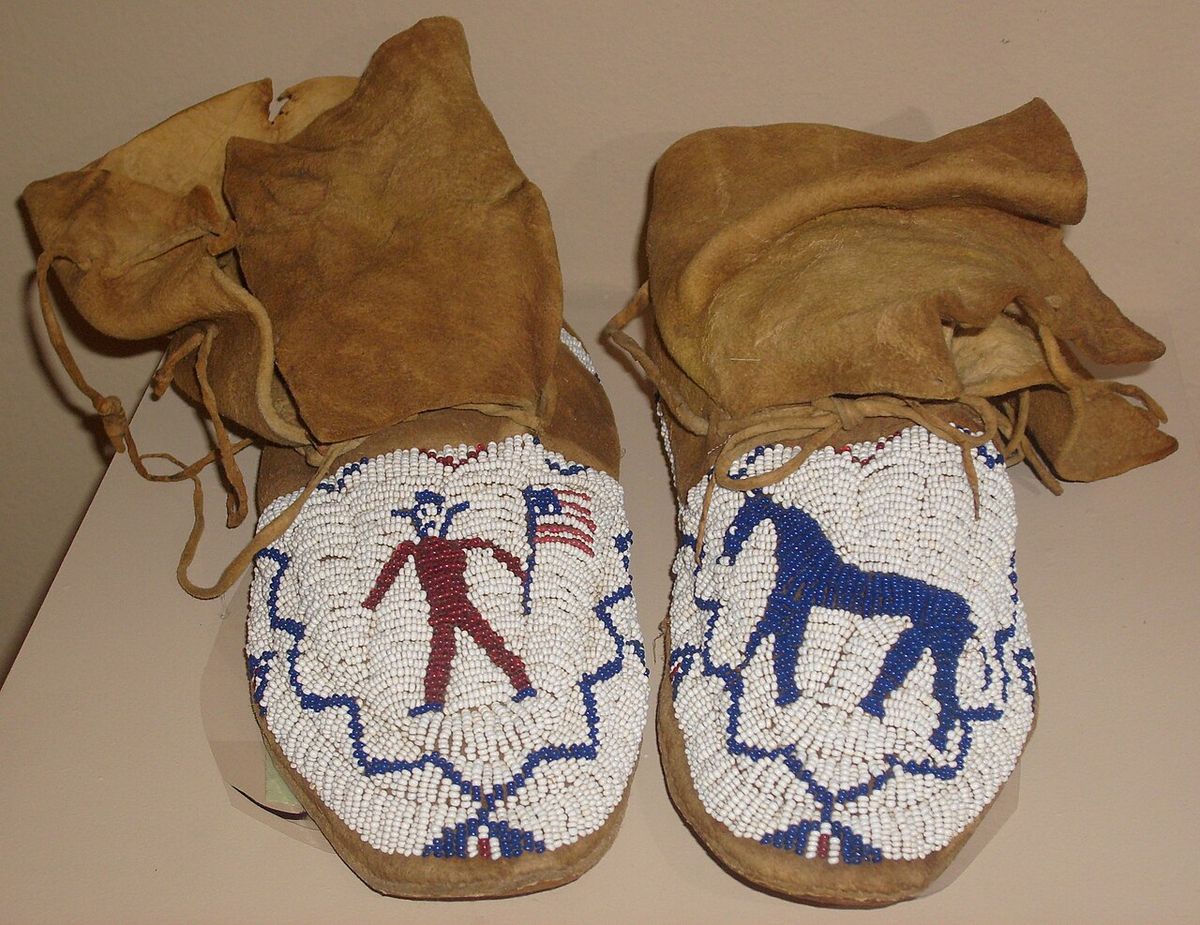
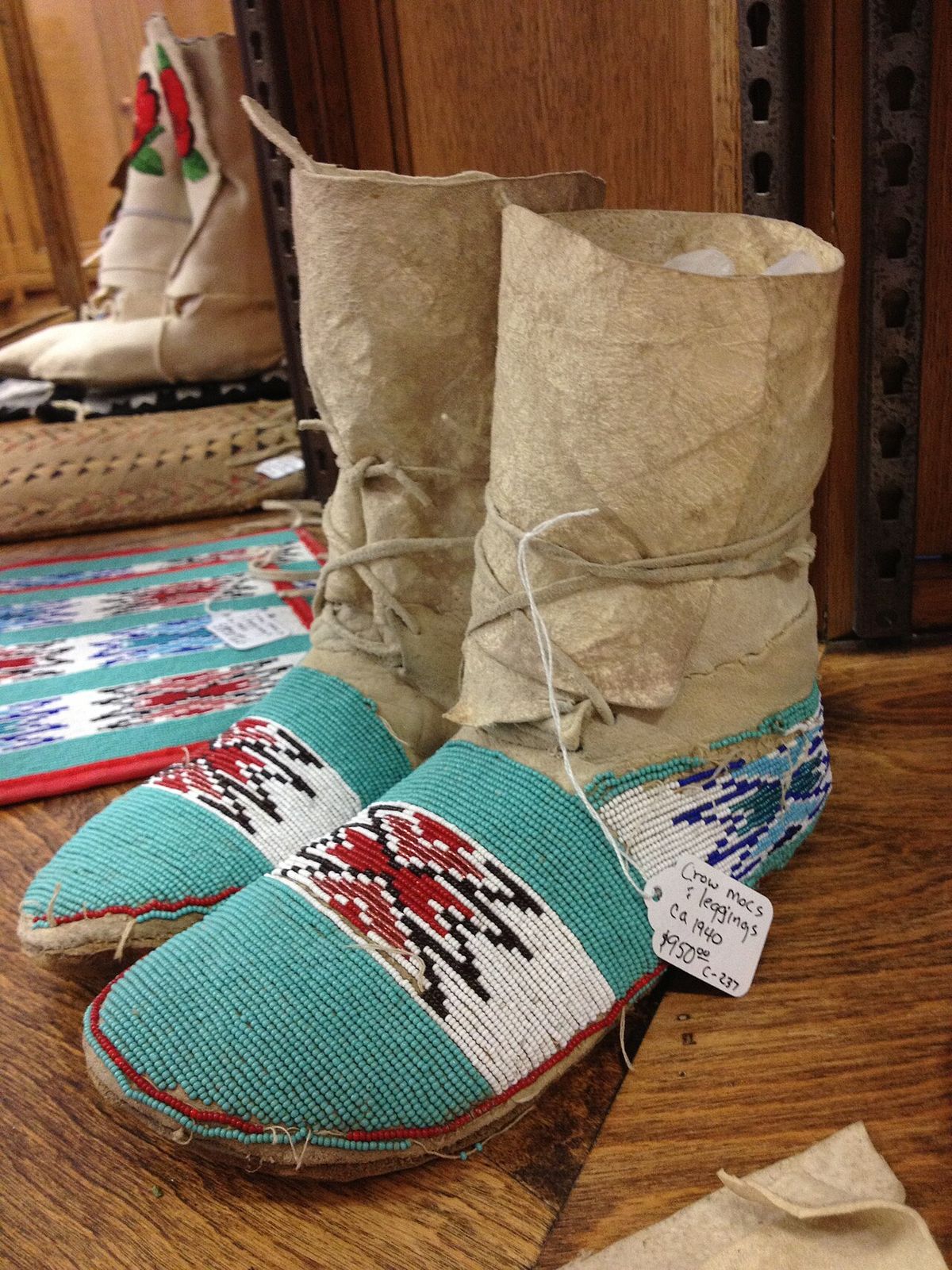
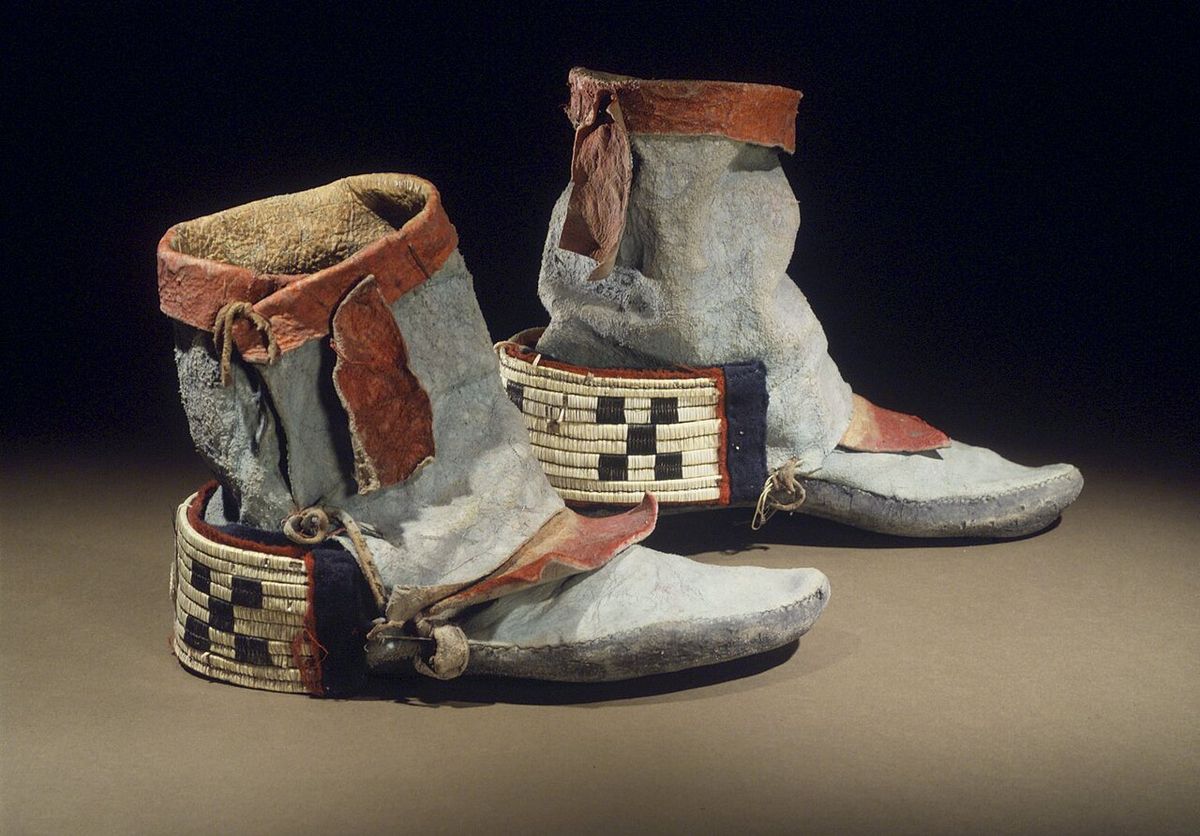
The term 'moccasin' derives from the Powhatan word 'makasin', with cognates in languages such as Massachusett (mohkisson/mokussin), Ojibwa (makizin), and Mi'kmaq (mksɨn), tracing back to the Proto-Algonquian word *maxkeseni, meaning shoe. The classic design involves a sole made from soft leather and sides made of one piece of leather, stitched together at the top, sometimes with an added vamp panel. This construction allows for flexibility and a close feel of the ground, which was historically advantageous for tracking and movement. Decoration through beadwork or embroidery is a significant artistic element, with patterns and styles varying widely among different Indigenous nations. By the 1800s, moccasins had become a standard component of Canadian Indigenous regalia, particularly within powwow attire. The most commonly recognized style is that of the Plains Indians, which often featured a harder sole to protect against rocky terrain and cacti.
Regional adaptations were directly influenced by local geography and needs. Eastern Indigenous tribes, moving across forest floors covered in leaves and soft earth, predominantly wore soft-sole moccasins. In contrast, Plains tribes developed hard-sole moccasins to withstand the abrasive environment of rocks and prickly pear cacti. The footwear was not only functional but also a marker of identity, with distinct stitching techniques, cut, and adornment signalling tribal affiliation and personal status. The design protects the foot while allowing the wearer to feel the ground.
Modern Adaptations and Uses
While remaining important to traditional Indigenous dress, the moccasin has evolved into several contemporary footwear styles for global markets. The driving moccasin, or 'driving moc', is a modern adaptation that incorporates rubber tabs on the sole to provide grip, particularly for automotive pedals, while maintaining the soft leather upper's flexibility. These soles typically come in two variations: a uniform covering of small, round rubber dots or larger, flat rubber pads separated by small gaps. Another significant adaptation is the moc-toe work boot, a sturdy boot that mimics the moccasin's distinctive U-shaped toe design, created by weld-stitching two pieces of leather or fabric over the toe box. These boots are commonly paired with hard rubber compound soles for industrial durability.
Specialized versions have also been developed for specific trades. In New Zealand and Australia, sheep shearers use a synthetic, cream-coloured felt moccasin with a back seam and a rounded, gathered toe. This design includes a front lace covered by a flap secured with a side buckle, a safety feature to prevent the shearer's handpiece comb from snagging. These moccasins provide excellent grip on wooden floors, absorb sweat, and protect the feet during long shearing sessions. The word moccasin can also denote a shoe of deer leather adorned with laces.
- Driving Moccasin (Driving Moc): A contemporary style with added rubber tabs on the sole for grip while driving.
- Moc Toe Boot: A work boot style featuring a U-shaped toe design created by weld-stitching two pieces of leather.
- Shearers' Moccasin: A specialized shoe made of synthetic felt, used in New Zealand and Australia for sheep shearing.
- Rubber-dotted Sole: A driving moc variation with a uniform covering of small, round rubber pads.
- Separated Pad Sole: A driving moc variation with larger, flat rubber pads separated by small areas.
Cultural Resurgence and Artisan Craft
There is a significant contemporary resurgence in the traditional art of moccasin-making across Indigenous communities in Canada, driven by cultural preservation and artistic expression. Artisans like Esta Bee undertake dedicated projects, such as a 2026 mentorship initiative to learn and document the creation of beaded gauntlets and moccasins using traditional Dene materials like home-tanned hide and trade beads. Such projects are often supported by arts foundations, like the Alberta Foundation for the Arts, and focus on skills development in sketching, motif design, and beading techniques. The goal is often to create personal or family heirlooms for cultural and educational events, reinforcing practices of cultural continuity and sovereignty.
Educational institutions and cultural organizations actively support this revival. The Manitobah Storyboot School offers workshops teaching the traditional art of moccasin-making to both Indigenous and non-Indigenous participants. These programs ensure that knowledge and techniques are transmitted to new generations. The materials and patterns used are often deeply researched, drawing from museum collections, historical texts like Judy Thompson's 'Women’s Work, Women’s Art', and traditional pattern books. The process is frequently documented and shared via social media and blogs, providing a valuable resource for wider cultural preservation and inspiring others to engage with their heritage through craft.
- 2026 Gauntlets and Moccasins Project: A mentorship initiative by artisan Esta Bee, funded by the Alberta Foundation for the Arts.
- Manitobah Storyboot School: Offers moccasin-making workshops.
- Key Research Text: 'Women’s Work, Women’s Art' by Judy Thompson, a detailed book on 19th-century Northern Athapaskan clothing.
- Material Suppliers: Vintage beads sourced from Etsy sellers like LanaBeads2, MicroBeads, and TeresaSullivanStudio.
- Fabric Source: Melton wool fabric obtained from Atex Designer Fabrics.
The Moccasin Identifier Initiative
Founded by Carolyn King in partnership with the Mississaugas of the Credit First Nation and The Greenbelt Foundation, the Moccasin Identifier is a First Nations-led educational initiative. Its core mission is to increase public awareness and understanding of Indigenous Treaties, history, and relationships to the land across Canada. The program employs visual symbols of moccasin prints through stencils, public art installations, and educational kits to create tangible reminders of Indigenous presence and Treaty responsibilities. The initiative's stated goal is to 'Cover Canada in Moccasins' by integrating this learning into schools, workplaces, and public spaces, thereby supporting the broader goals of Truth and Reconciliation.
As of 2025, the Moccasin Identifier is refining its National Treaty Education materials into three distinct streams for Primary Years, Middle Years, and High School students. It offers virtual and in-person presentations, augmented reality experiences where users can virtually stencil a moccasin design, and resources for Treaties Recognition Week. The initiative actively seeks consultants and partners to expand its national reach, with a submission deadline for a related project set for January 10, 2025. By transforming the moccasin from a physical object into a powerful educational symbol, the project fosters a deeper collective understanding of whose land Canadians reside on and the enduring significance of Treaty agreements.
Community Events and the Moccasin Walk
Community events centred on the moccasin are important for promoting wellness, cultural connection, and public education. A prominent example is the Moccasin Walk organized by the Lheidli T'enneh First Nation in Prince George, British Columbia. Scheduled for July 11, 2026, the event invites Indigenous and non-Indigenous community members to walk together on the north side of the Lheidli T'enneh reserve. Registration begins at the Health Centre on Landooz Road, with the walk running from 10:30 a.m. to 12:30 p.m., followed by a barbecue lunch and prize draws. Chief Dolleen Logan has emphasized that the walk is an opportunity to strengthen community relationships and celebrate health and wellness in an inclusive setting.
Health manager Tamara Seymour has stated that the event will proceed rain or shine, reflecting a spirit of resilience and community. Such events are part of a broader pattern of cultural gatherings that incorporate traditional symbols. For instance, Indigenous Student Services at various institutions host events like the Digwaagig Maanjidowin (Fall Gathering) on September 14, 2026, where wearing moccasins and mukluks is encouraged as part of the celebration. Registration for the Moccasin Walk is open online and in person on the morning of the event, with organizers encouraging families to attend for a day focused on wellness and community fun.
- 2026 Moccasin Walk: Scheduled for Saturday, July 11, 2026, hosted by the Lheidli T'enneh First Nation.
- Event Location: North side of the Lheidli T'enneh reserve, starting at 2003 Landooz Rd., Prince George, BC.
- Walk Time: From 10:30 a.m. to 12:30 p.m., followed by a barbecue and prize draws.
- Community Leader: Organized with statements from Chief Dolleen Logan and Health Manager Tamara Seymour.
- Related Gathering: Digwaagig Maanjidowin (Fall Gathering) hosted by Indigenous Student Services on September 14, 2026.
- Registration: Available online and in person on the morning of the event.
The Canadian Market and Retail
The market for authentic, Indigenous-made moccasins in Canada is strong, with numerous businesses emphasizing their products as 100 percent made in Canada by Indigenous artisans. These companies often highlight generational knowledge and traditional techniques in their marketing, appealing to consumers seeking authentic cultural products. Many operations, such as Whetung's, offer flexible return policies for unworn moccasins with original tags, though customers are responsible for return shipping costs. The commercial success of these enterprises supports Indigenous economies and helps sustain artisan communities.
Key features of the retail scene for moccasins in Canada include a strong emphasis on product origin, with prominent labeling of items as '100% Canadian Made' and crafted by Indigenous artisans. The product range is diverse, including traditional soft-sole moccasins, insulated mukluks for winter, and contemporary lifestyle footwear. Retail is often integrated with cultural centres, museums, and online markets dedicated to Indigenous arts, and many platforms operate on a model that returns a significant portion of sales directly to the makers. The demand for these products extends beyond Indigenous communities, with many non-Indigenous Canadians and international tourists purchasing moccasins as meaningful souvenirs and statements of support for Indigenous artistry.
Questions about Moccasin
What are moccasins made of?
Traditional moccasins are primarily crafted from deerskin or other soft leathers. The sole is typically made from soft leather, while the sides are a single piece of leather stitched together at the top. Contemporary moccasins may also incorporate other materials such as Melton wool, beaver fur for lining, synthetic felt for specialized versions, and rubber pads for soles in adapted styles like driving mocs. The adornment often involves beadwork or embroidery, using materials like trade beads and thread.
What is the Moccasin Identifier?
The Moccasin Identifier is a First Nations-led educational initiative founded by Carolyn King in partnership with the Mississaugas of the Credit First Nation. It is dedicated to increasing awareness of Indigenous Treaties, history, and relationships to the land across Canada. The program uses stencils of moccasin prints in public spaces and schools as visual reminders of Indigenous presence and Treaty responsibilities. It offers educational programs, presentations, and is developing a National Treaty Education plan with materials for primary, middle, and high school students.
Where can I buy authentic Indigenous-made moccasins in Canada?
Authentic Indigenous-made moccasins are available through several dedicated retailers in Canada. The Manitobah Indigenous Market, the Wanuskewin Gift Shop, and companies like Whetung's are prominent sources, all emphasizing that their products are 100 percent made in Canada by Indigenous artisans. These moccasins are sold both online and in physical stores, often associated with cultural centres or museums. Purchasing from these sources directly supports Indigenous artists and their communities.
What is a Moccasin Walk?
A Moccasin Walk is a community wellness event that promotes physical activity, cultural connection, and inclusivity. The Lheidli T'enneh First Nation hosts an annual Moccasin Walk, with the 2026 event scheduled for July 11 on their reserve north of Prince George. The walk is open to both Indigenous and non-Indigenous participants, featuring a registered walk, a barbecue, and prize draws. It was created to provide a local, accessible wellness event for the community, fostering relationships and celebrating health in a shared, welcoming environment, regardless of weather conditions.
How are contemporary moccasins different from traditional ones?
While traditional moccasins are leather footwear for outdoor terrain, contemporary adaptations have diversified for specific modern uses. Driving moccasins add rubber pads to the sole for better grip on car pedals. Moc-toe work boots incorporate the classic moccasin toe shape into a sturdy boot with a hard rubber sole for industrial safety. Specialized shearers' moccasins, used in New Zealand and Australia, are made from synthetic felt with safety buckles. Despite these functional adaptations, the core design principles of a soft, flexible construction and often decorative upper remain connected to the traditional form.
Why are moccasins important to Indigenous cultures?
Moccasins are important as practical footwear, artistic expression, and cultural symbols. Historically, their design was tailored to specific environments, embodying a deep connection to the land. The beadwork and patterns serve as markers of tribal identity, family lineage, and personal story. Today, they represent cultural continuity and resilience, with a strong resurgence in traditional making practices through mentorship and art projects. Initiatives like the Moccasin Identifier further use their significance as educational tools for teaching about Indigenous history, treaties, and ongoing presence on the land.
Sources and further reading
- Moccasin (Wikipedia)
- 100% Canadian Made Moccasins (whetung.com)
- Moccasin Identifier (moccasinidentifier.com)
- Lheidli T'enneh hosting 2026 Moccasin Walk Saturday (princegeorgecitizen.com)
- Gauntlets and Moccasins 2026 - Esta Bee, Indigenous Artisan (estabeeindigenousartisan.squarespace.com)
Checked by the Nosy Mag desk. Last updated 2026-10-25.