Haida people
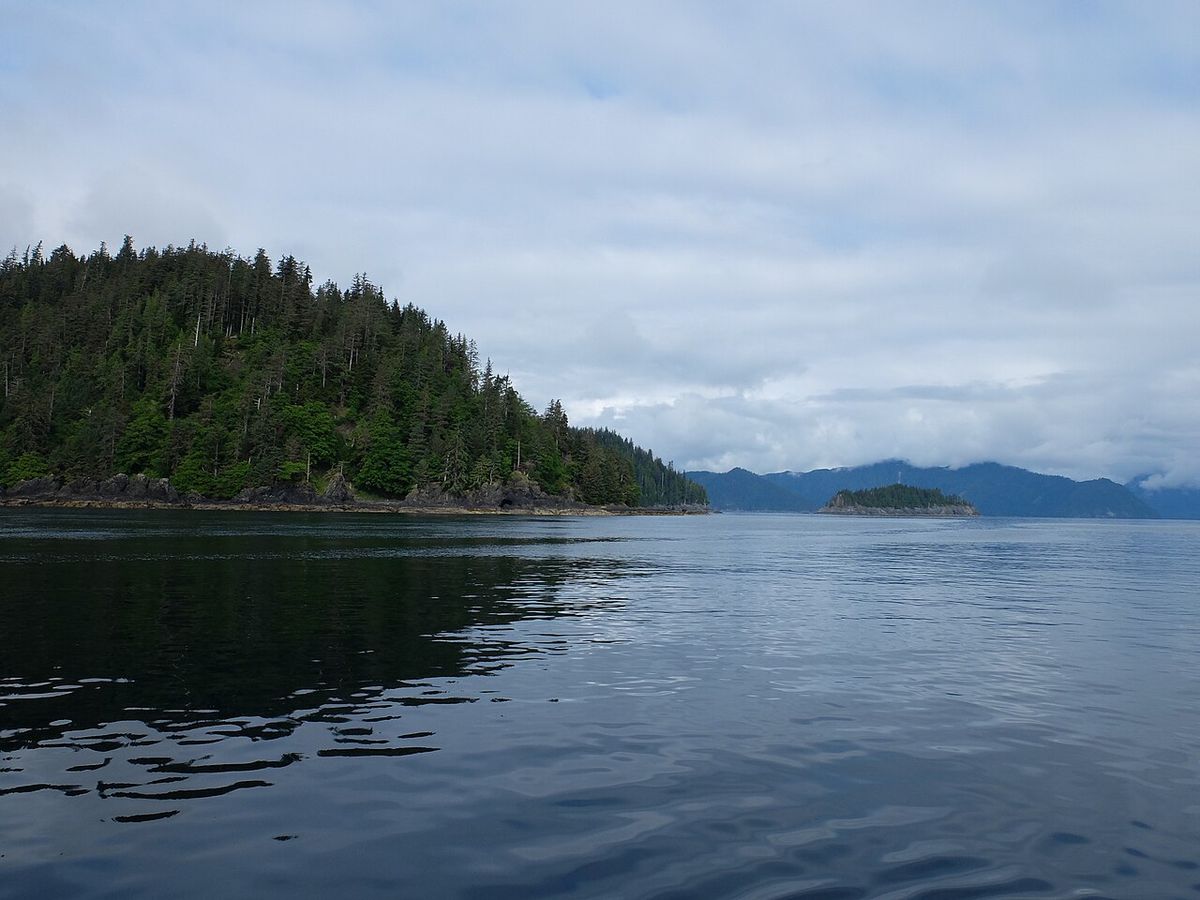
The Haida are an Indigenous nation whose traditional territory encompasses the Haida Gwaii archipelago off the coast of British Columbia and the southern half of Prince of Wales Island in Alaska. With a history of habitation stretching back over 13,000 years, the Haida are renowned for their sophisticated art, seamanship, and complex social structures organized into Raven and Eagle moieties. Their journey through the eras of the maritime fur trade, devastating epidemics, and colonial policies has been marked by resilience. In the 21st century, the Haida Nation is a leading force in Indigenous rights and environmental stewardship, culminating in the 2024 agreement with British Columbia that recognizes Haida Aboriginal title across all of Haida Gwaii.
Deep History and Traditional Society
Archaeological evidence confirms the Haida have inhabited Haida Gwaii for at least 13,100 years, living alongside glaciers and witnessing the arrival of the first trees. Their oral histories speak of primordial ancestresses like SGuuluu Jaad (Foam Woman) who founded the matrilineal lineages central to Haida identity. For millennia, Haida society participated in the coast-wide potlatch system, a rigorous legal and economic framework. The widespread arrival of red cedar around 7,500 years ago transformed their culture, leading to the construction of massive carved cedar monuments and big houses that became characteristic features of their villages. In the early 18th century, a group migrated north from K'iis Gwaii in the Duu Guusd region of Haida Gwaii to settle on Prince of Wales Island in Alaska, becoming known as the Kaigani Haida.
Traditional Haida social organization was split between two moieties, the Raven and the Eagle, with marriage between members of the same moiety prohibited. Clan membership was matrilineal, meaning children belonged to their mother's moiety. Each moiety contained numerous lineages, which were the fundamental property-holding groups in society. These lineages owned rights to specific economic resources such as salmon streams, cedar stands, hunting areas, and housing sites. The management of a lineage's property was the responsibility of the lineage chief, who held significant authority within the village structure.
Haida villages functioned as independent political units, with a great deal of autonomy held by each family. Their economy was based on a deep intimacy with the land and sea, relying on salmon, halibut, and marine mammals, and they traded items like eulachon grease with neighbouring nations such as the Nisga'a. The Haida were also known as skilled and sometimes fearsome mariners, conducting raiding expeditions in large sea-going canoes as far south as Washington State. They were known to have frequently carried out raids and to have practiced slavery. This traditional way of life, deeply connected to the resources of Haida Gwaii, sustained a population estimated by early traders and the Council of the Haida Nation to have been in the tens of thousands prior to European contact.
Contact, Trade and Colonial Incursion
The first recorded European contact with the Haida occurred in July 1774 when Spanish explorer Juan Pérez encountered Haida canoes off the coast of Haida Gwaii, though they did not land. Sustained trade began in 1787 when British Captain George Dixon initiated the sea otter pelt trade with the Haida. The Haida proved adept traders and became central figures in the lucrative China sea otter trade until the mid-1800s. They traded with Russian, Spanish, British, and American vessels, acquiring European goods including weapons which they sometimes used in conflicts. Although confrontations were relatively few, the Haida captured several ships, such as the Eleanor and the Susan Sturgis, and mounted cannons on their canoes.
The discovery of gold on southern Haida Gwaii in 1850, reportedly shown to a Haida man by an elder in Skidegate, triggered a brief gold rush in 1851. In response to the influx of American prospectors and to assert control, British colonial authorities formally annexed the archipelago in 1853, establishing the Colony of the Queen Charlotte Islands. This annexation was backed by gunboat diplomacy, a pattern used broadly along the coast to undermine Indigenous title. Colonial expansion also led to cross-border tensions, exemplified by the 1857 battle near Port Gamble between the USS Massachusetts and a raiding party of Haida and Tongass Tlingit, which resulted in significant casualties. In retaliation for the killing of a Kake chief in that raid, Colonel Isaac Ebey was killed and beheaded in 1857.
The colonial project was accelerated by the arrival of missionaries seeking to convert the Haida to Christianity. After earlier attempts, Anglican missionary William Collison established the first permanent mission in Masset in 1876, with a Methodist mission following in Skidegate in 1883. These missionaries actively opposed potlatch ceremonies, viewing them as antithetical to Christian teachings. This pressure culminated in the Canadian government amending the Indian Act in 1884 to outlaw the potlatch outright. The potlatch ban, which lasted for decades, severely disrupted Haida financial relationships, cultural transmission, and social cohesion, leading to the destruction or removal of many cultural treasures like totem poles.
Devastation and Resilience
The most catastrophic event of the 19th century for the Haida was the smallpox epidemic of 1862. The disease arrived in Victoria and spread rapidly among Indigenous encampments. Colonial authorities made no effort to vaccinate or quarantine Indigenous people. On May 13, 1862, Victoria Police burned homes, deliberately displacing 200 Haida, and continued burning Indigenous villages. In June, police forcibly cleared encampments, and approximately 20 canoes of Haida, many likely already infected, were escorted by gunboats back to Haida Gwaii. The disease spread throughout the islands upon their return, devastating villages and families.
The population collapse was staggering. The pre-epidemic population of Haida Gwaii was estimated at 6,607, but by 1881 it had been reduced to just 829 people. This demographic catastrophe concentrated the surviving population into the two main villages of Massett and Skidegate and critically weakened Haida sovereignty, paving the way for intensified colonization. The 20th century brought further assimilationist policies, with Haida children being forcibly sent to residential schools as early as 1911, some as far away as Alberta. These institutions aimed to strip children of their language and culture, enforcing English and Christian practices.
Despite these deep challenges, Haida resilience persisted. In 1911, Canada and British Columbia rejected a Haida offer to formally join Canada in exchange for full citizenship rights. This rejection showed the Crown's refusal to recognize Haida sovereignty on equal terms. Cultural practices, though driven underground by the potlatch ban, were maintained in secrecy. The stage was set for a remarkable cultural and political resurgence in the latter half of the 20th century, as the Haida began to forcefully reassert their rights and stewardship over their homeland.
Political Assertion and Environmental Defence
A defining moment in modern Haida history was the Lyell Island protest of 1985. Members of the Haida Nation established a blockade to prevent the logging of old-growth forests on Lyell Island by Western Forest Products. The standoff with police and loggers lasted two weeks and resulted in the arrest of 72 Haida. Images of elders being arrested garnered significant media attention and public support across Canada. This direct action was instrumental in forcing government action, leading to the 1987 South Moresby Agreement between Canada and British Columbia. This agreement established the Gwaii Haanas National Park Reserve and Haida Heritage Site, which is cooperatively managed by the Government of Canada and the Haida Nation, setting a precedent for shared governance.
The Lyell Island protest was a manifestation of the Haida's enduring commitment to protecting their land and waters. This commitment is formally expressed through the Council of the Haida Nation (CHN), the main governing body representing the Haida people in Canada. The CHN works alongside the two village band governments, the Old Massett Village Council and the Skidegate Band Council. In Alaska, federally recognized Haida tribes include the Central Council of the Tlingit & Haida Indian Tribes of Alaska, the Hydaburg Cooperative Association, and the Organized Village of Kasaan. The Haida Nation asserts inherent title and rights over all of Haida Gwaii and its surrounding waters, directing efforts toward ecosystem protection and regulating industrial activity.
Key milestones in this assertion of sovereignty include the official renaming of the archipelago from the Queen Charlotte Islands to Haida Gwaii by the British Columbia government in December 2009. The Haida have successfully advocated for protected status for nearly 70 percent of the million-hectare archipelago. Their political efforts are consistently framed by the principle of Yah’guudang, or respect, for the land, sea, and future generations. This principled stance has positioned the Haida Nation as one of the most politically savvy and resolved Indigenous governments in Canada.
The Path to Title Recognition
For decades, the Haida Nation pursued the recognition of their Aboriginal title to Haida Gwaii, a claim they had never ceded by treaty. In the early 2000s, the province offered a settlement of 20 percent of the land in exchange for dropping a title case, an offer firmly rejected by then-President Guujaaw. The Haida maintained that their title encompassed the entire archipelago, land, airspace, seabed, and waters. They kept a potential court case as leverage while preferring to negotiate. This strategy of steadfast negotiation, backed by growing legal precedents and public support for Indigenous rights, ultimately proved successful.
In April 2024, the Haida Nation and the Province of British Columbia announced the historic Gaayhllxid/Gíihlagalgang "Rising Tide" Haida Title Lands Agreement. This agreement marks the first time in Canadian history that a provincial government has recognized Indigenous Aboriginal title across an entire terrestrial territory outside of a court ruling. The B.C. government formally recognizes Haida ownership of all the lands of Haida Gwaii. The agreement is slated to be enshrined in provincial law, transferring title of more than 200 islands from the Crown to the Haida Nation after a two-year transition period.
The significance of this agreement is deep. It provides a new foundation for the relationship based on the recognition of pre-existing Haida title. The Haida Nation will manage the 98 percent of the archipelago that was formerly Crown land, including forests and protected areas. This grants them greater control over logging and other resource activities, allowing them to implement their stewardship principles more fully. Experts view this negotiated settlement as a groundbreaking new path toward reconciliation, moving beyond adversarial court battles to a model of respect and shared future-building.
Cultural Revitalization and Artistic Legacy
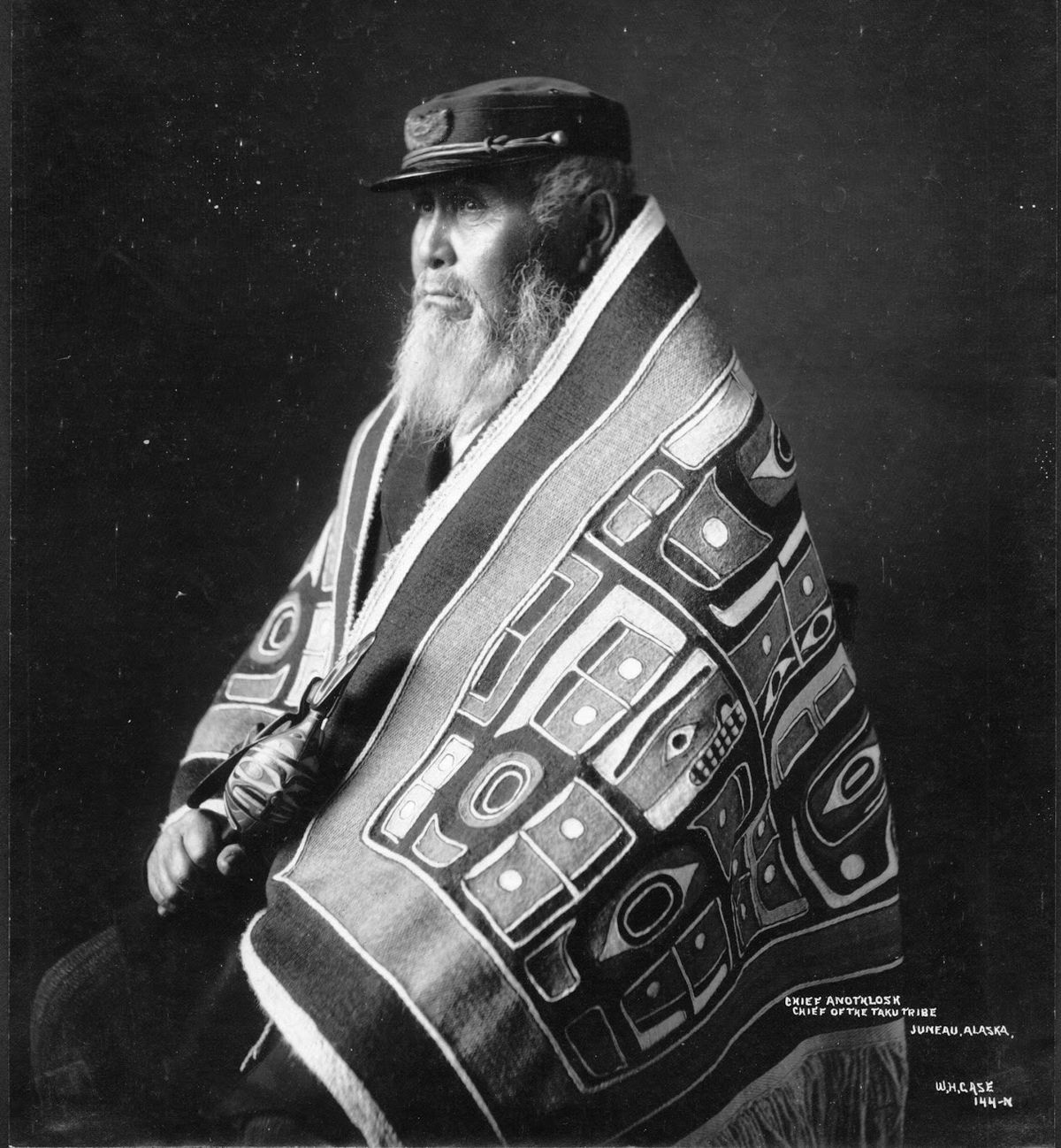
Haida culture is renowned for its strong and highly stylized art, a leading component of Northwest Coast art. This includes monumental totem poles (ǥyaagang), Chilkat weaving, bentwood boxes, transformation masks, and ornate jewellery. Artistic expression continues to evolve, with contemporary artists also working in forms like Haida manga. Well-known Haida artists include the late Bill Reid, Robert Davidson, Michael Nicoll Yahgulanaas, and Freda Diesing. Their work carries forward the traditions of crest display, storytelling, and the complex visual language of formline design.
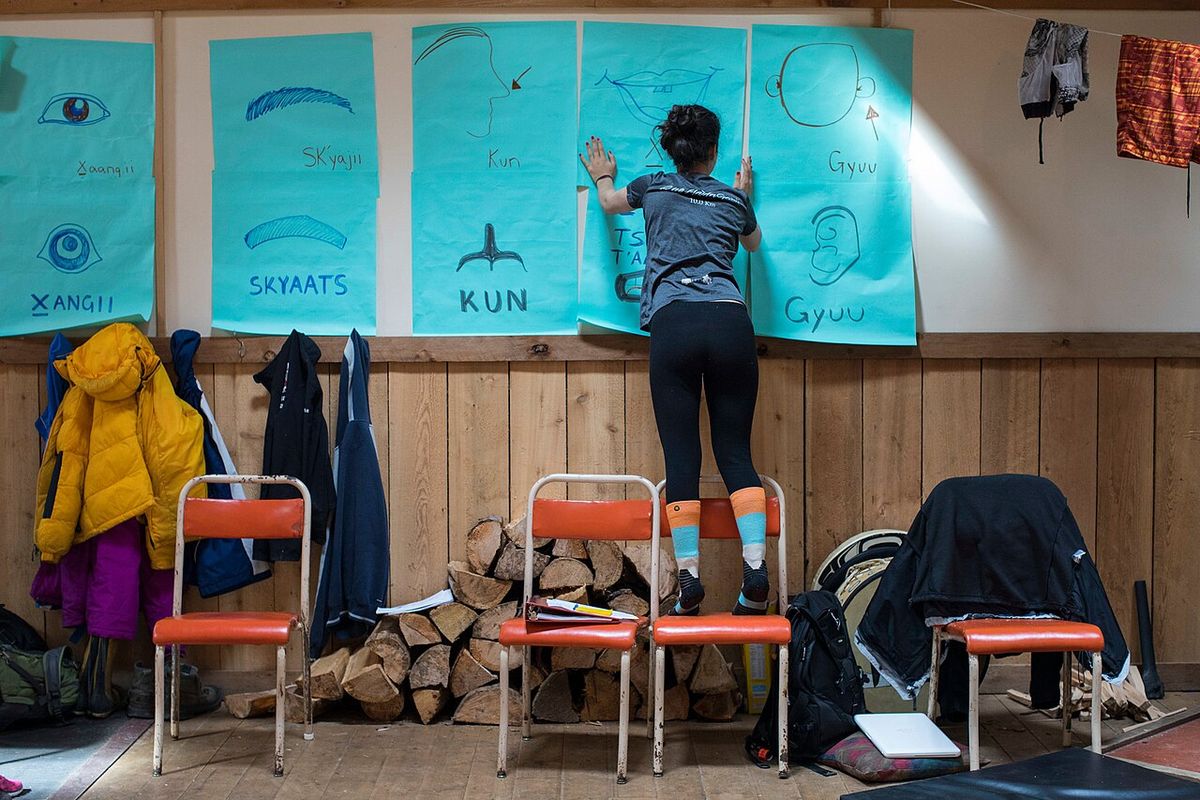
The Haida language, considered a linguistic isolate, was severely endangered by policies like residential schools. Revitalization projects began in the 1970s and continue today through initiatives like the X̲aad Kíl Née Language Office and the Skidegate Haida Immersion Program (SHIP). As of 2021, census data indicates 220 people have knowledge of Haida, but the number of fluent speakers is low, with the Haida Nation estimating only three or four dozen speakers, most over the age of 70. A major milestone for language revitalization was the 2018 release of The Edge of the Knife (SG̲aawaay Ḵʹuuna), the first feature-length film performed entirely in the Haida language.
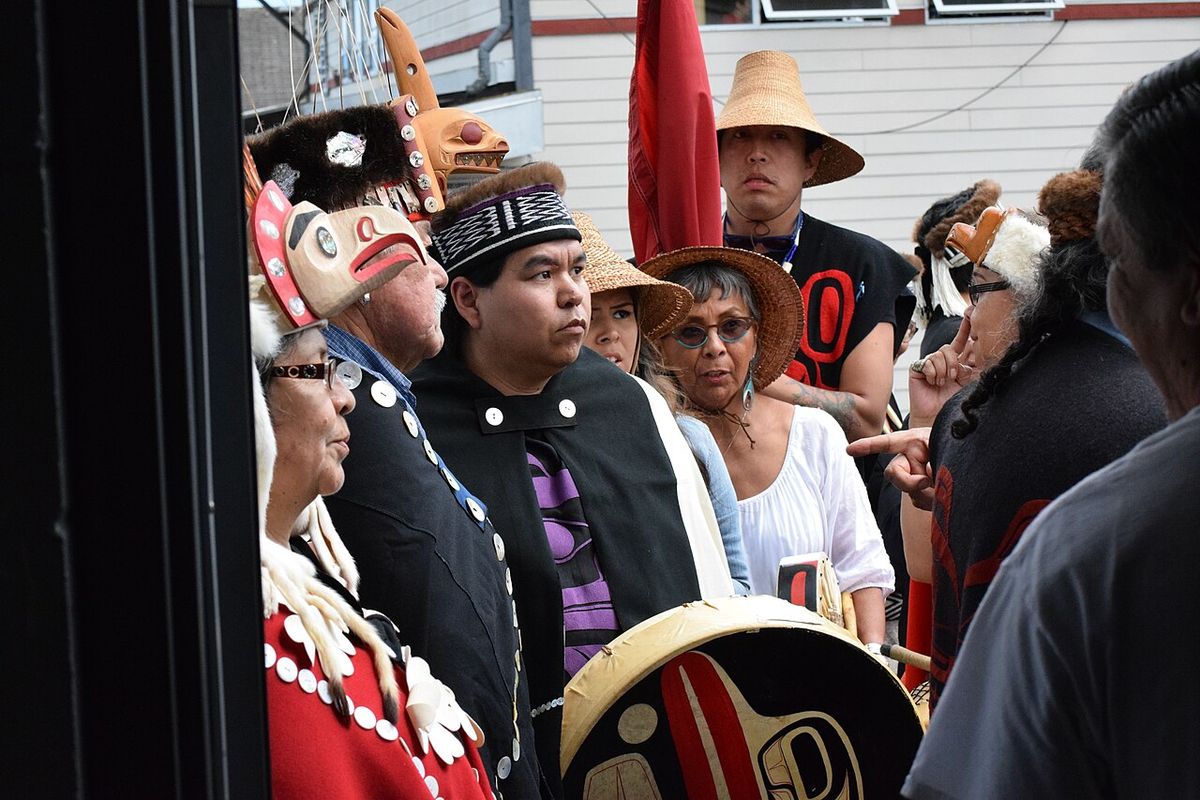
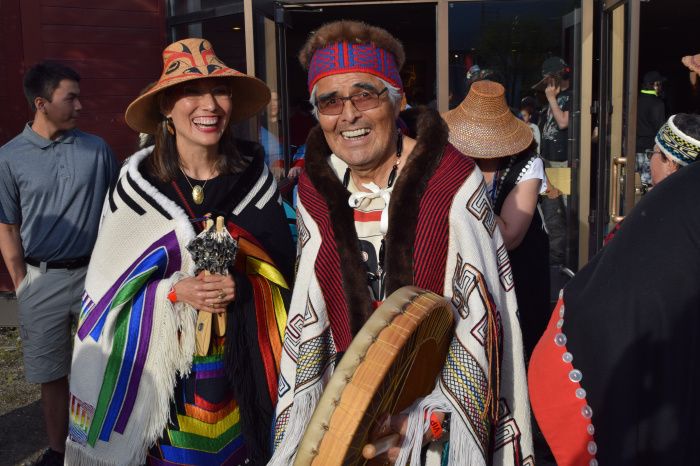
Cultural revitalization extends across many domains. The potlatch, once banned, is again practiced as a central institution for commemorating events, transferring names, and redistributing wealth. Filmmaking has become a powerful medium, with directors like Gwaai Edenshaw and Christopher Auchter creating works rooted in Haida stories and perspectives. Christopher Auchter directed the animated film The Mountain of SGaana in 2017 and the documentary Now Is the Time in 2019. Guardianship programs, such as the Haida Fisheries Guardians, blend traditional knowledge with modern science to steward the territory. These efforts are unified by a commitment expressed in the Haida Nation's constitution: "The living generation accepts the responsibility to ensure that our heritage is passed on to following generations."
- Language Revitalization Bodies: X̲aad Kíl Née Language Office (Masset), Skidegate Haida Immersion Program (SHIP).
- Landmark Film: The Edge of the Knife (2018), first Haida-language feature film.
- Other Filmmakers: Gwaai Edenshaw (co-director, The Edge of the Knife), Christopher Auchter (director, The Mountain of SGaana, Now Is the Time, The Stand).
- Cultural Practice: Potlatch (Haida: gyáa isáaw), an economic and social-political ceremony.
- Stewardship Programs: Haida Fisheries Guardians, Rediscovery T'aalan Stl'ang youth camp.
Haida Population and Governance Structure
The Haida people are represented through distinct but interconnected governance structures in Canada and the United States. In Canada, the Council of the Haida Nation (CHN) is the central governing body asserting Haida title and rights. The CHN works with two village band councils established under the Indian Act: the Old Massett Village Council on the north end of Graham Island and the Skidegate Band Council on the south-east. In Alaska, Haida people are part of federally recognized tribes including the Central Council of the Tlingit & Haida Indian Tribes of Alaska, the Hydaburg Cooperative Association, and the Organized Village of Kasaan. All people of Haida ancestry are entitled to Haida citizenship through the CHN, including the Kaigani Haida in Alaska.
According to the 2021 Canadian census, 4,260 people claimed Haida ancestry. This figure represents a significant recovery from the historic low of 588 people in 1915, though it remains below pre-epidemic estimates. The population is concentrated primarily in the two main communities on Haida Gwaii, Old Massett and Skidegate, as well as in urban centres and in Alaska. The Haida Nation continues to grow and strengthen its institutions, with current leadership including President Gaagwiis (Jason Alsop) of the CHN, Chief Councillor Donald "Duffy" Edgars of Old Massett, and Chief Councillor Billy Yovanovich of Skidegate.
| Governance Body | Location | Jurisdiction/Type |
|---|---|---|
| Council of the Haida Nation (CHN) | Haida Gwaii, B.C. | Central governing body |
| Old Massett Village Council | Old Massett, B.C. | Band Council (Indian Act) |
| Skidegate Band Council | Skidegate, B.C. | Band Council (Indian Act) |
| Central Council Tlingit & Haida | Alaska, USA | Federally recognized tribe |
| Hydaburg Cooperative Association | Hydaburg, Alaska, USA | Federally recognized tribe |
| Organized Village of Kasaan | Kasaan, Alaska, USA | Federally recognized tribe |
Questions about Haida people
Where is the traditional territory of the Haida people?
The traditional territory of the Haida encompasses the Haida Gwaii archipelago off the northern coast of British Columbia, Canada, and the southern half of Prince of Wales Island in Southeast Alaska, United States. Haida Gwaii, meaning "Islands of the People," is the heart of their homeland, with a history of continuous habitation for over 13,000 years. The two main population centres on Haida Gwaii are Old Massett on the north part of Graham Island and Skidegate on the south-east. The relationship between the Haida and these islands is fundamental to their culture, identity, and laws.
What was the significance of the 2024 agreement between the Haida Nation and British Columbia?
The Gaayhllxid/Gíihlagalgang "Rising Tide" Haida Title Lands Agreement, signed in April 2024, is a historic first in Canada. It marks the first time a provincial government has recognized Indigenous Aboriginal title across an entire terrestrial territory outside of a court ruling. The agreement sees British Columbia formally recognize Haida ownership of all the lands of Haida Gwaii. After a two-year transition, the Haida Nation will manage the 98 percent of the archipelago that was formerly Crown land. This groundbreaking agreement provides a new foundation for reconciliation based on the recognition of inherent Haida title.
What are Haida moieties and why are they important?
Traditional Haida society is divided into two major social groups called moieties: the Raven and the Eagle. These moieties are exogamous, meaning marriage between two people from the same moiety was and is prohibited. Clan membership is matrilineal, so children belong to their mother's moiety. Each moiety contains numerous lineages, which are property-holding groups with rights to specific resources like fishing spots, berry patches, and house sites. The moieties structure social relations, ceremonial responsibilities, and the display of family crests on totem poles, masks, and other artworks.
How did the smallpox epidemic of 1862 affect the Haida population?
The 1862 Pacific Northwest smallpox epidemic was catastrophic for the Haida people. The disease was introduced via Victoria and then brought back to Haida Gwaii, where it spread rapidly with no vaccination or quarantine efforts from colonial authorities. The population collapse was devastating. The pre-epidemic population of Haida Gwaii was estimated at 6,607, but by 1881 it had been reduced to just 829 people. This loss of life critically weakened Haida sovereignty and concentrated survivors into the villages of Massett and Skidegate.
What is the current state of the Haida language?
The Haida language is an isolate, meaning it is not related to other language families, and is critically endangered. According to the 2021 census, 220 people reported having knowledge of Haida, but this figure includes all levels of understanding. The Haida Nation estimates there are only three or four dozen Haida-speaking people, with almost all of them being the age of 70 or older. Revitalization efforts are ongoing through dedicated programs like the X̲aad Kíl Née Language Office in Masset and the Skidegate Haida Immersion Program (SHIP). A significant cultural milestone was the 2018 all-Haida language feature film, The Edge of the Knife.
What was the Lyell Island protest and what did it achieve?
The Lyell Island protest in November 1985 was a defining environmental and rights assertion by the Haida Nation. Members established a blockade to prevent the logging of old-growth forests on Lyell Island by Western Forest Products. During a two-week standoff, 72 Haida were arrested, including elders, images of which garnered national media attention and public sympathy. This direct action raised awareness and pressured governments, leading to the 1987 South Moresby Agreement. This agreement created the Gwaii Haanas National Park Reserve and Haida Heritage Site, which is cooperatively managed by Canada and the Haida Nation, setting a precedent for shared governance.
Sources and further reading
- Haida people (Wikipedia)
- Council of the Haida Nation (haidanation.ca)
- Haida (thecanadianencyclopedia.ca)
- Haida Nation (coastalfirstnations.ca)
- 'Groundbreaking': The Haida get their land back (thenarwhal.ca)
Checked by the Nosy Mag desk. Last updated 2026-10-20.