Lenape
The Lenape, also known as the Lenni Lenape or Delaware people, are an Indigenous Algonquian-speaking nation whose historical territory, Lenapehoking, spanned the Mid-Atlantic region of what is now the United States, including parts of present-day New Jersey, eastern Pennsylvania, New York, and Delaware. Today, Lenape communities are federally recognized in the United States and have three First Nations in Canada, all located in southwestern Ontario. Their history of displacement through colonial expansion, treaties like the 1778 agreement with the United States, and forced removals in the 19th century is a foundational part of North American history. The Lenape continue to maintain their cultural identity and sovereignty, with active communities engaged in cultural revival, education, and partnerships across their traditional and current homelands.
Origins and Traditional Society
The name Lenape, meaning 'real person' or 'original person,' is the community's primary autonym, while the term Lenni Lenape combines 'Lenni' (genuine, pure) with Lenape. European colonists later applied the name Delaware, derived from Lord De La Warr and the Delaware River, to the people. Their traditional society was organized around a matrilineal clan system, where children belonged to their mother's clan, which could be Wolf, Turtle, or Turkey. Historically, Lenape society was also matrilocal, meaning husbands moved into their wives' households. Villages operated on a democratic and egalitarian basis, with local sachems consulting councils of elders and adhering to community expectations. The Lenape were considered grandfathers by other Algonquian peoples along the East Coast, a status reflecting their role as an origin point and as respected peacemakers among tribes.
Lenape social structure emphasized kinship, with identity rooted in immediate family, clan, and village before broader affiliations with neighbouring communities who shared their dialects. This complex kinship system, which included specific terms for relationships like cross-cousins, later created challenges in treaty negotiations with Europeans, who misunderstood these familial concepts. The Lenape economy was built on a combination of agriculture, hunting, and fishing, which supported a relatively large population. Scholars estimate that at the time of European settlement, the area around present-day New York City alone may have been home to approximately 15,000 Lenape people living in about 80 settlement sites.
Traditional Lifeways and Subsistence
The Lenape sustained themselves through sophisticated agricultural and hunting practices that were finely tuned to their environment. Women were primarily responsible for cultivating the Three Sisters, maize, beans, and squash, using companion planting techniques and slash-and-burn agriculture to enrich the soil. Men cleared fields and then focused on hunting and fishing, employing a seasonal round that structured their year. From September to January and again from June to July, hunters primarily pursued deer, using coordinated drives where lines of men would beat bones to herd animals toward rivers. From January until the spring planting in May, they hunted a wider variety of game, including bears, beavers, raccoons, and foxes.
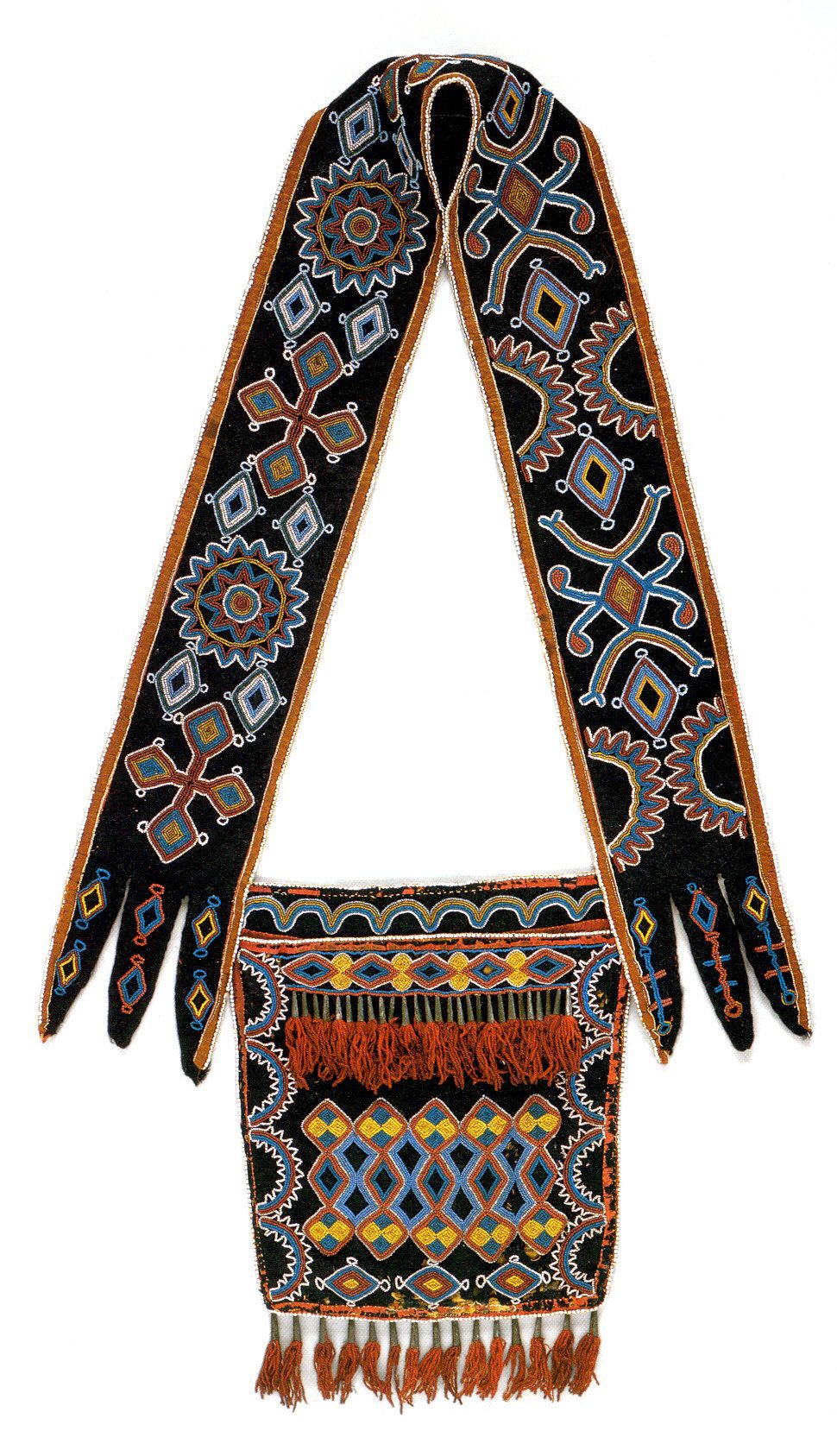
Fishing and shellfish harvesting provided a consistent food source, with clams gathered year-round in southern New Jersey. One fishing technique involved adding ground chestnuts to streams to stun fish, making them easier to catch. The Lenape also expertly managed their landscape with controlled fires to maintain farmland productivity and facilitate hunting. Their material culture demonstrated remarkable skill, fashioning clothing from natural materials like buckskin leggings, beaver pelts for winter mantles, and elaborately decorated skirts adorned with porcupine quills that reminded Dutch settlers of fine lace. Leisure activities included the gender-divided football-like game of pahsaheman and distinctive dance traditions where men danced loudly with bear claw accessories and women danced more modestly with bells.
- Agriculture: Cultivated maize, beans, and squash (Three Sisters) using companion planting.
- Hunting: Seasonal deer hunts from September-January and June-July. Other game hunted January-May.
- Fishing: Used ground chestnuts to stun fish. Harvested clams year-round in southern New Jersey.
- Land Management: Used controlled fire to extend farmland productivity and manage habitats.
- Clothing: Made winter mantles from beaver or bear pelts. Decorated skirts with porcupine quills.
- Leisure: Played the gender-divided game pahsaheman. Held distinct dance traditions for men and women.
European Contact and Colonial Era
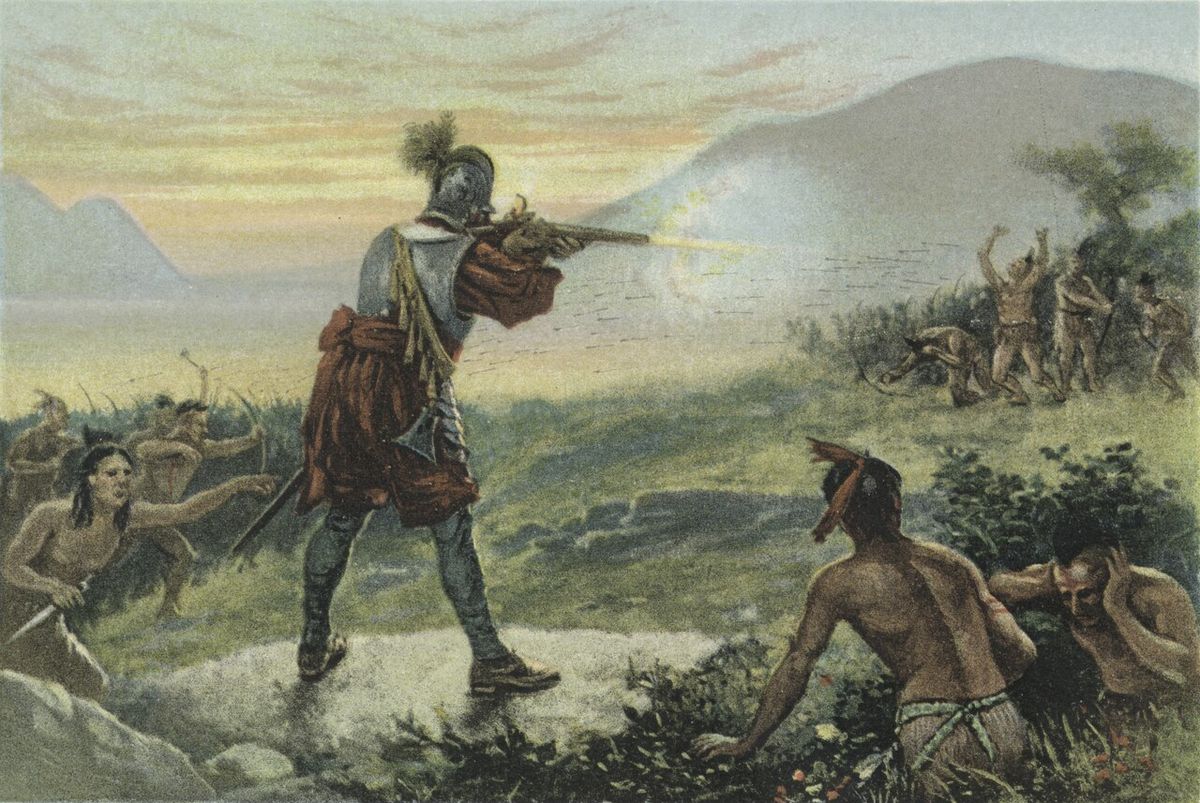
The first recorded European contact with the Lenape occurred in 1524 when the explorer Giovanni da Verrazzano was greeted by Lenape in canoes upon entering Lower New York Bay. Sustained contact began in the early 17th century with Dutch, Swedish, and English colonists. The Dutch established New Amsterdam in 1624 and a short-lived colony at Zwaanendael (present-day Lewes, Delaware) in 1631, which was destroyed in 1632 after a conflict over defaced Dutch insignia. The Lenape quickly became integral to the regional fur trade, producing wampum (shell beads) for exchange and acting as intermediaries between European traders and inland tribes like the Susquehannock. This economic integration led to over-harvesting of beaver in the lower Hudson Valley, exhausting local fur sources by the mid-17th century.
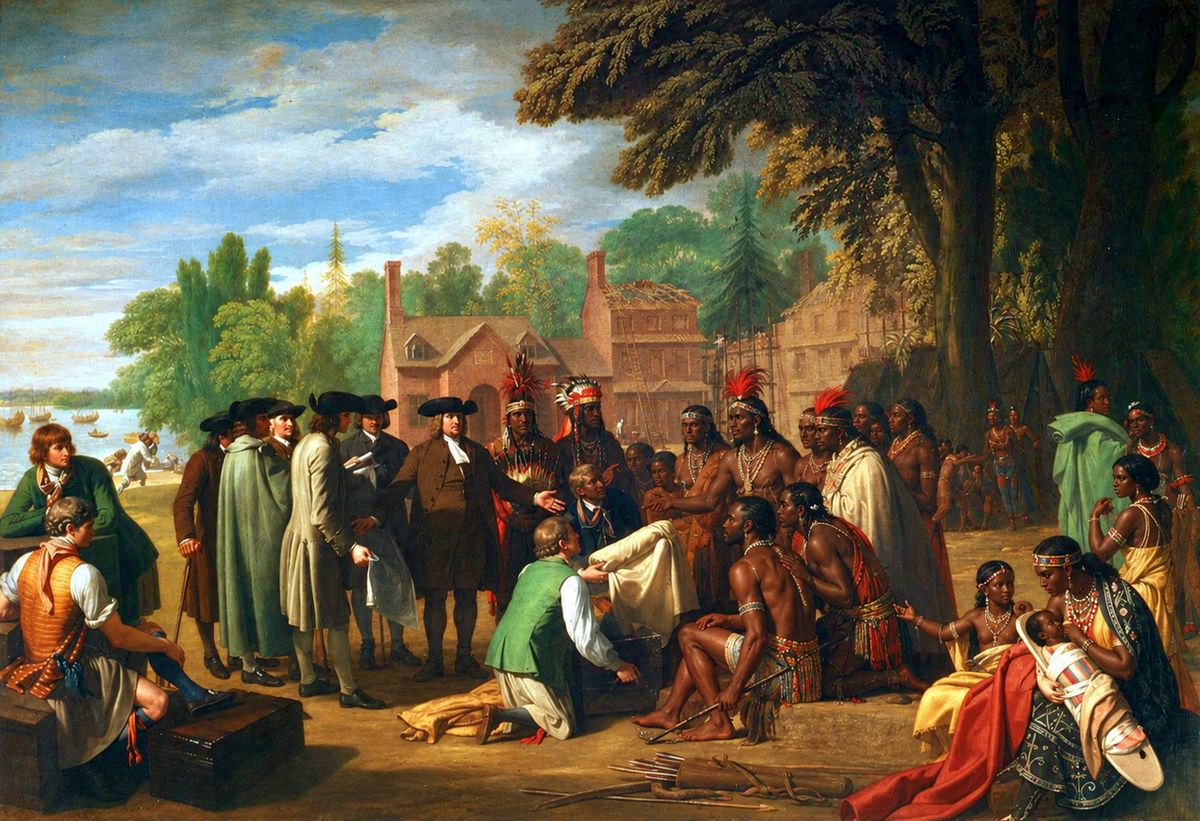
Armed conflicts and European diseases dramatically reduced Lenape populations. The Dutch carefully restricted firearms sales to the Lenape during the Beaver Wars, while arming their Iroquoian rivals, the Susquehannock and Haudenosaunee. This imbalance contributed to Lenape military defeats, and by 1676 they were incorporated into the Haudenosaunee Covenant Chain as tributaries. Epidemics of smallpox, measles, and other introduced diseases ravaged communities with no natural immunity. Violent conflicts like Kieft's War (1643 to 1645) further devastated Lenape settlements. In 1682, William Penn negotiated a famous peace treaty with the Lenape, establishing the Pennsylvania colony on principles of fair dealing, though these practices were abandoned by his heirs in the 18th century.
Displacement and Removals
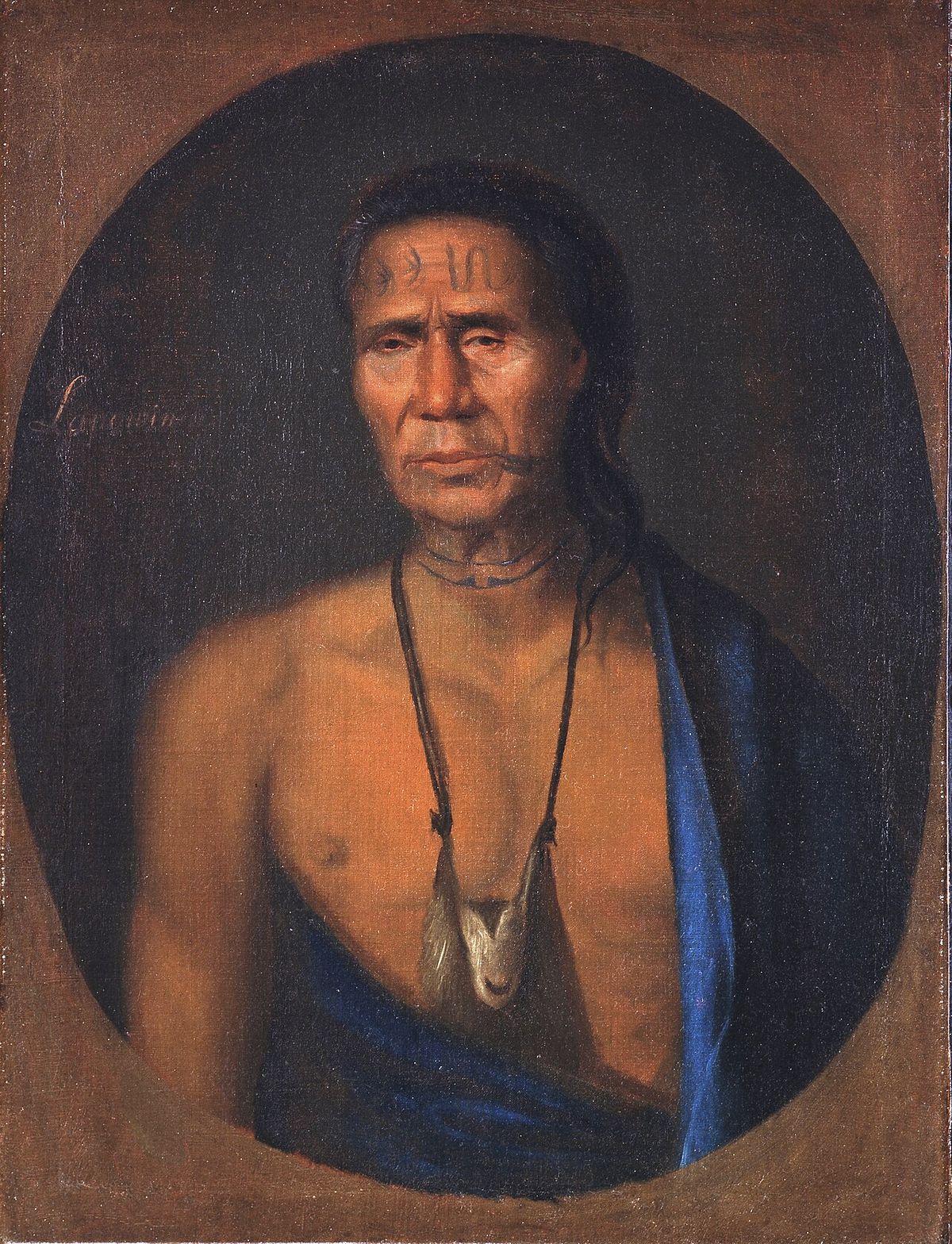
The 18th and 19th centuries were defined by relentless pressure on Lenape lands and subsequent forced removals. The effects of the American Revolutionary War in the late 18th century displaced most Lenape from their eastern homelands, pushing them north and west. A significant moment in Lenape-U.S. relations was the signing of the first treaty between the newly formed United States government and an Indian nation on September 17, 1778. This treaty, like many others, was based on a fundamental misunderstanding, as the Lenape concept of land stewardship differed profoundly from European notions of ownership.
In the 1860s, under the U.S. federal government's Indian removal policy, most of the Lenape remaining in the eastern United States were relocated to Indian Territory, now Oklahoma. This forced migration scattered the people, creating distinct diaspora communities. Some Lenape, however, remained in or returned to their ancient homeland, forming the basis for contemporary communities like the Nanticoke Lenni-Lenape Tribal Nation in New Jersey and the Lenape Nation of Pennsylvania. These groups emphasize a continuity of presence in their ancestral territories despite centuries of colonial pressure and official policies aimed at their erasure.
Contemporary Lenape Nations and Communities
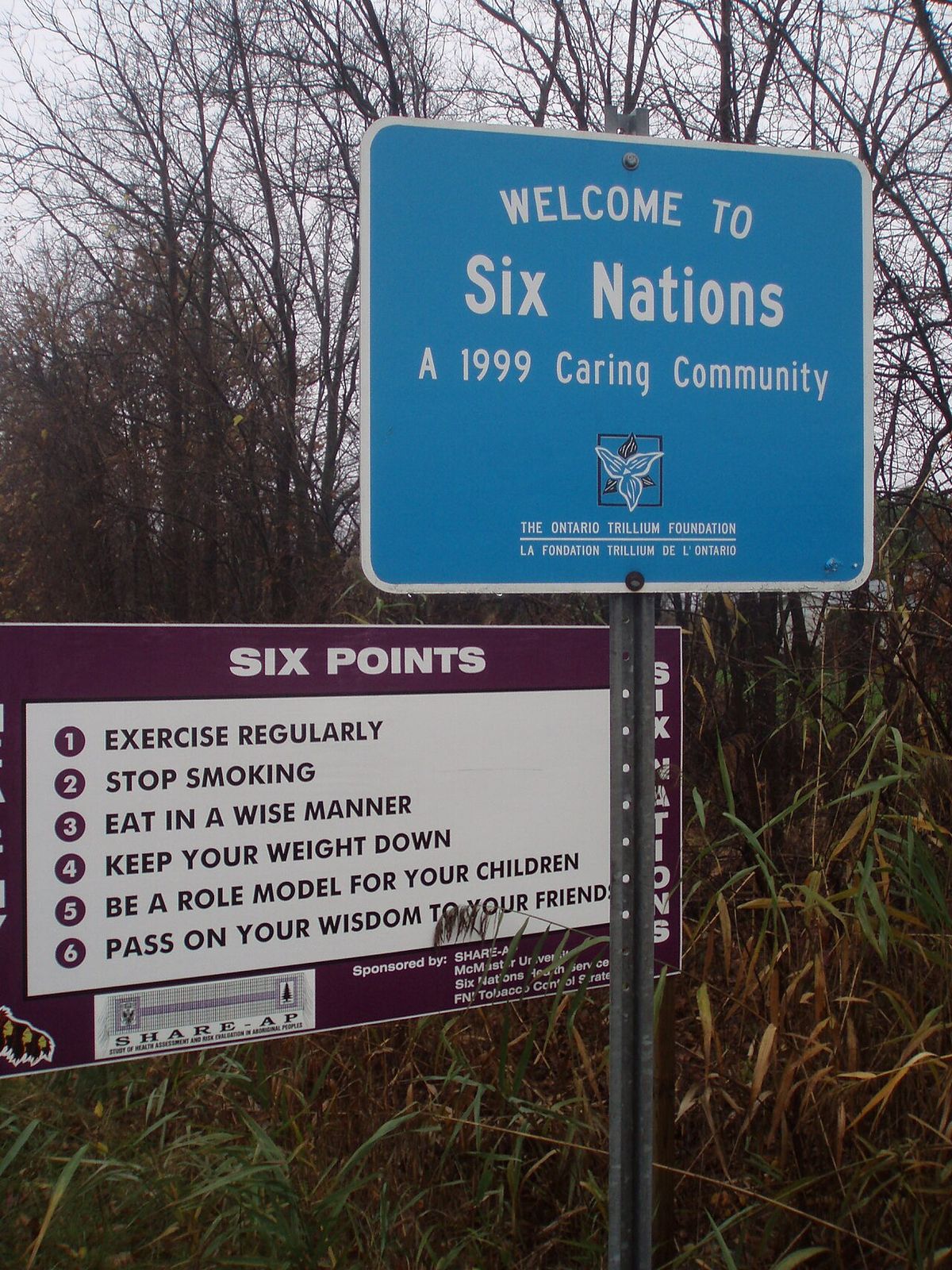
Today, Lenape people are organized into several federally recognized tribes in the United States and First Nations in Canada, alongside unrecognized groups maintaining presence in their ancestral homelands. In the United States, the federally recognized tribes are the Delaware Nation and Delaware Tribe of Indians in Oklahoma, and the Stockbridge, Munsee Community in Wisconsin. The Delaware Tribe of Indians is headquartered in Bartlesville, Oklahoma. In Canada, there are three Lenape First Nations, all located in southwestern Ontario: the Munsee-Delaware Nation, the Moravian of the Thames First Nation, and the Delaware First Nation of the Six Nations of the Grand River.
These communities maintain distinct land bases. The Stockbridge-Munsee Community holds a 22,139-acre reservation in Wisconsin. In Ontario, the Munsee-Delaware Nation and Moravian of the Thames have their own reserves, while the Delaware of Six Nations shares territory with Haudenosaunee nations. Beyond these recognized entities, groups like the Lenape Nation of Pennsylvania and the Nanticoke Lenni-Lenape Tribal Nation actively assert their cultural and historical presence. The Lenape Nation of Pennsylvania reports formal partnerships with over 130 organizations, including academic and environmental groups, and hosts a collaborative exhibition, 'Fulfilling a Prophecy,' at its Cultural Center in Easton.
| Community | Location | Status |
|---|---|---|
| Delaware Tribe of Indians | Bartlesville, Oklahoma | Federally recognized (U.S.) |
| Delaware Nation | Caddo County, Oklahoma | Federally recognized (U.S.) |
| Stockbridge, Munsee Community | Wisconsin | Federally recognized (U.S.) |
| Munsee-Delaware Nation | Southwestern Ontario | First Nation (Canada) |
| Moravian of the Thames First Nation | Chatham-Kent, Ontario | First Nation (Canada) |
| Delaware of Six Nations | Brantford, Ontario | First Nation (Canada) |
| Lenape Nation of Pennsylvania | Pennsylvania | Unrecognized (active community) |
| Nanticoke Lenni-Lenape Tribal Nation | New Jersey | State-recognized |
Cultural Revival and Language
Contemporary Lenape communities are engaged in sustained efforts to revive and preserve their cultural heritage and language. The Lenape languages, Unami and Munsee, belong to the Eastern Algonquian group and were once widely spoken but are now critically endangered. As of 2023, only a few elders in the Delaware First Nation at Moraviantown, Ontario, speak Munsee fluently. Preservation projects like The Lenape Talking Dictionary, funded by a 2002 grant to the Delaware Tribe of Indians, work to digitize and sustain the Southern Unami dialect. These languages were historically unwritten, and early European observers like William Penn recorded vocabulary, noting words like 'anna' for mother and 'netap' for friend.
Cultural education and partnership form a central part of modern Lenape activism. The Lenape Nation of Pennsylvania actively teaches in public and private schools, offering perspectives on Pennsylvania's history and culture. Their collaborative exhibition with the Penn Museum, now housed at their Cultural Center, draws on oral histories, family heirlooms, and archaeological research to present an authentic narrative. Traditional knowledge, particularly ethnobotany practiced historically by women, continues to be valued, with uses for plants like black walnut for ringworm and Ohio buckeye nuts for rheumatism. Community events, such as the Delaware Days celebration in Oklahoma and wellness days in New Jersey, reinforce social bonds and cultural continuity.
- Language: Unami and Munsee are critically endangered Eastern Algonquian languages.
- Preservation: The Lenape Talking Dictionary project (2002) works to digitize Southern Unami.
- Education: Lenape Nation of Pennsylvania teaches in school systems and partners with over 130 organizations.
- Exhibition: 'Fulfilling a Prophecy' is a collaborative exhibit with the Penn Museum, now in Easton, PA.
- Ethnobotany: Traditional uses of plants include black walnut for ringworm and buckeye nuts for rheumatism.
- Events: Communities host cultural gatherings like Delaware Days and Community Health & Wellness Days.
Questions about Lenape
Who are the Lenape people?
The Lenape, also known as the Lenni Lenape or Delaware, are an Indigenous Algonquian-speaking nation originally from the Mid-Atlantic region of North America. Their historical homeland, Lenapehoking, included areas now known as New Jersey, eastern Pennsylvania, New York, and Delaware. They are often called the 'Grandfather' tribe by other Algonquian peoples due to their respected status as peacemakers and cultural forebears. Today, Lenape communities exist in Oklahoma, Wisconsin, and Ontario, with other groups maintaining a presence in their ancestral territories.
Where do the Lenape live today?
Lenape people live in several communities across the United States and Canada. Federally recognized tribes in the U.S. are the Delaware Nation and Delaware Tribe of Indians in Oklahoma and the Stockbridge, Munsee Community in Wisconsin. In Canada, there are three Lenape First Nations in southwestern Ontario: the Munsee-Delaware Nation, the Moravian of the Thames First Nation, and the Delaware of Six Nations. Additionally, groups like the Lenape Nation of Pennsylvania and the Nanticoke Lenni-Lenape Tribal Nation maintain active communities within their traditional homelands.
What was traditional Lenape society like?
Traditional Lenape society was organized around a matrilineal clan system, with three primary clans: Wolf, Turtle, and Turkey. Children belonged to their mother's clan, and the society was matrilocal, meaning husbands moved into their wife's household. Villages were democratic and egalitarian, with sachems ruling in consultation with councils of elders. Their economy was based on agriculture, hunting, and fishing, with women cultivating the Three Sisters (maize, beans, squash) and men hunting deer and other game. They were skilled artisans, creating clothing from animal pelts and decorated with quills and wampum.
What happened to the Lenape during colonization?
European colonization led to devastating wars, disease epidemics, and forced displacement for the Lenape. Conflicts like Kieft's War and the Beaver Wars, coupled with diseases like smallpox, drastically reduced their population. The American Revolutionary War displaced most Lenape from their eastern homelands, and U.S. removal policies in the 1860s forced many to relocate to Indian Territory (Oklahoma). Despite this, many Lenape communities survived and persist today.
Are the Lenape languages still spoken?
The Lenape languages, Unami and Munsee, are critically endangered. As of 2023, only a few elders in the Delaware First Nation at Moraviantown, Ontario, speak Munsee fluently. Efforts are underway to preserve and revitalize the languages. In 2002, the Delaware Tribe of Indians received a grant to fund The Lenape Talking Dictionary, a project aimed at preserving and digitizing the Southern Unami dialect. These languages are part of the Eastern Algonquian language family and were historically unwritten, spoken languages.
Sources and further reading
- Lenape (Wikipedia)
- Lenape Nation of Pennsylvania (lenape-nation.org)
- Delaware Tribe of Indians: Home (delawaretribe.org)
- Nanticoke Lenni-Lenape Tribal Nation: Native American Tribe ... (nlltribalnation.org)
Checked by the Nosy Mag desk. Last updated 2026-10-18.