Canada in World War II
Canada's participation in the Second World War marked a defining chapter in the nation's history, transforming its military, economy, and international standing. The country entered the conflict under its own sovereign authority on 10 September 1939, a week after Britain's declaration, mobilizing over one million men and women from a population of roughly 11.5 million. Canadian forces played roles in key theatres including the Battle of the Atlantic, the Italian Campaign, and the D-Day landings at Juno Beach. The war effort, which cost over 42,000 Canadian lives and $21.8 billion, accelerated industrialization and solidified Canada's position as a significant global power with the world's fourth largest air force and third largest navy by 1945.
Sovereign Decision and Political Foundations
Canada's entry into the Second World War was a deliberate act of sovereign will, distinct from its automatic entry in 1914. The 1931 Statute of Westminster granted Canada full autonomy in foreign policy. After Germany invaded Poland on 1 September 1939 and Britain declared war on 3 September, the Canadian Parliament was called into special session. Following two days of debate, the House of Commons approved an Address in Reply to the Speech from the Throne on 9 September 1939, giving the government authority to declare war. Governor General Lord Tweedsmuir signed the proclamation that night, and King George VI approved it, making 10 September 1939 the official date of Canada's declaration of war on Germany. Prime Minister William Lyon Mackenzie King's cabinet had approved a war policy on 24 August 1939, which prioritized Canadian defence, consultation with Washington, and envisioned Canada providing munitions, raw materials, and food. The government's strategy received strong national support, evidenced by Adélard Godbout's provincial election win in Quebec on 26 October 1939 and King's federal Liberals winning a large majority on 26 March 1940.
The political approach was shaped by the desire to avoid a repeat of the Conscription Crisis of 1917. Both King and Opposition Leader Robert James Manion stated their opposition to conscripting troops for overseas service in March 1939. The initial war strategy was one of limited liability, focusing on industrial production, home defence, and air training. The government's first war budget, presented on 24 June 1940, was the first billion-dollar budget in Canadian history, containing $700 million in war expenses. With opposition support, the National Resources Mobilization Act initiated nationwide conscription for home defence, but conscripted Canadians could not be sent to fight overseas. This careful political management defined Canada's early war posture.
Military Mobilization and Early Deployments
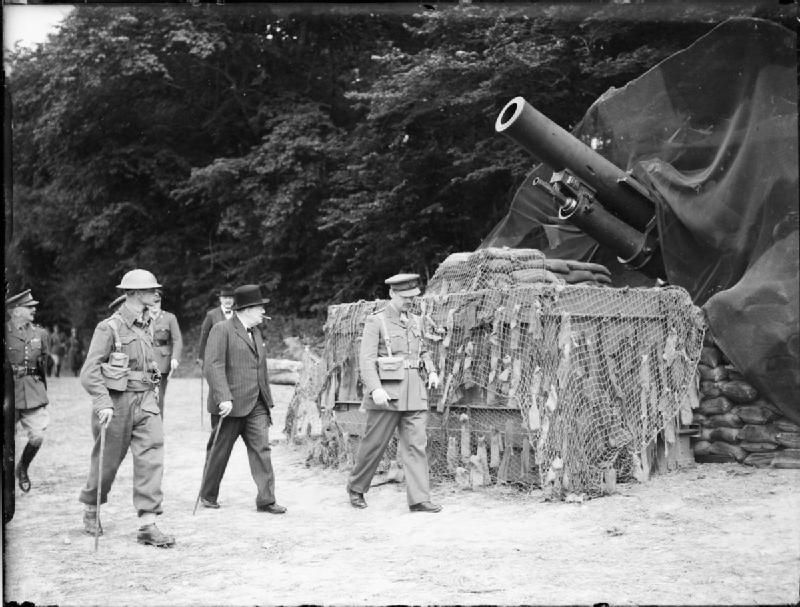
At the outbreak of war, Canada's armed forces were small and poorly equipped. In March 1939, the Permanent Active Militia numbered only 4,169 officers and men, and the reserve Non-Permanent Active Militia had 51,418. The Royal Canadian Navy had 309 officers and 2,967 ratings, while the Royal Canadian Air Force had 360 officers and 2,797 airmen. The government's initial commitment was limited to one division for overseas service and one for home defence. However, the eventual scale of mobilization vastly exceeded these early schemes. Over the course of the war, the army enlisted 730,000 personnel, the air force 260,000, and the navy 115,000. Approximately half of Canada's army and three quarters of its air force personnel never left the country. The first major overseas deployment was the 1st Canadian Infantry Division, which arrived in Britain on 1 January 1940. By 13 June 1940, elements like the 1st Battalion of The Hastings and Prince Edward Regiment were deployed to France in a belated attempt to support the British Expeditionary Force, only to withdraw from Brest days later as France fell.
The early war period highlighted severe equipment shortages and production challenges. A 1937 agreement stipulated Canadian military equipment would use British designs, but British companies refused to share these designs after war began. As late as 12 June 1940, the Canadian government and Manufacturers' Association asked Britain and France to place larger orders to utilize Canadian plants. The situation changed dramatically with the fall of France. On 24 May 1940, Britain informed Canada it could no longer provide equipment, and two days later asked Canada for equipment. Canada sent 50 to 60 million rounds of small arms ammunition and 75,000 Ross rifles overseas, leaving itself short. The Royal Canadian Navy also took on greater responsibility, with seven Canadian destroyers sailing to the English Channel in late May 1940. This period forced a rapid shift towards self-reliant war production.
- Permanent Active Militia (March 1939): 4,169 officers and men.
- Non-Permanent Active Militia (end of 1938): 51,418 personnel.
- Royal Canadian Navy (March 1939): 309 officers and 2,967 ratings.
- Royal Canadian Air Force (March 1939): 360 officers and 2,797 airmen.
- First Troop Convoy: Convoy HX 1 departed Halifax six days after declaration of war.
- First Division Overseas: 1st Canadian Infantry Division arrived Britain, 1 January 1940.
The War at Sea and in the Air
Canada's maritime contribution was decisive, centred on the gruelling Battle of the Atlantic, the longest continuous campaign of the war. The Royal Canadian Navy expanded from a tiny force in 1939 to over 400 vessels and nearly 100,000 personnel by 1945, becoming the world's third-largest navy. Canadian warships escorted vital convoys of troops and supplies across the Atlantic, facing relentless attacks from German U-boats. The war came to Canadian shores during the Battle of the St. Lawrence, where U-boats penetrated the Gulf, sinking Allied ships. The Canadian Merchant Navy, with its sailors completing over 25,000 voyages across the Atlantic, suffered heavy losses. The RCN also served in the Mediterranean, Caribbean, Pacific, and Arctic theatres, and assisted in the evacuations from France in Operations Cycle and Ariel.
In the air, Canada's role was twofold: training an immense number of Allied aircrew and conducting combat operations over Europe. The British Commonwealth Air Training Plan, proposed by Britain on 26 September 1939, was the largest air training program in history. Administered from Canada, it graduated 131,553 air force personnel, including 49,808 pilots, from October 1940 to March 1945. More than half of the graduates were Canadians who served with the RCAF and RAF. In combat, Canadians fought in the Battle of Britain, with between 88 and 112 pilots serving in RAF squadrons, 23 of whom were killed. An all Canadian squadron, No. 242 Squadron RAF, was formed and fought in the Battle of France, later joined by No. 1 Squadron RCAF during the Battle of Britain. The RCAF formed its own bomber group within RAF Bomber Command, No. 6 Group, which became operational on 1 January 1943. RCAF squadrons also operated in coastal command, fighter operations, and transport roles across all theatres.
The Army in Combat: From Setback to Victory
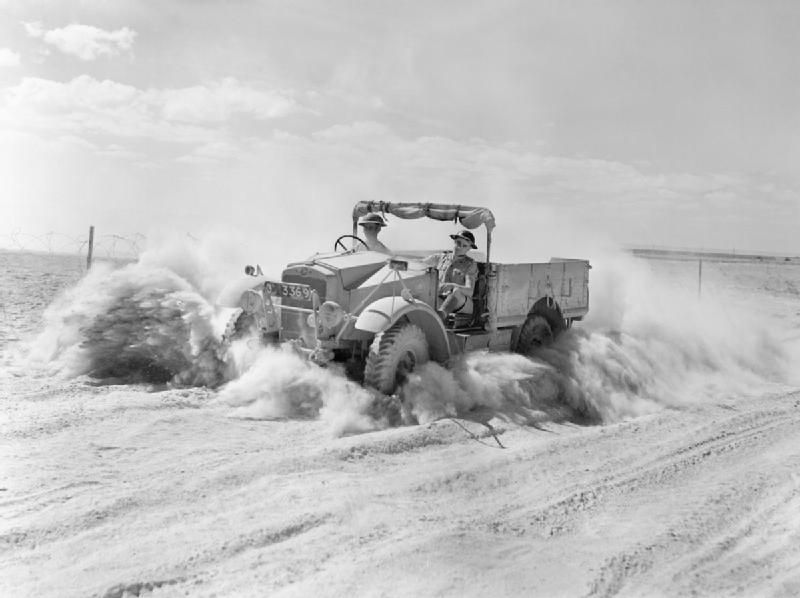
The Canadian Army's experience in the Second World War was one of initial frustration followed by hard-won success. Its first sustained combat came with the Allied invasion of Sicily in July 1943, where the 1st Canadian Infantry Division and the 1st Canadian Army Tank Brigade fought a successful month-long campaign. This was followed by the gruelling Italian Campaign, where Canadians fought through mountainous terrain in battles at Ortona, the Liri Valley, and the Gothic Line until February 1945. The Canadian Army's most famous contribution came on D-Day, 6 June 1944, when the 3rd Canadian Infantry Division landed on Juno Beach in Normandy. Against stiff German resistance, they achieved the deepest penetration of any Allied force that day. Following the Normandy breakout, the First Canadian Army, under General H.D.G. Crerar, played a major role in the liberation of northwest Europe. This army was a multinational force, also containing British, Polish, and other Allied units. Canadian troops fought in the battles to clear the Channel ports, the costly Scheldt Estuary campaign from 2 October to 8 November 1944 to open the port of Antwerp, and the final push into Germany and the Netherlands in 1945. Canada was the only country of the Americas to be actively involved in the war prior to the attack on Pearl Harbor, and its army also saw early action in the defence of Hong Kong in December 1941.
- Italian Campaign (September 1943 to February 1945): I Canadian Corps fought from Sicily to the Gothic Line.
- Normandy Landings, Juno Beach (6 June 1944): 3rd Canadian Infantry Division assaulted the coast.
- Battle of the Scheldt (October to November 1944): First Canadian Army cleared the Scheldt Estuary.
- Liberation of the Netherlands (1945): Canadian forces led the final campaign.
- Dieppe Raid (19 August 1942): The 2nd Canadian Division suffered heavy losses.
Home Front: Industrial Power and Social Change
The war transformed Canadian society and supercharged its economy, ending the Great Depression. The government implemented wage and price controls, rationing of key goods like gasoline and sugar, and promoted victory bonds campaigns. Initiatives like If Day in Winnipeg in February 1942, a staged Nazi invasion, helped raise over $3 million in war bonds. The industrial output was staggering. Canadian factories produced warships, merchant vessels, bombers, fighters, tanks, and artillery. This production employed millions of Canadians, including a significant number of women who entered the workforce in unprecedented numbers. Agriculture also expanded massively to feed Canada, Britain, and Allied nations. The financial cost of the war was immense, totalling $21.8 billion between 1939 and 1950. This expenditure fuelled economic growth and technological advancement. The war also had social effects, including the internment of Canadian citizens of Japanese, Italian, and German descent under the War Measures Act. The conscription crisis re-emerged in 1944, when Prime Minister King, after a divisive national plebiscite in 1942, was forced to send some home defence conscripts overseas. On the defence front, Canada stationed troops in Newfoundland, occupied Iceland from June 1940 to spring 1941, and provided companies for the defence of Bermuda, Jamaica, the Bahamas, and British Guiana.
Canada's mining and metals industries made significant contributions, supplying half of Allied aluminum and ninety per cent of Allied nickel. The Canadian company Eldorado Gold Mines Ltd. processed uranium for the Manhattan Project. Chinese Canadians contributed to the war effort despite historical discrimination, raising funds and volunteering for service. Indigenous Canadians donated money, collected scrap materials, and entered the labour force. Approximately 160,000 French-Canadian soldiers served overseas, comprising 20 percent of all Canadian servicemen, in units like Les Fusiliers Mont-Royal and the Royal 22e Régiment.
Commemoration, Legacy, and Modern Institutions
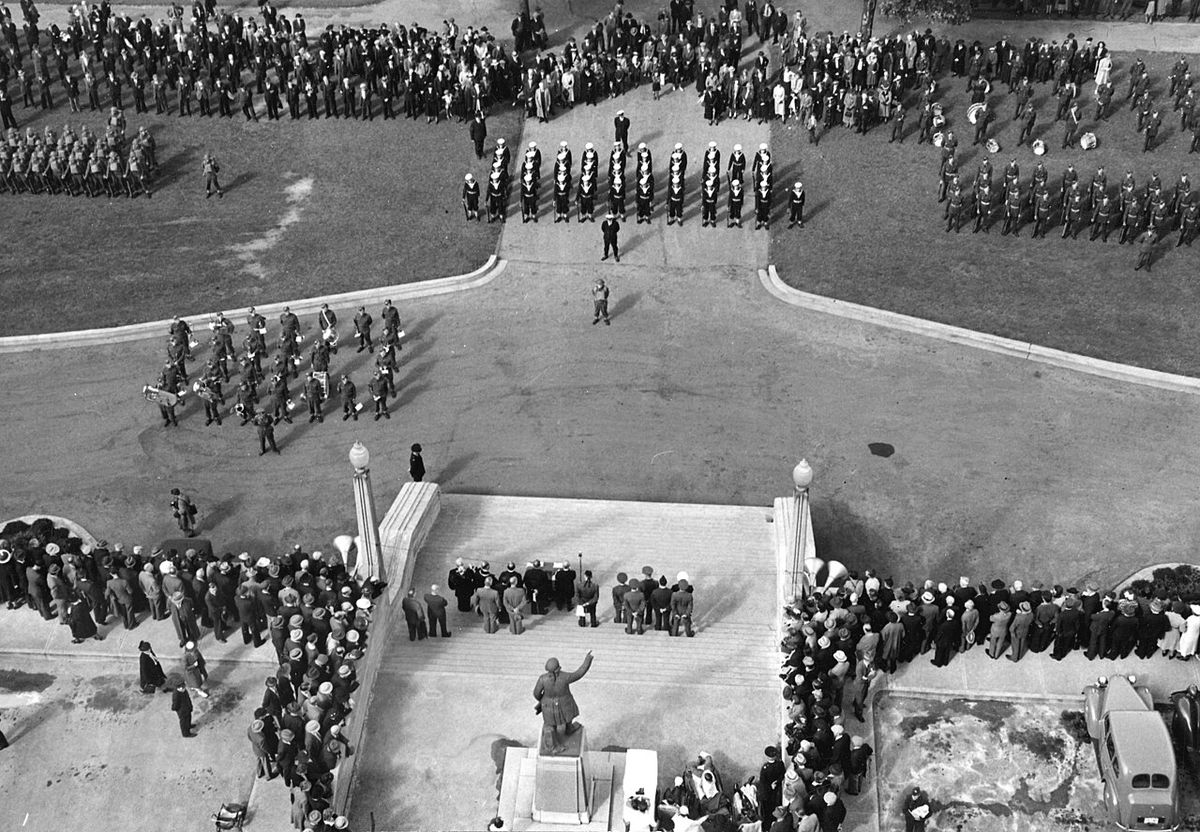
The legacy of Canada's Second World War effort is deeply embedded in the national consciousness. The conflict claimed the lives of 42,000 Canadians and wounded another 55,000. Their sacrifice is commemorated annually on Remembrance Day, at war memorials across the country, and at overseas sites like the Juno Beach Centre in Normandy. Major anniversaries are marked by ceremonies and educational programs. The 80th anniversary of the war's end is being observed with events from 2025 into 2026, including an exhibition at the Canadian War Museum in Ottawa running from 9 May 2025 to 18 January 2026. The war fundamentally altered Canada's global position. It emerged with the world's fourth-largest air force and third-largest navy, a formidable industrial base, and a strong, independent voice in international affairs, which led to its founding role in the United Nations. The experience of total war accelerated centralization and social programs. Organizations like the Canadian Battlefields Foundation work to remember Canada's role through battlefield study tours. Cultural commemorations continue, such as the planned concert We Will Remember on 1 November 2026 at the Canadian War Museum. The war also highlighted the contributions of Indigenous service members, recognized on Indigenous Veterans Day.
Canada's official histories of the war were produced by trained historians deployed during the conflict. The performance of Canadian forces in battles like Hong Kong and Dieppe remains a subject of historical study. The Veterans Guard of Canada, composed largely of First World War veterans, served in home defence and guarded internment camps, with over 17,000 veterans serving over the course of the war.
Questions about Canada in World War II
When did Canada declare war in World War II?
Canada declared war on Germany on 10 September 1939, one week after the United Kingdom. This separate declaration demonstrated the nation's autonomy under the 1931 Statute of Westminster. Canada later declared war on Italy on 11 June 1940 and on Japan on 7 December 1941.
How many Canadians served in World War II?
Approximately 1.1 million Canadians served in the Canadian Armed Forces during the Second World War, from a total population of about 11.5 million. This included 730,000 in the army, 260,000 in the air force, and 115,000 in the navy. About half of the army and three quarters of the air force personnel never left Canada.
What was Canada's most significant battle in World War II?
Canada was involved in several crucial battles. The D-Day landing at Juno Beach on 6 June 1944 is among the most famous. The Battle of the Atlantic, fought from 1939 to 1945, was the longest campaign. Other significant actions include the Italian Campaign, the liberation of the Netherlands, the Dieppe Raid of 1942, and the Battle of the St. Lawrence.
What was the British Commonwealth Air Training Plan?
The British Commonwealth Air Training Plan was a massive aircrew training program headquartered in Canada. From October 1940 to March 1945, it trained 131,553 air force personnel, including 49,808 pilots, at airbases across Canada. More than half of the graduates were Canadians who went on to serve with the RCAF and RAF.
How did World War II affect Canada's economy?
The war ended the Great Depression and triggered an industrial transformation. Canada became a major producer of war matériel, manufacturing warships, aircraft, tanks, and vehicles. The financial cost between 1939 and 1950 was $21.8 billion. The war effort created millions of jobs and brought women into the workforce in large numbers.
How is Canada's role in World War II commemorated today?
Canada's service is commemorated through national ceremonies on Remembrance Day, November 11, and at institutions like the Canadian War Museum in Ottawa and the Juno Beach Centre in France. Major anniversaries are marked with special events, such as the 80th anniversary exhibitions from 2025 into 2026. The sacrifices are also honoured through cultural events and activities recognizing Indigenous Veterans Day.
Sources and further reading
- Canada in World War II (Wikipedia)
- Canada in the Second World War (junobeach.org)
- Canadian War Museum (warmuseum.ca)
- Canada's Role In World War II (cbf-fccb.ca)
- Commemorative events (veterans.gc.ca)
Checked by the Nosy Mag desk. Last updated 2026-10-23.