Canadian nationality law
Canadian nationality law defines who is a citizen of Canada and outlines the legal framework for acquiring, retaining, and losing that status. The primary statute is the Citizenship Act, which came into force in 1977 and has been amended numerous times, most recently in 2025. The law is rooted in Canada's history as a British colony and its evolution into an independent nation, balancing principles of birthright citizenship, naturalization, and connection to the country. Recent legislative changes, particularly the elimination of the first-generation limit on citizenship by descent, have significantly expanded access to Canadian citizenship for individuals born abroad to Canadian parents and grandparents.
Historical Foundations and Colonial Era
The legal foundations of Canadian nationality are intertwined with its history as a collection of British colonies. Before Confederation, British nationality law applied across the Empire, meaning all residents of British North America were British subjects. The rules were uncodified and often unclear, with each colony having wide discretion over its own naturalization procedures. A key distinction emerged between imperial naturalization, granted in the United Kingdom and valid throughout the Empire, and local naturalization, granted by a colony and valid only within its territory. For example, a person who naturalized in British Columbia was a British subject there but not necessarily in England. The legal status of married women was entirely dependent on their husbands, a principle formalized in Upper Canada in 1849 and later aligned with British law in 1881, which caused women to lose their British subject status upon marriage to a foreign national.
Following Confederation in 1867, the new Dominion of Canada enacted federal nationality legislation in 1868, superseding provincial laws and creating a unified system. Naturalization required three years of residence, good character, and an oath of allegiance. Despite this political change, Canadians remained British subjects. The Immigration Act of 1910 introduced the term "Canadian citizen," but this was merely a label for those with a right to enter and remain in Canada, not a substantive citizenship. Discriminatory policies against Asian migrants were a stark feature of this era. The federal Chinese Immigration Act of 1885 imposed a head tax, which was increased to $100 in 1900 and $500 in 1903. Japanese migration was limited through diplomatic agreements, and measures like the 1908 requirement for "Asiatic immigrants" to possess $200 were designed to restrict entry from India and Hong Kong, despite their residents being British subjects.
The Imperial Code and Path to Autonomy
The British Nationality and Status of Aliens Act 1914 codified British subject status as a common imperial nationality for the first time. Canada adopted this common code, which allowed Dominions to define their own citizenship for domestic purposes while maintaining the overarching British subject status. The 1914 law also entrenched the doctrine of coverture, automatically stripping British women of their nationality upon marriage to a foreign man, with only limited exceptions. Canada's growing international profile as an independent member of the League of Nations after 1920 necessitated a legal mechanism to distinguish its nationals. The Canadian Nationals Act of 1921 defined a Canadian national as any British subject who qualified as a Canadian citizen under the 1910 Immigration Act, enabling separate Canadian representation on international bodies like the Permanent Court of International Justice.
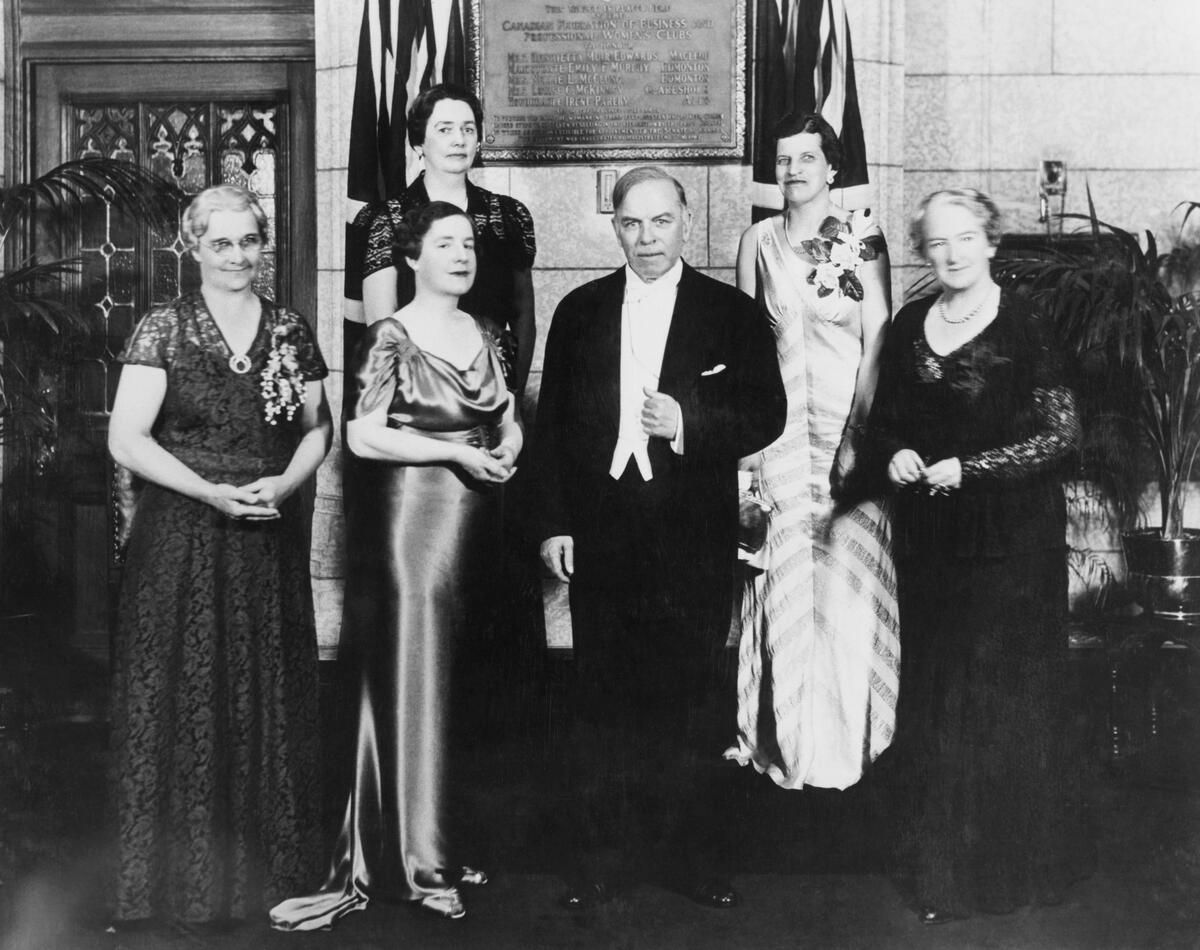
The 1926 Balfour Declaration and the 1931 Statute of Westminster granted Canada and other Dominions full legislative independence, formally recognizing them as autonomous and equal within the British Commonwealth. This independence complicated efforts to reform imperial nationality law, as Britain could no longer impose uniform rules. Pressure from women's groups led to piecemeal reforms across the Empire. Canada partially amended its rules in 1932, allowing women who did not acquire a foreign nationality through marriage to retain their British subject status. However, the fundamental link between a married woman's nationality and that of her husband remained largely intact until after the Second World War, highlighting the slow evolution of gender equality within the nationality framework.
Creation of Canadian Citizenship
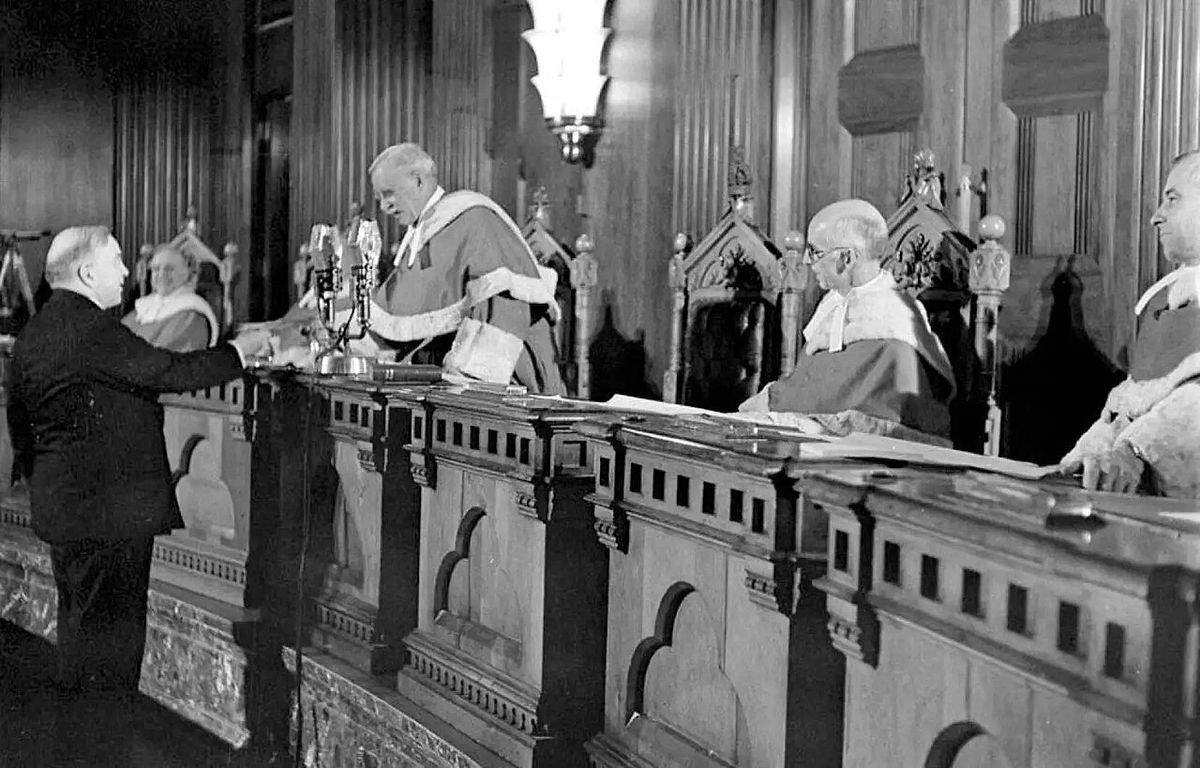
A distinct Canadian citizenship was formally established with the passage of the Canadian Citizenship Act in 1946, which came into force on January 1, 1947. This landmark legislation marked a decisive shift from imperial identity to a national one. On that date, all British subjects who were born, naturalized, or domiciled in Canada for at least five years automatically became Canadian citizens. The law also extended citizenship to the British-born wives of Canadian citizens and to children born abroad to Canadian fathers or unmarried Canadian mothers, provided certain registration requirements were met. Crucially, the Act severed the automatic link between marriage and nationality for women. All citizens of Canada and other Commonwealth countries continued to be defined as British subjects under this Act, a status that applied to Newfoundland when it joined Canada in 1949.
The naturalization process under the 1946 Act required applicants to have lived in Canada for at least five of the preceding six years, including one year immediately before applying. Wives of Canadian citizens were exempt from the general residence requirement. A language proficiency requirement existed but was waived for those domiciled in Canada for 20 years. The process culminated in an interview with a citizenship judge. The Act also contained provisions for the automatic loss of citizenship, which applied particularly to those born abroad. These individuals had to formally declare their intent to retain Canadian citizenship between the ages of 21 and 24, and renounce any other nationalities they held, or be domiciled in Canada by age 24. Citizenship could also be revoked from naturalized citizens for reasons like prolonged residence abroad, disloyalty, or fraud.
- January 1, 1947: Canadian Citizenship Act comes into force.
- Automatic citizenship granted to British subjects born, naturalized, or domiciled in Canada.
- Wives of Canadian citizens automatically acquired citizenship.
- Children born abroad to Canadian fathers or unmarried mothers eligible, subject to registration.
- Naturalization required five years of residence (one year immediately prior).
- Loss of citizenship possible for those born abroad failing to declare retention by age 24.
Modern Citizenship Act and Naturalization
The current Citizenship Act, which replaced the 1946 statute in 1977, is the central statute of modern Canadian nationality law. It formally abolished the term "British subject" in Canadian law, though Canadians remain Commonwealth citizens. The Act establishes the primary methods of acquiring citizenship: by birth in Canada, by descent (for those born abroad to a Canadian parent), and by naturalization (grant). Birthright citizenship, or jus soli, is granted to almost every person born within Canada's provinces and territories, with very limited exceptions for children of foreign diplomats. Citizenship by descent allows children born outside Canada to at least one Canadian parent to inherit citizenship, though recent rules have added conditions for some in this category.
For permanent residents, the path to citizenship by grant involves meeting several specific requirements. The central requirement is physical presence: an applicant must have been physically present in Canada for at least 1,095 days within the five years immediately before applying. Applicants may count each day spent in Canada as a temporary resident or protected person within that period as half a day, up to a maximum of 365 days. Applicants between the ages of 18 and 54 must demonstrate adequate knowledge of English or French and pass a citizenship test on Canadian history, values, institutions, and symbols. All applicants must file income tax returns for at least three of the preceding five years if required, and must not be under a removal order or be inadmissible on security grounds. The process involves submitting an application, attending a test and interview if applicable, and taking the Oath of Citizenship at a ceremony, after which a citizenship certificate is issued.
The 2025 Reform: Abolishing the First-Generation Limit
The most significant recent reform to Canadian nationality law is the passage of Bill C-3, An Act to Amend the Citizenship Act, which received Royal Assent on November 20, 2025, and came into force on December 15, 2025. This legislation was a direct response to a 2023 Ontario Superior Court of Justice ruling that declared the first-generation limit unconstitutional. Prior to this change, citizenship by descent was limited to the first generation born outside Canada. A child born abroad to a Canadian parent who was also born abroad could not automatically acquire Canadian citizenship, creating a class of "Lost Canadians." The new law eliminates this first-generation limit for individuals born before December 15, 2025, meaning many in the second or subsequent generations born abroad are now automatically Canadian citizens and can apply for a citizenship certificate.
For individuals born on or after December 15, 2025, a new "substantial connection" test applies to those beyond the first generation. A child born abroad to a Canadian parent who was also born abroad will be eligible for citizenship if that Canadian parent can prove they were physically present in Canada for at least 1,095 days (cumulative, not necessarily consecutive) before the child's birth or adoption. This residency requirement mirrors the standard naturalization period. The parent must provide documentary evidence such as pay stubs, academic transcripts, or leases. The rule change has a retroactive effect, restoring or granting citizenship to potentially thousands of people with Canadian ancestry who were previously excluded, provided they were born before the law came into effect. The court had set a final deadline of January 20, 2026, for the government to pass this law.
| Category | Born Before Dec 15, 2025 | Born On or After Dec 15, 2025 |
|---|---|---|
| First Generation Abroad | Automatic citizen | Automatic citizen |
| Second+ Generation Abroad | Automatic citizen (if descended from Canadian) | Citizen if Canadian parent meets 1,095-day residency test |
| Proof Required | Citizenship certificate application | Citizenship certificate application + parent's proof of connection |
Rights, Responsibilities, and Proof of Citizenship
Canadian citizenship confers a comprehensive set of rights and responsibilities. Citizens have the right to enter, remain in, and leave Canada, a right not guaranteed to permanent residents who can lose status for prolonged absence or criminality. Citizens can vote in federal, provincial, and municipal elections, run for public office, and apply for a Canadian passport. They are also entitled to consular assistance abroad. Key responsibilities include obeying Canadian laws, participating in the democratic process, and respecting the rights and freedoms of others. While dual citizenship is permitted, serving in the military of a country at war with Canada or engaging in acts of treason can lead to the revocation of citizenship, though such cases are extremely rare.
Proving citizenship is a critical administrative step, especially for those who acquire it by descent or through recent legislative changes. Individuals who are citizens but were not born in Canada must apply to Immigration, Refugees and Citizenship Canada (IRCC) for a citizenship certificate. This document is the primary proof of citizenship and is required to apply for a Canadian passport. The application process involves submitting documentation that proves descent from a Canadian citizen, such as birth certificates and the parent's proof of citizenship. Processing times for these applications can be lengthy. It is important to distinguish this from applying for a citizenship grant, which is the process of naturalizing from permanent resident status to citizen. As Commonwealth citizens, Canadians are also eligible to vote and stand for public office in the United Kingdom.
Loss and Revocation of Citizenship
The circumstances under which Canadian citizenship can be lost or revoked are narrow and strictly defined. The most common form of voluntary loss is renunciation, where a citizen formally applies to give up Canadian citizenship, often to comply with the laws of another country that restricts dual nationality. Historically, the 1947 and 1977 Acts contained provisions for automatic loss, such as for citizens born abroad who failed to take steps to retain citizenship or who voluntarily acquired another nationality. Many of these automatic loss provisions have been repealed or struck down by courts. Today, citizenship can generally only be revoked from a naturalized citizen if it was obtained by fraud, false representation, or concealment of a material fact. This process involves a formal decision by the Federal Court or, in some cases, the Minister, and is subject to appeal.
The concept of "Lost Canadians" refers to individuals who believed they were or should have been Canadian citizens but lost or were denied status due to historical gaps or discriminatory provisions in past laws. This includes war brides, children born abroad to Canadian soldiers, and those affected by the first-generation cut-off. Legislative fixes in 2009 and 2015 restored citizenship to many of these groups. For example, the 2009 amendments restored citizenship to those who had involuntarily lost it due to prolonged residence abroad before 1967 or failure to register births or apply for retention. These changes show the evolving nature of Canadian nationality law as it strives to be more inclusive and address past exclusions.
Questions about Canadian nationality law
How do I become a Canadian citizen by naturalization?
To become a Canadian citizen by naturalization, you must first be a permanent resident. You need to have been physically present in Canada for at least 1,095 days within the five years immediately before you apply. Time spent as a temporary resident or protected person counts as half a day, up to a maximum of 365 days. You must have filed your income tax returns for at least three years within that five-year period if required to do so. Applicants between the ages of 18 and 54 must demonstrate adequate knowledge of English or French and pass a citizenship test on Canadian history, values, institutions, and symbols. The final step is taking the Oath of Citizenship at a formal ceremony.
Does Canada allow dual citizenship?
Yes, Canada permits dual citizenship, meaning you can be a Canadian citizen and a citizen of another country at the same time. Canada does not require you to renounce your other citizenship(s) when you become Canadian. However, some other countries may not allow dual citizenship, so it is important to check the laws of the other country. Canadian citizens, including dual citizens, must use a valid Canadian passport to enter Canada. Between 2015 and 2017, there was a provision allowing revocation of citizenship for dual citizens convicted of terrorism or treason, but it is no longer in effect.
What is the new law about citizenship by descent?
A new law, Bill C-3, came into force on December 15, 2025. It eliminates the first-generation limit on citizenship by descent for individuals born before that date. This means if you were born outside Canada to a Canadian parent, and that parent was also born outside Canada, you are likely now automatically a Canadian citizen. For those born on or after December 15, 2025, in the second generation or later, citizenship is granted if their Canadian parent can prove a substantial connection to Canada by having lived here for at least 1,095 days before the child's birth or adoption.
I was born outside Canada to a Canadian grandparent. Am I a citizen?
Under the new rules that took effect in December 2025, you may be a Canadian citizen if you were born before December 15, 2025, and have at least one Canadian grandparent. The law has removed the generational limit for people born before that date. You will need to apply for a citizenship certificate as proof. If you were born on or after December 15, 2025, your eligibility depends on your parent's status and their physical connection to Canada, requiring them to have spent 1,095 days in Canada before your birth.
How do I prove my Canadian citizenship if I was born abroad?
If you are a Canadian citizen by descent (born outside Canada to a Canadian parent), you must apply for a citizenship certificate from Immigration, Refugees and Citizenship Canada (IRCC). This is not the same as applying for citizenship through naturalization. You will need to submit documents proving your parent's Canadian citizenship and your relationship to them, such as birth certificates and your parent's citizenship certificate or birth certificate. Once you receive the citizenship certificate, you can use it to apply for a Canadian passport.
Can my Canadian citizenship be taken away?
It is very difficult for a natural-born Canadian citizen to lose their citizenship. Canadian citizens cannot have their citizenship revoked for reasons of national security or for being convicted of a crime. The main way a naturalized citizen can lose citizenship is if it is discovered that it was obtained through fraud, false representation, or concealment of a material fact. This involves a formal legal process usually decided by the Federal Court and can be appealed. Voluntary renunciation is also possible if a citizen chooses to give up their status and already has or will have another nationality.
Sources and further reading
- Canadian nationality law (Wikipedia)
- New law grants thousands Canadian citizenship: Can you ... (cicnews.com)
- Second generation Canadians born abroad one step ... (mltaikins.com)
- Canadian Citizenship Rules (donvalleylegal.ca)
- New Rules Affecting Canadian Citizenship by Descent ... (bellissimolawgroup.com)
Checked by the Nosy Mag desk. Last updated 2026-10-24.