Canada permanent resident card
The Permanent Resident Card (PR card) is the official identification and travel document issued by Immigration, Refugees and Citizenship Canada (IRCC) to individuals who have been granted permanent resident status in Canada. It serves as proof of status and is required for permanent residents to re-enter Canada on commercial transportation like airplanes, trains, or ships. The card, which is the property of the Crown, is normally valid for five years and must be renewed to maintain its utility as a travel document. As of 2025, there are an estimated 3.13 million permanent residents in Canada, many of whom are eligible to become Canadian citizens.
History and legislative background
The concept of permanent residence in Canada has evolved significantly over the past century. Before 1910, newcomers were referred to as landed immigrants. The Immigration Act of 1910 formally introduced the term 'permanent residence' into Canadian law. The modern framework was established with the passage of the Immigration and Refugee Protection Act (IRPA) in 2002, which also officially changed the terminology from 'landed immigrant' to 'permanent resident'. The first PR cards were distributed on 28 June 2002, coinciding with the implementation of IRPA. A significant policy change affecting PR card holders occurred on 10 November 2016, when Canada introduced the Electronic Travel Authorization (eTA) requirement for most visa-exempt foreign nationals. This change meant that permanent residents, including those from visa-free countries, must present a valid PR card or a Permanent Resident Travel Document to board a flight to Canada, with the exception of United States citizens and lawful permanent residents.
Rights, responsibilities and restrictions
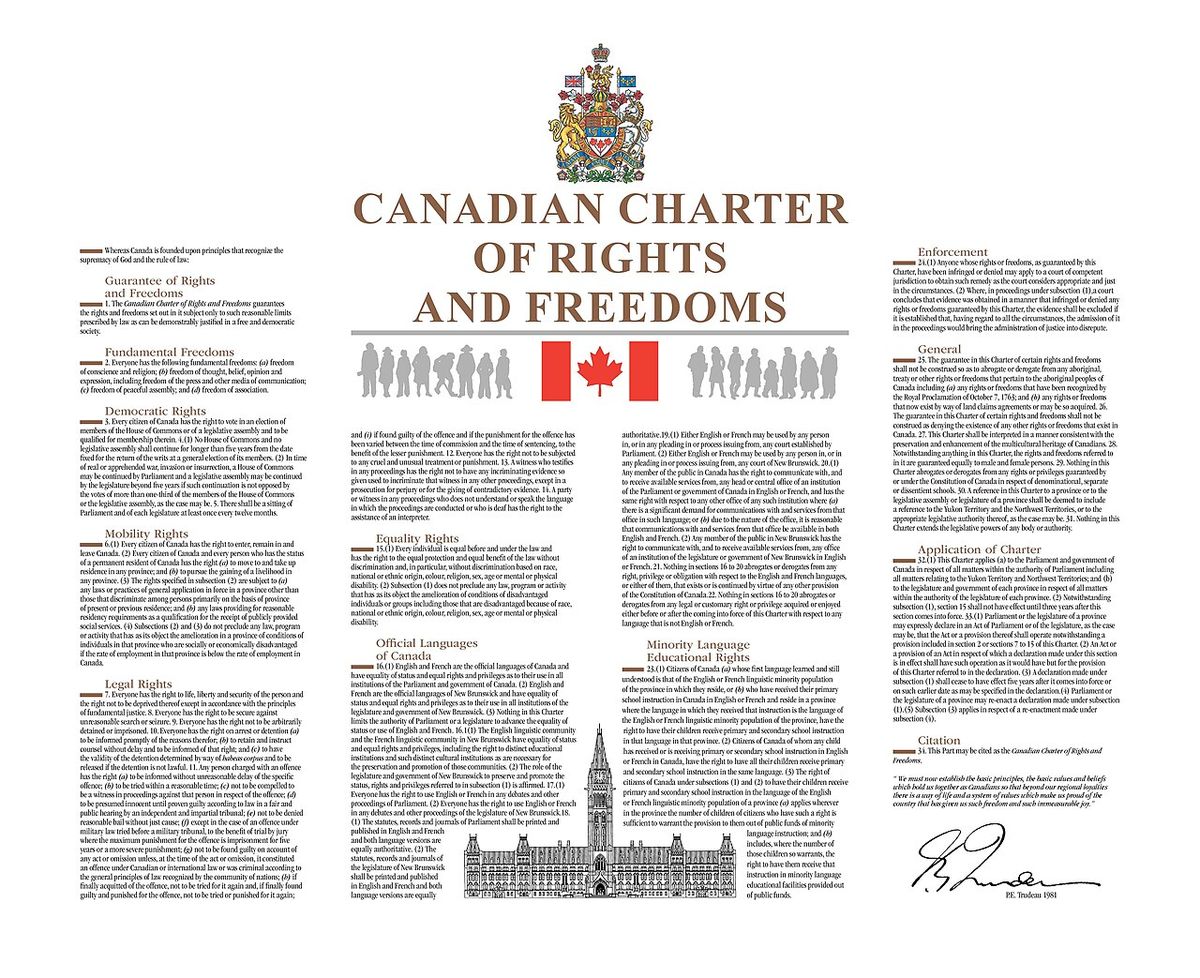
Permanent residents enjoy many of the same rights and protections as Canadian citizens. They have the right to live, work, and study anywhere in Canada and are entitled to the protections of the Canadian Charter of Rights and Freedoms. They can access universal healthcare and contribute to the Canada Pension Plan. Since 2022, permanent residents have been allowed to enlist in the Canadian Armed Forces. A key responsibility is meeting the residency obligation, which requires living in Canada for at least 730 days within any five-year period. Permanent residents also have the right to sponsor certain family members for permanent residence, subject to specific criteria. However, significant restrictions differentiate permanent residents from citizens. They cannot vote or run for office in federal, provincial, or municipal elections, though some municipalities like Toronto, Vancouver, Halifax, and Calgary have proposed extending municipal voting rights. For national security reasons, they are also barred from holding jobs that require a high-level security clearance. When travelling internationally, they must use their foreign passport alongside their PR card, as they are not eligible for a Canadian passport unless they are stateless.
Card design and security features
The physical PR card has undergone several iterations to enhance security and functionality. All versions are credit-card sized and feature a maple leaf, earning the card its colloquial nickname. The initial 2002 version had an aqua background with purple and orange graphics, a photograph, and an optical stripe on the back containing holder information. A major redesign on 24 August 2009 introduced a white background, a transparent window with a secondary ghost image, and replaced the optical stripe with a two-dimensional barcode. Cards issued after 1 February 2012 no longer include the holder's signature. The current standard version, introduced on 25 November 2015, incorporated a radio-frequency identification (RFID) chip for expedited processing at land border crossings. This chip does not store personal data but contains a unique identifier that links to a secure government database. The 2015 design also added an image of the Peace Tower and removed the immigration category and 2D barcode from the back. A further nuanced, mostly aesthetic redesign was issued sometime after 2022. All cards feature a machine-readable zone on the back compliant with ICAO Document 9303 Part 5 standards.
Application, renewal and validity
Obtaining and maintaining a PR card involves distinct processes depending on an individual's circumstances. New permanent residents must provide a Canadian residential address to IRCC, either upon landing or within 180 days, to receive their first card at no cost. If they fail to do so, they must later apply and pay a CA$50 fee. For renewals or replacements of lost, stolen, or damaged cards, existing permanent residents must apply through the IRCC processing centre in Sydney, Nova Scotia, and pay the CA$50 fee. The application is now submitted online via the Permanent Residence Portal. A critical part of any renewal application is proving compliance with the 730-day residency obligation within the previous five years. Applicants must gather and submit documents such as tax notices of assessment, employment records, bank statements, and utility bills. The card is normally valid for five years, though it may be issued for one year if permanent resident status is under review. It is crucial to understand that the expiration date on the card does not mean the holder's permanent resident status has expired. Status is only lost through specific actions like becoming a citizen, being outside Canada for too long without meeting an exception, or having status revoked due to serious criminality.
Special application scenarios include new permanent residents who cannot supply a Canadian address at the time of landing. These individuals must provide an address to Immigration, Refugees and Citizenship Canada within 180 days to avoid a new application and fee. Existing permanent residents whose card is expired, lost, stolen, or damaged must also apply for a new card. In some cases, the permanent resident card must be collected in person at an Immigration, Refugees and Citizenship Canada office in Canada.
- Permanent residents outside Canada without a valid card must apply for a single-use Permanent Resident Travel Document (PRTD) from a Canadian office abroad for a CA$50 fee.
- In some cases, a renewed PR card must be collected in person at an IRCC office in Canada.
- Time spent abroad may still count toward the residency obligation if the person is accompanying a Canadian citizen spouse or parent, or is employed full-time by a Canadian business or the public service.
- Individuals who cannot meet the residency requirement due to compelling humanitarian and compassionate reasons can request special consideration from IRCC.
The processing times for applications can vary. Applicants are advised to apply for renewal well before any planned travel, especially if their card is nearing its expiry date. This is because a valid permanent resident card is required to board a flight to Canada. The renewal process is mandatory for maintaining the card's function as a travel document. Permanent resident status itself continues independently of the card's validity, as status is not lost when a card expires.
New pathways and immigration context for 2026 to 2028
Canada's immigration landscape continues to evolve, with new pathways to permanent residence being developed to meet economic and humanitarian goals. The federal government's Immigration Levels Plan for 2026 to 2028 aims to stabilize annual permanent resident admissions at 380,000. A key initiative is the planned acceleration of the transition of up to 33,000 temporary work permit holders to permanent residence over 2026 and 2027, targeting those with strong community ties. Several new or expanded pathways are expected to launch or reopen in 2026. A new accelerated pathway for holders of United States H-1B visas in key sectors like technology is anticipated, building on a successful 2023 pilot. The government has also announced plans to admit up to 14,000 foreign national construction workers, with up to 6,000 spaces reserved for undocumented workers already in Canada, to address labour shortages. A sector-specific stream for agriculture and fish processing workers is in development with a goal to launch in the 2025 to 2026 period. The Economic Mobility Pathways Pilot (EMPP) for skilled refugees is expected to be replaced by a permanent program. The government also plans a one-time initiative to streamline permanent residence for about 115,000 protected persons already in Canada.
Other notable trends for 2026 include a significant expansion of Provincial Nominee Programs, which are projected to grow by more than 65 percent compared to 2025. For healthcare, new rules are streamlining permanent residency for internationally educated physicians, particularly in Ontario, where some can now apply as self-employed professionals without a traditional job offer. While direct parent and grandparent sponsorship is paused, the Super Visa remains a stable option for long-term family visits. These developments indicate a targeted immigration strategy focusing on economic integration, regional needs, and specific skill sets. The overall plan reflects a shift toward selecting immigrants who are already in Canada and contributing to the economy, rather than focusing primarily on overseas applicants. This approach is designed to address immediate labour market needs and support long-term economic growth.
Travel requirements and proof of status
The PR card plays a central but nuanced role in travel and proving legal status. Legally, a permanent resident has the right to enter Canada under the Immigration and Refugee Protection Act, and status is not contingent on possessing the physical card. However, due to carrier regulations, a valid PR card is mandatory for boarding a commercial flight, bus, train, or ship destined for Canada. The exception is travel from the United States via a land border crossing, where a permanent resident may enter without a card, though they may face difficulties boarding commercial ground transportation to reach the border. Within Canada, the PR card is the most convenient document for proving status to provincial authorities, employers, or schools, but other documents like the original Record of Landing are also acceptable. There is no legal requirement to carry the card at all times within Canada. The card also facilitates visa-free travel to several countries for permanent residents whose nationality would normally require a visa. The legal presumption of status is important. Under IRPA, a person with a valid PR card or signed confirmation of permanent residence document is presumed to be a permanent resident unless an officer determines otherwise. Conversely, a person outside Canada without a valid card or confirmation of permanent residence document is presumed not to be a permanent resident unless they can prove their status.
Loss and renunciation of status
Permanent resident status can end in several specific ways, distinct from the expiration of the physical PR card. Status is automatically and immediately lost upon becoming a Canadian citizen. During the citizenship ceremony, the PR card is physically destroyed. Status can be revoked by the government if the permanent resident fails to meet the 730-day residency obligation within a five-year period, unless an exception applies such as being posted abroad as a Crown servant. Serious criminality or immigration violations that result in a removal order can also lead to loss of status. a permanent resident does not lose status simply because their PR card expires. Status remains intact until a formal adjudication by an immigration official determines otherwise. Permanent residents also have the option to voluntarily renounce their status by submitting form IMM 5782 to IRCC if they no longer wish to retain their permanent residency in Canada. This formal renunciation process is separate from allowing a card to expire or failing to meet residency requirements. The Minister of Immigration, Refugees and Citizenship may also waive certain requirements or grant permanent residency on humanitarian and compassionate grounds in specific cases.
Questions about Canada permanent resident card
How long does it take to renew a PR card in Canada?
Processing times for PR card renewals can vary based on application volume and completeness. Applications are submitted online through the Permanent Residence Portal to the processing centre in Sydney, Nova Scotia. While IRCC does not publish a fixed timeline for 2026, applicants should anticipate several months of processing and are strongly advised to apply well before any planned international travel. Checking the IRCC website for current processing times is recommended, and ensuring the application is complete with all required proof of residency documents can help avoid delays.
Can I travel outside Canada while my PR card is being renewed?
Travelling outside Canada while a renewal application is in process is risky. If you leave without a valid PR card, you will not be able to board a commercial carrier to return to Canada. You would need to apply for a Permanent Resident Travel Document (PRTD) at a Canadian office abroad, which is a separate process and not guaranteed. The safest course is to wait until you have received your new PR card before undertaking international travel. If travel is urgent and the card has expired, you must apply for a PRTD to return.
What happens if my PR card expires?
The expiration of your PR card does not mean your permanent resident status has expired. You continue to be a permanent resident if you meet the residency obligation and your status has not been revoked. However, an expired card cannot be used for international travel to return to Canada on commercial transportation. Within Canada, you can use other documents like your original landing paper or confirmation of permanent residence to prove your status to authorities. To restore your ability to travel, you must apply to renew the card from within Canada.
What are the residency requirements to renew a PR card?
To renew a PR card, you must demonstrate that you have met the residency obligation. This requires you to have been physically present in Canada for at least 730 days within the five years immediately preceding your application. Time spent abroad may still count toward this total under specific exceptions, such as if you were employed full-time by a Canadian business, working for the federal or provincial public service, or accompanying a Canadian citizen spouse or parent. You must provide documented proof, like tax records, employment letters, or lease agreements, to support your claim of residency.
Can I apply for a PR card from outside Canada?
No, you cannot apply to renew or replace a PR card from outside Canada. The application must be submitted from within the country. If you are outside Canada and do not have a valid PR card, you cannot board a flight to return. Instead, you must apply for a Permanent Resident Travel Document (PRTD) at a Canadian visa office abroad. The PRTD is a single-use document that allows you to travel back to Canada. The overseas officer will assess whether you still meet the requirements to be a permanent resident before issuing the document.
What is the difference between a PR card and Canadian citizenship?
A PR card proves permanent resident status, which grants the right to live, work, and study in Canada indefinitely, along with many social benefits. However, permanent residents cannot vote, hold certain security-sensitive jobs, or obtain a Canadian passport. Canadian citizenship is the next step, offering full political rights and a passport. Permanent residents can apply for citizenship after living in Canada for at least 1,095 days within a five-year period, among other requirements like language proficiency and passing a citizenship test. Upon becoming a citizen, the PR card is destroyed and permanent resident status ends.
Sources and further reading
- Canada permanent resident card (Wikipedia)
- The new pathways to permanent residence coming ... (cicnews.com)
- PR Card Renewal Canada: Complete 2026 Guide (earnestimmigration.com)
Checked by the Nosy Mag desk. Last updated 2026-10-26.