Thirty-one
Thirty-one, also known as Scat or Trente et Un, is a classic gambling card game where players aim to assemble a hand totalling 31 points in a single suit. Played by two to seven people with a standard deck, the game combines hand management and strategic knocking to avoid holding the lowest score. Its long history dates to 15th century Europe. The game is popular in America, Britain and Canada. It is widely available to play online.
History and Origins
The game of thirty-one has a documented history stretching back to the 15th century, with its first known mention appearing in a 1440 sermon by the Italian saint Bernadine of Siena. This early reference suggests the game may have Italian origins. By the 16th century, the game was noted by prominent figures including the French writer Rabelais and the mathematician Gerolamo Cardano, indicating its spread across Europe. The historian David Parlett observes that the name 'thirty-one' historically referred to two distinct card games, one resembling pontoon and the other similar to commerce. The game became particularly popular in France, England, and Ireland during this period. In the 1670s, the English naturalist Francis Willughby recorded thirty-one being played in England. The game is a precursor to Vingt-Un, which later evolved into the modern game of blackjack.
Standard Rules and Gameplay
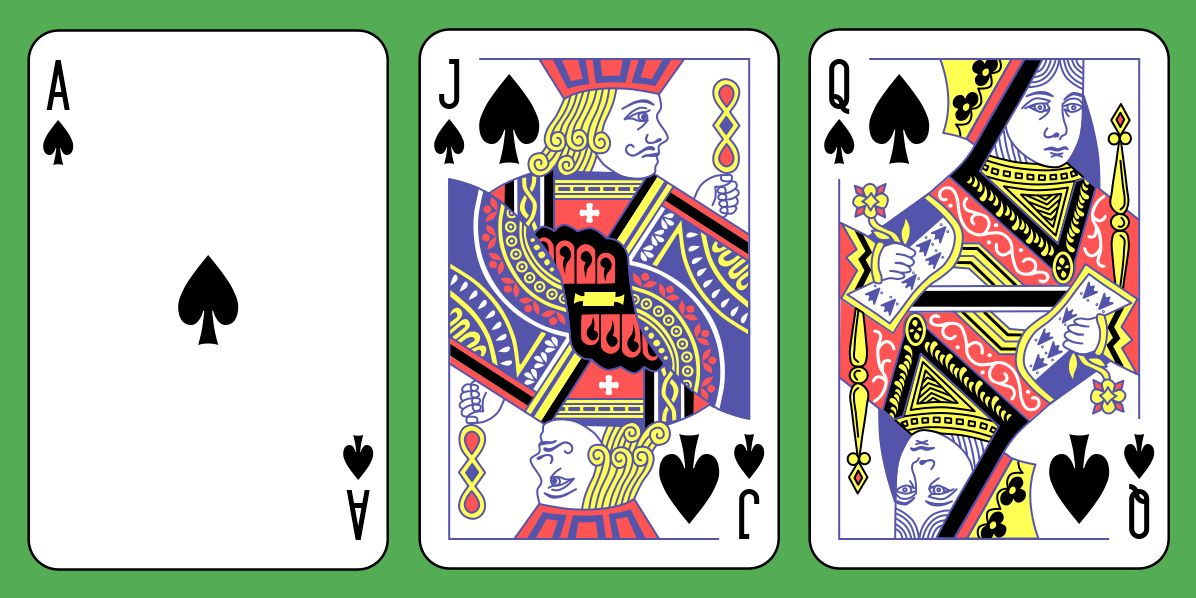
Thirty-one is played with a standard 52-card deck, though a Dutch variant uses a 32-card deck consisting only of cards from seven through ace. Each player begins the game with three lives, often represented by three pennies or tokens. The dealer shuffles and deals three cards face down to each player. The remaining deck forms the stock pile, and its top card is turned face-up to start the discard pile. Card values are fixed for scoring aces count as 11 points, face cards count as 10, and all other cards count their pip value. The primary objective is to collect three cards of the same suit whose combined value totals 31, known as a blitz, or to have a higher point total in one suit than at least one other player at the end of a round.
Play proceeds clockwise from the dealer's left. On a turn, a player must draw one card, either the top card of the discard pile or the top card of the stock pile. The player then discards one card face-up to the discard pile, always maintaining a three-card hand. A key strategic element is the knock. A player who believes their hand can beat at least one opponent may knock on the table instead of drawing. This signals the beginning of the final round. After a knock, each remaining player, in clockwise order, gets one final turn to draw and discard. If the stock pile is exhausted before anyone knocks, the round ends in a draw with no lives lost.
Scoring occurs when the round ends, either by a player revealing a blitz or after the final turns following a knock. Players reveal their hands and calculate their score based only on cards of the same suit. If a hand contains cards of multiple suits, only the highest-valued single card counts as the score. The player with the lowest score loses the round and forfeits one life. If the player who knocked has the lowest score, they lose two lives. In the event of a tie for lowest score between players who did not knock, all tied players lose one life. If the knocker ties for lowest, the knocker is safe and only the other tied player loses a life.
A blitz, a hand worth exactly 31 in one suit, is an automatic victory. The moment a player acquires such a hand, they must reveal it immediately. This ends the round instantly, and all other players lose one life. There is a special rule for two-player games when one player knocks. The card the other player discarded just before the knock remains on top of the discard pile and is available for that player to take back on their final turn, allowing them to potentially restore a suit they had broken up tactically.
Card Values and Scoring
The scoring system in thirty-one is straightforward, with each card assigned a fixed point value. These values are used exclusively to total the points from cards of the same suit within a player's three-card hand. The goal is to reach the target of 31 points, but any total under that is valid, with higher scores being better. The following table details the point value for every card rank in the standard deck.
| Card Rank | Point Value |
|---|---|
| Ace | 11 |
| King | 10 |
| Queen | 10 |
| Jack | 10 |
| 10 | 10 |
| 9 | 9 |
| 8 | 8 |
| 7 | 7 |
| 6 | 6 |
| 5 | 5 |
| 4 | 4 |
| 3 | 3 |
| 2 | 2 |
When calculating a hand's score, only cards of the same suit are combined. A hand with three different suits scores only the value of its highest single card. Several specific hand types have defined outcomes in common play. A blitz, scoring exactly 31 in one suit, is an automatic round winner. Under the popular optional rule, three cards of the same rank from different suits score 30.5 points. In the event of a tie for the highest score at showdown, the tie is broken by comparing the highest-ranking card within the scoring suit, then the next highest if needed.

Common Variations
Over centuries of play, numerous regional and house rule variations of thirty-one have emerged, altering stakes, scoring, and procedures. The banking variation introduces a pot and a widow hand. Before each round, all players ante one token into a central pot. During the deal, after each player receives one card, the dealer places one card face down to form a three-card 'widow' pile. On their turn, a player may exchange one or more cards from their hand with an equal number from the widow, leaving their discards face up. The player with the highest-valued hand at showdown wins the pot, and a blitz wins it immediately.
The dollar bill variation is a common method for tracking lives in North America. Each player starts with a five-dollar bill, though any denomination works. Losing a life is marked by folding down one corner of the bill. A player who has folded all four corners is said to be 'on the county' and remains in the game. If this player loses another life, they are eliminated and surrender their bill to the pot. The last player remaining wins all the bills on the table. The West Lansing cut throat variation modifies this by having players purchase three tokens for a set amount before play, with no free ride. A knocker who fails to beat at least one player loses two tokens, even if tied for lowest.
California Quick is designed for speed with larger groups. Key changes include the knocker losing two lives if they tie for lowest or if another player gets a 31 during the knock round. If the first player to act knocks immediately on their first turn, called 'knocking out of the gate,' the round ends with no further draws. A player dealt an initial 31 can only reveal it after the first player chooses not to knock out of the gate. The Switch variation changes the draw mechanism entirely. The dealer is dealt two hands, chooses one, and places the other face-up next to a face-down hand in the centre. On a turn, players can swap a single card with a centre hand, swap their entire hand with a centre hand, or renew a centre hand by replacing it with new cards from the deck.
Optional Scoring Rules- Three-of-a-kind: A hand with three cards of the same rank from different suits is often scored as 30.5 points.
- No-elimination variant: Uses a running point total instead of lives. Points are awarded per round: lowest score earns 1 point (0 if they knocked), middle scores earn 2 (1 if knocked), highest score earns 3 (4 if knocked), and a blitz earns 6 points.
- Stop the Bus: An English game using thirty-one's mechanics but with three-card brag rankings. The best hand is three of a kind (a 'prial'), followed by a running flush, a run, a flush, a pair, then high card.
Equipment and Setup
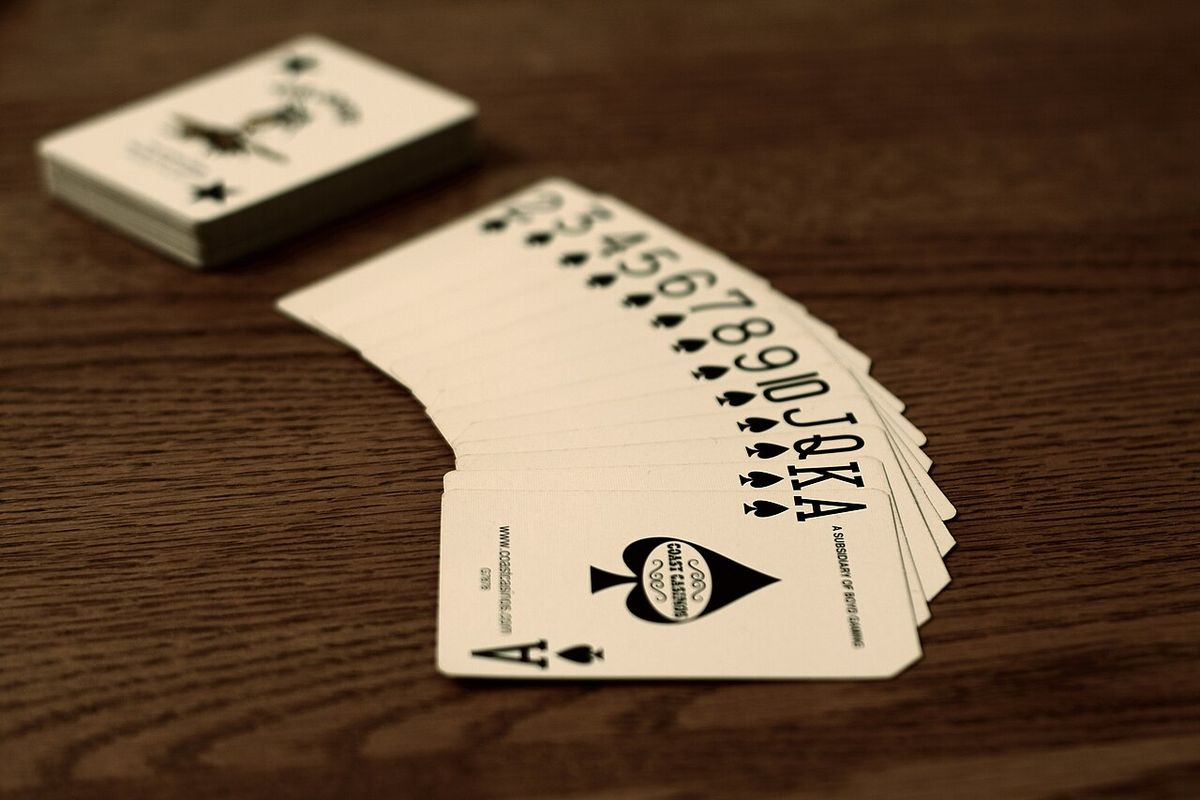
The core equipment for thirty-one is minimal, requiring only a standard 52-card deck of French playing cards. For tracking lives, groups commonly use physical tokens like poker chips, pennies, or the folded corners of banknotes. The game accommodates two to seven players, with three to five often considered ideal for balanced play. To begin, players must first determine a dealer. A common method is for each player to cut the deck, with the player drawing the lowest card becoming the first dealer. The role of dealer then rotates clockwise after each hand. Each player is allocated three lives, represented by their tokens. The dealer shuffles thoroughly and deals three cards face down to each player, one at a time. The remaining deck is placed face down in the centre as the stock pile. The dealer then turns the top card of the stock face up and places it beside the stock to form the discard pile, completing the setup for the first round of play.

Strategy and Tactics
Success in thirty-one hinges on hand management, risk assessment, and reading opponents. A fundamental tactic is memorizing the suits other players discard. If a player discards a card of a different suit than on their previous turn, it often signals they are 'changing suits,' which typically lowers their score and increases their vulnerability to a knock. Players should aim to build a hand in one suit as quickly as possible, as split suits yield very low scores. Holding three cards of the same rank (30.5 points) is a strong, safe hand, though it falls just short of a blitz. Knowing when to knock is the game's critical decision. A player should knock when confident their score exceeds at least one opponent's, ideally when holding a score in the mid-to-high 20s in one suit. Knocking too early with a weak hand risks a double life loss, while waiting too long allows opponents to improve and potentially knock first.
Players must also manage the psychological element of the game. Bluffing by discarding high-value cards of a suit you are not collecting can mislead opponents about your strength. Conversely, if you are close to 31, you may discard low cards of other suits to appear weaker, encouraging others to continue playing and potentially lose more lives if you hit a blitz. In the banking variation, the widow adds another layer. Exchanging multiple cards with the widow is risky but can quickly transform a poor hand. Observant players can track which cards have passed through the widow to deduce what opponents might be holding. The ultimate goal is not always to achieve 31, but consistently to avoid having the single lowest score, which requires constant comparison of your probable standing against the field.
Key Strategic Actions on Your Turn- Draw from Discard: Take the face-up card if it improves your hand in your target suit.
- Draw from Stock: Take an unknown card from the deck when the discard is unhelpful.
- Discard Strategically: Discard a card from a suit you are abandoning or a low card from your target suit to mislead.
- Knock: End the round when you believe your hand beats at least one other player's.
- Declare a Blitz: Immediately reveal a hand totalling 31 in one suit to win the round.
- Stand Pat: In some variations, keep all cards when you are the last player after a knock.
Thirty-One Online and Digital Play
The digital age has made thirty-one accessible to a global audience through numerous online platforms and mobile applications. These digital versions faithfully replicate the core rules, allowing players to enjoy the game against computer opponents or real people via the internet. Many sites offer the game for free, often as part of a larger collection of classic card games. A prominent online version available as of 2026 is hosted on Solitaire.org, which provides both an embedded web game and a standalone application. This particular implementation uses the Dutch 32-card deck (cards 7 through Ace only) and is modelled on the French rules where runs do not confer extra value. Players are dealt three cards, with a fifth hand dealt face down to the centre as a swap pile.
Online play automates scoring, enforces rules, and manages the deck, streamlining the experience. These platforms typically store game data locally in the user's web browser. Digital versions often include features like adjustable difficulty levels for AI opponents, tutorials for new players, and statistical tracking. The availability of thirty-one on iOS and Android devices as cross-platform apps further increases its reach, enabling quick games on smartphones and tablets. For Canadians looking to learn or play, these online resources provide a convenient, rule-accurate way to engage with this historic card game without needing physical cards or a group of friends present.
Comparison to Similar Games
Thirty-one shares conceptual DNA with several other card games but maintains distinct rules and objectives. It is frequently compared to commerce and cribbage, which also involve totalling card values, but thirty-one's focus on a single suit and the knocking mechanism sets it apart. It should not be confused with the German national game of Skat, despite sometimes sharing the name 'Scat.' It is also distinct from other games called 31, such as the German Schwimmen (Schnauz) or the Greek banking game of 31. Thirty-one's closest relative is arguably Vingt-Un (Twenty-One), the direct forerunner of blackjack. Both games involve drawing cards to reach a target number, but Vingt-Un uses a variable target and different scoring for the dealer. The game also shares a hand-improvement structure with rummy games, particularly gin rummy, where players draw and discard to form melds. However, thirty-one's fixed three-card hand and suit-based scoring create a unique and faster-paced dynamic focused on avoiding the lowest score rather than forming specific combinations.
Games Historically Related to Thirty-One- Commerce: A 16th-century French game involving card exchanges and totalling values.
- Cribbage: A scoring game where players tally points from card combinations.
- Trentuno: An early Italian game with a similar numerical goal.
- Vingt-Un (Twenty-One): The immediate precursor to blackjack, developed from thirty-one.
- Wit and Reason: A historical English card game mentioned alongside early forms of thirty-one.
- Biribi: An Italian lottery game sometimes grouped with games of chance like thirty-one.
- Trente et Quarante: A French banking game played with cards, sharing part of its name.
Questions about Thirty-one
What are the basic rules for playing the 31 card game?
The basic rules involve two to seven players using a standard 52-card deck. Each player starts with three lives and is dealt three cards. Players take turns drawing from either the stock or discard pile and then discarding one card, aiming to get a hand value as close to 31 as possible in one suit. Aces count 11, face cards 10, and other cards their face value. A player may knock when confident they can beat at least one opponent, giving others one final turn. The player with the lowest score at the showdown loses a life. A hand of exactly 31 in one suit (a blitz) ends the round immediately, making all other players lose a life.
How do you score hands in the game of 31?
Scoring is based only on cards of the same suit within a player's three-card hand. If two or three cards are the same suit, their point values are added together. If all three cards are different suits, only the highest single card's value counts as the score. A blitz, which is three cards of the same suit totalling exactly 31, is the highest possible score. An optional rule awards 30.5 points for three cards of the same rank from different suits. At the end of a round, all hands are revealed and scored, and the player with the lowest total loses.
Can you play 31 card game online for free?
Yes, there are several free online platforms where you can play thirty-one. Websites like Solitaire.org offer a digital version of the game that can be played directly in a web browser or as a standalone application. These online games often feature computer opponents and sometimes allow play against other people. The digital version on Solitaire.org, for example, uses the Dutch 32-card deck variant and stores your play data locally. The game is also available as a cross-platform mobile app for iOS and Android devices, providing a convenient way to play on smartphones and tablets.
What is the strategy behind knocking in 31?
Knocking is a strategic move to end the round when you believe your hand's score is higher than at least one other player's. Effective knocking requires observing opponents' discards to infer their strength. If you see players frequently changing suits, their scores are likely low, making a knock safer. A good time to knock is when you have a hand in the mid-to-high 20s in one suit. Knocking too early with a weak score risks you having the lowest hand and losing two lives. Conversely, waiting too long to knock may allow an opponent to achieve a blitz or improve their hand enough to knock first, putting you at a disadvantage.
What is a blitz in the 31 card game?
A blitz is the ultimate hand in thirty-one, consisting of three cards all of the same suit with a combined point total of exactly 31. This is typically achieved with an ace (11 points) and two face cards (10 points each). The moment a player obtains a blitz, they must immediately reveal it, which instantly ends the current round. When a blitz is revealed, all other players automatically lose one life, regardless of their own hand values. A blitz overrides any knocking action and is an automatic win for the player who holds it.
How many players can play 31, and what is the Dutch version?
Thirty-one is designed for two to seven players. The Dutch version of the game, known as Eenendertigen, uses a reduced 32-card deck instead of the standard 52. This deck consists only of cards with a rank of seven and higher, specifically the 7, 8, 9, 10, jack, queen, king, and ace in each suit. All other rules, including card values and the objective of reaching 31 in one suit, remain the same. This version is common in online implementations and streamlines the game by removing the lower-value cards, which slightly alters the probabilities and strategy.
Sources and further reading
- Thirty-one (Wikipedia)
- Thirty-One (bicyclecards.com)
- Play Free Thirty One Card Game Online (solitaire.org)
- Thirty-One (denexa.com)
- Thirty-One (bicyclecards.com)
- Play Free Thirty One Card Game Online (solitaire.org)
- 31 Card Game Rules and How to Play | Complete Guide to 31 (gameonfamily.com)
Checked by the Nosy Mag desk. Last updated 2026-11-10.