Scorpion
Scorpion is a patience or solitaire card game played with a standard 52-card deck. The objective is to assemble four complete descending sequences from King to Ace within the same suit, all within the tableau itself without separate foundation piles. Its unique rules, including moving entire groups of cards and a strict suit-matching requirement, contribute to a challenging game. Scorpion is widely available for free play online through numerous digital platforms.
Game Setup and Initial Deal
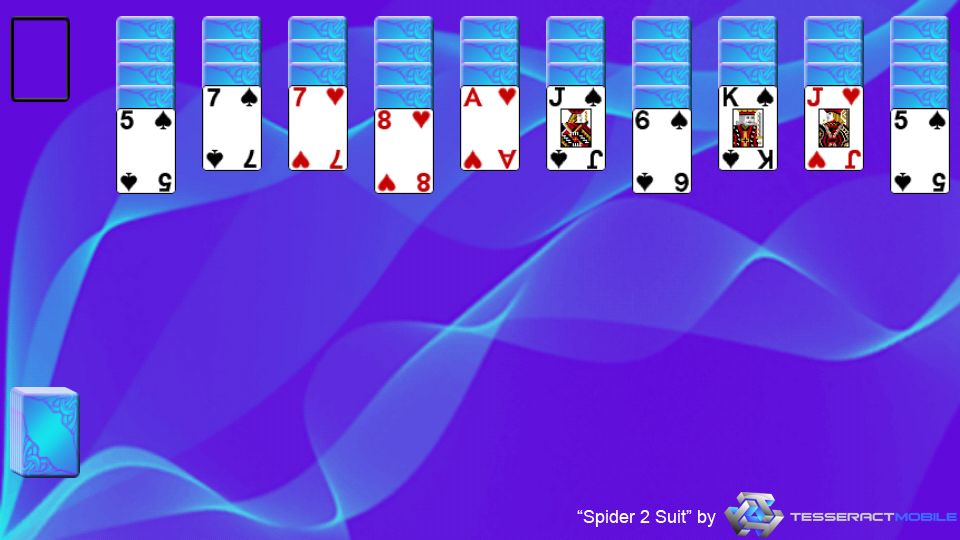
The game begins with a full 52-card deck from which 49 cards are dealt to form the tableau. These 49 cards are arranged into seven columns, with each column containing exactly seven cards. The first four columns from the left are dealt with their bottom three cards face down and their top four cards face up. The remaining three columns are dealt with all seven of their cards face up from the start. The three cards not dealt to the tableau are set aside as a reserve. This initial layout creates a mix of hidden and visible information, with 12 cards initially face down in the tableau. The entire play area consists solely of this tableau and the reserve. There are no separate foundation piles as found in games like Klondike or FreeCell.

Core Rules of Play
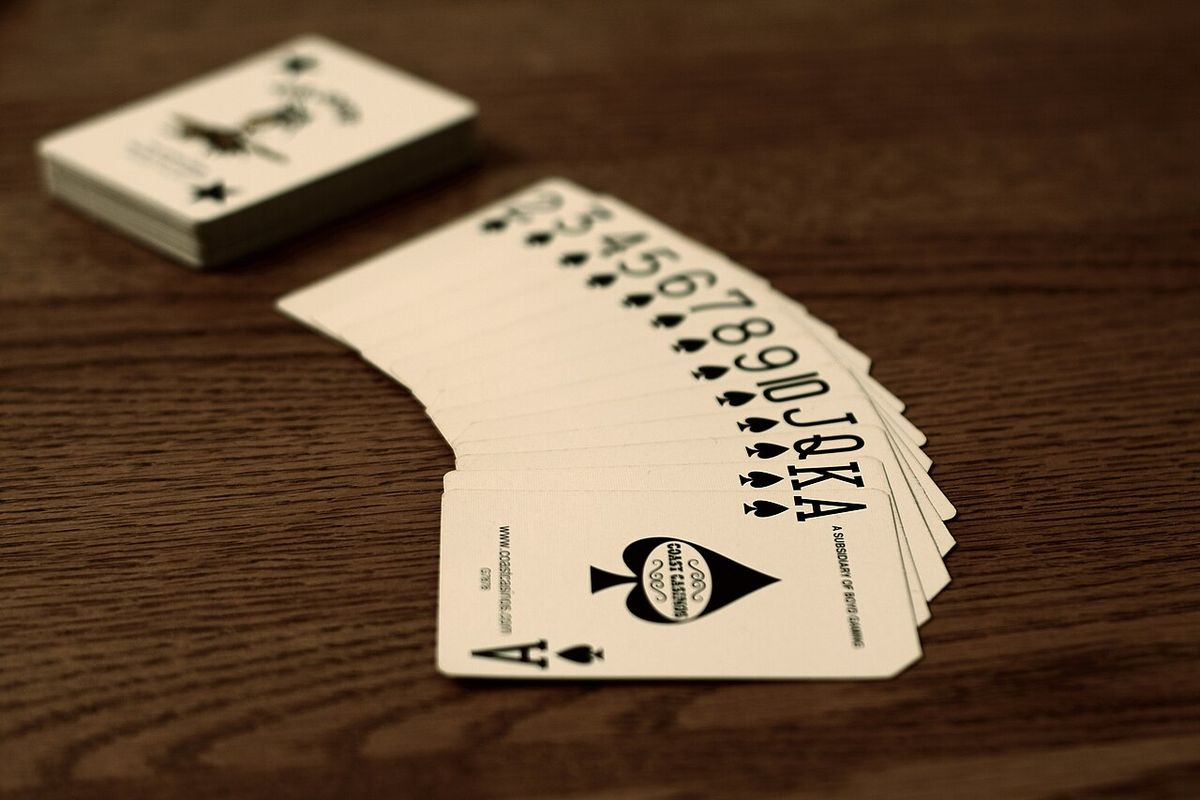
Gameplay in Scorpion revolves around moving cards between the seven tableau columns to build descending sequences. The fundamental building rule is that cards must be placed in descending order and must be of the same suit. For example, a 9 of hearts can only be placed onto a 10 of hearts. Aces are the lowest rank, and nothing can be placed on top of an ace. The most distinctive movement rule is that any face-up card, along with every card lying directly on top of it in its column, can be moved as a single unit. This is permitted regardless of whether the cards being moved together form a valid sequence themselves. The card at the base of the moved group must match the suit and be one rank lower than the top card of the destination column. When a face-down card becomes the top card of a column because the cards above it have been moved away, it is immediately turned face up. Empty columns are highly valuable but can only be filled by a single King or by a sequence of cards that has a King at its bottom.
The game proceeds with the player making all possible moves from the initial layout. The three reserve cards are not immediately available. They are dealt one each onto the first, second, and third columns of the tableau only after the player has exhausted all other legal moves. This single deal introduces new cards that can potentially unlock further sequences or reveal more face-down cards. The player cannot request these cards earlier, and they are not redealt. According to general rules, when a successful suit sequence column is built, it should be left alone unless it covers a face-down card. The game is won when the object of forming four suit sequence columns from king to ace is fulfilled.
- Any face-up card is available for play, no matter its position in a column.
- Moving a card from the bottom or middle of a column moves all cards on top of it as one unit.
- Cards are built down by suit, meaning the moved card must be one rank lower than the destination card and of the same suit.
- Nothing can be placed on top of an Ace.
- A gap on the tableau can only be filled by a King or a sequence with a King as its bottom card.
- An exposed face-down card is immediately turned face up.
- The three leftover cards are dealt onto the first three columns when no more moves are possible.
Strategic Objectives and Winning
The win condition is to form four perfect columns within the tableau, each containing a complete 13-card sequence from King down to Ace in a single suit. These completed sequences remain in place as part of the tableau. The game is won when all four suits are assembled into these columns, typically leaving the tableau with four ordered piles and three empty columns. The strategic path to victory involves carefully planning moves to expose face-down cards, creating and utilizing empty columns for King placement, and protecting low-ranking cards like Aces and Twos from being buried under longer sequences. The three reserve cards are dealt one each onto the first, second, and third columns only after all possible moves from the initial layout have been exhausted. This timing is a critical strategic element, as the new cards can unlock stalled positions.
A successful strategy requires a methodical approach to managing the tableau. Players must prioritize revealing face-down cards to increase available moves. They should also focus on protecting low cards, such as aces, and use empty columns wisely. Expert advice emphasizes that success hinges on focusing on accessible kings and carefully planning moves. The game's difficulty is compounded by the fact that a completed sequence is not automatically removed, so players must work around these long columns. Building long, in-suit sequences early consolidates cards and frees up tableau space. Players should plan multiple moves ahead, considering how moving one group will affect access to other key cards.
| Rank (High to Low) | Suit Example |
|---|---|
| King | King of Spades |
| Queen | Queen of Hearts |
| Jack | Jack of Diamonds |
| 10 | 10 of Clubs |
| 9 | 9 of Spades |
| 8 | 8 of Hearts |
| 7 | 7 of Diamonds |
| 6 | 6 of Clubs |
| 5 | 5 of Spades |
| 4 | 4 of Hearts |
| 3 | 3 of Diamonds |
| 2 | 2 of Clubs |
| Ace | Ace of Spades |
Understanding the rank order from King (high) to Ace (low) is fundamental for planning all moves in Scorpion. The table above illustrates the complete hierarchy used in the game. This knowledge is essential for determining which cards can be placed on others. It also helps in visualizing the goal of building each 13-card sequence.
- Reveal hidden cards as quickly as possible by moving cards off the face-down cards in the first four columns.
- Use empty columns wisely, reserving them for moving Kings or long sequences to access buried cards.
- Protect low cards like Aces and Twos from being trapped under other sequences early in the game.
- Build long, in-suit sequences early to consolidate cards and free up tableau space.
- Plan multiple moves ahead, considering how moving one group will affect access to other key cards.
- Time the deal of the three reserve cards to ensure the first three columns have useful landing spots available.

Difficulty, Scoring and Comparison to Other Solitaires
Scorpion is widely regarded as a challenging solitaire game, with an estimated win rate of approximately 8% for skilled players. This places its difficulty significantly higher than Klondike, where most deals are winnable, and roughly on par with the one-suit version of Spider Solitaire. Its challenge stems from the combination of the strict suit-matching rule and the initial blockage caused by face-down cards. The game is often compared to both Spider and Yukon. Like Spider, it uses a multi-column tableau where sequences are built in suit. However, Spider uses two decks and allows building in descending order regardless of suit initially, while Scorpion's single-deck, strict-suit rule is more constraining. Like Yukon, Scorpion allows the movement of groups of cards regardless of internal order, but Yukon uses separate foundation piles built upwards from the Ace.
Some digital versions of Scorpion implement a scoring system to rate player performance. This scoring is based on the lengths of in-suit runs built during the game, rewarding longer sequences more heavily. The maximum possible score is 52 points, mirroring the number of cards in the deck. The scoring is non-linear to incentivize building long sequences over many short ones. The points awarded for runs of specific lengths are detailed in the following table. This model contrasts with foundation-based games like Klondike where points are awarded for moving cards to separate foundation piles.
| Number of Cards in a Run | Resulting Score |
|---|---|
| 13 | 13 |
| 12 | 11 |
| 11 | 9 |
| 10 | 7 |
| 9 | 6 |
| 8 | 5 |
| 7 | 4 |
| 6 | 3 |
| 5 | 2 |
| 4 or fewer | 0 |
In Scorpion, the focus is entirely on building four complete king-to-ace sequences by suit within the tableau itself. The game has no separate foundation piles. Its low win rate highlights its position as a game of skill and careful planning. The scoring table provides a quantitative measure of success in digital implementations. This hybrid nature gives Scorpion its unique strategic flavour, demanding foresight in managing tableau space and sequence integrity.
Common Variants and Derivative Games
Several official variants of Scorpion exist, altering the initial deal or specific rules to modify the difficulty. Scorpion II reverses the layout of the standard game. In this version, the first three columns contain three face-down cards with four face-up on top, while the remaining four columns are dealt entirely face up. This configuration, with fewer hidden cards, is generally considered easier than the standard game. Wasp is another close variant that differs primarily in its rule for empty columns. In Wasp, any card or sequence can be placed into an empty column, not just a King or King-led sequence. This greater flexibility provides the player with more tactical options and increases the chances of winning.
A more distinct variant is Three Blind Mice, which uses a larger tableau of ten columns with five cards each. The three rightmost columns each have three face-down cards and two face-up cards on top, with the rest of the columns dealt face up. Two cards are set aside as a reserve, and gameplay otherwise follows standard Scorpion rules. The three face-down cards in the rightmost columns give the game its name, referencing the nursery rhyme 'Three Blind Mice'. The differences between these variants create distinct gameplay experiences. The rule changes in Wasp and the altered deal in Scorpion II are designed to make the game more accessible.
Three Blind Mice expands the scale of the game, offering a different puzzle with more columns but fewer cards per column. These variants ensure the core Scorpion concept remains engaging for players seeking either a slightly easier challenge or a fresh layout. The names of the variants, like Wasp and Three Blind Mice, continue the tradition of using evocative insect or animal imagery to suggest the game's tricky nature. All these variants maintain the core Scorpion mechanics of building down by suit and moving groups of cards. They tweak specific constraints to create different gameplay experiences for enthusiasts.

Digital Play, Features and Modern Availability
Scorpion Solitaire has seen a significant resurgence in popularity through digital distribution. It is a staple in many online card game portals and solitaire collection software, where it is almost always offered for free play without requiring registration or download. Major gaming sites like Solitaired, CardGames.io, and 247 Games host browser-based versions. These digital implementations often include quality-of-life features such as unlimited undo moves, hint systems, daily challenges, and customizable visual themes for card backs and table backgrounds. The game is also available as a dedicated downloadable application for Windows and other operating systems through platforms like Steam.
The digital era has made Scorpion more accessible than ever, allowing players to track statistics like win rates and move counts. This has contributed to a deeper understanding of its strategic depth among a global community of patience players. Modern digital versions of Scorpion Solitaire include a wide array of features that enhance the classic gameplay. These features are designed to assist new players, provide replay value, and allow for personalization. Common functionalities include daily challenges, winnable deals, hints, and undo options. Many versions also allow players to customize the game with different card designs and backgrounds.
The game now has a sustained online presence where it can be played for free in web browsers. It is often promoted within large collections of over 200 classic card games. This ensures it is discovered by players who already enjoy games like Klondike, Spider, FreeCell, and Tri Peaks. The inclusion in large online game collections ensures easy discovery for new audiences. Digital platforms have transformed Scorpion from a purely physical card game into a rich digital pastime with global reach.
- Unlimited undo and redo moves to experiment with strategy.
- An automatic hint system that suggests legal moves.
- Daily challenges with unique, winnable deals.
- Customizable card designs, backgrounds, and win animations.
- Statistical tracking of games played, wins, and best scores.
- Optional 'Clear Completed Runs' rule to automatically move finished sequences aside.
- Keyboard shortcuts for efficient card movement and highlighting.
- Leaderboards and achievement badges for competitive play.
- Accessibility options like colour-blind modes and larger card sizes.
- Integration with online profiles to sync progress across devices.
Historical Context and Cultural Footprint
The precise origins of Scorpion are not well-documented, but it is generally considered a member of the Spider family of solitaire games that emerged in the mid-20th century. Its name is evocative, suggesting a game with a deceptive sting, where early progress can be undone by later constraints. The game appears in various compendiums of card games from that period, often noted for its challenging and unforgiving nature. Within the solitaire community, it has maintained a loyal following among players seeking a difficult, skill-based puzzle. Commentary from enthusiasts often highlights the satisfying complexity of its interconnected ruleset.
Scorpion's reputation for difficulty is a defining part of its identity. Player testimonials and community discussions frequently cite its low win rate and the sharp learning curve as points of both frustration and attraction. It occupies a niche for players who have mastered more common solitaires and seek a greater test of patience and planning. The game's inclusion in major digital collections alongside hundreds of other variants has introduced it to new generations. This has secured its place in the modern canon of classic card games played on computers and mobile devices around the world.
Its strategic depth and unique mechanics continue to attract a dedicated subset of card game aficionados. These players appreciate its particular blend of constraint and possibility. The game is listed among other solitaire games in comprehensive glossaries and see-also sections, such as those for Yukon and the general list of solitaire games. The game's digital presence has solidified its status as a classic, ensuring it remains a point of reference and a benchmark for difficulty. This cultural footprint ensures Scorpion is remembered as a challenging and strategic member of the solitaire family.
Questions about Scorpion
What are the basic rules of Scorpion Solitaire?
Scorpion Solitaire is played with one deck. You deal 49 cards into seven columns of seven cards each. The first four columns have three face-down cards covered by four face-up cards, while the last three columns are all face-up. You build columns down by suit, meaning you can only place a card onto another card of the same suit that is one rank higher. You can move any face-up card and all cards stacked on top of it as a single unit. Empty columns can only be filled by a King or a sequence headed by a King. The three leftover cards are dealt to the first three columns when no other moves remain. The goal is to build four complete sequences from King to Ace in each suit within the tableau. According to general rules, a completed suit sequence column should be left alone unless it covers a face-down card.
How is Scorpion different from Spider Solitaire?
Scorpion and Spider Solitaire share a similar tableau layout but have key differences. Scorpion uses a single 52-card deck, while Spider uses two decks (104 cards). In Scorpion, you must build sequences in descending order by suit from the start, and the completed sequences stay in the tableau. In Spider, you initially build in descending order regardless of suit, aiming to eventually assemble full suits in order to remove them from the tableau. Only a King can fill an empty column in Scorpion, whereas in Spider, any single card or sequence can occupy an empty space. These rule variations make Scorpion generally more restrictive and challenging than the one-suit version of Spider. The object in Scorpion is to form four columns of suit sequences from king down to ace.
What is a good strategy for winning at Scorpion?
A successful Scorpion strategy focuses on revealing face-down cards as quickly as possible, as they are the main source of hidden obstacles. Prioritize moves that uncover these cards. Be judicious with your empty columns. They are powerful tools for repositioning Kings and long sequences, so avoid filling them prematurely. Try to build long, in-suit sequences early, but be careful not to bury low cards like Aces and Twos under other cards, as this can make the game unwinnable. Plan several moves ahead, considering how moving one group will affect your ability to access other cards. Use the three reserve cards wisely, as they are dealt only once, and ensure you have created useful landing spots for them before triggering the deal. Understanding the rank order from King (high) to Ace (low) is fundamental for planning.
What is the win rate for Scorpion Solitaire?
The win rate for Scorpion Solitaire is estimated to be around 8% for players employing careful strategy. This low percentage reflects the game's high difficulty level, which arises from the initial blockage of face-down cards and the strict requirement to build sequences by suit only. This win rate is substantially lower than that of Klondike Solitaire and is comparable to the more challenging modes of Spider Solitaire. The exact rate can vary based on the specific deal and the player's skill, but it consistently ranks Scorpion among the more difficult classic solitaire variants commonly played. The game is won when the object of forming four suit sequence columns from king to ace is fulfilled.
Can you play Scorpion Solitaire for free online?
Yes, Scorpion Solitaire is widely available for free online play through numerous websites and digital platforms. Popular sites like Solitaired, CardGames.io, and 247 Games offer full-featured browser-based versions that require no download, installation, or user registration. These online versions typically include helpful features such as undo options, hints, daily challenges, and customizable visual themes. The game is also part of many free solitaire collection software packages for Windows and other operating systems, and it can be found on mobile app stores, though some mobile versions may include advertisements or optional purchases for additional features. Its inclusion in large online game collections ensures easy discovery.
What are the main variants of Scorpion Solitaire?
The main variants of Scorpion include Scorpion II, Wasp, and Three Blind Mice. Scorpion II alters the initial deal so the first three columns have face-down cards and the last four are all face-up, making it slightly easier. Wasp changes a key rule by allowing any card or sequence to fill an empty column, not just a King, which increases player flexibility and win chances. Three Blind Mice is a more extensive variant with a larger tableau of ten columns of five cards each, and it uses a different arrangement of face-down cards. All these variants maintain the core Scorpion mechanics of building down by suit and moving groups of cards, while tweaking specific constraints to create different gameplay experiences. The name 'Three Blind Mice' references the three face-down cards in its rightmost columns.
Sources and further reading
- Scorpion (Wikipedia)
- Scorpion Solitaire: Rules, Strategy & Free Play (2026) (solitaireassociation.com)
- Scorpion Solitaire, Online and 100% Free (solitaired.com)
- Scorpion Solitaire, Rules and strategy tips (bvssolitaire.com)
- Scorpion Solitaire Classic Card Game (store.steampowered.com)
- Scorpion Solitaire | Play it online (cardgames.io)
- Scorpion Solitaire (greenfelt.net)
Checked by the Nosy Mag desk. Last updated 2026-11-10.