Phase 10
Phase 10 is a commercial rummy-type card game created by Kenneth Johnson in 1982. The game's objective is for two to six players to sequentially complete ten specific card combinations, or phases, to win. Known for its accessible yet strategic gameplay, Phase 10 has become a staple in Canadian family game nights, rivalling the popularity of games like Uno.
Gameplay and Rules
The core mechanic is contract rummy, where players must complete a specific meld, or phase, before they can discard their remaining cards. A game consists of ten distinct phases that players must complete in numerical order, from Phase 1 to Phase 10. Each player works on completing only their current phase during a hand, and they cannot advance to the next phase until they successfully lay down the required combination during their turn. The phases require players to collect various combinations of sets, runs, and cards of a single colour, increasing in complexity as the game progresses.
A typical hand in Phase 10 follows a structured sequence of actions each turn. The object for each player in a hand is to complete and lay down their current phase. Once a phase is laid down, a player aims to rid their hand of remaining cards by discarding them on laid down phases, which is called hitting. The player who discards all their cards first wins that hand and scores no penalty points. All other players are assessed penalty points based on the value of cards left in their hand.
- Draw one card from either the draw pile or the top of the discard pile.
- If able, lay down the completed current phase on the table.
- If a phase is laid down, play cards (hit) on any completed phase on the table to reduce hand size.
- Discard one card onto the discard pile to end the turn.
The hand ends immediately when one player discards their last card, having laid down their phase and hit where possible. That player wins the hand and scores zero penalty points for that round. The player who won the hand advances to the next phase for the subsequent round, while all other players must continue trying to complete the same phase they attempted in the previous hand. The overall game winner is the first player to complete Phase 10 and then go out by discarding their final card.

The Ten Phases
The ten phases form the sequential challenge at the heart of the game. Each phase specifies a unique combination of cards that must be assembled and laid down simultaneously. The required combinations are a mix of sets (cards of the same number), runs (consecutive numbers), and cards of all one colour. The phases are designed to progressively test a player's card management and strategic planning. The specific ten phases, as outlined in the official rules, are as follows.
- Phase 1: 2 sets of 3
- Phase 2: 1 set of 3 + 1 run of 4
- Phase 3: 1 set of 4 + 1 run of 4
- Phase 4: 1 run of 7
- Phase 5: 1 run of 8
- Phase 6: 1 run of 9
- Phase 7: 2 sets of 4
- Phase 8: 7 cards of one colour
- Phase 9: 1 set of 5 + 1 set of 2
- Phase 10: 1 set of 5 + 1 set of 3
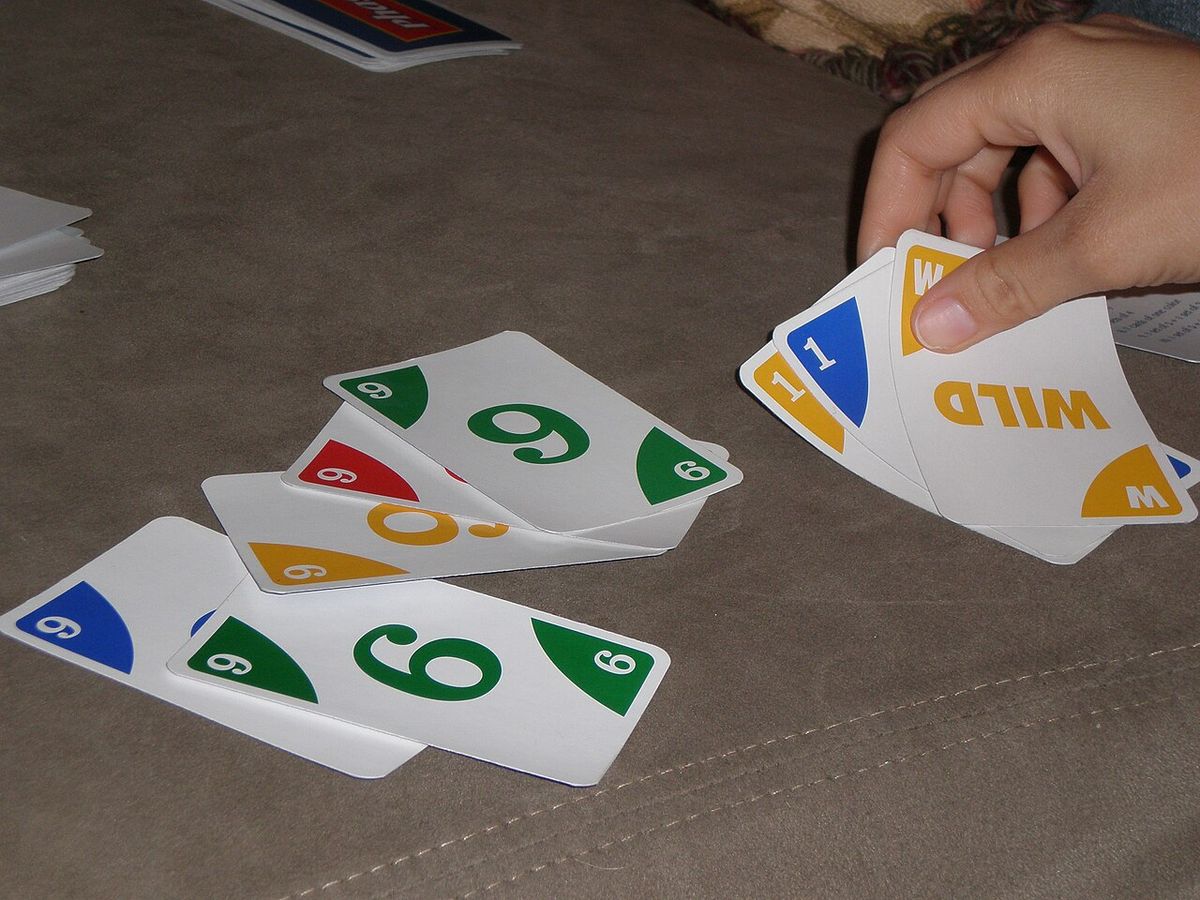
A 'run' must consist of cards in consecutive ascending order, such as 3, 4, 5, 6. The suits or colours do not need to match in a run, but for Phase 8, all seven cards must share the same colour (all red or all black). A 'set' consists of cards with the same numerical value, regardless of their suit or colour. The strategic use of Wild cards is crucial, as they can substitute for any number or any colour to help complete a phase, though they carry a high penalty point value if left in a player's hand at the end of a round.
Scoring and Card Values
Accurate scoring is essential in Phase 10, as the player with the lowest cumulative score after someone completes Phase 10 is the overall winner. This means a player can lose many individual hands but still win the game by minimizing penalty points. Penalty points are assigned after each hand to every player except the one who went out. The point values for cards are fixed and must be tallied from all cards remaining in a player's hand. The penalty point system is detailed in the table below.
| Card Type | Point Value |
|---|---|
| Number cards 1-9 | 5 points each |
| Number cards 10-12 | 10 points each |
| Skip cards | High point value |
| Wild cards | High point value |
The game concludes when a player completes Phase 10 and then discards their final card to go out. If two or more players complete Phase 10 in the same final hand, the winner is the player among them with the lowest total score for the entire game. Should those total scores be tied, the official rules prescribe a tiebreaker round where the involved players attempt to complete Phase 10 again, or in some variants, the last phase each was trying to complete. This scoring system encourages defensive play, as players must balance the urge to complete their phase quickly with the risk of being caught with a hand full of high-value cards if someone else ends the round.
History and Commercial Success
Kenneth Johnson created Phase 10 in 1982, basing its mechanics on the classic card game genre of contract rummy. The game was originally published by Fundex Games, which marketed it as a rummy-type game with a challenging twist. Phase 10 rapidly grew in popularity, becoming Fundex's best-selling product. This massive commercial success demonstrated the game's broad, enduring appeal across multiple generations of players.
In a significant corporate shift, Fundex sold the license rights for Phase 10 to the toy and game giant Mattel in December 2010. Under Mattel's ownership, the game has remained in continuous production and distribution, maintaining its presence on retail shelves across Canada and internationally. The game's cultural impact was formally recognized in November 2024 when it was inducted into the National Toy Hall of Fame, an honour that cements its status as a classic. The standard edition is widely available at Canadian retailers like Walmart and specialty toy stores, often marketed with the tagline 'From the makers of UNO' to leverage brand recognition.
Digital Adaptations and Variants
The digital evolution of Phase 10 began in 2007 when Fundex partnered with Magmic to bring the game to BlackBerry devices. This was followed by an iOS release in 2009 and an Android version in March 2012, which included both free and paid options. Magmic also released a dice game adaptation, Phase 10 Dice, on the iTunes App Store in September 2013. A major new digital version, Phase 10: World Tour, was launched by Mattel163 Limited in 2019 for Android and iOS. This edition introduced a 'Journey' mode where players travel to different virtual worlds, completing unique phases against computer opponents of varying difficulty.
The game also features online multiplayer functionality, allowing players to compete with others globally. This multiplayer mode uses an in game currency system of coins, where players spend coins to play and earn more if they win, similar to the system in Mattel163's digital version of Uno. The game uses two regular decks of cards. Several physical variants of the game have been released.
- Phase 10 Express: A faster-paced version of the game.
- Phase 10 FLIP: Features double-sided cards for added strategy.
- Phase 10 in a travel-sized storage box.

Phase 10 in the Canadian Market
Phase 10 holds a strong position in the Canadian games market, commonly found in the board game aisles of major retailers, toy stores, and online marketplaces. It is frequently purchased as a family game, with its packaging and rules featuring both English and French text to serve the Canadian bilingual market. Its rummy-based mechanics are familiar to many players, while the structured phase system provides a clear and engaging goal. Canadian consumers can choose from the classic base game as well as the various travel and express editions. The game's longevity and hall of fame status contribute to its perception as a reliable and worthwhile entertainment purchase. Its simple rules and potential for strategic depth allow it to bridge age gaps, appealing to both children learning card game fundamentals and adults enjoying a light, social competition.
Questions about Phase 10
What are the rules of Phase 10?
Phase 10 is played over a series of hands where players try to complete ten specific phases in order. Each player is dealt ten cards at the start of a hand. On your turn, you draw a card, may lay down your completed phase, add cards to existing phases (hit), and then discard one card. The hand ends when a player discards their last card. That player advances one phase, while others must retry their current phase. All other players score penalty points for cards left in hand. The first to complete Phase 10 and go out wins, but the overall winner is the player with the lowest total score at that point.
What is the difference between Phase 10 and Uno?
While both are published by Mattel and are popular card games, Phase 10 and Uno are fundamentally different. Phase 10 is a rummy-style game focused on collecting specific sets and runs of cards over multiple rounds. Uno is a shedding-type game where the goal is to be the first to play all your cards by matching colour or number. Phase 10 involves longer-term strategy across phases, while Uno is faster-paced and more focused on immediate card matching and action cards. Both games are staples in the Canadian family game market.
Can you play Phase 10 with two players?
Yes, Phase 10 can be played with two to six players. The rules are the same regardless of player count, though the dynamic changes with fewer players. With only two players, the game can be more strategic and less chaotic, as you have more control over the discard pile and can more easily track your opponent's progress. The official rules fully support two-player games. This makes it a versatile game suitable for different group sizes.
What are the ten phases in Phase 10?
The ten phases are specific card combinations a player must complete in sequence to win the game. The phases are: 1) 2 sets of 3, 2) 1 set of 3 + 1 run of 4, 3) 1 set of 4 + 1 run of 4, 4) 1 run of 7, 5) 1 run of 8, 6) 1 run of 9, 7) 2 sets of 4, 8) 7 cards of one colour, 9) 1 set of 5 + 1 set of 2, and 10) 1 set of 5 + 1 set of 3. Players must complete the current phase in order to advance to the next one. These phases increase in complexity as the game progresses.
Is there a digital version of Phase 10?
Yes, several digital versions exist. The most recent major release is Phase 10: World Tour by Mattel163, launched in 2019 for iOS and Android. It features a single-player Journey mode with unique phases and a global multiplayer mode. Earlier digital versions were released by Magmic for BlackBerry, iOS, and Android platforms. There is also a separate dice game app called Phase 10 Dice. These adaptations allow players to enjoy the game on mobile devices.
How many cards are in a Phase 10 deck?
The game uses two regular decks of cards. This includes number cards from 1 to 12 in four colours, plus four Wild cards and four Skip cards. The Wild card can be used in place of any number card or as any colour to complete a phase. The Skip card causes an opponent to lose a turn. This deck composition supports the rummy-style gameplay required to complete the ten phases.
Sources and further reading
- Phase 10 (Wikipedia)
- Fundex Card Game Phase 10 - Minds Alive! Toys Crafts Books (mindsalive.ca)
Checked by the Nosy Mag desk. Last updated 2026-11-12.