Belote
Belote is a 32-card trick-taking card game for four players in fixed partnerships, widely considered the national card game of France. The game, which belongs to the jass family, is characterized by the high rank of the jack and nine in the trump suit. It is popular in casual play and gambling circles. The game appeared around 1900 in France. Its definitive rules were first published in French in 1921. Closely related games are played throughout the world.
Origins and History
Belote emerged in France around the year 1900, evolving from earlier games in the jass family such as Klaberjass, which is also known as bela. The game's definitive rules were first codified and published in French in 1921, providing a standard framework for play. Its name is derived from the term for a specific meld within the game, the 'belote', which is a pair consisting of the king and queen of the trump suit. From its French origins, Belote has spread globally, with closely related variants played across Europe, North Africa, and the Middle East. Similar games are played in central Europe, Saudi Arabia (baloot) and in Cyprus (pilotta).
Equipment and Basic Concepts
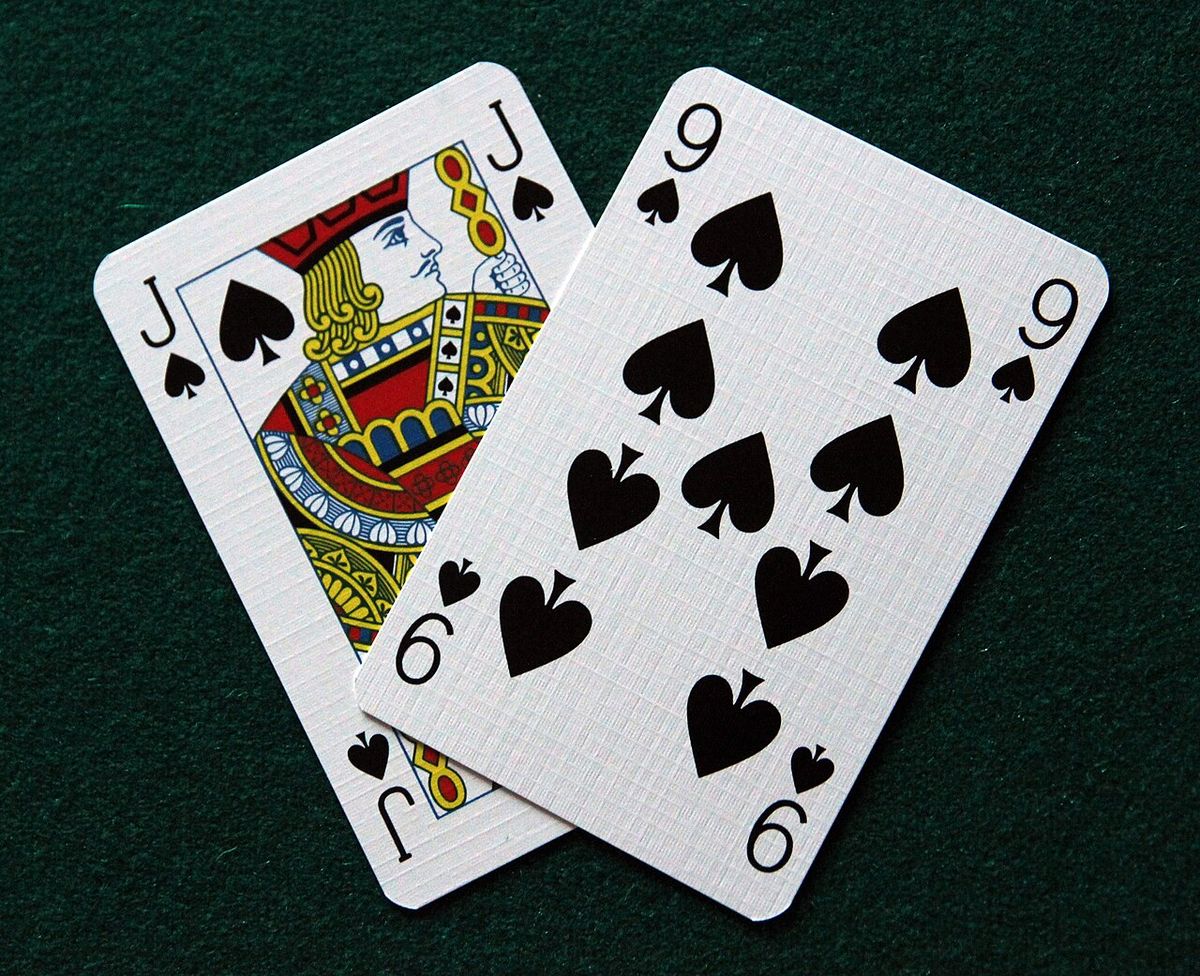
Belote is played with a standard 32-card deck, which is a French-suited pack stripped of all cards from the six down to the two. The four players form two fixed partnerships, with partners sitting opposite each other at the table. Each deal revolves around a trump suit, which outranks all other suits and has a unique hierarchy of cards. The rank of cards differs significantly between the trump suit and the other three non-trump, or plain, suits, fundamentally shaping the strategy of play. The game consists of several phases: dealing, one or two rounds of bidding, play with melding, and final scoring for the deal.
Card Rankings and Point Values
The hierarchy of cards is central to gameplay and differs between the trump suit and the plain suits. In the trump suit, the order from highest to lowest is Jack, 9, Ace, 10, King, Queen, 8, and 7. This order, where the Jack and 9 are the most powerful, is a defining feature of the jass family of games. In the three plain suits, the standard order applies: Ace (high), 10, King, Queen, Jack, 9, 8, and 7 (low). Each card also carries a point value used for scoring, with the last trick of each deal awarding a bonus. The total point value available in the tricks of a single deal is 162 points. The specific point values for cards are as follows:
| Card | Point Value |
|---|---|
| Ace | 11 points |
| 10 | 10 points |
| King | 4 points |
| Queen | 3 points |
| Jack (plain suit) | 2 points |
| 9, 8, 7 | 0 points |
The last trick, called Dix de Der, is worth 10 points. Winning all eight tricks in a deal is known as a capot. A capot awards the team 252 points instead of the standard 162. This is because the last trick bonus increases to 100 points from its usual 10.
Gameplay Procedure: Dealing and Bidding
A game of Belote proceeds through several distinct phases: dealing, bidding, declarations, trick-play, and scoring. The dealer distributes cards in batches, first giving three cards to each player, then two cards, for a total of five cards each. One card is then turned face up on the table. This card's suit is a potential trump for the first round of bidding. The remaining cards are temporarily set aside. The bidding phase consists of one or two rounds and determines the declarer and the trump suit. The player to the dealer's left begins, and each player in turn may either 'take' the face-up card, thereby accepting its suit as trump and becoming the declarer, or pass. If all four players pass, a second round of bidding occurs where any player may name a trump suit different from the face-up card's suit, with the dealer having the final opportunity to name any suit as trump. Once a declarer is established, the remaining cards are dealt. The declarer picks up the face-up card, and then each player, including the declarer, receives additional cards so that everyone holds eight cards. The declarer's partner becomes their silent ally for the deal. Before trick-play begins, players may announce declarations, which are specific combinations of cards held in hand. These melds, except for the belote itself, must be announced during or before the first trick. The rules for trick-play are specific and must be followed strictly by all players during the eight tricks of each deal.
- The first player in a trick can play any card from their hand.
- Subsequent players must follow the suit that was led if they are able to do so.
- If the led suit is the trump suit, a player must play a higher-ranking trump card if they have one, regardless of who is currently winning the trick.
- If a player cannot follow a non-trump suit lead, they must play a trump card, an action called trumping or ruffing, unless their partner is currently winning the trick.
- If an opponent has trumped and is winning a trick, a player who cannot follow suit must play a higher trump if possible, called overtrumping. If they cannot overtrump but have a lower trump, they must play it, called undertrumping.
- The winner of a trick collects the four cards and leads the first card to the next trick.
Declarations (Melds)
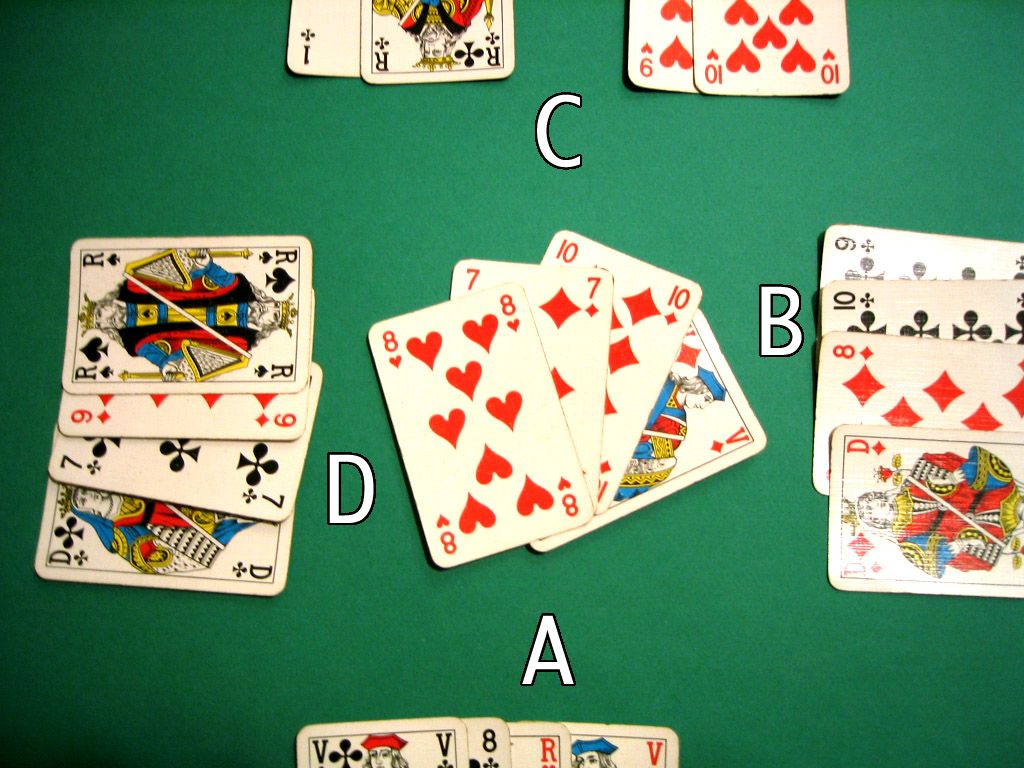
Declarations allow teams to score bonus points for specific card combinations held at the start of play. These melds are announced at the beginning of the first trick, and only the team that declares the highest-value combination scores for declarations, with the crucial exception of the belote. A single card can only be counted toward one declaration. The primary declarations and their point values are as follows:
- Tierce: A sequence of three consecutive cards in the same suit (e.g., A-K-Q). Worth 20 points.
- Quarte: A sequence of four consecutive cards in the same suit. Worth 50 points.
- Quinte: A sequence of five consecutive cards in the same suit. Worth 100 points.
- Carré (Four of a Kind): Four Jacks (200 points), four Nines (150 points), or four Aces, Tens, Kings, or Queens (100 points). Sevens and Eights do not count.
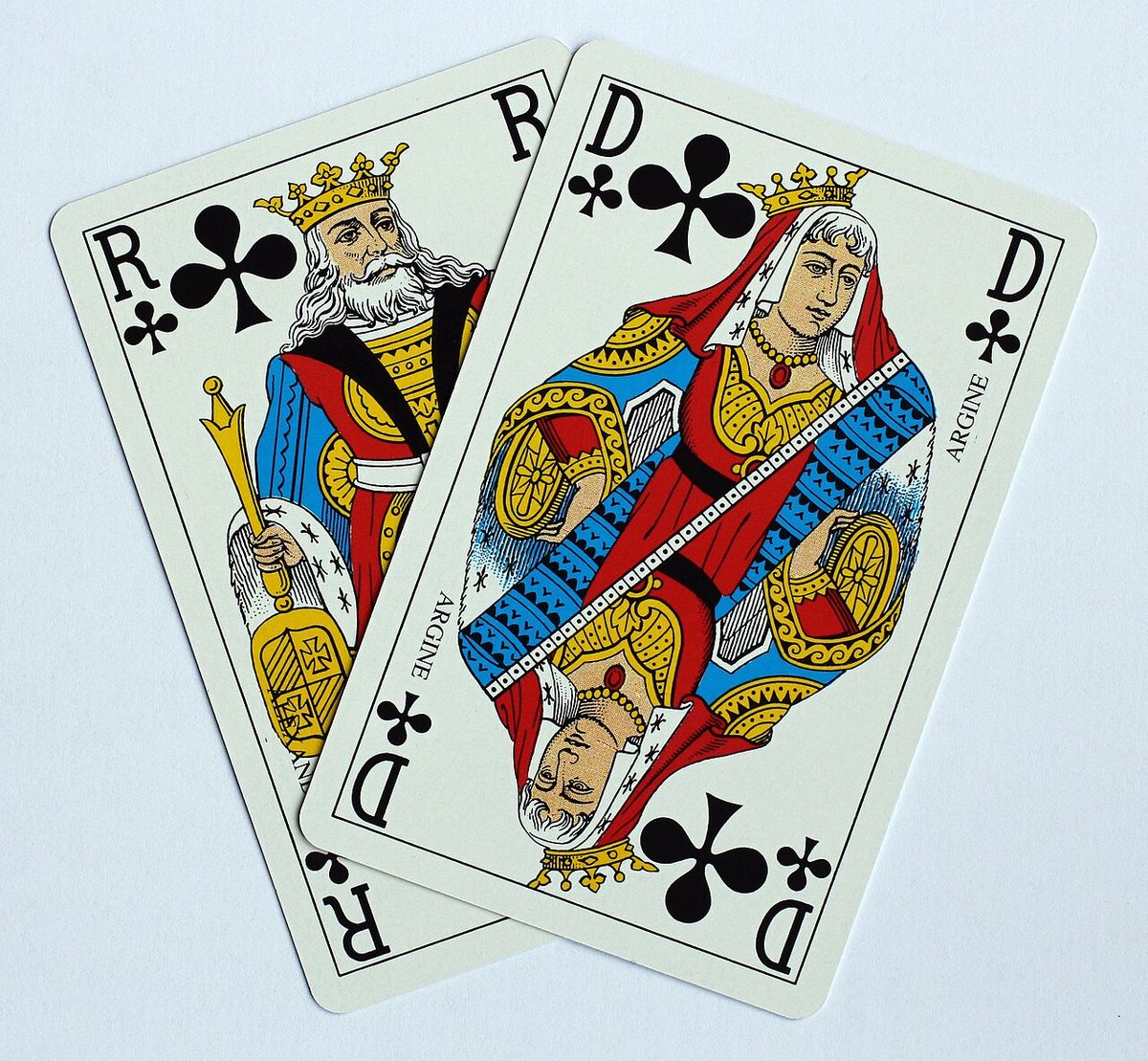
- Belote: The pair of the King and Queen of the trump suit. Worth 20 points and scored separately.
The belote is unique. It is declared not during the initial meld announcement, but when a player plays the first card of the pair (the King or Queen of trump) during trick-play, announcing 'belote'. When the second card of the pair is played, 'rebelote' is announced. The 20 points for a belote-rebelote are always awarded to the team that holds it, even if they fail their contract. Sequences are counted in the "A K Q J 10 9 8 7" order within a single suit, and a player only needs to specify the type of declaration, not the exact cards or suit.
Scoring and Winning
At the end of the eight tricks, each partnership totals the point values of the cards in the tricks they have won, plus the 10 points for the last trick (dix de der) and any points from declarations. The declaring team has a contract to score more points than the defending team. If the declarers succeed, both teams add their respective point totals to their cumulative game score. If the declarers fail to outscore the defenders, they score zero for the deal, and the defenders score the sum of both teams' points from that deal. A tie, known as a litige, results in the declaring team's points being held in reserve and added as a bonus to whichever team wins the next deal. If another tie occurs, the points continue to accumulate. The first partnership to reach the agreed-upon target score of 1000 points wins the game.
Major Variants: Coinche and Contrée
Several popular variants of Belote exist, often with more complex bidding systems. Belote Coinchée, commonly called Coinche, incorporates a bridge-like auction. All cards are dealt first, and players bid in a clockwise auction, stating a number of points (starting at 80) and a trump suit or a special contract like 'no trump' or 'all trumps'. In these special contracts, card ranks and values are modified. Bids can be doubled ('coinche') and redoubled ('surcoinche'), which typically ends the auction. A contract is successfully made if the declarers take at least as many points as they bid. If successful, the declarers score the points taken plus their bid while the defenders score the points they took. If the contract fails, the defenders score 160 points plus the declarers' bid, and the declarers score nothing but 20 points for any belote they held. Belote Contrée is a similar variant but typically omits the 'no trump' and 'all trump' contracts and is often played without declarations other than belote-rebelote. The double is called 'contrée' and the redouble 'surcontrée'.
Worldwide Variants and Names
Belote and its closely related games are played in numerous countries under various names, reflecting its wide appeal and adaptation to local cultures. These games share the core mechanics of a 32-card deck, trick-taking, and often the special rank of the jack and nine. The global spread of these games demonstrates the lasting influence of the jass family. Specific regional names and games include:
- Quebec: Bœuf
- Bulgaria: Бридж-белот (Bridge-belote)
- Greece: Βίδα (Vida). Μπουρλότ (Bourlot)
- Cyprus: Πιλόττα (Pilotta)
- Croatia, Serbia, North Macedonia: Bela or Belot (Белот, Beljot)
- Armenia: Բազար բլոտ (Bazaar belote)
- Arabian Peninsula: بلوت (Baloot)
- Russia, Moldova, Tunisia, Morocco, Madagascar: Belot or Belote (called Tsiroanomandidy in Madagascar)
- Netherlands: Klaverjassen
Digital Play and Modern Context
In the digital age, Belote has found a massive audience online, which has increased its accessibility far beyond its traditional geographic strongholds. Numerous websites and mobile applications offer Belote, Belote Coinchée, and Belote Contrée, often in multiplayer formats with ranking systems, virtual currency, and daily challenges. Platforms like VIP Belote and others facilitate play between users worldwide, making the game accessible to French speakers and card game enthusiasts across Canada and beyond. These digital versions faithfully replicate the rules while adding social and competitive layers through leagues and tournaments. Players can often download applications like 'Belote Card Game' or 'Belote Multijoueur' to play on Windows, Android, or iOS devices. Online play typically follows standard rules where the goal is to collect points with a partner to reach a target like 500 or 501 points before the rival team. Digital platforms also manage scoring automatically, track experience points, and offer game challenges for extra rewards, which has helped sustain the game's popularity with a new generation.
Questions about Belote
What is Belote?
Belote is a 32-card trick-taking partnership card game for four players in fixed partnerships. It is immensely popular in France and is considered the national card game. The game involves bidding for a trump suit, playing tricks, and scoring points from high-value cards and specific card combinations called declarations. It is known for the unique trump ranking where the Jack and Nine are the highest cards. The game belongs to the jass family of card games.
How do you win a game of Belote?
A partnership wins the game by being the first to reach a total score of 1000 points. Points are accumulated deal by deal from winning tricks containing valuable cards. Points also come from capturing the last trick, called the Dix de Der, and declaring melds. The declaring team must outscore the defenders in each deal to add their points to their total. If they fail, the defenders score all the points from that deal.
What is a 'belote' and a 'rebelote'?
A 'belote' is the combination of the King and Queen of the trump suit. It is worth 20 bonus points. A player announces 'belote' when playing the first of these two cards during trick-play and announces 'rebelote' when playing the second. Unlike other declarations, points for a belote-rebelote are always scored by the team that holds it, even if they lose the contract. This meld is declared during play, not during the initial meld announcement phase.
What is the difference between Belote and Belote Coinchée?
Belote Coinchée, or Coinche, is a major variant with a structured bidding phase similar to bridge. All cards are dealt first, and players bid on a contract specifying a point target and trump. It includes special 'no trump' and 'all trumps' contracts and allows for doubles and redoubles. Standard Belote uses a simpler bidding process where a player accepts or names a trump suit after receiving only five cards. In Coinche, a failed contract awards the defenders 160 points plus the declarers' bid.
Can you play Belote online?
Yes, Belote is widely available online and on mobile devices. Numerous platforms offer multiplayer Belote, Belote Coinchée, and Belote Contrée. These digital versions often feature ranked play, tournaments, virtual currency, and experience points. They allow players from Canada and around the world to compete against each other at any time. Platforms like VIP Belote host games that faithfully replicate the standard rules and scoring.
What is the total point value available in a single deal?
The total point value available in the tricks of a single deal is 162 points. This sum comes from the point values of the 32 cards plus the 10 points awarded for winning the last trick, called the Dix de Der. The card point values are: Ace 11, Ten 10, King 4, Queen 3, Jack 2, and Nine, Eight, Seven 0. If a team wins all tricks (a capot), they score 252 points as the last trick bonus becomes 100 points.
Sources and further reading
- Belote (Wikipedia)
- Rules of Belote (playjoy.com)
Checked by the Nosy Mag desk. Last updated 2026-11-10.