500 (card game)
500, also known as Five Hundred, is a classic trick-taking partnership card game derived from Euchre. The objective is for a team to be the first to score 500 points by successfully fulfilling bids on the number of tricks they will win. While of American origin, the game has found a lasting home in Canada, particularly in Ontario and Quebec, where it remains a staple of social and family game nights. It is distinguished by its unique 43-card deck, the strategic role of the joker, and a variety of special contracts like Misère. The game's blend of partnership communication, tactical bidding, and trick-play maintains a dedicated following across generations.
Origins and History
The game of 500 originated in the United States as an extension of Euchre before the year 1900. It incorporated elements from other games, including a bidding system and a misère contract similar to that found in Russian Preference. The United States Playing Card Company was instrumental in its early promotion, copyrighting and marketing a dedicated 500 deck with an accompanying rule set in 1904. The company further refined the game by releasing an improved Avondale scoring table in 1906 to address bidding irregularities. While its peak popularity in the United States was eclipsed by the rise of Auction and Contract Bridge after 1920, 500 maintained a strong regional following in states like Ohio and Pennsylvania. The game also took root internationally, becoming notably popular in Australia, New Zealand, the Shetland Islands, and Canada. In Canada, it has been a persistent favourite, especially within the communities of Ontario and Quebec, where it is often passed down through families as a traditional pastime.
Equipment and Setup
The standard game of 500 for four players uses a modified 43-card deck. This deck is created by removing all 2s, 3s, and two 4s from a standard 52-card pack and adding a single joker. Common practice removes the two black 4s, though some variants remove the 4 of spades and 4 of diamonds, and the 4 that matches the colour of the trump suit is then considered a trump card, ensuring there are always 13 trumps. A 45-card deck, which retains all four 4s, is also a common variant, particularly in French Canadian play. The game is played by four players in two partnerships, with partners traditionally sitting opposite each other. The dealer distributes ten cards to each player in a specific sequence, such as bundles of three, four, and three cards. During the deal, three cards (or five with a 45-card deck) are dealt face down to the centre of the table to form the kitty, also known as the widow or blind, and this kitty is later claimed by the winning bidder.
Card Ranking and the Joker
A fundamental and unique aspect of 500 is its card ranking system, which differs between trump and non-trump suits. In a non-trump suit, cards rank from highest to lowest as Ace, King, Queen, Jack, 10, 9, 8, 7, 6, 5, and 4. The trump suit features a more complex hierarchy where the highest card is always the joker, followed by the jack of the trump suit known as the Right Bower, and then the jack of the suit of the same colour as trumps, called the Left Bower, which is considered part of the trump suit for the duration of the hand. After these top three cards, the remaining trump cards rank in their usual order: Ace, King, Queen, 10 down to 4. The joker holds a special status as in a trump contract it is the highest trump, and in a no-trump contract, including Misère, it is the only trump card and may only be played when a player cannot follow suit. When leading the joker, a player nominates the suit that others must follow, which is a powerful tactical tool available regardless of the cards in the leader's hand.
Bidding and Special Contracts
After the deal, a clockwise auction determines the contract for the hand. Starting with the player to the dealer's left, each player may either bid or pass. A bid consists of a number from six to ten and a trump suit (or no-trump), representing the number of tricks the bidder's partnership intends to win. Suits rank from lowest to highest in bidding: Spades, Clubs, Diamonds, Hearts, No-trump. A higher-numbered bid always outranks a lower one, and at the same number, a higher-ranking suit or no-trump outranks a lower one. The auction continues until three consecutive players pass. In American-style play, there is typically only one bidding round where a bid of six is often called an "inkle," a weak bid used to signal a holding to one's partner, and it usually cannot win the auction. If no bid of seven or higher is made, the hand is often redealt. The game features several special, high-risk contracts.
- Misère (Nullo): The bidder aims to win zero tricks. Their partner folds, and the contract is worth 250 points, bidding between 8 Spades and 8 Clubs.
- Open Misère: The bidder aims for zero tricks but must play with their hand exposed after the first trick. Worth 500 points, it bids between 10 Diamonds and 10 Hearts.
- Blind Misère: A Misère bid made before the bidder looks at their cards.
- Double Nullo/Grand Nullo: Both partners must avoid winning any tricks. In some versions, the caller does not access the kitty.
- Hi/Lo (Even Stevens): The solo bidder aims to win exactly five tricks and lose five. Worth 350 points, it is played like no-trump.
- Patastrophe: An Open Misère where both partners play with open hands after the first trick, worth 1000 points.
- Slam: A variant where the declarer must win all ten tricks after their partner passes one card and folds, worth 500 or 520 points.
The player who makes the successful bid then collects the kitty. This player sorts through their hand and discards the least-useful three cards, or five in the case of a 45-card deck. The discarded cards are placed face down and play no further part in the hand. The player then begins play with a hand of ten cards. In some variations, if a player does not receive a face card, it is considered a misdeal and a redeal may be required.
Gameplay and Scoring
The declarer (the player who made the winning bid) leads to the first trick. Players must follow suit if able, which includes following a led trump with any trump card, including the Left Bower. If unable to follow suit, a player may play any card. The trick is won by the highest trump played. If no trump is present, by the highest card of the suit led. The winner of each trick leads to the next. After all ten tricks are played, the hand is scored. If the bidding partnership makes or exceeds their bid, they score the points for that contract. If they fail, the value of the bid is deducted from their score. Points are never subtracted from an opponent's total. Failed contract points are simply added to the opposing team's score. The first partnership to reach +500 points wins the game. A common variation, the point-spread rule, ends the game when one team has a positive score and the other a negative score, and the difference between them is 500 or more points. A team whose score dips to -500 points or below loses the game, known as going "out the back door". The player to the left of the previous dealer deals for the next hand, so the deal moves clockwise around the table.

Common Variations and Player Counts
500 includes numerous local and regional rule variations that affect gameplay. The French Canadian variation is particularly notable in Quebec and uses a 52-card deck with both 2s and 3s removed and two jokers ("bonhommes"), with the white joker typically ranked higher. Each player receives ten cards, and the kitty holds six, while the "petite misère" is worth 500 points and the "grosse" or open misère is worth 1000. Many groups play with a "set" or "breach" rule, which penalizes a team that fails its contract by a large margin by prohibiting them from bidding in the next hand. The Walker Ultimate 500 variation requires the winning team to hit exactly 500 points, with 1000 points resulting in a loss, leading to more complex bidding. While the classic game is for four players in partnerships, 500 can be adapted for other numbers. The following list outlines the common adaptations for different player counts, each requiring specific deck adjustments.
- Two Players: Uses a 43-card deck. Each player is dealt a hand, and a third "dummy" hand is dealt to the table, which each player controls when they are not the declarer. An alternative version uses a standard 52-card deck with ten cards each and eight exposed cards for selection.
- Three Players: A cutthroat version with no permanent partnerships. Each player bids and plays solo, typically using a 33-card deck (a joker plus a Piquet pack). Alternatively, a "dead hand" can be used with a standard deck. The common strategy is for the two unsuccessful bidders to form a temporary alliance.
- Four Players: The standard and most popular form, played in two fixed partnerships with a 43 or 45-card deck.
- Five Players: Often played with rotating partnerships, where each player takes a turn without a partner over the course of five hands. A full 52-card deck with one joker is used, and the winning bidder may choose a partner by calling a card. The partnership changes each round, and each player plays for themselves.
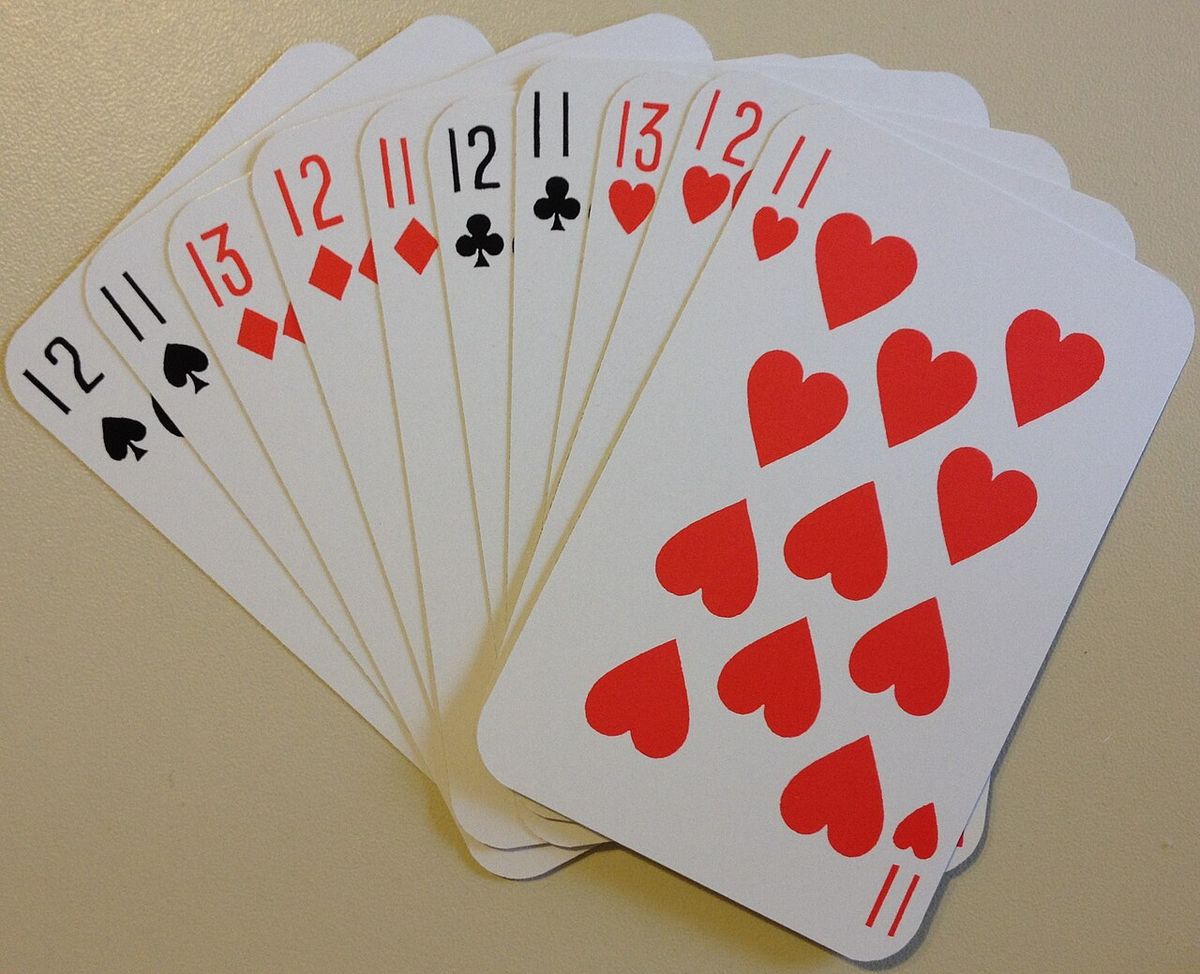
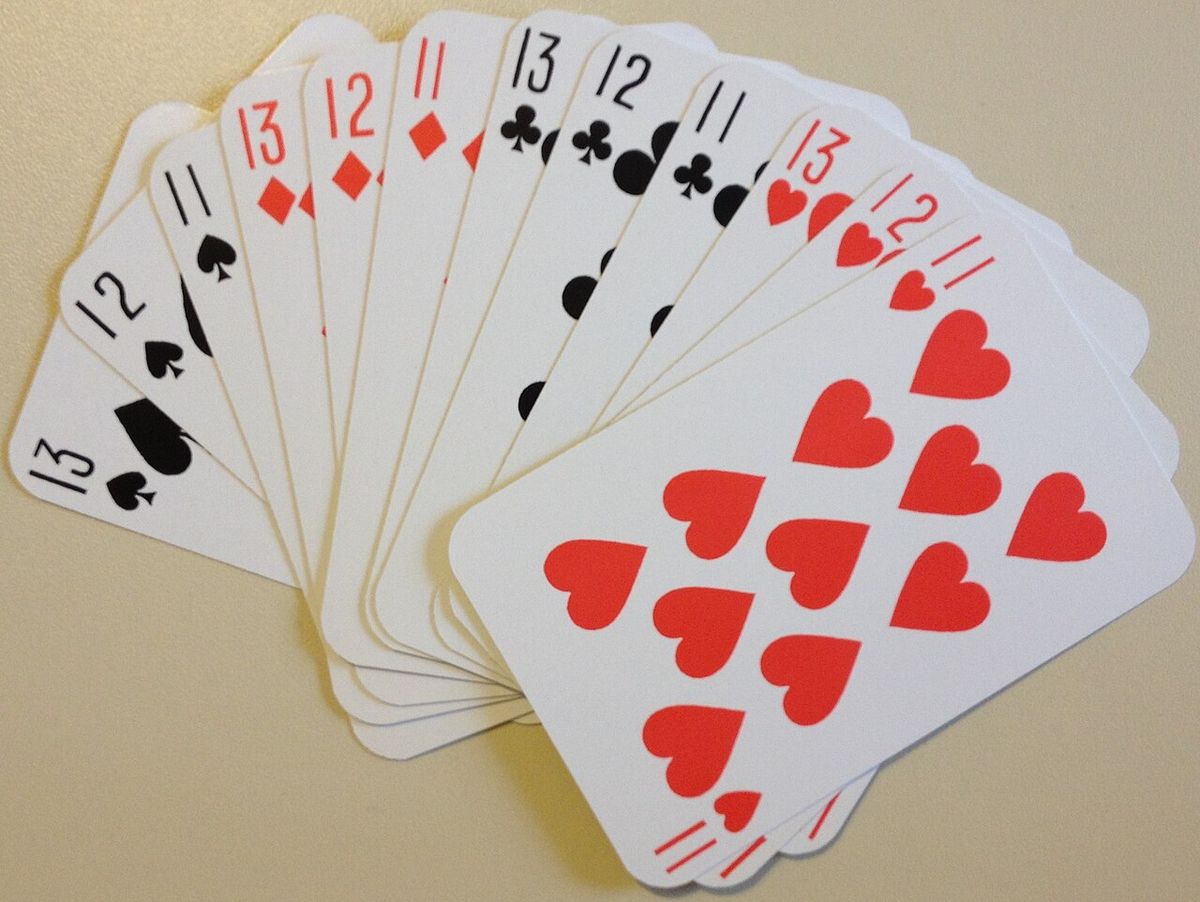
- Six Players: Can be played as three teams of two or two teams of three. This format requires a special 63-card deck which includes 11s, 12s, and red 13s. Each player receives 10 cards, and the kitty receives 3 cards.
500 in the Digital Age and Comparison to Rummy 500
500 has successfully transitioned to online platforms, allowing players to connect and compete virtually. Sites like Trickster Cards offer digital versions of the game, including the Australian variant with multi-round bidding and the American single-bid style. These platforms often feature daily challenges, leaderboards, and support for various player counts and rule customizations, helping to sustain the game's community. It is crucial to distinguish 500 (the trick-taking game) from Rummy 500, a completely different card game popular in Canada and elsewhere. Rummy 500 is a shedding and melding game where players aim to form sets and sequences to be the first to reach 500 points. The confusion arises solely from the shared target score, and the following table clarifies the key differences between these two distinct games.
| Feature | 500 (Five Hundred) | Rummy 500 |
|---|---|---|
| Game Type | Trick-taking | Rummy (melding and shedding) |
| Primary Objective | Fulfill a bid for tricks | Meld cards into sets/runs and shed hand |
| Key Mechanics | Bidding, following suit, trump | Drawing, melding, discarding |
| Common Deck | 43 or 45 cards + joker(s) | Standard 52 cards + jokers |
| Partnerships | Yes (in standard 4-player) | Typically every player for themselves |
The United States Playing Card Company copyrighted and marketed a dedicated 500 deck in 1904. The game remains popular in Ohio and Pennsylvania, where it has been taught through six generations community-wide. Special decks for six-handed play were created by the US Playing Card Company, and these decks are also made by Queen’s Slipper, Piatnik, and Cartamundi. The original rules state that if any player scores out during play of a hand, the balance of the hand is not played unless the bidder can win out.
Questions about 500 (card game)
What is the difference between 500 and Rummy 500?
500 (Five Hundred) and Rummy 500 are entirely different card games. 500 is a trick-taking game where partners bid on how many tricks they will win, using a modified deck and a trump suit. Rummy 500 is a melding and shedding game where individual players try to form sets and sequences of cards to be the first to reach 500 points, played with a standard deck. The only commonality is the target score of 500.
How many cards are used in a standard 500 game?
The standard four-player game uses a 43-card deck. This is made from a standard 52-card deck by removing all 2s, 3s, and two of the 4s (usually the black 4s), and adding one joker. A 45-card deck variant is also common, where all four 4s are kept and the kitty is larger. The French Canadian variation uses a 52-card deck with the 2s and 3s removed and two jokers.
Can you play 500 with two players?
Yes, a two-handed version of 500 exists. It is played with the standard 43-card deck. Each player is dealt a hand, and an additional "dummy" hand is dealt face down to the table. When a player is the declarer, they play only their own hand. When they are the defender, they play both their own hand and the dummy hand against the declarer, creating a challenging solo experience. An alternative version uses a standard 52-card deck with ten cards each and eight exposed cards for selection.
What is a 'Misère' in 500?
Misère, also called Nullo, is a special contract where the bidder's goal is to win zero tricks. Their partner folds and does not participate in the hand. It is worth 250 points and typically outbids 8 Spades but is outbid by 8 Clubs. An Open Misère is a more difficult version where the bidder must play with their hand exposed after the first trick. It is worth 500 points and bids between 10 Diamonds and 10 Hearts. In some variants, its value and precedence can differ.
How does the joker work in 500?
The joker is the most powerful card. In a trump contract, it is the highest trump. In a no-trump contract or Misère, it is the only trump card and can only be played when a player cannot follow suit. When leading a trick with the joker, the player nominates which suit the other players must follow. This nomination can be any suit, regardless of the cards in the leader's hand. In some versions with two jokers, the black joker beats the red one.
Where is 500 popular in Canada?
500 is popular in Canada, especially in the provinces of Ontario and Quebec. The game has been taught through six generations community wide in these regions. A specific French Canadian variation is popular in Quebec, which uses two jokers and a standard 52 card pack stripped of 2s and 3s. This variation involves a kitty of six cards and includes special misère bids. Beyond these provinces, the game maintains popularity in other countries such as Australia, New Zealand, and Shetland.
Sources and further reading
- 500 (card game) (Wikipedia)
- The 8 Best Card Games of 2026 | Reviews by Wirecutter (nytimes.com)
- Trickster 500 | Play Free Online (trickstercards.com)
- How to Play 500 Rum Card Game (bicyclecards.com)
- 500 Rummy, Card Game Rules (pagat.com)
- Over 120 Sheets For 500 Rummy Card Game: Publishing, Score Sheetz (amazon.ca)
- Rummy 500 Card Game Canada, Ivo's atelier (ivosatelier.eu)
Checked by the Nosy Mag desk. Last updated 2026-11-10.