CEGEP
A CEGEP is a publicly funded college that forms a unique part of Quebec's post-secondary education system. The term is a loanword from the French acronym for collège d'enseignement général et professionnel, meaning General and Professional College. These institutions provide a mandatory transitional step for Quebec students between secondary school and university, offering academic, professional, and general programs. The CEGEP system was created in 1967 to democratize and harmonize access to higher education across the province.
Historical context and creation
The CEGEP system was born from a period of significant social reform in Quebec known as the Quiet Revolution. Prior to 1967, access to higher education in the province was fragmented and unequal, with French Canadian students often requiring two to three more years of study than their English Canadian counterparts to reach university. The system was also divided among numerous parallel institutions like classical colleges, normal schools, and specialized trade schools, which created barriers based on language, location, and socioeconomic status. The landmark Parent Report criticized this discriminatory structure and the general under schooling of French Canadians. In response, the first Minister of Education, Paul Gérin-Lajoie, championed legislation to create a unified collegiate network. The primary goals were to standardize the education pathway, improve accessibility for rural and urban students alike, and merge professional and academic streams under one roof. The first twelve CEGEPs opened their doors in September 1967, marking the beginning of a major change in Quebec education.
These inaugural institutions were strategically established across the province to ensure broader geographic access. They were CEGEP of Abitibi-Témiscamingue, Ahuntsic College, CEGEP of Chicoutimi, Édouard-Montpetit College, CEGEP of Jonquière, CEGEP Limoilou, Lionel-Groulx College, Maisonneuve College, CEGEP of Outaouais, CEGEP of Rimouski, CEGEP of Sainte-Foy, and Valleyfield College. The creation of CEGEPs effectively consolidated the existing patchwork of post secondary options into a coherent public system. This reform was a conscious effort to use education as a tool for social democratization. The mandatory common core curriculum, introduced for all students, was specifically designed as a rampart against excessive class divisions and to ensure all Quebec youth received a foundational education in literature, philosophy, and critical thinking. This common trunk of courses was intended to democratize teaching of subjects historically associated with elite education.
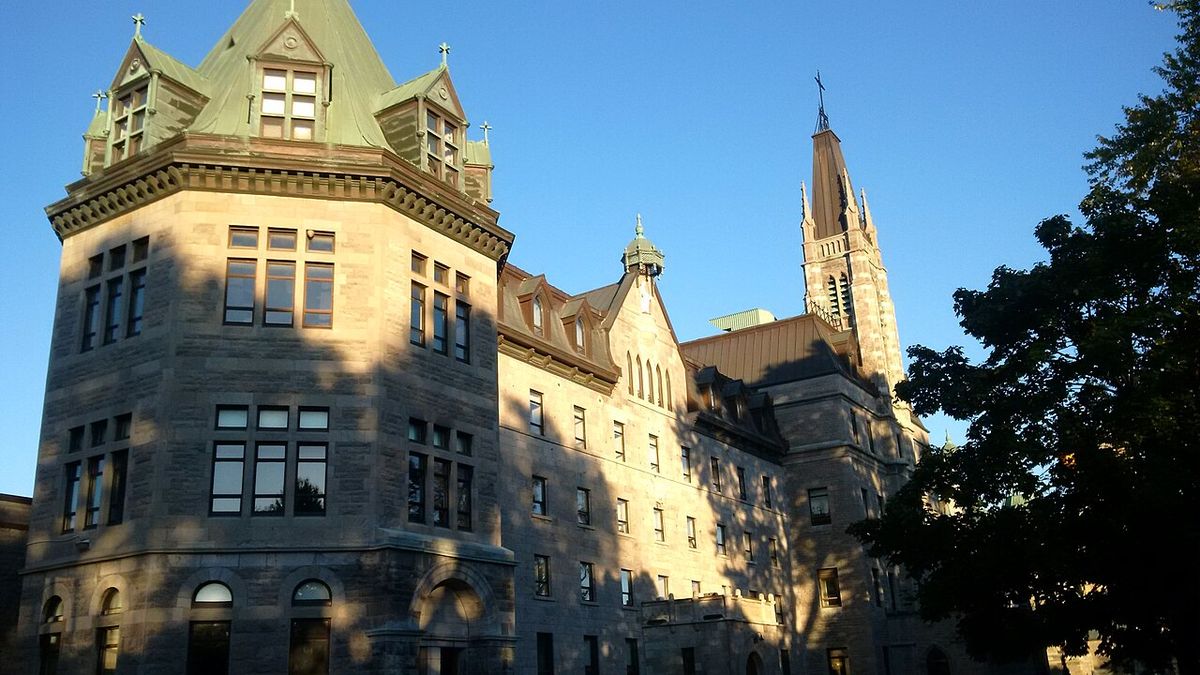
Structure and educational pathway
The Quebec education path is distinct within Canada, and the CEGEP serves as its crucial bridge. Students complete six years of primary school followed by five years of secondary school, finishing at Grade 11 instead of the Grade 12 common in other provinces. For those intending to pursue university, attendance at a CEGEP is mandatory before enrolling in a Quebec university. This structure means Quebec students complete one fewer year of pre university schooling than their counterparts elsewhere in North America. The CEGEP system compensates for this by providing the necessary preparatory year within its academic programs, while also offering a direct route to the workforce through its professional streams. Following successful completion of a CEGEP diploma, most undergraduate programs at Quebec universities are three years in length, making the total time from primary school to a bachelor's degree equal across Canada.
For students planning to study outside Quebec, the CEGEP diploma still provides significant advantages. A student with a two year DEC can apply to universities in other provinces and often receive one year of advanced standing, effectively entering as a second year student. The amount of credit granted is at the discretion of each receiving institution, but in practice most accept up to one full year. Alternatively, students may complete just one year of CEGEP and then apply to out of province universities as regular applicants who have met the equivalent of Grade 12 requirements. Some private English secondary schools in Quebec also offer a specialized Grade 12 curriculum that allows direct university admission without a DEC, but this is an exception within the provincial system. The CEGEP's role as a flexible transitional stage allows students to solidify their academic and career interests before committing to a longer and more specialized university program.
Programs and diplomas
CEGEPs offer three main types of programs leading to a Diploma of College Studies, or DEC (Diplôme d'études collégiales). All DEC programs, regardless of focus, include a mandatory common core curriculum designed to provide a broad educational foundation. This core consists of 14 courses, four in the student's first language, two in their second language, three humanities courses, three physical education courses, and two complementary elective courses unrelated to the main program. This requirement ensures that every graduate, whether from a technical or pre university stream, shares a common base of knowledge and skills. Academic Programs are two years in duration and are designed as university preparation, covering subject matter equivalent to the missing Grade 12 year and introductory first year university courses in fields like sciences, humanities, commerce, or arts.
Professional Programs are typically three years long and are geared toward immediate entry into the workforce. They provide specialized training in skilled trades and technologies such as nursing, industrial electronics, architectural technology, and computer science. While these programs are not primarily designed for university transfer, they do lead to a DEC and do not preclude further university study. General Programs also take three years to complete. In addition to these DEC programs, colleges offer continuing education for adults, which leads to an Attestation of College Studies (ACS or AEC). This certificate is similar to a DEC but does not include the core curriculum and is issued directly by the college rather than the provincial Ministry of Education and Higher Education.

The mandatory common core curriculum
A defining and unique feature of CEGEP education is the compulsory common core curriculum that every student must complete, irrespective of their chosen program. This set of courses was a deliberate innovation from the system's inception, intended to foster a shared intellectual experience and combat social stratification through education. The core is composed of several key subject areas that are deemed essential for the formation of well rounded citizens. All students take four courses in their language of instruction, ensuring advanced proficiency in French or English. They also take two courses in their second language, promoting bilingualism. Three humanities courses are required, which in French language CEGEPs are focused on philosophy, while in English institutions they cover a broader range of humanities topics. The curriculum mandates three physical education courses, emphasizing the importance of health and wellness.
Finally, students complete two complementary courses, which are electives chosen from fields outside their main program, such as arts or sciences, to encourage intellectual exploration. This common trunk of courses represents a significant portion of a student's coursework and is a fundamental part of the CEGEP philosophy. It ensures that a future engineer and a future philosopher graduate with some shared foundational knowledge in critical thinking, communication, and civic engagement. The design explicitly aims to democratize the teaching of literature and philosophy, subjects historically associated with elite classical education, making them accessible to all Quebec youth in the public college system. This approach was conceived as a rampart against excessive class divisions within society.
Language and the contemporary landscape
The vast majority of CEGEPs in Quebec are French language institutions, reflecting the province's linguistic majority. There are five public English language CEGEPs, which play a significant role for the English speaking community and newcomers. These English colleges are particularly popular among immigrants and anglophone Quebecers. This popularity has placed them at the centre of ongoing language policy debates. The Quebec government, in pursuit of its goal to promote French as the primary language of public life and higher education, has implemented measures to cap enrolment at English language CEGEPs. This policy is intended to encourage more students to choose French language post secondary education. These caps have generated concern within the English language education sector and among some employers.
Critics argue that limiting access to English CEGEPs could lead to an exodus of Quebec youth seeking higher education in other provinces, thereby reducing the local skilled labour pool. Student unions, such as that at Dawson College, have voiced the view that such policies risk making English language universities in Quebec more elitist, as access to the preparatory college pathway becomes constrained. The tension between promoting French and maintaining accessible English language education continues to shape discussions about the future of the CEGEP network and its role in a modern, multilingual Quebec. Employers have also voiced concerns that these enrolment caps will reduce the amount of skilled labour available to them within the province.
Evolution and recent developments
Since its creation with 12 institutions in 1967, the CEGEP network has expanded significantly to include 48 public colleges operating across Quebec. The system has also evolved to include College Centres (Centres d'études collégiales), which are small, often standalone campuses that function similarly to CEGEPs, frequently as extensions of larger colleges in remote regions. A major reform known as the Robillard Reform was undertaken in 1993, focusing on revising study programs to better align with industry expectations and creating a committee to evaluate college teachers. This ensured that both academic and professional programs remained relevant to the evolving needs of the economy and society. In recent decades, CEGEPs have also become hubs for applied research and innovation.
The majority of the province's thirty one Technology Transfer Centres have been established by CEGEPs. These centres conduct applied research in specific fields, such as aerospace, biotechnology, or sustainable development, in direct cooperation with industrial partners. This role enhances the colleges' contribution to Quebec's economic development beyond their primary educational mandate. The inherent flexibility of the CEGEP system, where students can often switch programs without losing a significant number of credits, continues to be cited as a key advantage. It allows young adults to explore different career paths without the financial and temporal penalties common in more rigid post secondary structures. This ability to change programs easily was designed to let students try different paths without risking whole semesters of education.
Comparative structure of education
The following table illustrates the comparative educational pathways for a student pursuing a bachelor's degree in Quebec versus in another Canadian province, highlighting the integrated role of the CEGEP. In Quebec, a student completes high school at grade 11, one year earlier than in other North American systems. They must then attend a CEGEP, typically for a two year academic program, before entering a three year undergraduate university program. In contrast, a student from another Canadian province completes grade 12 and then enters a standard four year undergraduate degree. The total number of years of study from primary school through a bachelor's degree is the same in both pathways. A Quebec student with a CEGEP diploma may also attend an out of province university, where their diploma is often treated as equivalent to one year of university study.
| Education Stage | Quebec Pathway | Other Canadian Province Pathway |
|---|---|---|
| Primary School | Grades 1-6 (6 years) | Grades 1-6 (6 years) |
| Secondary School | Sec I-V / Grades 7-11 (5 years) | Grades 7-12 (6 years) |
| Post Secondary Preparation | CEGEP (Academic DEC: 2 years) | N/A (Part of Secondary School) |
| University (Bachelor's) | 3 years | 4 years |
| Total Years (Primary to Bachelor's) | 6 + 5 + 2 + 3 = 16 years | 6 + 6 + 0 + 4 = 16 years |
As the table demonstrates, the total duration of study from primary school through to a bachelor's degree is identical at 16 years. The key difference is the location of the preparatory year, which in Quebec is housed within the two year CEGEP system, while elsewhere it is the final year of secondary school. For a Quebec student entering a professional program at CEGEP, the pathway is three years of college followed by direct entry into the workforce, or potentially further university study. This structure allows Quebec to maintain a distinct educational identity while ensuring its graduates meet the same overall standards for university entry as students from other provinces. The system also includes professional programs that are three years in duration for those seeking direct career entry.
Questions about CEGEP
How long is a CEGEP program?
The length of a CEGEP program depends on its type. Academic programs, which prepare students for university, are two years in duration. Professional and general programs, which are geared toward skilled trades and direct workforce entry, are three years long. All programs include a mandatory core curriculum of general education courses in addition to the specialized courses for the chosen field of study.
Can I go to university outside Quebec after CEGEP?
Yes, students with a two year DEC from a CEGEP can apply to universities outside Quebec. These institutions generally grant one year of advanced standing, allowing the student to enter as a second year student. The exact amount of credit is determined by each receiving university. Alternatively, a student may complete only one year of CEGEP and apply to an out of province university as a regular applicant with the equivalent of a Grade 12 diploma.
What is the difference between a DEC and an AEC?
A DEC, or Diploma of College Studies, is the standard diploma issued by the Quebec Ministry of Education and Higher Education upon completion of a CEGEP program. It includes the mandatory core curriculum. An AEC, or Attestation of College Studies, is a college certificate issued by a CEGEP's continuing education department for adult learners. The AEC is similar to a DEC in its specialized focus but does not include the general education core curriculum and is designed for more flexible, career oriented study.
What does CEGEP stand for?
CEGEP is an acronym for the French phrase collège d'enseignement général et professionnel, which translates to General and Professional College. It is a loanword from French that is now considered a word in itself. This term refers to the publicly funded colleges that are exclusive to Quebec's education system. The system was created in 1967 and originally consisted of 12 CEGEPs. Today, 48 CEGEPs operate in Quebec, with five using English as their medium of instruction.
Is CEGEP mandatory in Quebec?
A Diploma of College Studies from a CEGEP is mandatory for university admission in Quebec for typical students. The only exceptions are for mature students, typically meaning a minimum age of 21 with other requirements, or for students whose secondary diploma was earned in another province or country. Some private English schools in Quebec offer Grade 12 which allows direct university access without a DEC. Quebec students complete high school at grade 11 instead of grade 12, so the two-year academic CEGEP program fills the gap before the shorter three-year undergraduate degree in the province.
How many English language CEGEPs are there?
There are five public CEGEPs in Quebec that use English as their medium of instruction. These English language colleges are particularly popular among immigrants and English speaking Quebecers. The Quebec government is capping their enrolments to promote French language education. This policy has created concerns from the English language education sector and employers about students leaving the province for higher education and reducing the local labour pool.
Sources: Wikipedia and current public reporting, checked by the Nosy Mag desk. Last updated 2026-10-26.