Wyandot language
The Wyandot language, also known as Wendat, Wyandotte, or historically as Huron, is an Iroquoian language traditionally spoken by the Wyandot people. Descended from the Tionontati, its speakers were historically part of a confederacy in south central Ontario before being dispersed in the mid 17th century, with descendant communities now primarily located in Oklahoma, United States, and Wendake, Quebec. The language is critically important to Canadian heritage as one of the best documented Indigenous languages in North America, with a rich history tied to early trade and missionary contact. Following the death of its last native speaker in 1972, Wyandot entered a period of dormancy, but revitalization efforts are now underway in both Oklahoma and Quebec, supported by modern linguistic research and community led initiatives.
Historical and Linguistic Origins
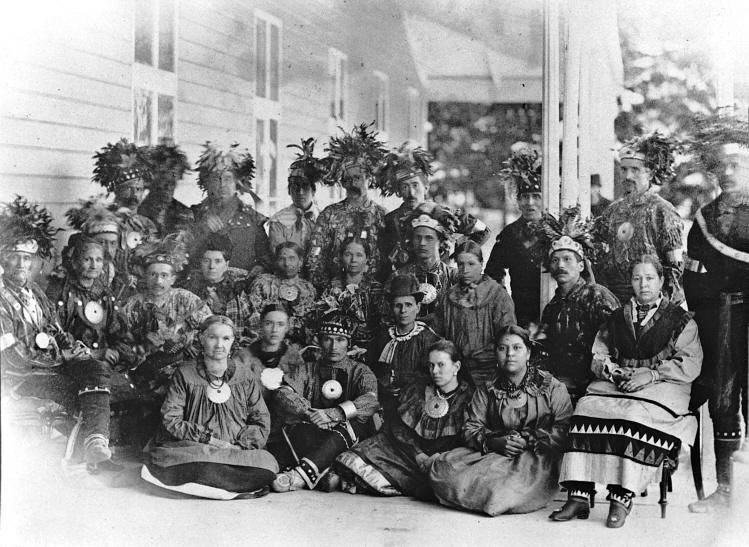
The Wyandot language has its roots in the speech of the Tionontati people, also known as the Petun or Tobacco Nation. Historically, the Wyandot people emerged from a confederacy of four matrilineal tribes: the Attignaouantan (Bear People), Attigneenongnahac (Cord People), Arendahronon (Rock People), and Tohontaernrat (Deer People). Their ancestral homeland, called Huronia by French colonists, was located near Georgian Bay in present day Ontario. By the early 1600s, this confederacy numbered around thirty thousand people and was involved in the fur trade between western Indigenous nations and French settlers. The mid 17th century brought catastrophic change with Iroquois attacks in 1648 to 1650, which dispersed the confederacy and set groups on a long migration. One major group of refugees, coalescing with Tionontati allies, eventually traveled through areas like Detroit and Sandusky, Ohio, before settling in Kansas and finally Oklahoma, becoming known as the Wyandotte. Another group relocated with Jesuit missionaries to the Quebec City area, establishing the community now known as the Huron Wendat Nation at Wendake. By the early 20th century, when ethnographer Marius Barbeau documented the language in Oklahoma, it was distinct enough to be considered a separate sister language, with differences in phonology, grammar, and lexicon suggesting a stronger influence from Petun.
Phonology and Unique Features
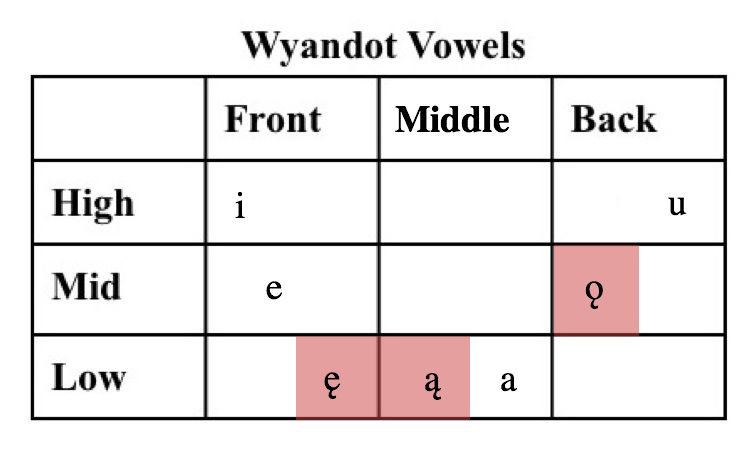
Wyandot's sound system, reconstructed by linguist Craig Kopris from Barbeau's early 20th century transcriptions, contains several features that make it unique among Iroquoian languages. A key distinction is the presence of a phonemic voicing contrast for stops, with a voiced /d/ contrasting with voiceless /t/, a feature not found in its linguistic relatives. The relationship between /d/ and /n/ is complex, as they are cognate with /n/ in other Northern Iroquoian languages and appear to have been in the process of a phonemic split during the language's active period. Wyandot also possesses a contrast between the voiceless fricative /ʃ/ and its voiced counterpart /ʒ/, though it lacks a parallel /s/ and /z/ contrast. The consonant /r/ is pronounced as [ɹ] rather than a trill. The vowel system, after accounting for allophones, consists of six core phonemes plus a marginal nasal vowel /ã/, with evidence suggesting vowel length was also contrastive. Syllable structure in Wyandot is complex, allowing for onset clusters of up to three consonants and coda clusters of up to two, resulting in a maximal syllable shape of CCCVCC.
- The only Iroquoian language with a phonemic voicing distinction for stops (/t/ vs. /d/).
- A contrast between the fricatives /ʃ/ and /ʒ/.
- Consonant /r/ realized as the English like [ɹ].
- Complex consonant clusters permitted in all syllable positions.
- A six vowel phoneme system with contrastive length.
Writing System and Orthography
Wyandot is written using an adapted Latin script. The orthography employed by linguist Craig Kopris, based on Barbeau's work, uses several special characters to represent distinct sounds. The glottal stop is written with the character ⟨ʔ⟩. The fricatives /ʃ/ and /ʒ/ are indicated with a hachek, as ⟨š⟩ and ⟨ž⟩ respectively. Nasal vowels are marked with a nasal hook, such as ⟨ę⟩ and ⟨ǫ⟩, and vowel length is shown with a colon, as in ⟨ę:⟩. Prenasalization of stops is indicated by a raised ⟨ⁿ⟩, for example ⟨ⁿd⟩. Some consonant allophones, like [m] and [g], are explicitly written with their own symbols. The closely related Wendat language uses a similar but distinct orthography, which has evolved from the 17th century system used by Jesuit missionaries. In the modern Wendat system, the glottal stop is written with an apostrophe, /ʃ/ is written as ⟨ch⟩, and nasal vowels are indicated by a following ⟨n⟩, as in ⟨en⟩. To distinguish a nasal vowel from an oral vowel followed by /n/, the latter uses a diaeresis over the vowel, such as ⟨ën⟩. These orthographic differences reflect the separate but parallel paths of language documentation and revitalization in the Oklahoma and Quebec communities.
Extinction and Modern Revitalization Efforts
The Wyandot language effectively died as a spoken community language with the passing of its last known native speaker in 1972. Since that time, both the Wyandotte Nation in Oklahoma and the Huron Wendat Nation in Quebec have launched significant initiatives to reclaim and revitalize the language as a core component of cultural identity. In Oklahoma, the Wyandotte Nation has integrated language classes into the Wyandotte Public Schools for students from kindergarten through fourth grade. The tribe also runs a preschool language program called Turtle Tots and has developed online language lessons for self study. Since 2005, Richard Zane Smith of the Wyandot Nation of Kansas has volunteered as a teacher in these schools, aided by the linguistic materials created by Craig Kopris. In Wendake, Quebec, the Huron Wendat Nation offers adult and children's classes in the Wendat language at its village school. Wendat linguists, including Megan Lukaniec, have been instrumental in developing curriculum and educational materials. These community driven efforts are part of a broader movement across Canada supported by the federal Indigenous Languages Act, which received Royal Assent in 2019 to provide long term funding for Indigenous led language reclamation. The Wyandot language is also used in the television series Barkskins.
- School based language classes for K 4 students in Wyandotte, Oklahoma.
- The Turtle Tots preschool immersion program in Oklahoma.
- Online Wyandot language lessons for independent learners.
- Adult and children's Wendat language classes in Wendake, Quebec.
- Development of pedagogical materials by community linguists like Megan Lukaniec.
- Volunteer teaching by cultural knowledge keepers such as Richard Zane Smith.
Sample Vocabulary and Cultural Significance
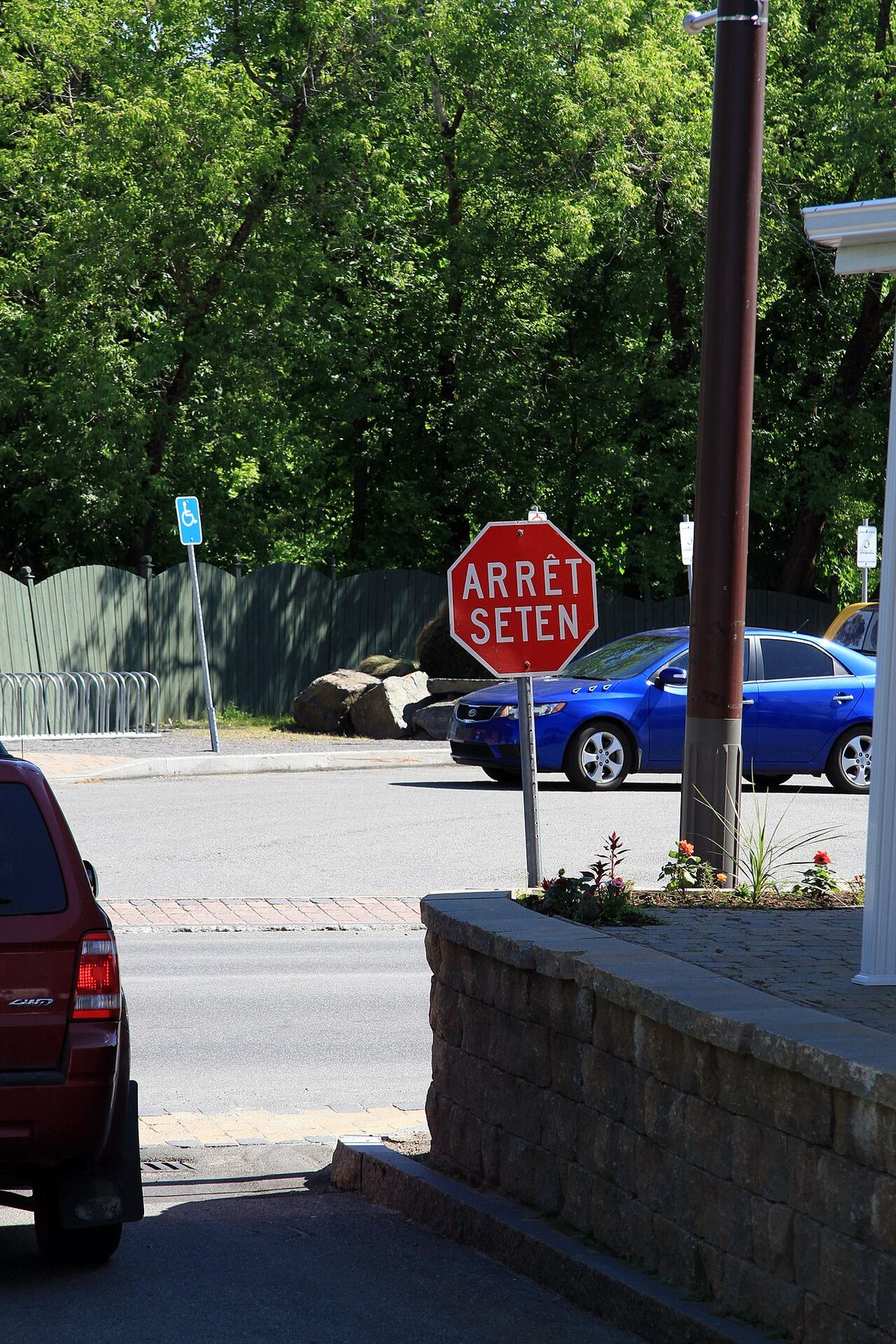
A selection of Wyandot words offers a glimpse into the language and its connection to daily life and environment. Basic numerals include skat (one), tindee (two), shenk (three), anduak (four), and weeish (five). Common terms include sandustee for water and kanata for village, a word that is the source for the name of Canada. Greetings and expressions are kweh (hello), eskoyeh (farewell), and tizameh (thank you). The word for mother is änen'enh. The term Seten, meaning stop, appears on road signs alongside French arrêt in the Wendake reserve in Quebec, serving as a public marker of the living language. The word Hamedisu’ refers to God or the almighty. These vocabulary items are vital tools for cultural transmission, used in educational settings to teach new generations about their heritage, worldview, and connection to place.
Linguistic Documentation and Key Figures
The Wyandot language is exceptionally well documented for a North American Indigenous language, thanks to centuries of recorded contact. Early documentation includes the 17th century works of French missionary Gabriel Sagard, who authored Le grand voyage and a Dictionnaire de la langue huronne. In the mid 18th century, Jesuit missionary Pierre Potier documented the Petun dialect, a crucial precursor to Wyandot. The most comprehensive modern linguistic work stems from the early 20th century when Canadian ethnographer Marius Barbeau conducted extensive fieldwork in Wyandotte, Oklahoma, transcribing narratives and vocabulary. These transcriptions formed the foundation for linguist Craig Kopris's seminal PhD thesis, A Grammar and Dictionary of Wyandot, completed in 2001, which provides the most complete analysis of the language's phonology and structure. For the related Wendat language, anthropologist John Steckley was noted in 2007 as a leading non native scholar and speaker, and he edited a Dictionary of the Huron Language in 2009. In the community, Wendat linguist Megan Lukaniec has been a key figure in creating pedagogical resources. These individuals, from missionaries to modern community linguists, have created an invaluable archive that enables current revitalization work.
Wyandot in Contemporary Media and Policy Context
The Wyandot language has found a place in contemporary culture and is supported by evolving Canadian policy frameworks. It was featured in the television series Barkskins, introducing the sound of the language to a broader audience. This visibility aligns with growing national recognition of the importance of Indigenous languages. The landmark federal Indigenous Languages Act, passed in 2019, creates a legislative framework to support the reclamation, revitalization, maintenance, and strengthening of Indigenous languages through sustained funding. National Indigenous Peoples Day and the International Decade of Indigenous Languages (2022 2032) provide further platforms for awareness. In June 2026, the Office of the Commissioner of Indigenous Languages released new analyses of 2021 Census data, examining language use in urban areas and the phenomenon of silent speakers, to better inform revitalization strategies. These reports contribute to a growing understanding of language vitality in Canada, where over sixty Indigenous language dialects are considered critically endangered. The Assembly of First Nations, through its Chiefs Committee and Technical Committee on Languages, advocates for First Nations led initiatives, ensuring community needs guide national policy implementation.
Questions about Wyandot language
When did the Wyandot language go extinct?
The Wyandot language lost its last known native speaker in 1972, marking its extinction as a living, community spoken language. This event followed a long period of decline due to colonial displacement, cultural disruption, and assimilation pressures. However, the language is not lost it entered a state of dormancy. Extensive documentation by linguists and ethnographers, particularly the early 20th century work of Marius Barbeau and the later analysis by Craig Kopris, has preserved its structure and vocabulary, enabling current revitalization efforts by descendant communities.
Where is the Wyandot language being revived today?
Revitalization efforts are active in two primary locations. In the United States, the Wyandotte Nation in Oklahoma offers language classes in public schools from kindergarten through fourth grade, runs a preschool program called Turtle Tots, and provides online lessons. In Canada, the Huron Wendat Nation in Wendake, Quebec, offers adult and children's classes in the closely related Wendat language at its village school. Both communities are led by cultural teachers and linguists dedicated to reclaiming their linguistic heritage as a second language for new generations.
What makes Wyandot phonology unique among Iroquoian languages?
Wyandot possesses several unique phonological features. It is the only Iroquoian language with a phonemic voicing distinction for stops, contrasting /t/ and /d/. It also has a contrast between the voiceless fricative /ʃ/ and the voiced /ʒ/, a pairing not found in its relatives. The sound /r/ is pronounced as [ɹ], similar to the English 'r', rather than as a trill. The language allows for complex consonant clusters, with syllables potentially beginning with up to three consonants and ending with up to two, giving it a distinct phonetic character.
How is the Wyandot language written?
Wyandot uses a Latin based orthography developed by linguist Craig Kopris. It includes special characters like ⟨ʔ⟩ for the glottal stop, ⟨š⟩ and ⟨ž⟩ for the fricatives /ʃ/ and /ʒ/, and marks nasal vowels with a hook, as in ⟨ę⟩. Vowel length is indicated by a colon (⟨ę:⟩), and prenasalized stops are shown with a raised ⟨ⁿ⟩ (e.g., ⟨ⁿd⟩). The related Wendat orthography differs slightly, using an apostrophe for the glottal stop, ⟨ch⟩ for /ʃ/, and a trailing ⟨n⟩ to mark nasal vowels, such as ⟨en⟩.
What is the Canadian government's role in supporting Indigenous languages like Wyandot?
The Canadian government supports Indigenous language revitalization primarily through the Indigenous Languages Act (ILA), which received Royal Assent in June 2019. The Act's purpose is to support the reclamation, revitalization, maintenance, and strengthening of Indigenous languages by ensuring adequate, sustainable, and long term funding for community led initiatives. The Office of the Commissioner of Indigenous Languages, established under the Act, promotes and champions these efforts. In 2026, the Commission released new data analyses to better understand language vitality, informing ongoing support for languages like Wyandot and Wendat across the country.
Is the Wyandot language the same as Huron or Wendat?
Wyandot is a distinct Iroquoian language, considered a sister to the Wendat language historically called Huron. Linguists have traditionally considered Wyandot a dialect or modern form of Wendat, but significant differences in phonology and lexicon now challenge that view. Wyandot is specifically associated with the Wyandot or Wyandotte people descended from the Tionontati who migrated to Oklahoma. Wendat is spoken by descendants of the Huron Wendat Confederacy in Quebec. Both languages share a common ancestral root but have developed separately due to historical displacement and different community contexts.
Sources and further reading
- Wyandot language (Wikipedia)
- Wyandot | Social Sciences and Humanities (ebsco.com)
- Languages (afn.ca)
Checked by the Nosy Mag desk. Last updated 2026-10-21.