Quillwork
Quillwork is a traditional Indigenous art form of North America that involves the decorative use of porcupine quills, and occasionally bird feathers, on items such as clothing, bags, regalia, and birchbark containers. The practice holds deep cultural, spiritual, and social significance for many First Nations, including the Cheyenne, Blackfoot, Mi'kmaq, and Dene, where it was historically a sacred act performed by specialized women. While its prominence was challenged by the introduction of glass beads in the mid-19th century, quillwork has persisted for over a millennium, with tools discovered in Alberta dating to the 6th century CE. Today, the art form is experiencing a contemporary revival through the work of dedicated artists and community workshops, ensuring its continued vitality.
Historical Significance and Cultural Context
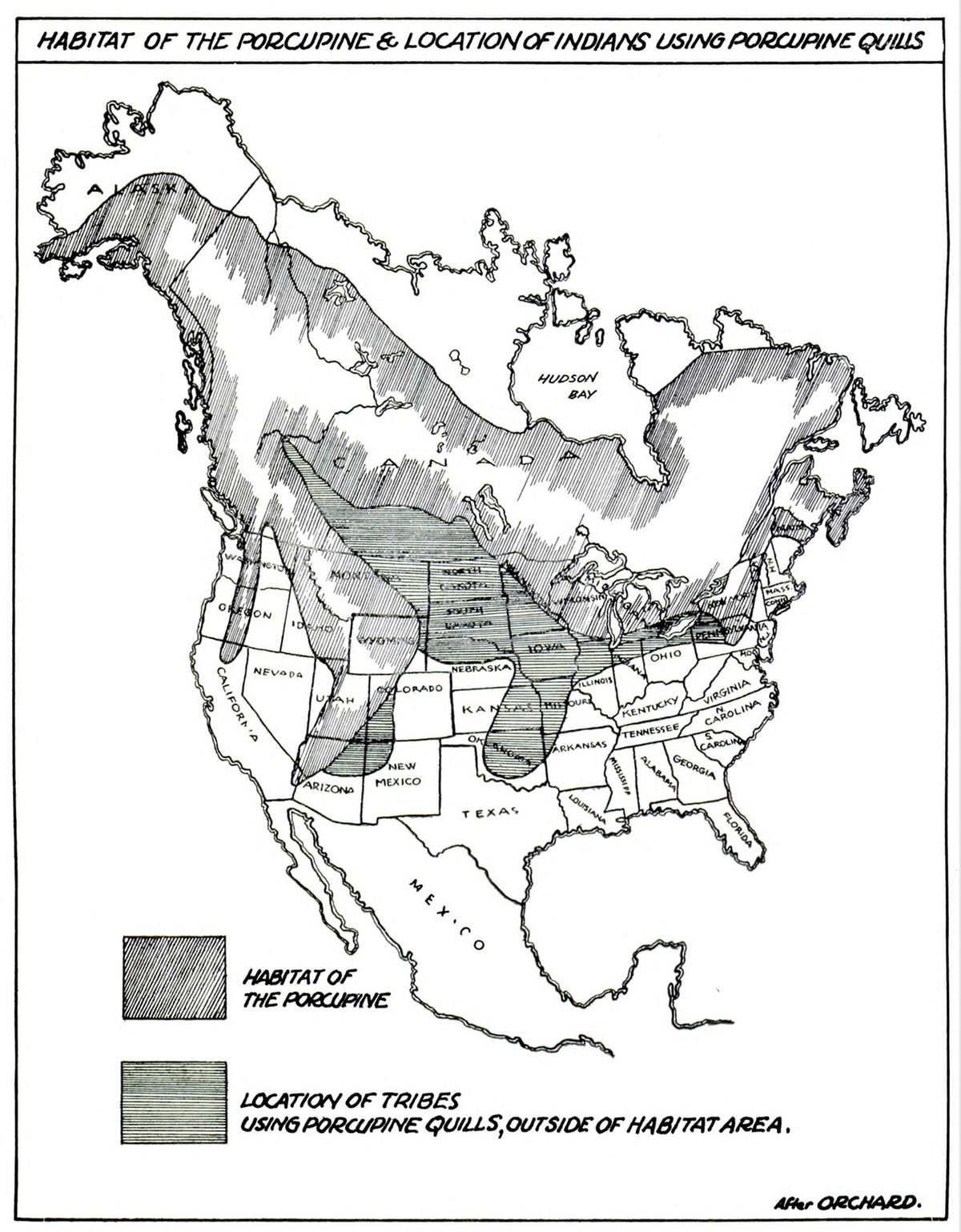
Quillwork is an art form unique to North America, practiced for centuries by Indigenous peoples within the natural habitat of the porcupine. Archaeological evidence, including quillworking tools discovered in Alberta, dates the practice back to at least the 6th century CE. For many nations, the creation of quillwork was far more than a decorative craft. It was a sacred activity imbued with spiritual power and structured knowledge. Among the Cheyenne, quillwork was governed by the prestigious Quilling Society, an elite group of women for whom the craft was an act of seeking knowledge, the tribe's highest virtue. The process and rituals of creating quilled items constituted a ceremony of sacred significance, with knowledge passed from master to apprentice. Cheyenne oral history, as told by Picking Bones Woman to George Bird Grinnell, traces the origin of quilling to a man who learned it from his wife, who was a buffalo.
Similarly, for the Blackfoot (Niitsitapi), quillwork was a religious practice performed by a select few women. These artists would wear special protective face paint, consisting of yellow ochre and animal fat applied in a 'V' across the forehead to the nose, followed by a red vertical line, resembling a crow's foot. They also wore sacred necklaces during their work. The responsibility of choosing the next initiate, typically a younger relative, fell to these esteemed craftswomen, ensuring the tradition's continuity. The Arapaho and Odawa tribes also attributed religious significance to quillwork, with designs representing sacred beings and connections to nature, where colours and shapes carried specific cultural meanings. The Mi'kmaq, renowned for their skill, were historically called the 'porcupine people.'
Materials and Preparation
The primary material for quillwork is the porcupine quill, a specialized hollow hair made of keratin. A single porcupine possesses roughly 30,000 quills, which are naturally pale yellow to white with black tips. Quills suitable for embellishment are typically two to three inches long. Harvesting quills is a skilled and sometimes dangerous task, involving plucking them from hides that have been soaked or carefully collecting them from live porcupines. The preparation of raw quills is a labour-intensive process that can take several days before they are ready for use in embroidery or weaving.
The preparation involves multiple meticulous steps. First, quills must be cleaned by soaking in hot soapy water to remove a greasy outer layer, then rinsed and dried. The tips are usually snipped off before use. Historically, dyes were derived from local plants, roots, flowers, and fruits, producing a spectrum of colours with black, yellow, and red being the most common. By the 19th century, aniline dyes became available through trade. The dyeing process involves soaking the quills for about thirty minutes, followed by a rinse in vinegar to set the colour. Finally, the dyed quills are dried for several days. Before sewing, quills are often moistened and flattened to make them more pliable, traditionally by drawing them between the teeth or over a thumbnail, or with specific bone tools.
Techniques and Regional Styles
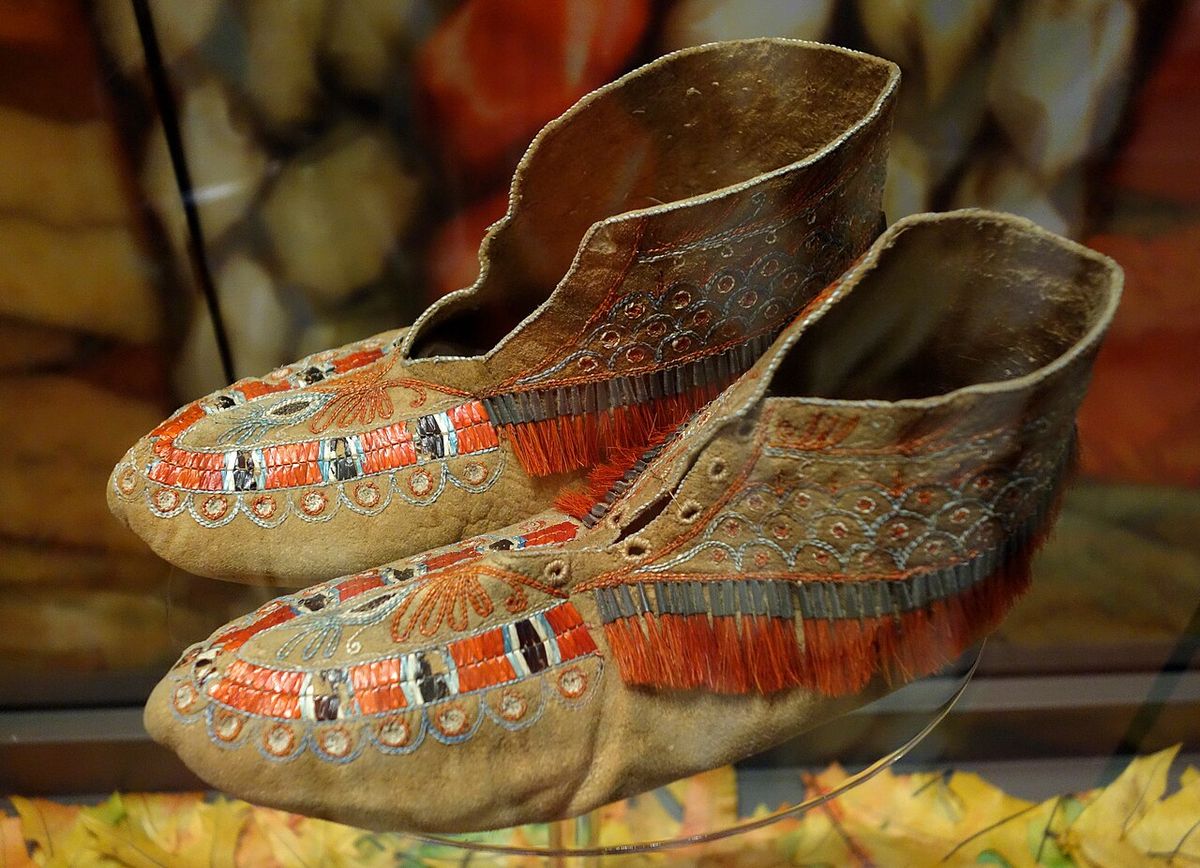
Artisans employ several core techniques to apply quills to a substrate, which historically included rawhide, tanned hides, and birch bark. The four most common techniques are appliqué, embroidery, wrapping, and loom weaving. In appliqué, quills are stitched into hide in a manner that conceals the stitches. Wrapping involves coiling a quill upon itself or intertwining two quills. Awls were used to punch holes in materials, and sinew was the traditional binding material, later supplemented or replaced by European thread. These methods allowed for the creation of durable and detailed decorations on a wide array of items, from practical clothing like moccasins and coats to furniture attachments like cradle covers and tipi decorations.
Distinct regional styles emerged across North America. In the Northeast and Great Lakes regions, tribes like the Odawa and Wyandot excelled at curvilinear and floral designs, a style popularized further by the influence of Ursuline nuns. Quilled birch bark boxes became a popular trade item with European-Americans in the 19th century. In contrast, Plains quillwork, practiced by nations such as the Cheyenne and Blackfoot, is characterized by bold, geometric patterns created with bands of rectangles. Rosettes of concentric circles and parallel panels commonly adorned men's shirts and other regalia. The Red River Ojibwe of Manitoba created crisp geometric patterns by weaving quills on a loom in the 19th century.
- Appliqué: Quills stitched to hide, covering the stitches.
- Embroidery: Quills sewn through a material to create a design.
- Wrapping: Quills coiled around themselves or other elements.
- Loom Weaving: Quills woven on a small loom to create bands.
- Birchbark Puncturing: Holes punched with an awl and quills inserted, used for boxes and mats.
Decline and Contemporary Revival
The mid-19th century marked a significant shift in Indigenous decorative arts with the widespread introduction of European glass beads through trade. Beads were easier to source, came in a vast array of colours, and were less labour-intensive to prepare and use compared to porcupine quills. As a result, beadwork gradually supplanted quillwork in popularity across many regions. This transition, coupled with the disruptive forces of colonization, led to the decline of quillwork as a common practice, threatening the continuity of this specialized knowledge. In some communities, such as the Dene community of Wha Ti in the Northwest Territories, the tradition was nearly lost by the late 1990s, with no active women quillers remaining.
Despite these challenges, quillwork never completely died out as a living art form, particularly in the Northern Plains. A dedicated revival movement, led by Indigenous artists, elders, and cultural institutions, has worked to reclaim and reinvigorate the practice. The Dene Cultural Institute held two workshops in Wha Ti in 1999 and 2000, effectively reviving quillwork there. Today, the art form is actively sustained through community-led education, workshops, and the work of contemporary master artists. These efforts frame quillwork not merely as a historical craft but as a dynamic component of contemporary Indigenous cultural expression and identity.
Notable Contemporary Artists and Initiatives
A new generation of quillwork artists across Canada and the United States is creating award-winning work and teaching the next generation. Their practices honour traditional techniques while engaging with modern themes and audiences. These artists often emphasize the importance of respectful material harvesting, the cultural teachings embedded in the process, and the need for Indigenous leadership in presenting their art. Exhibitions and public demonstrations have become crucial platforms for sharing this living tradition with wider audiences and affirming its contemporary relevance.
Prominent contemporary quillworkers include Juanita Growing Thunder Fogarty (Sioux-Assiniboine), Dorothy Brave Eagle (Oglala Lakota), and Blackfeet artists Leonda Fast Buffalo Horse and Deborah Magee Sherer. In Canada, key figures include Mi'kmaw artist Melissa Peter-Paul from Epekwitk (Prince Edward Island), who actively educates community members, and Dene artists Sarah Hardisty from Jean Marie River, Northwest Territories. Other notable artists are Kanatiiosh (Akwesasne Mohawk) of St. Regis Mohawk Reservation and Lucy Yakeleya. Major exhibitions, such as those at the Michigan State University Museum, centre Indigenous voices and bilingual presentations to properly contextualize the art.
- Juanita Growing Thunder Fogarty: Sioux-Assiniboine artist known for award-winning work.
- Dorothy Brave Eagle: Oglala Lakota artist from Denver, Colorado.
- Melissa Peter-Paul: Mi'kmaw artist from Epekwitk/PEI, focuses on education and revival.
- Sarah Hardisty: Dene artist from Jean Marie River, NWT.
- Leonda Fast Buffalo Horse: Blackfeet artist from Browning, Montana.
- Deborah Magee Sherer: Blackfeet artist from Cut Bank, Montana.
- Kanatiiosh: Akwesasne Mohawk artist from St. Regis Mohawk Reservation.
- Lucy Yakeleya: Dene artist who conducts quillwork workshops.
Quillwork in Education and Public Engagement
Educational initiatives and public programming are fundamental to the preservation and appreciation of quillwork today. Museums, cultural centres, and parks across Canada host demonstrations, workshops, and talks led by Indigenous knowledge keepers. For instance, Parks Canada offers Mi'kmaq quillwork demonstrations at Kejimkujik National Park in Nova Scotia, where an interpreter presents the elaborate process. Similarly, institutions like the McCord Museum in Montreal highlight the art form, noting the Mi'kmaq's historical reputation as 'the porcupine people.' These programs provide the public with direct access to the artistry and cultural narratives behind quillwork.
Workshops serve a dual purpose: they teach technical skills to Indigenous community members, ensuring intergenerational knowledge transfer, and they raise awareness among the broader public. Scheduled events, such as workshops at cultural institutes, are examples of this active, participatory approach. Museum exhibitions often complement their displays with poetry readings and other events that explore the connections between quillwork, language, and community. These efforts collectively work to position quillwork as a continuing, evolving tradition central to Indigenous cultural heritage.
The Process from Harvest to Finished Piece
The creation of a quillwork item is a comprehensive process that begins long before any decorative stitching occurs. It starts with the sustainable and respectful harvesting of materials from the land, including porcupine quills, birch bark, and sweetgrass. Harvesting quills requires specific knowledge, as it can be dangerous to collect from a live porcupine, and processing hides to pluck quills is tedious, involving lengthy soaking. This initial phase establishes a direct connection between the artist, the animal, and the environment, a relationship that is deeply honoured in the cultural context of the art.
After harvesting, the multi-day preparation of quills commences, involving cleaning, dyeing, and drying. The actual construction technique depends on the item being made. For quillwork on birchbark, an awl is used to puncture holes following a drawn pattern, and quills are inserted to form lines and designs. On hide, quills are sewn using an awl and needle, with sinew or thread, and are often flattened during application. The designs themselves are rarely random, commonly featuring geometric patterns like zigzags, diamonds, triangles, and circles, which are well-suited to the long, linear nature of the quills. Floral or animal designs are less common but appear in specific regional styles. The entire process is considered an integrated practice of skill, patience, and cultural expression.
Questions about Quillwork
What is quillwork?
Quillwork is a traditional Indigenous art form from North America that involves using the quills of porcupines, and occasionally bird feathers, to decorate items. Artists dye, flatten, and then apply the quills to materials like hide, birch bark, and cloth using techniques such as appliqué, embroidery, wrapping, and loom weaving. It was used to adorn clothing such as moccasins and coats, accessories like bags and belts, and items including cradleboards, tipi covers, and birchbark boxes. Historically, it was a major decorative art before the widespread introduction of glass beads in the mid-19th century.
Which Indigenous peoples practice quillwork?
Quillwork has been practiced by many Indigenous nations across North America where porcupines are found, from Maine to Alaska. This includes peoples of the Subarctic, Northeastern Woodlands, and Northern Plains. Specific nations with strong quillwork traditions include the Cheyenne, Blackfoot (Niitsitapi), Arapaho, Odawa, Mi'kmaq, Dene, Wyandot, and Red River Ojibwe. The Mi'kmaq were so renowned for their skill that they were historically called 'the porcupine people.'
Why is quillwork culturally significant?
For many Indigenous nations, quillwork was and is much more than decoration. It is a sacred practice with deep spiritual significance. Among the Cheyenne, it was governed by a prestigious Quilling Society and was considered an act of seeking knowledge, the tribe's highest virtue. Blackfoot quillers performed rituals with special face paint and prayers for protection. The Arapaho and Odawa also attributed religious significance to their work. The craft was a way to demonstrate connection to the natural world and to embody cultural values.
How are porcupine quills prepared for quillwork?
Preparing quills is a labour-intensive process. After harvesting, raw quills are soaked in hot soapy water to clean off a greasy outer layer, then rinsed and dried. The tips are usually snipped off. To add colour, quills are dyed using natural plant-based dyes or commercial aniline dyes, soaking for about 30 minutes before being rinsed in vinegar to set the colour. They are dried again for several days. Before application, quills are often moistened and flattened to make them pliable, traditionally by drawing them between the teeth or over a thumbnail, or with a bone tool.
Is quillwork still practiced today?
Yes, quillwork is very much a living art form today. While it declined in some communities after the introduction of glass beads, a strong revival movement led by Indigenous artists and elders has reinvigorated the practice. Contemporary artists like Juanita Growing Thunder Fogarty, Melissa Peter-Paul, and Sarah Hardisty create award-winning work. Communities also hold workshops to teach the skill, such as those held by the Dene Cultural Institute in Wha Ti, Northwest Territories, in 1999 and 2000 which revived the tradition there.
Where can I see quillwork or learn about it in Canada?
You can see historical and contemporary quillwork in many Canadian museums, such as the Canadian Museum of History, the McCord Museum in Montreal, and the National Museum of the American Indian. Cultural centres in regions like the Northwest Territories also feature quillwork. For live demonstrations, Parks Canada offers Mi'kmaq quillwork programs at Kejimkujik National Park in Nova Scotia. Various institutions host workshops and exhibitions developed in close collaboration with Indigenous communities.
Sources and further reading
- Quillwork (Wikipedia)
- Quillwork (thecanadianencyclopedia.ca)
- Quillwork (indigenousyukon.ca)
- MSU Museum quillwork exhibition centers Indigenous art (msutoday.msu.edu)
- The "Porcupine People" Mi'kmaw Quillwork Demonstration (parks.canada.ca)
Checked by the Nosy Mag desk. Last updated 2026-10-26.