Visa policy of Canada
The visa policy of Canada governs the entry of foreign nationals into the country, managed primarily by Immigration, Refugees and Citizenship Canada (IRCC). It establishes the requirements for visitor visas, electronic travel authorizations (eTAs), and various permits for study and work. The policy impacts tourism, international education, and labour mobility. Recent updates include expanded biometrics collection and changes to study permit rules.
Visa Exemption and the Electronic Travel Authorization
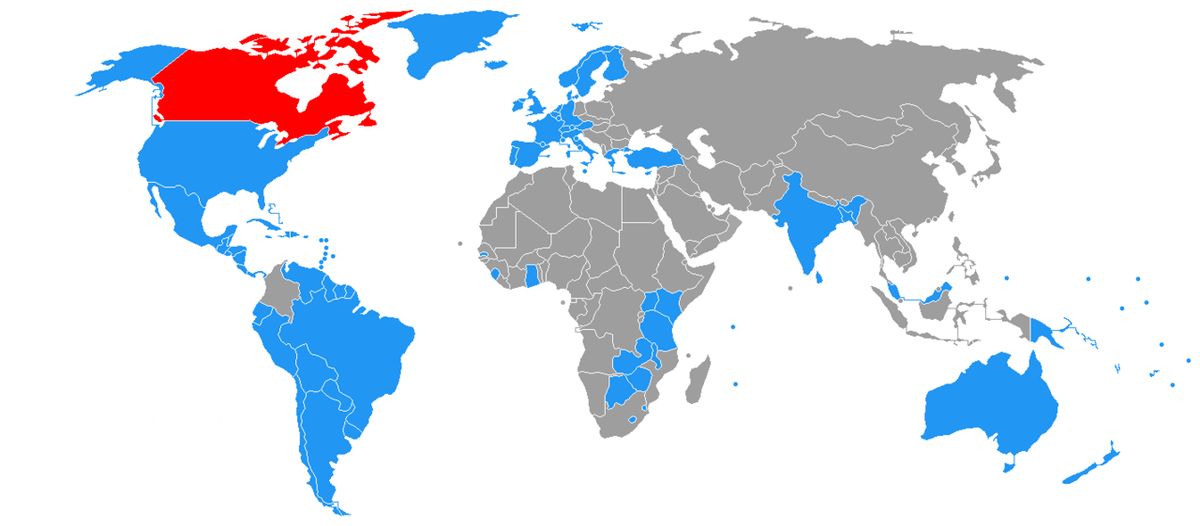
Citizens of many countries, including most European nations, Australia, Japan, and South Korea, do not require a visa to visit Canada for short stays. These visa-exempt travellers are instead required to obtain an Electronic Travel Authorization (eTA) if arriving by air, a system that became mandatory on 10 November 2016. The eTA application is completed online through the IRCC website, involves a fee of seven dollars, and requires basic biographic and passport information. Once approved, an eTA is valid for up to five years or until the traveller's passport expires, whichever is shorter, permitting multiple entries. Notable exemptions from the eTA requirement include United States citizens, U.S. lawful permanent residents, and Canadian citizens and permanent residents, who must instead present appropriate citizenship or residency documents.
The eTA system functions as a pre-screening risk assessment. Applicants answer questions regarding their health, immigration history, and any criminal convictions. Unlike a full visa application, it does not require detailed travel itineraries or extensive proof of funds. French citizens residing in Saint Pierre and Miquelon who travel directly from that territory to Canada are also exempt from the eTA requirement. To be added to the visa waiver list, a country must meet conditions related to socio-economic factors, immigration issues, travel document integrity, safety, border management, human rights, and bilateral considerations.
Temporary Resident Visas and Entry Requirements
Citizens of the majority of the world's countries require a Temporary Resident Visa (TRV) to enter Canada as a visitor. This visa must be obtained from a Canadian diplomatic mission or Visa Application Centre (VAC) before travel, with applications increasingly submitted online. A standard visitor visa can be valid for up to ten years, but the actual duration of each stay is determined by a border services officer upon arrival, typically up to a maximum of six months. Applicants must demonstrate they have sufficient funds for their stay, possess ties to their home country, and intend to leave Canada at the end of their authorized visit.
Canada has implemented several programs to streamline visa processing for certain travellers. The CAN+ program allows applicants from select countries who have visited Canada within the last ten years or who hold a valid U.S. visa to submit simplified applications with less documentation. For family reunification, the Parent and Grandparent Super Visa allows parents and grandparents of Canadian citizens or permanent residents to visit for up to five years at a time without needing to renew their status. Visa-exempt nationals approved for a Super Visa must still obtain an eTA to travel to Canada by air.
Key Temporary Resident Categories:- Visitors: For tourism, business, or family visits, requiring a visa, eTA, or proof of citizenship depending on nationality.
- Students: Must hold a valid study permit from a Designated Learning Institution (DLI), with specific rules for work and dependants.
- Temporary Foreign Workers: Require a work permit, which may be employer-specific or open, often contingent on a Labour Market Impact Assessment.
- Temporary Resident Permit (TRP) Holders: Individuals who are otherwise inadmissible may be granted a TRP for compelling reasons.
Biometrics Collection and Security Measures
Canada expanded its biometrics collection program in 2018 and 2019. Most foreign nationals applying for a visitor visa, study permit, work permit, or permanent residence must now provide fingerprints and a photograph. This requirement was rolled out globally in stages, concluding on 3 December 2019 when it was extended to applicants already within Canada. Biometrics are collected once every ten years and are stored to verify identity and screen against immigration and criminal databases.
Applicants outside Canada and the United States must submit biometrics at a Visa Application Centre. Those within the United States can use designated Application Support Centres run by U.S. Citizenship and Immigration Services. Within Canada, biometrics are collected at specific Service Canada locations. The biometrics fee is separate from the application fee. This system aims to prevent identity fraud, streamline border processing, and protect the integrity of Canada's immigration programs. Certain individuals, such as those applying for a study or work permit on arrival at a port of entry or those seeking asylum, have their biometrics collected directly by border officials.
Transit Through Canada Without a Visa
Foreign nationals who are not visa-exempt and need to connect through a Canadian airport to reach another country generally require a Canadian transit visa. However, Canada operates two key programs that allow certain travellers to transit without this visa. The Transit Without Visa (TWOV) program and the China Transit Program (CTP) permit eligible travellers en route to or from the United States to transit through specific Canadian airports without a Canadian visa or eTA. To qualify, travellers must hold a valid U.S. visa, travel on an approved airline, and complete their transit within 24 hours without leaving the airport's sterile transit area.
The list of approved airlines includes Air Canada, Air Canada Rouge, Air China, Cathay Pacific, China Eastern, China Southern, Hainan Airlines, Philippine Airlines, WestJet, and Xiamen Airlines. Participating airports are Vancouver, Calgary, Winnipeg, Terminal 1 at Toronto Pearson, and, for the China Transit Program only, Montreal-Trudeau. For the CTP, passengers travelling to the U.S. must also depart from a specified list of airports in Asia, including Beijing, Shanghai, Guangzhou, Shenzhen, Fuzhou, Xiamen, Hong Kong, Singapore, Manila, Seoul, Busan, Taipei-Taoyuan, Tokyo-Narita, Tokyo-Haneda, and Osaka. These programs facilitate efficient global travel connections while maintaining strict security controls.
Study and Work Permits for Temporary Residents
International students constitute a significant portion of Canada's temporary residents. To obtain a study permit, a student must first secure an acceptance letter from a Designated Learning Institution (DLI) and prove they have sufficient funds for tuition and living expenses. Master's and doctoral students enrolled at public DLIs are exempt from the requirement to obtain a Provincial Attestation Letter, removing them from the national study permit cap. Study permits for prerequisite courses are now limited to the course length plus 90 days, requiring students to apply for a new permit for their main program of study.
For work, Canada offers several pathways. The International Experience Canada (IEC) program allows youth from over 30 partner countries to obtain open work permits under Working Holiday, Young Professionals, or International Co-op streams. Under the Canada-United States-Mexico Agreement, professionals from the United States and Mexico in listed occupations can apply for work permits on arrival. Most other temporary foreign workers require an employer-specific work permit, which often necessitates a positive Labour Market Impact Assessment from Employment and Social Development Canada.
International Experience Canada (IEC) Participant Countries (Select Examples):- United Kingdom: Age limit 30 for Working Holiday and Young Professionals streams.
- Japan: Age limit 30 for Working Holiday and Young Professionals streams.
- South Korea: Age limit 30 for Working Holiday and Young Professionals streams.
Recent Policy Changes and Immigration Context
Canada's visa and immigration policies are continuously adjusted to meet economic and social goals. The federal Immigration Levels Plan sets a target of welcoming 380,000 new permanent residents annually, with over half coming through economic immigration streams like Express Entry and the Provincial Nominee Program. This high level of immigration is a strategy to counteract an aging population and low birth rate. The plan also includes targets for family reunification and refugee resettlement.
Several specific changes have taken effect. The federal government closed the Start-Up Visa program to new applications, with a transition to a new entrepreneur pilot program announced. In Ontario, new labour rules now ban employers from listing Canadian work experience as a job requirement. Ontario's As of Right framework allows professionals certified in other provinces to work in Ontario for up to six months while obtaining local authorization. On 25 November 2025, Canada lifted the visa requirement for citizens of Qatar. On 26 May 2026, nationals of Indonesia and Malaysia who had a Canadian visa in the previous 10 years or who held a valid U.S. non-immigrant visa became eligible to apply for an eTA instead of a visa to travel to Canada by air.
Dual Citizens, Permanent Residents, and Special Cases
Canadian citizens, including those with dual citizenship, do not need a visa or eTA to enter Canada but must present a valid Canadian passport when arriving by air. This rule means dual citizens can no longer board a flight to Canada using only their non-Canadian passport. Canadian permanent residents must travel with a valid Permanent Resident (PR) Card or a Permanent Resident Travel Document. Permanent residents from visa-exempt countries are barred from applying for an eTA and must use their PR card for air travel, unless they also hold a U.S. passport.
There are provisions for Canadian citizens without a valid passport who need to travel urgently. Those who have previously held a Canadian passport or certificate of citizenship can apply for a one-time special authorization online, valid for a single entry within a four-day window. Holders of valid Canadian refugee travel documents are exempt from both visa and eTA requirements. Foreign nationals with a valid Canadian study, work, or temporary resident permit do not need an eTA if they are only visiting the United States or St. Pierre and Miquelon and return to Canada before their status expires.
Questions about Visa policy of Canada
Do I need an eTA if I am a U.S. citizen flying to Canada?
No, United States citizens are exempt from the Electronic Travel Authorization (eTA) requirement. You can travel to Canada by air, land, or sea using your valid U.S. passport. U.S. lawful permanent residents, or Green Card holders, are also exempt from the eTA but must present their valid permanent resident card along with their passport. This exemption applies regardless of the method of arrival into Canada.
How long can I stay in Canada as a visitor?
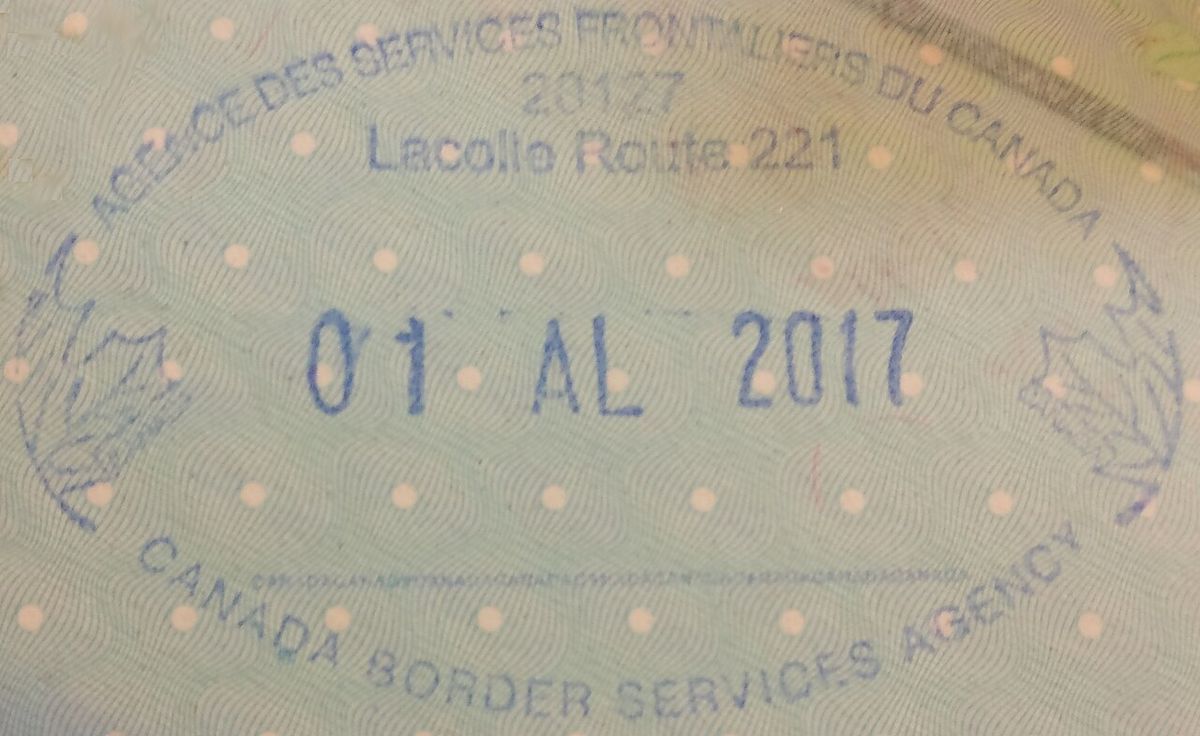
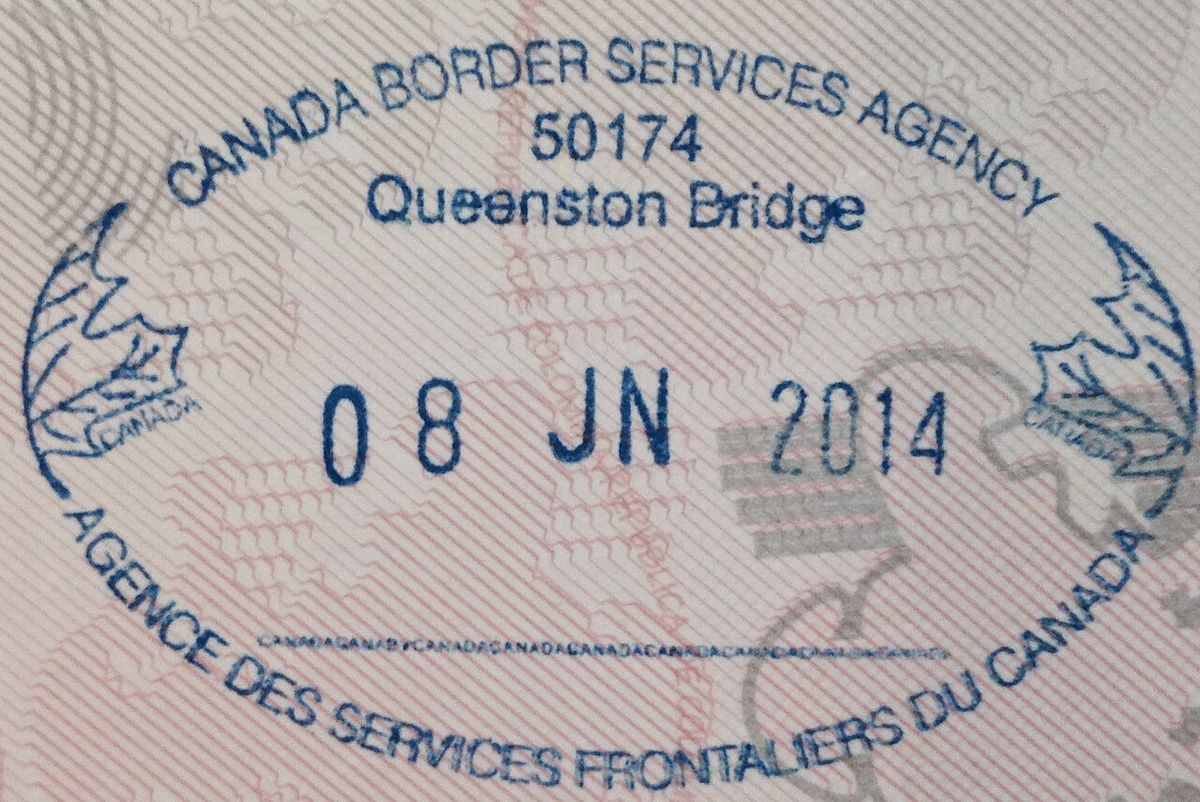
A Canada Border Services Officer will determine your authorized period of stay upon entry, typically granting a stay of up to six months from the date of entry. If a specific date is written on the entry stamp, you must leave Canada before that date. If you wish to stay longer, you must apply to extend your status at least 30 days before your authorized stay expires. Overstaying your permitted period can lead to enforcement action and negatively affect any future applications to enter Canada.
How do I apply for a Canadian visitor visa?
Most applicants must apply online through the official Immigration, Refugees and Citizenship Canada website. The process involves completing application forms, paying the required fee, and submitting supporting documents like proof of financial funds and ties to your home country. Depending on your country of citizenship, you will likely also need to provide your biometrics, which are fingerprints and a photograph, at a Visa Application Centre. Some applicants may have to submit a paper application at a visa application centre located at a Canadian diplomatic mission.
What is the Parent and Grandparent Super Visa?
The Parent and Grandparent Super Visa allows parents and grandparents of Canadian citizens or permanent residents to visit Canada for up to five years at a time without renewing their status. It is a multi-entry visa valid for up to ten years. Applicants must provide proof of financial support from their child or grandchild, purchase Canadian medical insurance, and undergo a medical examination. Citizens of visa-exempt countries who are approved must also obtain an eTA to travel to Canada.
What are the new rules for international students?
The information provided does not contain specific details about new rules for international students such as Provincial Attestation Letters. Generally, to study in Canada, most foreign nationals need a study permit. Holders of passports from Greenland and the United States, U.S. permanent residents, French citizens residing in St. Pierre and Miquelon, and nationals of visa-exempt countries may apply for a study permit on arrival if they have the proper documentation. All study permit holders must comply with the conditions of their permit.
Can I transit through Canada without a visa?
You may transit through Canada without a Canadian transit visa if you qualify for the Transit Without Visa Program or the China Transit Program. Eligibility requires holding a valid U.S. visa, traveling on an approved airline, and transiting through a participating Canadian international airport like Vancouver or Toronto Pearson within 24 hours. You must remain in the sterile international transit area or post-preclearance area and not leave the airport. Citizens of certain listed countries are eligible for these transit programs.
Sources and further reading
- Visa policy of Canada (Wikipedia)
- Canadian Visa Requirements in 2026 (canadianvisa.org)
- Five changes that took effect across Canada's immigration ... (cicnews.com)
- Canada's Immigration Levels Plan 2024 to 2026 (canadavisa.com)
- Traveller entry requirements, Travel and tourism (travel.gc.ca)
Checked by the Nosy Mag desk. Last updated 2026-10-24.