66th Nova Scotia general election
The 66th Nova Scotia general election will elect members of the 66th General Assembly of Nova Scotia. The election must be held on or before December 7, 2029. This follows changes to the province's electoral laws and boundaries, including a reversion to a five-year electoral cycle and an expansion of the legislature from 55 to 56 seats. The political scene has also shifted since the last election, with the Progressive Conservatives holding a majority government and the New Democratic Party serving as the official opposition.
Constitutional and Legal Framework
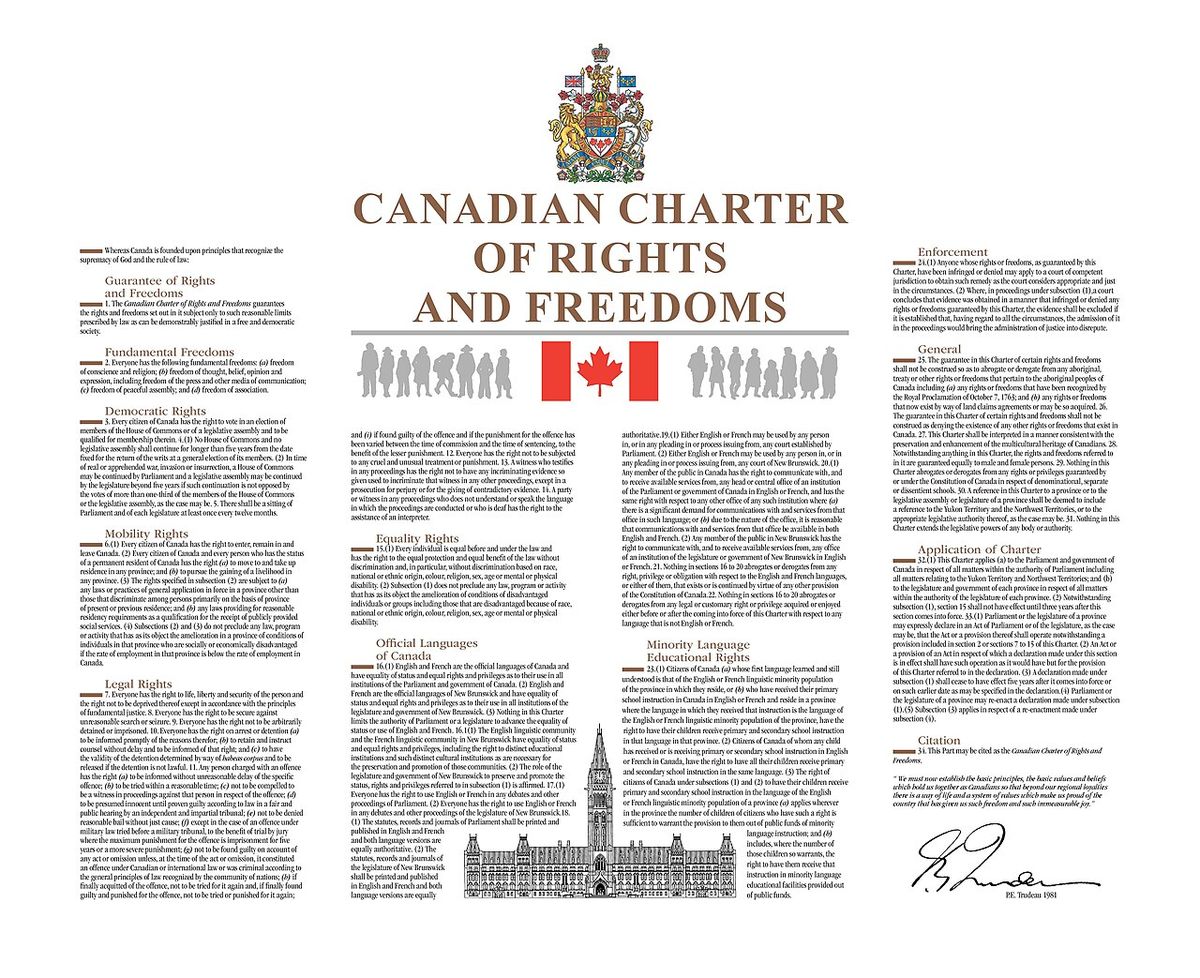
The timing of the 66th Nova Scotia general election is governed by both the Canadian Charter of Rights and Freedoms and provincial legislation. Section 4 of the Charter mandates that a legislative assembly cannot continue for longer than five years without an election, setting the ultimate outer limit. Premier Tim Houston introduced a bill to repeal the province's four-year fixed election date law on February 18, 2025. This bill received royal assent on March 26, 2025, formally reverting the province's electoral cycle to the five-year maximum period outlined in the Charter. This change provides the sitting premier with flexibility to request the dissolution of the legislature from the lieutenant governor, potentially calling an election at any time within the five-year window. Consequently, the 66th election must be held by December 7, 2029, ensuring the new General Assembly is convened before the five-year limit expires. The repeal of fixed election dates marks a return to a more traditional Westminster parliamentary practice in the province, where the timing of an election is a political decision rather than a statutory one.
Electoral Boundary Redistribution and Court Challenge
A significant factor shaping the 66th general election is a major redistribution of provincial electoral boundaries, concluded in early 2026. Electoral boundary reviews in Nova Scotia are normally conducted at least every ten years, with the last review occurring in 2018-19. The 2025-26 review was triggered by a court order. The Supreme Court of Nova Scotia ruled that a previous commission's decision not to create a distinct electoral district for the Acadian community in Chéticamp violated Section 3 of the Charter, which guarantees the right to effective representation. This legal finding forced the government to establish a new Electoral Boundaries Commission to correct the violation. After extensive public consultations, the commission submitted an interim report in August 2025 presenting three options for the legislature's composition. Following a second round of public consultations and deliberations, the commission issued its final report in January 2026. The commission unanimously recommended expanding the House of Assembly to 56 seats to accommodate the court's directive and reflect population changes. This expansion will be achieved by dividing the existing riding of Inverness into two new electoral districts.
The two new ridings created by the boundary redistribution are Chéticamp-Margarees-Pleasant Bay and Inverness-We'koqma'q. The creation of Chéticamp-Margarees-Pleasant Bay directly addresses the court's finding by providing a district designed to enhance the effective representation of the Acadian and francophone population in that region. The neighbouring district of Inverness-We'koqma'q will encompass the remaining areas of the former Inverness riding. This redistribution means all political parties will need to nominate candidates in these new districts and adjust their campaigning strategies for the 66th election. The 56-seat legislature will be the largest in Nova Scotia's history, marking a permanent change to the province's electoral map. Candidates running in the 2029 election will be competing under these new boundaries, which will be used for the first time. The court-ordered process shows the ongoing legal requirement for electoral boundaries to provide effective representation to distinct communities within the province.
- Supreme Court of Nova Scotia ruled previous boundaries violated Charter Section 3.
- Court order mandated creation of a district for Chéticamp's Acadian community.
- New Electoral Boundaries Commission formed in 2025.
- Interim report with three options presented in August 2025.
- Final report recommending 56 seats delivered in January 2026.
- New district of Chéticamp-Margarees-Pleasant Bay created.
- New district of Inverness-We'koqma'q formed from remainder of old riding.
- First election under new 56-seat map will be the 66th general election.
Political Context and Party Leadership Changes
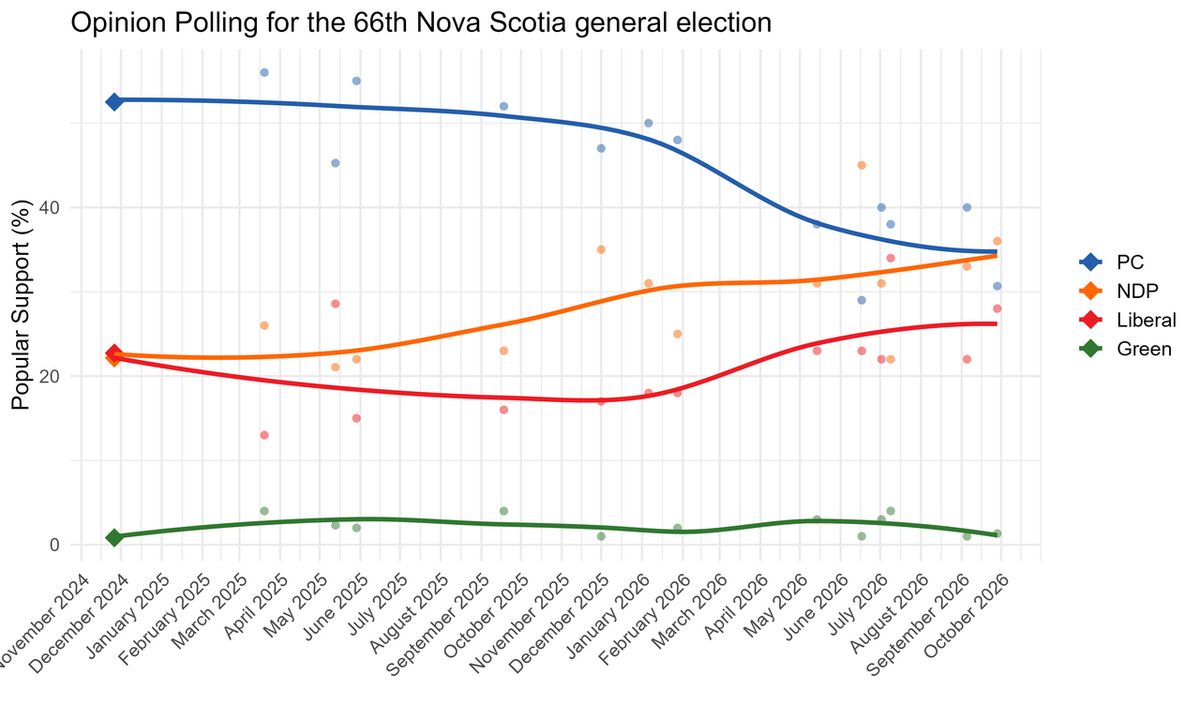
The 66th general election will occur in a political environment reshaped by the results of the 2024 election. On November 26, 2024, the Progressive Conservative Party of Nova Scotia, led by Premier Tim Houston, won a second consecutive majority government. This victory positioned the PCs as the incumbent government seeking re-election in the 2029 campaign. A major shift occurred with the official opposition status, as the New Democratic Party surpassed the Liberal Party in seat count, replacing the Liberals as the official opposition for the first time since 2013. This change has significant implications for daily legislative proceedings, committee assignments, and the public profile of the parties leading into the next election. The Nova Scotia Liberal Party, after its defeat, experienced immediate leadership turnover. Party leader Zach Churchill, who led the Liberals into the 2024 election, stepped down from the role on December 10, 2024. In the interim, the party was led by Derek Mombourquette. The party's leadership situation evolved further when, on December 8, 2025, former premier Iain Rankin was appointed as the interim leader of the Liberal Party. This period of interim leadership will continue until the party holds a permanent leadership convention. The New Democratic Party, as the official opposition, will be working to consolidate its position and build a platform to challenge the government. The performance of the Houston government on issues such as healthcare, housing, and the economy will be central to the opposition's critique in the legislature and during the election campaign.

Key Dates and Legislative Timeline
The timeline leading to the 66th Nova Scotia general election includes several confirmed dates that set the stage for the campaign. The legislative change to the electoral cycle occurred in the first quarter of 2025, with the bill receiving royal assent on March 26, 2025. The electoral boundary review process unfolded throughout 2025 and into early 2026, with the final report delivered in January 2026. Party leadership changes, particularly within the Liberal Party, occurred in December 2024 and December 2025. While the exact date of the 66th election remains at the premier's discretion, it cannot legally be held later than December 7, 2029. The election call, campaign period, advance voting, and election day will all be scheduled within this framework. The following table outlines the key confirmed dates and deadlines related to the election.
| Event | Date |
|---|---|
| Zach Churchill steps down as Liberal leader | December 10, 2024 |
| Bill to repeal fixed election dates introduced | February 18, 2025 |
| Royal Assent for 5-Year Cycle | March 26, 2025 |
| Boundary Commission Interim Report | August 2025 |
| Iain Rankin becomes interim Liberal leader | December 8, 2025 |
| Boundary Commission Final Report | January 2026 |
| Constitutional Deadline for 66th Election | December 7, 2029 |
Campaign Issues and Strategic Considerations
While the specific issues of the 2029 campaign will be defined closer to the election, several structural and political factors are already in place that will influence the debate. The expansion of the legislature to 56 seats creates new competitive ridings, particularly in the reconfigured Inverness region, where local concerns and community representation will be paramount. The political parties will need to develop platforms that address provincial priorities such as healthcare, the economy, housing, and climate change, all within the context of a larger legislative assembly. The performance of the Progressive Conservative majority government over its mandate will be a central theme, with the New Democratic Party as the official opposition aiming to present itself as a government-in-waiting. The Nova Scotia Liberal Party, under interim leadership, will be working to rebuild its base, select a permanent leader, and redefine its policy direction to regain lost ground. The election will also be the first provincial test of the new five-year electoral cycle, which may influence voter turnout and campaign strategy. All parties will be organizing their constituency associations, fundraising, and candidate recruitment efforts well in advance of the election call to ensure they are competitive across all 56 electoral districts. The new electoral map requires parties to assess voter demographics and historical voting patterns in the freshly drawn districts of Chéticamp-Margarees-Pleasant Bay and Inverness-We'koqma'q, which lack incumbent MLAs. This presents both a challenge and an opportunity for each party to establish a foothold in these communities.
Broader Parliamentary and Advocacy Context
The work of the General Assembly of Nova Scotia continues between elections, with members engaging in local representation, lawmaking, and committee scrutiny. Nova Scotia's parliamentarians also participate in national and international interparliamentary associations, which foster dialogue on shared challenges. These include the Canadian Branch of the Commonwealth Parliamentary Association (CCOM) and the Canadian Group of the Inter-Parliamentary Union (UIPU). For instance, on June 9, 2026, members of the Canada, United Kingdom Inter-Parliamentary Association hosted a working lunch with a UK parliamentary committee to discuss energy security and climate policy. Such exchanges inform the perspectives that MLAs bring to the provincial legislature. Advocacy for inclusive politics remains a theme, as exemplified by former Nova Scotia Speaker Kevin Murphy's work to promote the participation of persons with disabilities in Commonwealth parliaments. Murphy, who was first elected in 2013 and served as Speaker, used his position to advance the Commonwealth Parliamentarians with Disabilities (CPwD) initiative. His personal advocacy began after a hockey injury at age 14 led him to push for accessibility improvements in his school and community, demonstrating how lived experience can shape parliamentary priorities. These ongoing parliamentary activities contribute to the environment in which the 66th general election will take place, highlighting the intersection of provincial governance with wider national and global issues. The records of the legislature, including the Debates (Hansard) and the Journals, provide the official account of the decisions and transactions of the House that will form part of the government's record to be judged in 2029.
National and International Connections
Nova Scotia's political developments do not occur in isolation and are often connected to broader Canadian and international dialogues. The province's representatives engage in numerous interparliamentary groups that link them with counterparts across Canada and around the world. These groups include the Canada-United States Inter-Parliamentary Group (CEUS), the Canada-Europe Parliamentary Association (CAEU), and the Canadian NATO Parliamentary Association (CANA). Participation in these forums allows MLAs to discuss issues like trade, security, and climate change, which have direct implications for Nova Scotia's economy and communities. On the international stage, Canadian foreign policy statements, such as those made at the United Nations General Assembly, often reference Canadian provinces and their characteristics. In a September 2026 address to the UN, Canada's Minister for Foreign Affairs, Anita Anand, drew on her upbringing in the coastal province of Nova Scotia, using a maritime metaphor to discuss global order. She stated, 'The tide does not wait. You must move with it,' framing Canada's approach to strategic autonomy and multilateral partnerships. This connection illustrates how Nova Scotia's identity is woven into national narratives that can resonate during provincial election cycles, particularly on issues of economic diversification, energy projects like those in Canso, and responses to global disruptions. The work of these associations and the national context they provide form a backdrop against which provincial parties will articulate their visions for Nova Scotia's place in Canada and the world.
Questions about 66th Nova Scotia general election
When is the next Nova Scotia provincial election?
The 66th Nova Scotia general election must be held on or before December 7, 2029. This deadline is set by the Canadian Charter of Rights and Freedoms, which limits the life of a legislative assembly to five years. The previous election was on November 26, 2024, starting the clock for the next vote. Premier Tim Houston has the discretion to call the election at any time before the December 2029 deadline, following the repeal of the fixed election date law in March 2025.
How many seats will be in the next Nova Scotia legislature?
The next General Assembly of Nova Scotia will have 56 seats, an increase from the current 55. This expansion was recommended by the Electoral Boundaries Commission in its January 2026 final report. The change was necessitated by a Supreme Court of Nova Scotia ruling requiring the creation of a distinct electoral district for the Acadian community in Chéticamp. The new ridings are Chéticamp-Margarees-Pleasant Bay and Inverness-We'koqma'q, created from the former Inverness district.
Who is the premier leading into the 2029 election?
Premier Tim Houston of the Progressive Conservative Party will lead into the 2029 election as the incumbent premier. His party won a majority government in the November 2024 Nova Scotia general election. Premier Houston introduced the bill to repeal the four year fixed election date legislation on February 18, 2025. This bill received royal assent on March 26, 2025, reverting the province to a five year electoral cycle. Consequently, he holds the authority to advise the lieutenant governor to dissolve the general assembly earlier, though the election must constitutionally be held on or before December 7, 2029.
Which party is the official opposition in Nova Scotia?
The New Democratic Party is the official opposition in Nova Scotia. This status was achieved after the party replaced the Liberal Party following the November 26, 2024 general election. The change grants the New Democratic Party specific parliamentary privileges and responsibilities in the legislative assembly. As the official opposition, its role is to hold the governing Progressive Conservative majority to account. This positioning will be a key factor as all parties prepare for the next provincial election.
Who is leading the Nova Scotia Liberal Party?
Iain Rankin is the interim leader of the Nova Scotia Liberal Party as of December 8, 2025. He assumed this role following the interim leadership of Derek Mombourquette. Mombourquette had become interim leader after Zach Churchill stepped down as party leader on December 10, 2024. The party has not yet selected a permanent leader through a formal leadership election. The next permanent leader will be tasked with rebuilding the party after its loss of official opposition status.
Why did Nova Scotia change its election date law?
Nova Scotia changed its election date law to repeal fixed four year terms and revert to a five year maximum cycle. Premier Tim Houston introduced the relevant bill on February 18, 2025. The legislation received royal assent on March 26, 2025. This change aligns the province's electoral cycle with the five year maximum period stipulated by Section 4 of the Canadian Charter of Rights and Freedoms. It restores the premier's traditional power to advise the lieutenant governor on dissolving the legislature, providing flexibility within the constitutional window.
Sources: Wikipedia and current public reporting, checked by the Nosy Mag desk. Last updated 2026-10-25.