Killing of Richard Oland
The killing of Richard Oland was a high-profile Canadian criminal case involving the 2011 murder of a prominent New Brunswick businessman from the family behind Moosehead Breweries. His son, Dennis Oland, was charged and convicted of second-degree murder in 2015, a verdict that was overturned on appeal. Following a retrial by judge alone, Dennis Oland was acquitted in 2019, and police subsequently stated the investigation was no longer active. The case, marked by intense media scrutiny, significant police misconduct, and a complex forensic investigation, remains officially unsolved.
Background of Richard Oland and Family Dynamics
Richard Henry "Dick" Oland was born in 1941 into the prominent Oland family of New Brunswick, brewers of Moosehead beer. He was the second son of Philip Oland, chairman and CEO of Moosehead Breweries, and Mary Oland, and was raised in the affluent suburb of Rothesay alongside his older brother, Derek. Richard attended Rothesay Collegiate School, Regiopolis College, and later the University of New Brunswick, where he obtained a certificate in brewing technology. In 1965, he married Constance "Connie" Connell, with whom he had three children: Elizabeth, Jacqueline, and Dennis. A friend who was a clinical psychologist later suggested Richard had Asperger syndrome. By 1980, Richard was a vice-president at Moosehead but became embroiled in a public and legal feud with Derek over succession, which their father ultimately decided in Derek's favour, prompting Richard's departure from the family business in 1981.
Starting anew, Richard Oland built a personal fortune estimated at nearly $37 million through three major enterprises. His business ventures included the property development firm Kinghurst Estates Limited, the trucking company Brookville Transport Limited, and his investment firm Far End Corporation. He also served as president of the Saint John 1985 Canada Summer Games Society, overseeing the organization of the games. Richard maintained his primary office at the Far End Corporation premises at 52 Canterbury Street in Saint John's historic Uptown district, renting the second-floor space from building owner John Ainsworth, who operated Printing Plus on the first floor. Richard was married to Connie for 46 years but was also in an eight-year extramarital relationship with local real estate agent Diana Sedlacek. Family members and Sedlacek described Richard as having a strong, controlling, and at times verbally abusive personality, with a particularly strained relationship with his only son, Dennis, whom he reportedly thought was lazy.
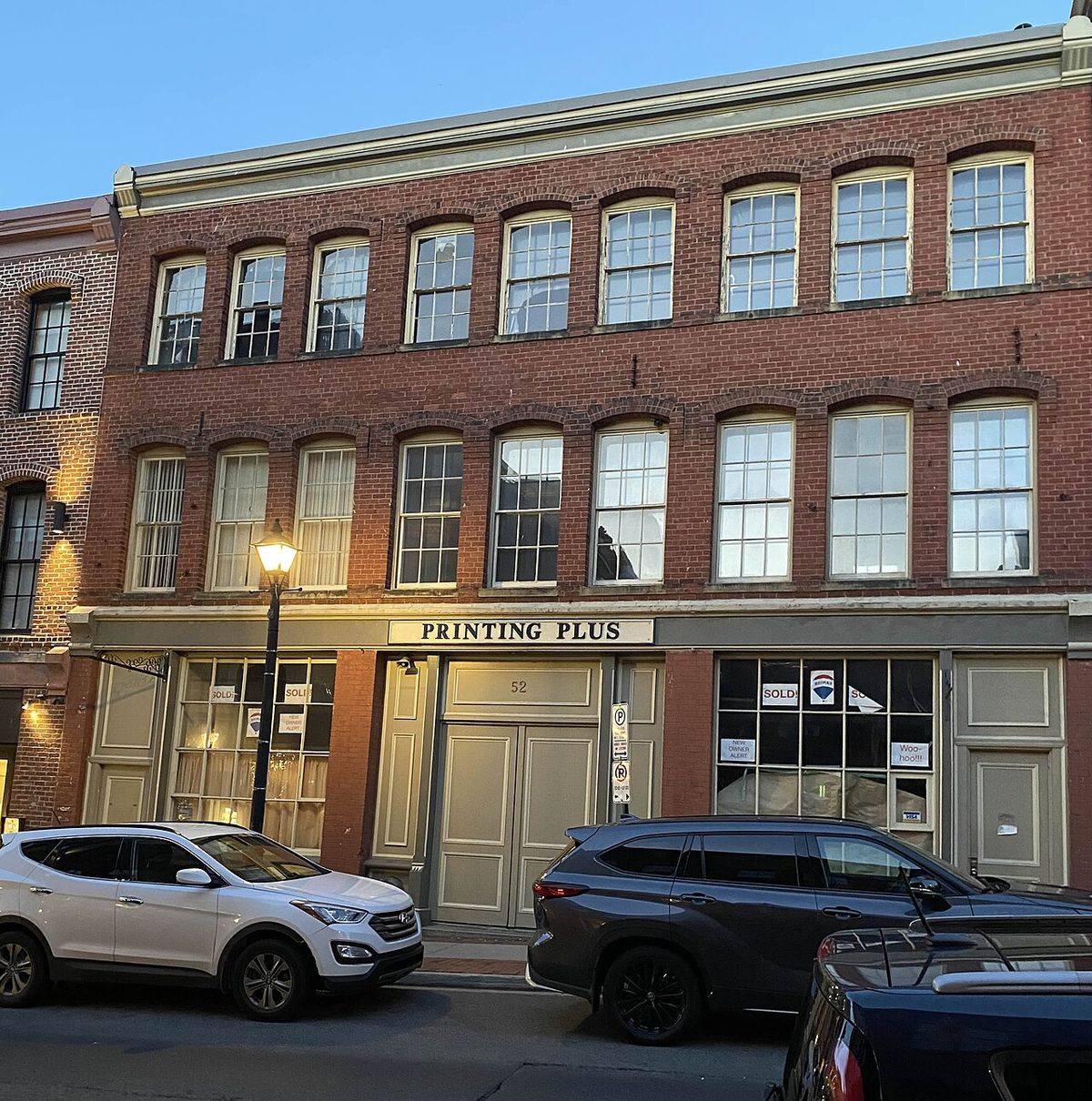
Discovery of the Murder and the Crime Scene
On the morning of July 7, 2011, Richard Oland's personal assistant, Maureen Adamson, discovered his body lying face down in a pool of blood in his second-floor office. Sergeant Mark Smith of the Saint John Police Force later testified it was one of the bloodiest crime scenes of his career. A forensic autopsy conducted by Dr. Ather Naseemuddin revealed Richard Oland had suffered 45 sharp and blunt force wounds to his head, neck, and hands. Six of the wounds were defensive injuries to his hands, indicating he had tried to protect himself during the initial attack. The assault continued after he was on the floor, causing catastrophic skull damage, including 14 fractures. A concave area measuring 10 cm in length, 7 cm across, and 2 cm deep was found on his skull, and portions of brain matter were discovered on his back.
The violence of the attack resulted in blood spatter on every wall of the office, as well as on the desk, computer, chair, filing cabinets, and an empty pizza box. Blood had soaked through three layers of flooring, staining the ceiling of the office below. Forensic analysts concluded the attacker would have been heavily contaminated with blood. Despite the gruesome scene, very few transfer stains or footprints were found, with only one unexplained footprint discovered. No murder weapon was ever found, though police speculated a drywall hammer, roofer's hatchet, or combat knife could have been used. The investigation was immediately hampered by significant contamination of the crime scene by the Saint John Police Force. Officers used the office bathroom for two days before it was tested for evidence, and Deputy Chief Glen McCloskey, among others, walked through the scene without protective gear. The last keystroke on Richard's computer was recorded at 5:39 p.m. on July 6, 2011. The only item missing from the scene was Richard Oland's iPhone.
Police Investigation and Initial Focus on Dennis Oland
Within hours of the discovery, police began interviewing the Oland family. Dennis Oland, who had visited his father the previous evening, gave a video-recorded statement that lasted over five hours. He told Constable Stephen Davidson he had visited his father's office around 5:30 p.m. on July 6, 2011, to discuss family genealogy and left about an hour later. He stated he was wearing a blue dress shirt, navy blazer, the pants he had on, and his shoes during the visit. Midway through the interview, Davidson informed Dennis he was the primary suspect. Dennis contacted lawyer Bill Teed, who advised him to stop speaking, but Davidson continued. Police allowed Dennis to leave around 11:00 p.m. without seizing the clothing he described.
The police theory quickly centred on Dennis, positing a financial motive. Testimony from financial manager Robert McFadden revealed Dennis was deeply in debt and had borrowed approximately $538,000 from his father to cover divorce expenses. The terms dictated that upon Connie Oland's death, this sum would be deducted from Dennis's inheritance, with $269,000 going to each of his sisters. The investigation also explored other individuals. Robert McFadden and his son, Galen, were at the office until about 5:30 p.m. on July 6. In 2012, Galen McFadden provided a DNA sample, which matched blood found on office curtains, a bathroom sink, and a paper towel. Police later covertly obtained Robert McFadden's DNA from a restaurant straw. The police forensics unit ultimately concluded the blood evidence related to Galen McFadden was unrelated to the murder. Two weeks after the murder, police said they were convinced Richard was killed by someone he knew.
Key Evidence: The Brown Jacket, Cell Phone, and Forensic Analysis
The most critical physical evidence in the case was a brown sports jacket owned by Dennis Oland. During his initial police interview, Dennis stated he had worn a navy blazer to visit his father. However, security footage from a downtown mall on July 6 showed him wearing a brown jacket, and his father's assistant, Maureen Adamson, confirmed he was wearing a brown jacket during the visit. His wife, Lisa, took the jacket to a dry cleaner on July 8, 2011. Police later seized the jacket on November 8, 2011. A visual inspection by Constable David MacDonald identified five reddish spots invisible to the naked eye. The jacket was sent to the RCMP forensics lab in Nova Scotia on November 25, 2011. Forensic testing confirmed four microscopic spots on the jacket contained blood that matched Richard Oland's DNA profile. The defence argued the minuscule amounts of blood could have been transferred through casual contact. The Crown argued the jacket had been dry-cleaned to destroy evidence.
Another central piece of evidence was Richard Oland's missing iPhone, the only item taken from the scene. Cell phone records showed it last communicated with a Rogers network tower in Rothesay at 6:44 p.m. on July 6, receiving a text from Diana Sedlacek. The phone was later indicated to have a "roaming error" on July 9. Other forensic searches yielded no conclusive evidence. Extensive swabbing of Dennis Oland's car, six pairs of his shoes, a reusable grocery bag, and his BlackBerry cell phone showed no traces of Richard Oland's blood or DNA. Sergeant Mark Smith spent three days searching Dennis's car, swabbing ten different areas including the steering wheel and door handles. No blood or DNA was detected in any of these tests.
- Brown Jacket: Four microscopic spots of Richard Oland's DNA confirmed on the fabric. Spots were on the outside right sleeve, outside upper-left chest, and outside back bottom hem.
- Missing iPhone: Last signal at 6:44 p.m. on July 6 from a Rothesay tower. Showed roaming error on July 9, indicating it was not destroyed immediately.
- Vehicle and Personal Items: No blood or DNA from Richard Oland found in Dennis's car, on his six pairs of shoes, his BlackBerry phone, or a reusable grocery bag.
- Other DNA: Blood matching Galen McFadden's DNA found on office curtains, a bathroom sink, and a paper towel, deemed unrelated to the murder.
- Crime Scene Hairs: Three hairs found inside Richard's hands and tissue from under his fingernails were collected. The hairs lacked roots and could not be tested for DNA.
Legal Proceedings: From Preliminary Inquiry to First Conviction
Dennis Oland was arrested and charged with second-degree murder in November 2013. Police stated no one else would be charged. He pleaded not guilty and was released on bail with a $50,000 surety posted by his uncle, Derek Oland, under conditions that included surrendering his passport. A preliminary inquiry presided over by Provincial Court Judge Ronald LeBlanc spanned 37 days in late 2014. Judge LeBlanc was highly critical of the police investigation and the Crown's theory. He noted the police had a mere "hunch" and stated the Crown had "failed to establish a reason for Dennis Oland to kill his father," as the $37 million inheritance went to Connie, not Dennis. He also questioned the cell phone evidence, noting a jury could conclude the phone was outside Canada on July 9. Despite his reservations, he found there was sufficient evidence to proceed to trial and placed a publication ban on the inquiry contents until after the trial verdict.
The first trial began in September 2015 before Justice John Walsh and a jury in Saint John. It became the longest trial in the province's history, lasting 65 days. About 5,000 prospective jurors were summoned from Saint John and Kings counties, with 16 jurors empanelled. The prosecution argued Dennis killed his father in a fit of rage over money and his father's disrespect. The defence highlighted the lack of a murder weapon and the problematic police investigation. On December 19, 2015, after deliberation, the jury returned a guilty verdict. Dennis Oland was sentenced to life in prison with no possibility of parole for 10 years, as recommended by the jury. He was sent to the maximum security Atlantic Institution in Renous to begin his sentence. The defence immediately appealed the conviction.
Appeal, Retrial, and Acquittal
The appeal focused on errors in the trial judge's instructions to the jury. The defence argued Justice Walsh erred in his charge regarding the brown jacket evidence, specifically by not properly instructing the jury on how to consider its probative value given it had been dry-cleaned. On October 24, 2016, the New Brunswick Court of Appeal agreed, setting aside the murder conviction and ordering a new trial. The court found the error was significant enough that the verdict could not be sustained. The Crown's subsequent attempt to appeal this ruling to the Supreme Court of Canada was dismissed. The retrial was held in 2019 and was conducted by judge alone, with Justice Terrence Morrison of the New Brunswick Court of Queen's Bench presiding. Before the retrial started, a mistrial was declared after a police officer improperly gathered information about the jury pool.
The 2019 retrial revisited the same core evidence but with renewed scrutiny. The defence focused on the timeline, presenting video evidence showing Dennis in Rothesay by about 7:30 p.m. on July 6. Two witnesses in the building below Richard's office testified hearing thumping noises between 7:30 and 8:00 p.m. A witness in a bar across the street reported seeing an unknown man exit the office building around the same time. Video evidence confirmed a vehicle was parked near the office and left seven minutes later. Former deputy chief Glen McCloskey testified, admitting mistakes at the crime scene. On July 19, 2019, Justice Terrence Morrison found Dennis Oland not guilty, stating the Crown had not proven its case beyond a reasonable doubt. He emphasized the lack of a clear motive, the absence of a murder weapon, and the reasonable possibility of innocent transfer of blood.
| Legal Phase | Date | Key Outcome | Presiding Official | Additional Details |
|---|---|---|---|---|
| Charge & Bail | November 2013 | Dennis Oland charged with second-degree murder. Released on $50,000 bail. | Justice Hugh McLellan | Derek Oland posted surety. Dennis surrendered passport. |
| Preliminary Inquiry | December 2014 | Judge rules sufficient evidence for trial, but criticizes police theory. | Judge Ronald LeBlanc | Inquiry lasted 37 days. Publication ban imposed. |
| First Trial | Sep-Dec 2015 | Jury finds Dennis Oland guilty of second-degree murder. | Justice John Walsh & Jury | Trial lasted 65 days. 5,000 prospective jurors summoned. |
| Appeal | October 24, 2016 | New Brunswick Court of Appeal overturns conviction, orders new trial. | NB Court of Appeal | Error found in jury instructions regarding brown jacket evidence. |
| Retrial | 2019 | Judge-alone trial results in a not guilty verdict. | Justice Terrence Morrison | Mistrial declared initially due to police misconduct. Verdict on July 19, 2019. |
Aftermath, Costs, and Unresolved Questions
Following the 2019 acquittal, the Saint John Police Force stated there was no longer an active investigation into Richard Oland's murder, effectively leaving the case unsolved. The combined cost of the two trials to New Brunswick taxpayers was significant. The police force's handling of the investigation faced sustained criticism, leading to an external review by the New Brunswick Police Commission. That review was suspended in January 2016 after Dennis Oland's conviction was appealed and was reported to be in limbo as of 2019. The Provincial Police Commission had launched an investigation into the mishandling of the homicide investigation after the first trial. Deputy Chief Glen McCloskey was investigated for his conduct but was cleared by Halifax police and not charged.
The killing of Richard Oland remains a subject of significant public interest. The brutal nature of the crime, the prominent family involved, the dramatic courtroom scenes, and the ultimate acquittal have cemented its place in Canadian legal history. A CBC Television documentary series titled The Oland Murder premiered in 2020. For the Oland family, the tragedy was compounded by the lengthy legal battle. The case shows the challenges of forensic evidence interpretation and the pressure on police in high-stakes investigations. According to a Maclean's report, officers' sloppy work included not photographing the back alleyway until three years after the crime and a blood spatter expert arriving four days after the homicide. With no other suspects and the investigation closed, the question of who killed Richard Oland remains unanswered.
Key Figures and Their Roles in the Oland Case
The case involved numerous individuals from the Oland family, including Richard Oland's wife Constance, his son Dennis, and his daughters Lisa Bustin and Jacqueline Walsh. Key law enforcement figures such as Constable Stephen Davidson and Sergeant Mark Smith of the Saint John Police Force played central roles in the investigation and subsequent trials. The legal proceedings also featured prominent judicial figures like Justice Jack Walsh and Justice Hugh McLellan, whose rulings significantly shaped the course of the case. Their collective interactions and testimonies were critical in forming the narrative of the investigation, the initial conviction, and the eventual acquittal.
- Richard (Dick) Oland: The 69-year-old victim, a successful entrepreneur and former Moosehead Breweries vice-president. He was last seen alive in his office on July 6, 2011.
- Dennis Oland: Richard's son, a 43-year-old investment adviser. He was charged, convicted, and later acquitted of his father's murder. He spent ten months in the Atlantic Institution.
- Constance (Connie) Oland: Richard's wife of 46 years and mother of Dennis, Elizabeth, and Jacqueline. She was the primary beneficiary of his $37 million estate.
- Derek Oland: Richard's older brother, executive chairman of Moosehead Breweries. He posted bail for Dennis and was the rival in the family business feud.
- Diana Sedlacek: Richard Oland's mistress of eight years. She sent the last text message to his iPhone on July 6, 2011.
- Maureen Adamson: Richard Oland's personal assistant. She discovered his body and testified that Richard gave Dennis a friendly reception.
- Robert McFadden: Richard Oland's financial manager. He was present at the office until about 5:30 p.m. on July 6 and declined to give a DNA sample voluntarily.
- Galen McFadden: Robert McFadden's son. His DNA was found in bloodstains in the office bathroom, deemed unrelated to the murder.
- Dr. Ather Naseemuddin: Forensic pathologist who conducted the autopsy, counting 45 wounds.
- Justice John Walsh: Presiding judge at the first trial in 2015. He was a former prosecutor in the trial of Allan Legere.
- Justice Terrence Morrison: Presiding judge at the 2019 retrial, who delivered the not guilty verdict.
- Deputy Chief Glen McCloskey: Saint John police officer who admitted to contaminating the crime scene. He was investigated but cleared.
- Constable Stephen Davidson: Lead investigator who interrogated Dennis Oland and declared him the primary suspect.
- Bill Teed: Lawyer contacted by Dennis Oland during his police interview, who advised him to stop speaking.
Questions about Killing of Richard Oland
Who was Richard Oland and why was his murder so high-profile?
Richard Oland was a 69-year-old multi-millionaire businessman from Saint John, New Brunswick, and a former vice-president of the famed Moosehead Breweries. His murder was high-profile due to the family's prominence and wealth, the extreme violence of the crime, and the subsequent accusation against his own son, Dennis Oland. The case generated significant media attention across Canada, featuring a lengthy, expensive trial that revealed intimate details of the family's dynamics. The investigation and trials also exposed serious errors by the Saint John Police Force, including scene contamination and delayed forensic work.
What was the evidence against Dennis Oland?
The evidence included Dennis Oland being the last known person to see his father alive on July 6, 2011. Four microscopic spots of blood matching Richard Oland's DNA were found on a brown jacket Dennis wore that day. Richard Oland's missing iPhone last communicated with a cell tower in Rothesay at 6:44 p.m. on July 6. Dennis initially told police he wore a navy blazer, but video evidence showed the brown jacket. The defence argued the blood could have been transferred innocently through a hug in the bloody office. No murder weapon was found, and no blood or DNA from Richard was found in Dennis's car, on his shoes, or on his personal phone.
Why was Dennis Oland's first murder conviction overturned?
The New Brunswick Court of Appeal overturned Dennis Oland's second-degree murder conviction on October 24, 2016. The appeal court found a critical error in the trial judge's instructions to the jury regarding the brown jacket evidence. The trial judge failed to properly instruct the jury on how to consider the probative value of the blood evidence given the jacket had been dry-cleaned by Dennis's wife after he was named a suspect. This error was deemed significant enough to have potentially affected the verdict, so the court ordered a new trial. The Supreme Court of Canada later dismissed the Crown's attempt to appeal this ruling.
What was the verdict in the second trial and how was it different?
In the second trial, which was a retrial by judge alone, Dennis Oland was found not guilty on July 19, 2019. Justice Terrence Morrison ruled that the Crown had not proven its case beyond a reasonable doubt. The judge-alone format was a key difference, meaning the verdict was rendered by a single justice after reviewing all evidence. The defence presented a timeline with witnesses hearing thumps between 7:30 and 8:00 p.m. and video evidence placing Dennis in Rothesay by 7:30 p.m. The judge emphasized the lack of a clear motive, the absence of a murder weapon, and the possibility of innocent blood transfer.
How did police mishandle the Richard Oland murder investigation?
The Saint John Police Force's investigation was heavily criticized for contaminating and poorly securing the crime scene. Officers used the office bathroom for two days before forensic testing. Deputy Chief Glen McCloskey and others walked through the scene without protective gear. Police failed to test the main door for fingerprints immediately and did not seize Dennis Oland's described clothing. The brown jacket was sent for forensic testing after the warrant for its seizure had expired. A blood spatter expert did not arrive until four days after the homicide. The back alleyway was not photographed until three years after the crime. These failures led to an external review by the New Brunswick Police Commission.
Is the murder of Richard Oland still an open case?
No, the murder of Richard Oland is not an active investigation. Following Dennis Oland's acquittal in July 2019, the Saint John Police Force publicly stated that there is no longer an active investigation into the killing. With no other suspects charged, the case remains officially unsolved. The New Brunswick Police Commission's review of the police handling was suspended in January 2016 after the conviction was appealed and was in limbo as of 2019. The case is considered closed by police, though it remains a subject of public speculation and media interest.
Sources and further reading
- Killing of Richard Oland (Wikipedia)
- Dennis Oland Case (thecanadianencyclopedia.ca)
- 15 years later, Oland murder remains one of Canada's ... (tj.news)
- The Murder of Richard Oland (canadiantruecrime.ca)
- Ex-deputy police chief admits mistakes in Oland case ... (cbc.ca)
Checked by the Nosy Mag desk. Last updated 2026-10-31.