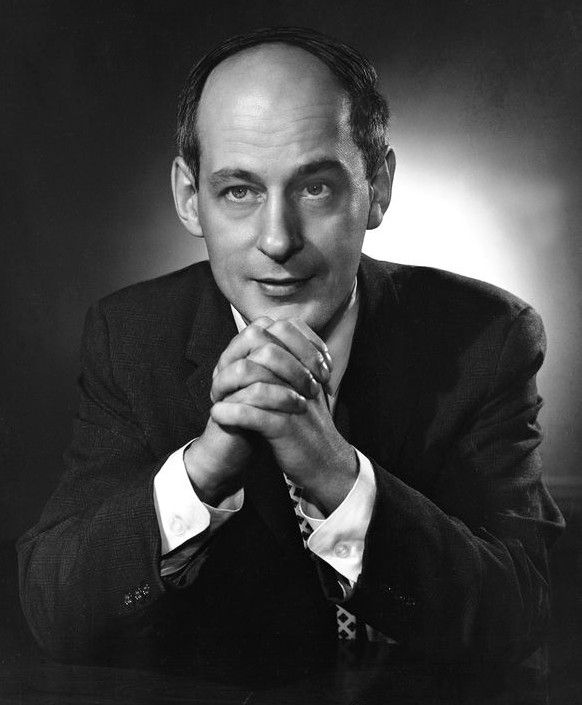
Denis Lortie
Denis Lortie is a former Canadian Forces corporal. On May 8, 1984, he stormed the Parliament Building in Quebec City, opening fire with several firearms and killing three government employees while wounding thirteen others. The attack, which was politically motivated against the governing Parti Québécois, ended after a lengthy negotiation with the National Assembly's serjeant-at-arms, René Jalbert, who convinced Lortie to surrender. Lortie's subsequent legal proceedings, which included an overturned first-degree murder conviction and a guilty plea to second-degree murder, along with his eventual parole, remain a notable chapter in Canadian criminal justice and security history.
Early Life, Trauma, and Military Career
Denis Lortie was born on March 10, 1959, in Quebec, as the youngest of eight children in a family marked by severe dysfunction and abuse. He and all his siblings endured years of physical and sexual abuse perpetrated by their father. One of the Lortie siblings finally informed the police of the abuses in the late 1960s. In 1969, Lortie's father was sent to federal prison for three years. He finished incarceration in 1972 but never returned to his family. After finishing high school in Quebec, Lortie joined the Canadian Forces in the late 1970s. He served in the Logistics Branch as a supply technician, with postings that included CFB Borden in Ontario, CFB Valcartier in Quebec, CFB Halifax in Nova Scotia, and finally CFS Carp near Ottawa, Ontario. On December 27, 1980, he married Lisa Lévesque in Quebec City, and the couple was posted to CFB Halifax the following year. They had a son in 1982 and a daughter in 1983. At the time of the shooting in 1984, Lortie was a corporal stationed at CFS Carp.
Lortie was bilingual but faced significant personal anguish over his language skills. Even while speaking French, his native language, he encountered pronunciation difficulties that resulted in irregular and halting speech. He blamed his social and professional failures on his inability to speak English flawlessly, and was keenly aware that his poor English reinforced negative stereotypes of Francophones and Québécois. After the birth of his daughter in 1983, Lortie's mental state deteriorated as he worried he would become abusive in the manner of his father. He contemplated killing himself and his family before ultimately placing blame for his problems on the governing pro-sovereignty Parti Québécois, disliking the party's advocacy of a distinct Francophone identity for Quebec. Lortie planned the killing spree as a means of broadcasting his discontent.
Preparation and the Morning of the Attack
The direct preparation for the attack began on May 7, 1984, when Lortie left the CFS Carp military base under the pretence of needing time off to arrange a divorce from his wife. He had previously attempted to secure official leave from his base but was refused. Lortie later claimed he saw the face of his abusive father on the officer who denied his request. After leaving the base, he rented a car and drove to Quebec City, where he took a guided tour of the Parliament Building. He then rented a room in a motel for the night. The next morning, May 8, at 9:30 a.m., Lortie walked into the CJRP radio station in Quebec City, identified himself only as Mr. D, and dropped off a sealed envelope containing an audiotape for one of the station's hosts, André Arthur. He instructed the radio staff not to open the envelope until 10:30 a.m., but they opened it immediately, discovering it was a taped statement of Lortie's plans. On the tape, he declared, 'The government now in power is going to be destroyed.' By the time CJRP staff contacted police, Lortie's attack was already under way.
Lortie's method of timing his assault was uniquely tied to media broadcast schedules. Instead of wearing a watch, he planned to listen to CJRP and wait for host André Arthur to end his regular segment, which would signal the approach of the 10:00 a.m. parliamentary committee meeting he aimed to disrupt. On that specific day, however, Arthur ended his broadcast 20 minutes early, a crucial deviation that led Lortie to enter the building and proceed to the Assembly Chamber while it was still mostly empty. This error in timing fundamentally altered the outcome of his plan, which was to assassinate Premier René Lévesque and other members of the governing Parti Québécois during their meeting.
The Shooting and Police Response
At 9:45 a.m. on May 8, 1984, Denis Lortie entered the Parliament Building through a side door located on Grande-Allée, dressed in full combat uniform. He was armed with two C-1 submachine guns, an Inglis pistol, a duffel bag containing four hundred rounds of 9 mm NATO ammunition, and a knife strapped to his leg. As he entered the building, he immediately shot and mortally wounded a receptionist, then proceeded to a corridor where he killed a messenger. He moved into a smoking room, shooting and wounding a person there, before heading toward the cafeteria and ultimately finding his way to the Assembly Chamber. Witnesses reported hearing him shout 'Where are the MNAs? I want to kill them' as he moved through the building. Outside the chamber, a massive police response was assembling, with dozens of armed Sûreté du Québec officers, more than a dozen Groupe d'intervention operatives, and Quebec City Police officers, many carrying M2 carbines, taking up positions alongside helicopters and snipers.
Upon reaching the Assembly Chamber, Lortie found it largely empty due to his mistimed entry. He opened fire on the government employees and staff who were still inside, killing one and wounding eleven others in a sustained attack. The dramatic moments were recorded by a single television camera setup permanently installed in the assembly room, capturing footage of Lortie firing rounds from the Speaker's chair toward people cowering in the aisles. This footage would later be released and used by the CBC's current affairs program The Journal to create an English-language audio re-enactment. The police, despite their numbers and firepower, were held at bay as the situation developed into a hostage scenario.
René Jalbert's Negotiation and the Surrender
The National Assembly's serjeant-at-arms, René Marc Jalbert, was informed that a man in military uniform was armed inside the Assembly Chamber. A veteran of the Royal 22e Régiment, Jalbert approached the situation with deliberate calm. Upon stepping out of an elevator, Lortie asked him why he had come and fired his C-1 submachine gun inches from Jalbert's face. Unflinching, Jalbert told Lortie that he too had been a soldier and offered to show his military discharge card as a point of shared experience. Lortie agreed to this and showed his own identification, establishing a fragile thread of communication. Jalbert later recalled the tense moment, stating he told Lortie, 'If you keep on shooting we can’t have a conversation.' This initial exchange was critical in de-escalating the immediate violence.
Jalbert persuaded Lortie to come into his basement office to discuss the matter further and to release the other civilians trapped in the Assembly Chamber. Over the next four hours, Jalbert engaged Lortie in conversation. He listened to Lortie's grievances and ultimately promised him that he would be able to surrender to military police, a key concession as Lortie was unwilling to surrender to civilian authorities. At 2:15 p.m., after more than four hours of negotiation, Lortie surrendered to a combined group of Sûreté du Québec officers, Quebec City Police Service officers, and National Assembly security personnel. For his extraordinary bravery, which likely prevented further loss of life, René Jalbert was awarded the Cross of Valour, Canada's highest civilian award for bravery, several months later in a ceremony held in the very National Assembly chamber that had been under attack.
Victims and the Immediate Public Impact
The shooting resulted in three fatalities and thirteen people wounded, all of whom were non-elected government employees. The three men killed were Georges Boyer, Camille Lepage, and Roger Lefrançois. The attack sent shockwaves through Quebec and the rest of Canada, dominating national headlines and raising urgent questions about the security of legislative buildings. The fact that the assault was carried out by an active member of the Canadian Forces using military-issue weapons added a layer of deep public concern. An investigation into contributing factors later highlighted the easy access Lortie had to weapons and ammunition, noting that CFS Carp, unlike other bases, lacked proper secure storage. The release of the television footage from inside the chamber a year later, and the subsequent CBC re-enactment, forced the public to confront the visceral reality of the attack. The victims' families expressed enduring grief and, in some cases, strong disagreement with the judicial and parole outcomes for Lortie. Steve Boyer, son of victim Georges Boyer, stated that he believed Lortie should have been executed, a punishment abolished for civilian murder in Canada in 1976.
Legal Proceedings, Appeals, and Psychiatric Assessment
The criminal case against Denis Lortie involved complex intersections of law, mental health, and appeals. Psychiatrist Pierre Mailloux, assigned to assess Lortie, diagnosed him with paranoid schizophrenia and concluded he had organized his crime during a psychotic episode, believing he was acting on instructions from God. Despite this psychiatric assessment, Lortie was convicted of first-degree murder in 1985 and sentenced to life in prison. However, the Quebec Court of Appeal reviewed the case and ordered a new trial after determining the trial judge had made errors in instructing the jury on how they should weigh the testimony from the psychiatrists heard in the case. This appellate decision forced a retrial.
Facing a new trial, Lortie pleaded guilty to reduced charges of second-degree murder in 1987. For this conviction, he received a life sentence with no eligibility for parole for ten years. The legal journey did not reach the Supreme Court of Canada, as records indicate an application for leave to appeal was filed but the ultimate disposition of that leave application is part of the court's closed records. The table below outlines the key stages in Denis Lortie's legal journey from attack to final sentencing.
| Year | Legal Event | Outcome or Status |
|---|---|---|
| 1984 | Attack and Arrest | Surrendered on May 8. Charged with murder. |
| 1985 | First Trial | Convicted of first-degree murder. |
| 1985 to 1987 | Appeal Process | Quebec Court of Appeal ordered a new trial due to judicial error. |
| 1987 | Second Trial | Pleaded guilty to second-degree murder. |
| 1987 | Sentencing | Life imprisonment, no parole for 10 years. |
| Post-1987 | Potential Supreme Court Appeal | Application for leave to appeal filed (docket 21950). |
Imprisonment, Rehabilitation, and Parole
Denis Lortie served his life sentence in a minimum security correctional facility north of Montreal, where he underwent intensive psychiatric treatment and took classes designed to deal with aggression. The Parole Board of Canada, in its assessment leading to his release, concluded he had 'patched his life together despite being responsible for one of the most notorious events in Quebec history.' In 1995, the board granted him day parole to a halfway house in Hull, Quebec. In a contemporaneous interview, Lortie stated he was 'disconnected from reality' at the time of the killings but claimed the counselling in prison had provided him with tools he previously lacked. The strict conditions of his day parole required him to spend every night at the halfway house between 11:00 p.m. and 7:00 a.m., inform parole supervisors of his whereabouts at all times, and remain within a 40-kilometre radius of the house.
In July 1996, Lortie was granted full parole by the Parole Board of Canada. As of 2007, reports indicated he was married, held a steady job, owned a house, and had been forthcoming with the authorities monitoring his case. His rehabilitation and reintegration were held up by the board as a successful outcome of the correctional system, though they remained deeply controversial. The relatives of some victims believed he was not punished severely enough. Hélène LeFrancois, whose husband Roger was murdered, stated, 'I have tried to forget, but in the last 10 years nothing has eased the grief I felt at the loss of my husband.' The parole decisions sparked ongoing public debate about justice, mental illness, and the possibility of redemption after violent crime.
Lasting Significance and Security Legacy
The Denis Lortie attack remains a critical case study in Canadian security procedures, mental health adjudication, and crisis management. It was a direct assault on a provincial legislature and prompted comprehensive reviews of security protocols at government buildings across Canada. The event demonstrated the potential for catastrophic violence stemming from a combination of personal grievance, mental illness, and political ideology. The successful negotiation by René Jalbert became a seminal example of crisis de-escalation, studied for its emphasis on communication, patience, and establishing rapport over the immediate use of force. Jalbert's actions likely saved many lives and set a standard for handling similar barricade situations.
The case also sparked enduring debates about the balance between criminal responsibility and mental illness within the legal system. Lortie's diagnosis of paranoid schizophrenia and the subsequent overturning of his initial conviction highlighted the legal complexities of adjudicating crimes committed during psychotic episodes. His eventual rehabilitation and successful reintegration into society, as affirmed by the parole board, continue to inform discussions about the goals of incarceration and the treatment of mentally ill offenders. The attack is often cited alongside other incidents like the 2014 attack on Parliament Hill by Michael Zehaf-Bibeau and the 1966 attempted bombing by Paul Joseph Chartier.
Questions about Denis Lortie
What did Denis Lortie do?
On May 8, 1984, former Canadian Forces Corporal Denis Lortie stormed the Parliament Building in Quebec City. He was armed with multiple firearms, including submachine guns, and opened fire inside the building. His attack resulted in the deaths of three government employees and left thirteen other people wounded. The shooting spree was a politically motivated attempt to target members of the governing Parti Québécois during a parliamentary committee meeting.
How did the Denis Lortie attack end?
The attack ended after a prolonged negotiation with René Jalbert, the National Assembly's serjeant-at-arms. Jalbert, a military veteran, calmly engaged Lortie in conversation for over four hours in his basement office. He persuaded Lortie to release other hostages and promised him he could surrender to military police, which led to Lortie's surrender to a combined police force at 2:15 p.m. Jalbert's actions were later recognized with the Cross of Valour, Canada's highest civilian bravery award.
Is Denis Lortie still in prison?
No, Denis Lortie is no longer in prison. He was granted day parole in 1995, allowing him to live under strict conditions in a halfway house in Hull, Quebec. He was then granted full parole in July 1996. As of 2007, reports indicated he was living in the community, was married, held a steady job, and owned a house. The Parole Board of Canada determined he no longer posed a threat to society.
What mental illness did Denis Lortie have and how did it affect his trial?
According to psychiatrist Pierre Mailloux, Denis Lortie was diagnosed with paranoid schizophrenia. The assessment concluded Lortie committed the attack during a psychotic episode, believing he was acting on instructions from God. This diagnosis was central to the legal appeals process. The Quebec Court of Appeal cited errors in how the jury was instructed to weigh this psychiatric testimony as the reason for overturning his first-degree murder conviction and ordering a new trial.
Who were the victims and what was the security failure that allowed the attack?
The three people killed were government employees Georges Boyer, Camille Lepage, and Roger Lefrançois. Thirteen others were wounded. A significant contributing factor was the failure of security at Lortie's military base, CFS Carp. Unlike other non-combat bases, it reportedly lacked a proper armoury or secure ammunition lockers, allowing Lortie easy access to the two C-1 submachine guns, pistol, and hundreds of rounds of ammunition used in the attack.
What was Denis Lortie's sentence and why was it changed?
Denis Lortie was initially convicted of first-degree murder in 1985 and sentenced to life in prison. The Quebec Court of Appeal overturned that conviction and ordered a new trial after determining the trial judge made errors while instructing jurors about how to weigh the testimony from psychiatrists. In 1987, Lortie pleaded guilty to reduced charges of second-degree murder to avoid a retrial. For this second-degree murder conviction, he was sentenced to life imprisonment with no eligibility for parole for ten years.
Sources and further reading
- Denis Lortie (Wikipedia)
- Watch how Denis Lortie's National Assembly attack ended ... (cbc.ca)
- Supreme Court of Canada | 21950 (scc-csc.ca)
- Lortie Released (thecanadianencyclopedia.ca)
Checked by the Nosy Mag desk. Last updated 2026-10-24.