Paroli betting system
The Paroli betting system is a positive progression gambling strategy where players increase their wager only after a win, specifically by doubling the stake. Often referred to as the reverse Martingale or anti-Martingale system, it is designed to capitalize on winning streaks while limiting losses by resetting to a base bet after a loss or a predetermined number of consecutive wins. The system is popular among Canadian players for its simplicity and perceived lower risk compared to loss-chasing strategies, making it a common topic in discussions about roulette, blackjack, and even-money sports bets. It is crucial to understand that, like all betting systems, Paroli cannot overcome the mathematical house edge inherent in casino games or change the fundamental odds.
Core Mechanics and a Worked Example
The Paroli system operates on a straightforward sequence of rules that govern bet sizing based on the outcome of the previous wager. A player begins by establishing a base betting unit, for example, $10. This unit remains the starting point for every new betting cycle. The fundamental rule is to double the wager only following a win. If the initial $10 bet wins, the next bet becomes $20. If that $20 bet wins, the next becomes $40. Most commonly, players aim for a sequence of three consecutive wins before resetting. After achieving the target, or immediately after any loss, the player returns to the original $10 base bet to begin the next cycle. This structure is designed to protect the bankroll from escalating losses while allowing profits to grow during a hot streak.
A clear example illustrates the potential outcomes. Starting with a $10 base bet, a player wins three times in a row. The sequence is a $10 win, a $20 win, and finally a $40 win. The total profit from this cycle, before resetting to $10, is $70 ($10 + $20 + $40). If the player loses on the third bet instead, the outcome is simply the loss of the $40 wager, and the cycle ends. The key financial takeaway is that the system limits the exposure during a losing cycle to the amount of the current doubled bet, not the cumulative total of previous wins. This contrasts sharply with negative progression systems like the Martingale, where bets increase after losses, potentially leading to rapid and substantial financial risk.
The system's logic hinges on using house money to fund the increased bets during a winning streak. The initial base bet is the only personal capital at risk at the start of each cycle. Subsequent bets after a win are funded by the casino's payout, a psychological aspect many players find appealing. It is imperative for users to strictly adhere to the reset rules. Deviating from the plan, such as continuing to double beyond the target wins or chasing losses by increasing after a loss, fundamentally breaks the system and aligns it with higher-risk strategies. Discipline in bankroll management and sticking to predetermined limits are essential companions to employing the Paroli method effectively.
Historical Context and Etymology
The Paroli system has a long history in gambling circles, with its origins believed to trace back to the 16th century. The name itself is derived from the Latin term par, which translates to equal or one that is equal. This etymology reflects the system's focus on even-money bets and its cyclical nature, where the bettor returns to an equal, base stake after a completed sequence. Some historical accounts link the concept to the French mathematician and inventor Blaise Pascal, who is credited with an early version of the roulette wheel in the 17th century. If this association is accurate, the system's documented use would extend back to the 18th century, coinciding with the popularization of roulette in European casinos. For centuries, the Paroli existed as a known but less prominent strategy, often overshadowed by more aggressive systems.
Its modern resurgence in popularity, particularly among online casino players, is attributed to its straightforward rules and lower-risk profile compared to the infamous Martingale. The system's adaptation from traditional table games to online blackjack, roulette, and sports betting platforms has made it a frequent subject of strategy guides and player forums. Its longevity speaks to a persistent appeal among gamblers seeking a structured approach that offers the excitement of progressing bets without the extreme volatility of loss-chasing methods. The system's historical journey highlights a constant in gambling: the search for a manageable method to engage with games of chance.
The Paroli system is a positive progression betting strategy where you increase your stake only after a win. It is often described as the reverse or anti Martingale system because it doubles bets on wins instead of after losses. This system is widely regarded as one of the simplest and most popular casino betting systems among online betting enthusiasts. It is presented as a practical tool for modern players, but it is important to understand it is a money management technique and cannot manipulate fixed odds or guarantee wins.
Comparison with the Martingale System
The Paroli and Martingale systems represent two diametrically opposed philosophies in betting progression. The Martingale is a negative progression system where a player doubles their bet after every loss. The goal is to recoup all previous losses and net a profit equal to the original base bet on the first subsequent win. This approach can lead to rapidly escalating bet sizes during a losing streak, quickly hitting table limits or exhausting a bankroll. In contrast, the Paroli is a positive progression system, increasing bets only after wins. Its primary goal is to maximize profits during a winning streak while containing losses by immediately resetting after a single loss.
A direct comparison of outcomes highlights the risk profiles. In a Martingale sequence, a run of consecutive losses creates exponential growth in the required next bet. A Paroli sequence during a winning streak also grows bets exponentially ($5, $10, $20, $40), but the source of funds is the casino's payout, and a loss simply resets the cycle to $5. The key difference is that the Martingale risks personal capital in an attempt to recover losses, while the Paroli risks only the profits gained during the current streak. Consequently, the Paroli is widely regarded as a lower-risk, more conservative strategy suitable for players with smaller bankrolls or lower risk tolerance.
Both systems share the fundamental limitation that they cannot alter the house edge. Whether betting with positive or negative progression, the mathematical expectation on each bet remains negative for casino games like roulette and blackjack. The choice between systems often comes down to a player's psychological preference and bankroll management style. The Martingale appeals to those seeking to recover losses quickly, accepting high volatility for the chance of a small, steady profit. The Paroli appeals to those who prefer to lock in small wins, accept frequent small losses, and hope for the occasional profitable streak, all with a much lower risk of catastrophic loss.
Practical Application in Casino Games
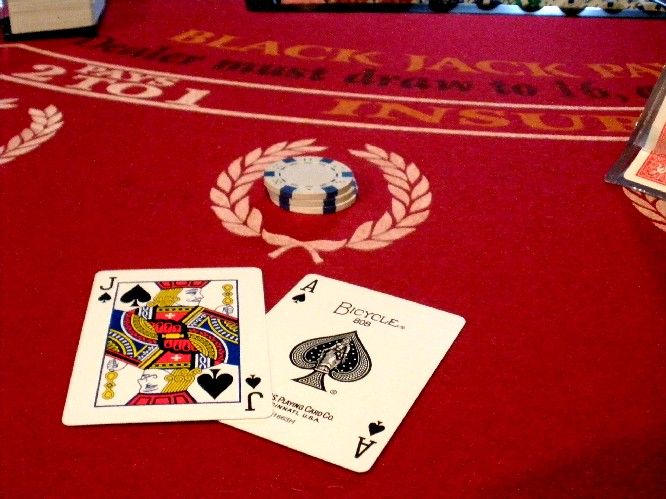
The Paroli system is versatile and can be applied to any casino game offering even-money betting options, where the odds of winning are close to 50%. Its most common applications are in roulette and blackjack. Players simply apply the doubling sequence to their chosen even-money bet across spins. In blackjack, the system is applied to the base game wager, independent of playing strategy decisions like hitting, standing, or doubling down. A player using basic strategy would employ the Paroli on their initial bet for each hand. For instance, a $10 bet that wins leads to a $20 bet on the next hand. If that hand wins, the next bet is $40. A loss at any point, or after three wins, resets the bet to $10. It is crucial to remember that blackjack outcomes are not independent in a card-counting context, but for most players, the Paroli is used as a flat betting system overlay. The system is also mentioned among popular baccarat betting systems, typically applied to the Banker or Player bets.
To implement the system effectively, a player must first establish a sustainable base betting unit. A common recommendation is to set this unit at 2% to 3% of one's total gambling bankroll for the session. The player must also decide on a win target, with three consecutive wins being the standard. Before playing, it is essential to confirm the table minimum and maximum bets to ensure the doubled bets during a streak will not exceed the table limit, which would break the progression. Adherence to the reset rule is non-negotiable for the system to function as intended.
- Roulette: Apply to even-money outside bets like Red/Black or Odd/Even.
- Blackjack: Apply to the base game wager, independent of basic strategy decisions.
- Baccarat: Apply to the Banker or Player bets, as noted among top baccarat systems.
- Sports Betting: Apply to wagers with approximately 50/50 odds, such as point spreads.
- Craps: Can be applied to even-money propositions like the Pass Line bet.
Advantages and Limitations
The Paroli system offers several perceived advantages that contribute to its popularity. Its primary benefit is disciplined bankroll management. By forcing a reset after a loss, it prevents the player from chasing losses with increasingly large bets, a common pitfall in gambling. The system is exceptionally easy to learn and execute, requiring no complex calculations, making it accessible for novice players. It also adds a structured element of excitement to gameplay, allowing players to progress bets during winning streaks. From a psychological standpoint, it can make sessions feel more controlled and can help with time management, as the betting pattern creates natural break points.
However, the system has significant limitations rooted in probability. The most critical is that it does not and cannot change the house edge. Each bet placed, whether at the base unit or a doubled amount, carries the same expected value (a negative percentage for the player). Over the long run, the average loss will equate to the total amount wagered multiplied by the house edge. Because the Paroli involves betting more money during winning streaks, the total amount wagered over time can be higher than with flat betting, potentially leading to greater monetary losses in the long term despite the structured approach.
Another limitation is its dependence on streaks. The system is designed to profit from consecutive wins, but such streaks are statistically less common than alternating wins and losses. A player may experience many short cycles consisting of a single win followed by a loss, resulting in small, frequent losses of the base unit. The occasional three-win streak must be large enough to offset these frequent small losses. The system offers no protection against an extended losing streak at the base unit level, which can steadily deplete a bankroll. It is not a strategy for generating large profits, but rather for managing the pace of play and potential losses.
- Advantage, Bankroll Discipline: Prevents chasing losses by enforcing a reset after a loss.
- Advantage, Simplicity: Easy to learn with no complex math required.
- Advantage, Controlled Excitement: Adds structure and can aid in session time management.
- Limitation, No Edge Change: Does not alter the mathematical house advantage of any game.
- Limitation, Increased Total Wagering: Can lead to higher total bets and thus higher expected monetary loss.
- Limitation, Streak Dependency: Profits rely on infrequent consecutive winning streaks.
- Limitation, Base Unit Losses: Offers no defense against a long series of losses at the base bet level.
The Mathematics and Expected Value
Understanding the Paroli system requires a basic grasp of the mathematics behind independent trials and expected value. This means a player will, on average, hit a three-win streak about once every nine cycles. The expected payout from such a streak, starting with a $10 unit, is $70. However, the more frequent outcomes are cycles that end in a loss before reaching three wins. The expected value calculation must account for all possible sequences. When modeled, the expected loss per cycle converges to the house edge applied to the total amount wagered. For instance, if a player completes many cycles, the average amount wagered per cycle is higher than just the base bet due to the doubling. This increased total wagering amplifies the expected monetary loss over time compared to simply flat betting the base unit repeatedly, even though the percentage edge remains unchanged.
The Paroli system is commonly applied to bets with approximately 50/50 odds, such as even money wagers in roulette or blackjack. The basic idea is that you double your betting unit following each winning wager. A common implementation is to aim for three winning spins or hands in a row, after which you reset your stake to the original base amount. This strategy can alter the distribution of outcomes during a session by capitalizing on short winning streaks. However, it is essential to understand that no betting system can overcome the house edge or change the fundamental probabilities of the game.
| Metric | Flat Betting ($10 per bet) | Paroli System (3-win target) |
|---|---|---|
| Typical Session Outcome | Many small wins/losses | Many small losses, few large wins |
| Bankroll Volatility | Lower | Higher |
This mathematical reality is why gambling mathematicians and experts consistently state that no betting system can turn a negative-expectation game into a positive one. The Paroli, like all systems, simply rearranges the sequence of wins and losses. It can create the illusion of control and can be a fun way to structure play, but it does not offer a mathematical advantage. Responsible use of the system involves acknowledging this fact and treating any wins as the result of short-term luck, not the superiority of the strategy.
Responsible Gambling Considerations
The Paroli system should never be portrayed as a way to beat the casino or secure income. It is a money management technique for entertainment purposes only. Players are urged to set strict limits on both money and time before beginning any session. The base unit should be an amount whose loss would not cause financial or personal distress.
A key risk with any system, including Paroli, is the temptation to deviate from the plan. After a few losses, a player might abandon the reset rule and start increasing bets to chase losses, effectively converting the Paroli into a Martingale. Conversely, during a winning streak, a player might ignore the target and continue doubling, risking a large portion of their profit on a single bet. Both behaviors are signs of problem gambling. The system's structure is intended to impose discipline. Breaking that discipline negates its only potential benefit.
Canadian players should be aware of the tools available at licensed online casinos and betting sites, such as deposit limits, loss limits, wager limits, session time reminders, and self-exclusion programs. These tools exist to help maintain control. Gambling should be viewed as a paid entertainment activity, with the cost being the expected loss over time. Using the Paroli system can be part of a controlled approach to this entertainment, provided the player understands its limitations, sticks to personal limits, and never gambles with money needed for essentials like rent, bills, or groceries.
- Set a firm budget and time limit before starting any gambling session.
- Establish a base betting unit that is a small percentage (2-3%) of your total bankroll.
- Strictly adhere to the Paroli rules: double after a win, reset after a loss or three wins.
- Never deviate from the plan to chase losses or extend a winning streak beyond the target.
- Use responsible gambling tools offered by licensed sites, like deposit and loss limits.
- View gambling as paid entertainment, not an income source, and never gamble with essential funds.
Questions about Paroli betting system
What is the reverse Martingale strategy?
The reverse Martingale strategy is another name for the Paroli betting system. It is a positive progression system where you increase your bets after a win, specifically by doubling your stake. This is the direct opposite of the classic Martingale system, which involves doubling your bet after a loss. The reverse Martingale aims to capitalize on winning streaks by using profits to fund larger bets, while a loss triggers a reset to a small base bet, limiting potential losses.
Does the Paroli betting system work?
The Paroli system works as a structured method for managing bet sizes, but it does not work to change the odds or guarantee profits. It provides a clear rule set for increasing wagers during winning streaks and resetting after losses, which can help with bankroll management and discipline. However, because it cannot alter the mathematical house edge inherent in casino games, it does not provide a long-term advantage. Its effectiveness is in organizing play, not in overcoming the fundamental negative expectation of the games.
What games is the Paroli system best suited for?
The Paroli system is best suited for casino games that offer even-money bets with odds close to 50%. The most common applications are in roulette, on bets like red/black or odd/even, and in blackjack on the base game wager. It can also be applied to baccarat on the Banker or Player bets and to sports betting on markets with approximately 50/50 odds, such as point spread bets. The system relies on the frequent occurrence of consecutive wins, which is more statistically plausible in games with near-even odds.
How many times should you double your bet in the Paroli system?
The Paroli betting system generally dictates that you stop doubling your wagers and return to your base amount after the third consecutive win. The aim of the Paroli is to double your stake for three winning spins in a row. Once that happens, you reset your stake to the original amount. This three win target is the most common and standard rule for the system.
What are the main risks of using the Paroli system?
The main risks of the Paroli system are mathematical and psychological. Mathematically, the system does not reduce the house edge, so long-term expected loss remains. Because you bet more money during winning streaks, your total amount wagered over time can be higher, potentially leading to greater monetary losses. Psychologically, the system can create frustration during frequent short cycles of win-then-loss, and it may tempt players to abandon the reset rule to chase losses or extend winning streaks beyond the target, both of which increase risk substantially.
Is the Paroli system legal to use in Canadian casinos?
Yes, the Paroli betting system is perfectly legal to use in both physical and online casinos in Canada. Betting systems are simply patterns of wagering and are not prohibited by law or casino policy. However, players must always abide by the table limits set by the casino. It is important to ensure that your planned doubled bets during a Paroli sequence do not exceed the table's maximum bet, as this would prevent you from completing the progression as intended. The system is a personal strategy choice, not a form of cheating.
Sources and further reading
- The Pros & Cons of Using the Paroli Betting System, Online Casino (casino.betmgm.com)
- The Paroli System, Is It Effective for Sports Betting? (sportsbettingdime.com)
- What Is The Paroli Strategy In Blackjack? (spincasino.com)
- Paroli Betting System | The Ultimate Betting Guide by MTS (mytopsportsbooks.com)
- Mastering Roulette Strategy: Tips on the Martingale System (livescore.com)
- Reverse Martingale, with a twist discussed in Betting Systems/Gambling at ... (wizardofvegas.com)
Checked by the Nosy Mag desk. Last updated 2026-11-20.