Whist
Whist is a classic English trick-taking card game for four players in two partnerships, considered the direct forerunner of Bridge. The game, whose name derives from an old word for 'quiet' or 'attentive', rose to prominence in the 18th and 19th centuries as a staple of gentlemen's clubs and social gatherings. In its basic form, players aim to win tricks in excess of six, with each odd trick scoring one point. The first team to reach an agreed total, often five or seven points, wins the game. While its popularity in clubs was largely superseded by Bridge in the 1890s, Whist endures as a social and online game, with many modern variants like Bid Whist and Solo Whist remaining popular. For Canadians, Whist represents a piece of card-playing history that is still accessible through community events, online platforms, and as the foundational mechanics for many contemporary trick-taking games.
Historical Development and Cultural Impact
The origins of Whist trace back to earlier trick-taking games like Ruff and Honours, which were popular in 17th-century England. Whist is described as a simpler, more staid version of Ruff and Honours played with a 52-card pack. The game's serious play is documented from around 1728 among gentlemen at London's Crown Coffee House. A key figure in Whist's codification was Edmond Hoyle, who began tutoring wealthy clients and published A Short Treatise on the Game of Whist in 1742. This text became the standard rulebook for the next century, cementing Whist's status as a game of skill and etiquette. By the 19th century, the game was governed by elaborate rules maintained by prestigious clubs like The Portland Club in London and The Whist Club in New York.
The game evolved into two main formats: Long Whist, played to 9 or 10 points, and the faster Short Whist. Short Whist was played with a rubber of two 5-point games in Britain, and a game of 7 points in America. The publication of Henry Jones's The Principles of Whist in 1862, under the pseudonym 'Cavendish', further refined strategy and became another standard work. Whist's reign as the premier club game ended in the early 1890s when it was quickly supplanted by the new game of Bridge. However, Whist did not disappear. It transitioned into a popular social game, featured in duplicate competitions and charitable events known as whist drives. Its basic trick-taking structure formed the foundation for countless subsequent card games, from Bridge to Spades.
Standard Rules and Gameplay
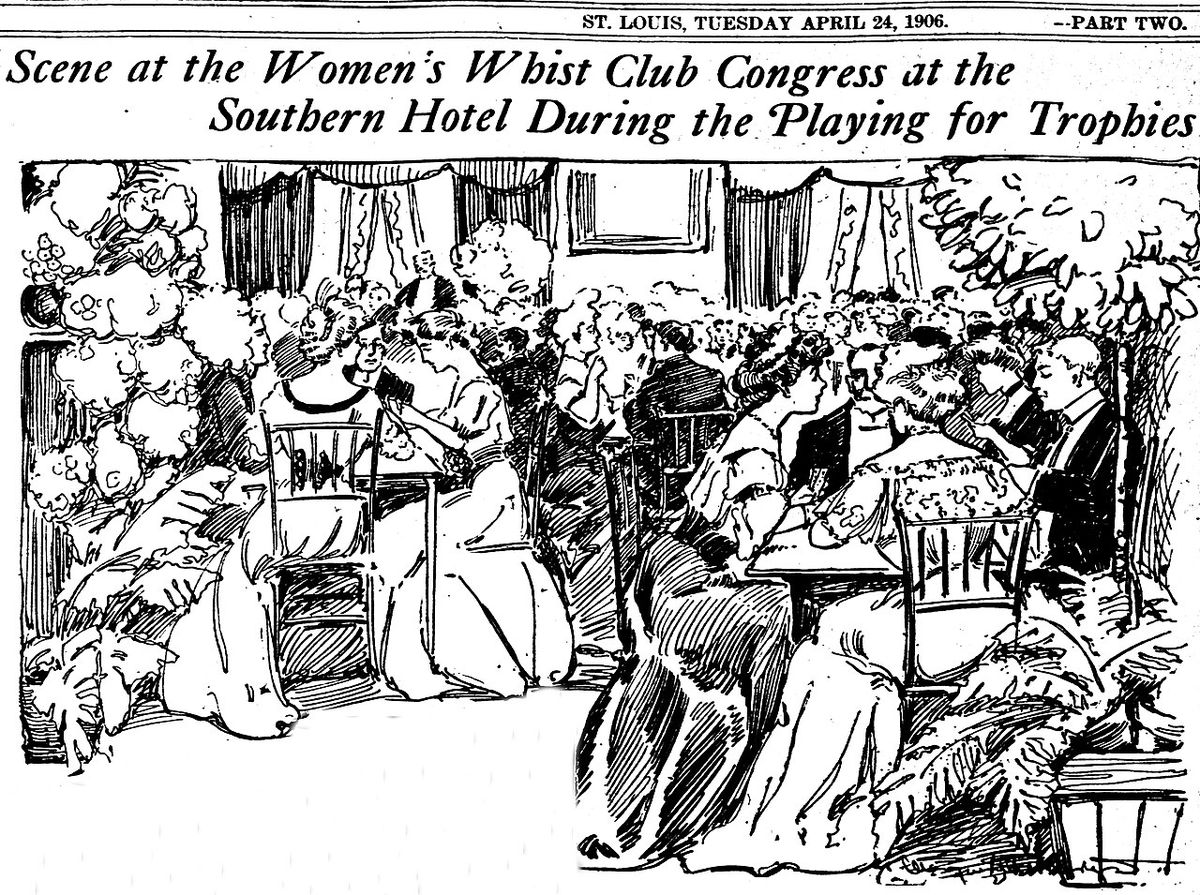
Classic Whist is played by four players divided into two fixed partnerships, with partners sitting opposite each other. A standard 52-card deck is used, with cards ranking from Ace (high) down to Two (low). The game proceeds clockwise. Partnerships and the first dealer are determined by drawing cards, with the two lowest cards partnering and the highest card dealing. The dealer shuffles the deck, offers a cut to the player on their right, and then deals 13 cards to each player one at a time. The dealer's final card is dealt face up to establish the trump suit for that hand. This card remains face up until it is the dealer's turn to play to the first trick.
The player to the dealer's left, known as eldest hand, leads to the first trick by playing any card from their hand. Each subsequent player must follow suit if they are able. If a player cannot follow suit, they may play any card, either discarding from a non-trump suit or playing a trump card, an action known as ruffing. The trick is won by the highest card of the suit led, unless one or more trump cards are played, in which case the highest trump card wins. The winner of each trick gathers the four cards and then leads to the next trick. This process continues until all 13 tricks have been played. Before the next trick begins, any player may ask to review the cards from the previous trick, aiding in memory and strategy.
- Draw for partners and dealer: The four players draw cards. The two lowest become partners, the highest is the dealer.
- Deal 13 cards each: The dealer distributes the entire deck one card at a time, ending with a face-up trump card for themself.
- Eldest hand leads: The player to the dealer's left plays the first card of the first trick.
- Follow suit if possible: Each player must play a card of the suit led if they hold one.
- Win the trick: The highest card of the led suit wins, unless a trump is played, then the highest trump wins.
- Winner leads next: The player who wins a trick leads the first card to the following trick.
- Score odd tricks: After 13 tricks, each trick a partnership wins beyond six scores one point.
Scoring and Winning the Game
Scoring in Whist is based on winning tricks beyond a baseline of six. The first six tricks a partnership wins are known as 'book' and do not score. Each additional trick, called an 'odd trick', scores one point for the partnership. The specific target score to win a game varies by tradition. In American Short Whist, a game is seven points. In British Short Whist, a game is five points, and the first partnership to win two games wins the overall rubber, often earning a two-point bonus. Long Whist was historically played to 9 or 10 points.
Many variations include scoring for honours, which are the Ace, King, Queen, and Jack of the trump suit. If a partnership holds three of the four top honours between them, they may score a bonus of one or two points, while holding all four typically awards a four-point bonus. However, a partnership cannot win the game by honours alone if they have four points. They must also win at least one odd trick. The game can be scored with pen and paper or with traditional whist markers. When playing for stakes, a game where opponents score only one or two tricks may count as a double game, and a shutout where opponents score zero tricks may count as a triple game.
Strategy and Conventional Play
Despite its simple rules, Whist offers deep strategic play centred on deduction and partnership communication. Since there is no bidding as in Bridge, partners can only infer information about each other's hands from the cards played. A skilled player tries to track which cards have been played, deduce the location of missing high cards, and use their own plays to signal information to their partner. This is achieved through a system of conventions, especially regarding which card to lead at the start of a trick or how to play a sequence of high cards.
Conventional leads are designed to convey the strength and length of a suit. For example, leading an Ace conventionally shows strength but may also indicate a lack of lower cards in that suit, while leading a King followed by an Ace suggests the holder also has some lower cards. Players also employ tactical manoeuvres like the finesse, where a lower honour is played in the hope that a higher honour is held by an opponent who has already played to the trick or is positioned unfavourably. The overall goal is to work with your partner to control the flow of tricks, conserve high cards and trumps for critical moments, and accurately predict the distribution of the remaining cards in the later stages of the hand.
- Lead your strongest suit: The conventional first lead is from your longest or strongest suit to establish tricks and signal to your partner.
- Signal with high cards: The sequence in which you play honours (e.g., Ace then King vs. King then Ace) conveys information about other cards you hold in that suit.
- Track played cards: Remembering which cards, especially high cards and trumps, have been played is crucial for late-game strategy.
- Use trumps wisely: Avoid wasting high trumps on tricks you can win otherwise. Save them to capture your opponents' high cards or to gain control.
- Communicate through discards: When you cannot follow suit, the card you choose to discard can signal to your partner which suits you value or lack.
Major Variants and Descendant Games
The basic framework of Whist has spawned a vast family of trick-taking games, often classified by their added mechanics like bidding or variable player counts. One significant group is the auction whist family, where players bid for the right to choose trumps. This includes Bid Whist, a lively partnership game especially popular in African American communities that uses a 54-card deck with jokers. Other auction variants include Vint (Russian whist), Spades (where spades are always trump), and the Polish Whist with auction. The Boston group features games like Solo Whist, where individuals bid to win or lose a specific number of tricks against the other three players.
The classic whist group includes games that modify core rules without bidding. Minnesota whist and Swedish whist involve playing hands either to win or lose tricks. Hokm (or court piece) is a popular Persian game. For different numbers of players, common variants include German whist for two players, and dummy or widow whist for three players. The exact bidding group, which includes games like Oh Hell and Romanian whist, challenges players to win the exact number of tricks they predict. These variants demonstrate Whist's adaptability and its role as a progenitor for much of the modern trick-taking card game landscape.
| Variant Group | Key Example | Defining Characteristic |
|---|---|---|
| Auction Whist | Bid Whist, Spades | Bidding for trump selection or contract |
| Boston Group | Solo Whist, Belgian Whist | Individual players bid against the table |
| Classic Whist | Minnesota Whist, Hokm | Modifications to base rules (e.g., no trumps) |
| Exact Bidding | Oh Hell, Romanian Whist | Players must win exactly the number of tricks bid |
| Other Player Counts | German Whist (2), Dummy Whist (3) | Adapted for non-standard number of players |
Whist in the Modern Era: Social and Online Play
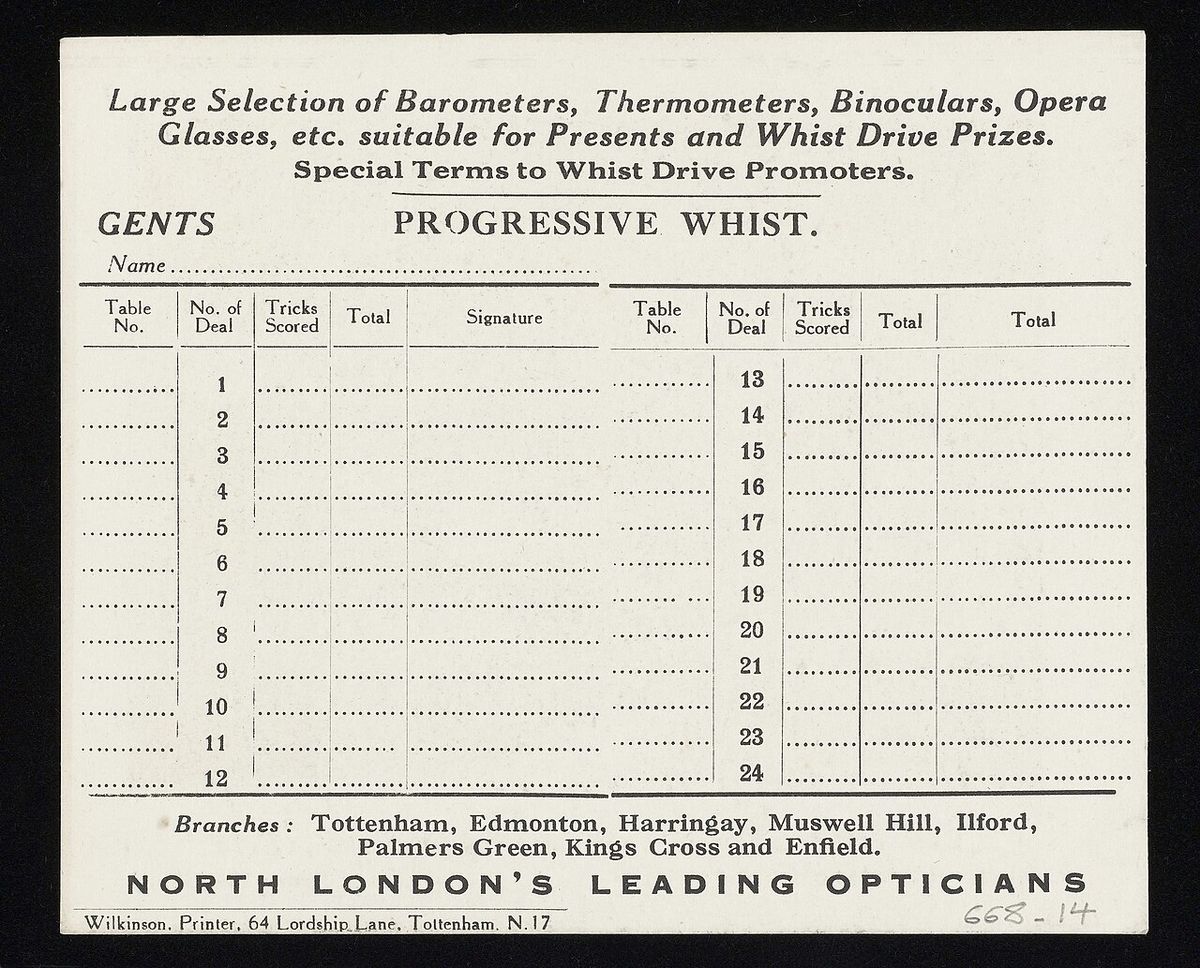
While no longer the dominant club game, Whist has maintained a presence as a social pastime. Whist drives, where multiple tables play progressive rounds with partners changing between hands, remain a format for community fundraisers and social clubs. In Canada, groups like the Cercle des Filles d'Isabelle in Notre-Dame des Bois-Francs host regular Whist Militaire parties, illustrating the game's community role. The game's historical significance is also celebrated in living history contexts, such as being featured in the virtual programming of the Museum of the American Revolution, highlighting its popularity during the 18th century.
The digital age has given Whist a new lease on life through free online platforms. Websites like Whist Palace and World of Card Games offer the classic game and its variants, such as Bid Whist, playable in browsers or via mobile apps without requiring downloads or sign-ups. As of 2026, data from these sites indicates an average game length of about 12 minutes. These platforms feature multiplayer modes, private tables for friends, tournaments, and leagues, making the game accessible to a global audience. The automated dealing, scoring, and enforcement of rules lower the barrier to entry, allowing both new players to learn and seasoned players to enjoy a quick game against opponents or computer bots at any time.
- Whist Palace: A platform offering Bid Whist online with leagues, clubs, and tournaments, updated for 2026.
- World of Card Games: A site providing free classic Whist against bots or live players, with an average game length of 12 minutes.
- CardGames.io: A browser-based site with Whist and many other card games, playable on mobile and desktop.
- Whisthub: A website dedicated to playing Colour Whist (Whist à la couleur) online for free.
- Mobile Apps: Several platforms, including Whist Palace, offer dedicated apps for playing on tablets and phones.
- Private Tables: Most online platforms allow users to host private games and invite friends via a shareable link.
Key Terminology
Understanding Whist requires familiarity with its specific vocabulary, much of which has been inherited by later card games. The deal refers to the distribution of all 52 cards, one at a time to each player. The player who performs this is the dealer. The trump suit is determined by the face-up final card and beats all other suits. A trick consists of one card played by each of the four players. The first card played in a trick is the lead. Honours are the top four cards of the trump suit (A, K, Q, J), which can score bonus points.
A finesse is a tactical play of a lower honour hoping a higher honour is held by an opponent in a favourable position. A tenace is a holding of the first and third, or second and fourth, highest cards of a suit, a powerful positional combination. Winning all 13 tricks is a Grand Slam, while winning 12 is a Small Slam. A rubber is a match consisting of the best of three games. In some contexts, a dummy hand is used to allow three players to participate. This specialized lexicon is part of the game's depth and its influence on the language of card play.
Questions about Whist
How do you play Whist?
Whist is played by four players in two partnerships. A dealer distributes all 52 cards, giving each player 13. The dealer's final card is turned face up to set the trump suit. The player to the dealer's left leads to the first trick. Players must follow suit if possible. If not, they may play any card. The highest card of the suit led wins the trick, unless a trump is played, in which case the highest trump wins. The winning team scores one point for each trick they win beyond the first six. The first partnership to reach the agreed target, often five or seven points, wins the game.
What is the difference between Whist and Bridge?
Whist is the direct forerunner of Bridge. The key difference is that Bridge features a bidding phase where partners communicate information about their hands and compete to declare a contract, which sets a specific goal for the number of tricks they must win. Whist has no bidding. The trump suit is determined randomly by the turn of a card, and partners must deduce each other's hands solely through the cards played. Bridge also has a more complex scoring system with bonuses for contracts bid and made. Whist's rules are simpler and more static, while Bridge adds a layer of strategic depth through the auction.
Can you play Whist online for free?
Yes, Whist is widely available to play online for free. Platforms like Whist Palace and World of Card Games offer browser-based versions of classic Whist and variants like Bid Whist, with no download or signup required for basic play. These sites feature games against computer bots, multiplayer matchmaking, and the ability to host private tables to invite friends. As of 2026, these online games have an average length of about 12 minutes. Some platforms also offer ranked games, tournaments, and mobile apps, providing a comprehensive digital card-playing experience at no cost.
What is a whist drive?
A whist drive is a social event format where multiple tables play Whist simultaneously in a progressive competition. After a fixed number of hands, often with a changing trump suit sequence, the winning pair at each table moves to a different table, typically one moving 'up' and the other moving 'down' the sequence. This allows all participants to play with and against different people throughout the event. Whist drives are commonly organized by community groups or as charitable fundraisers. A full drive might consist of 24 hands, with a break for refreshments halfway through, and they follow specific conventions for dealing and movement.
What is Bid Whist?
Bid Whist is a popular variant of Whist, particularly within African American communities. It introduces a bidding phase where players compete to choose the trump suit and a game type, such as playing to win the most tricks or to lose every trick. It is played with a 54-card deck that includes two jokers, which act as the highest trumps. Each player is dealt 12 cards, and the remaining cards form a 'kitty' that the winning bidder picks up. The game features more complex scoring and dynamic play than classic Whist, with the bidding adding a significant strategic layer similar to other auction-based games.
How is the trump suit determined in Whist?
In standard Whist, the trump suit is determined randomly by the deal. After shuffling and cutting, the dealer gives each player 13 cards, one at a time. The very last card dealt, which is to the dealer themself, is placed face up on the table. The suit of this face-up card becomes the trump suit for that hand. This card remains face up until it is the dealer's turn to play to the first trick, at which point the dealer picks it up and incorporates it into their hand. This method ensures the trump suit changes each hand, adding variety and an element of chance to the game's strategy.
Sources and further reading
- Whist (Wikipedia)
- Whist, Online & Free | Play Classic Card Games (worldofcardgames.com)
- Whist Palace, Play Whist Online Now (whist-palace.com)
- Play Whist, a Revolutionary Card Game (amrevmuseum.org)
- Whist | Play it online (cardgames.io)
- Whist | Jouez en ligne (cardgames.io)
Checked by the Nosy Mag desk. Last updated 2026-11-11.