War (card game)
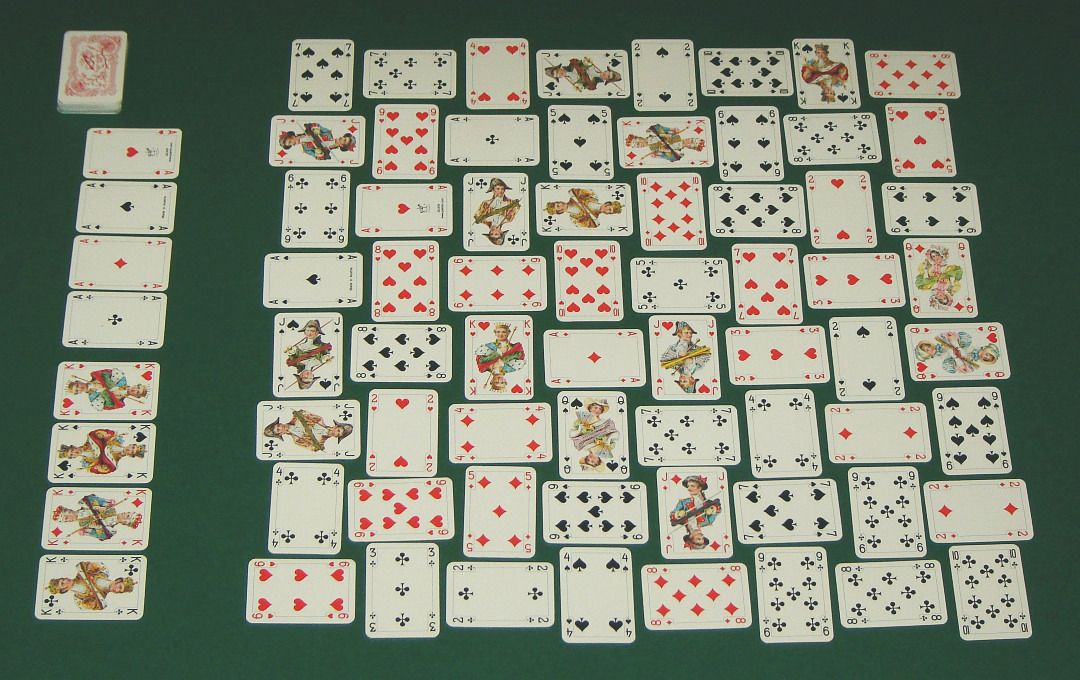
War, also known as Battle in the United Kingdom, is a simple, chance-based card game most commonly played by two people with a standard 52-card deck. The game's objective is straightforward: to win all of the cards from the opponent. Its minimal rules and reliance purely on the luck of the draw make it a popular introductory card game for children, though numerous variations exist to add complexity. While not a game of strategy in the traditional sense, its enduring presence in Canadian households and its role as a foundational pastime contribute to its cultural familiarity. The game's name is also used for many complex strategic card games, creating a distinct separation between this elementary pastime and the hobbyist market of modern tabletop gaming.
Standard Rules and Gameplay
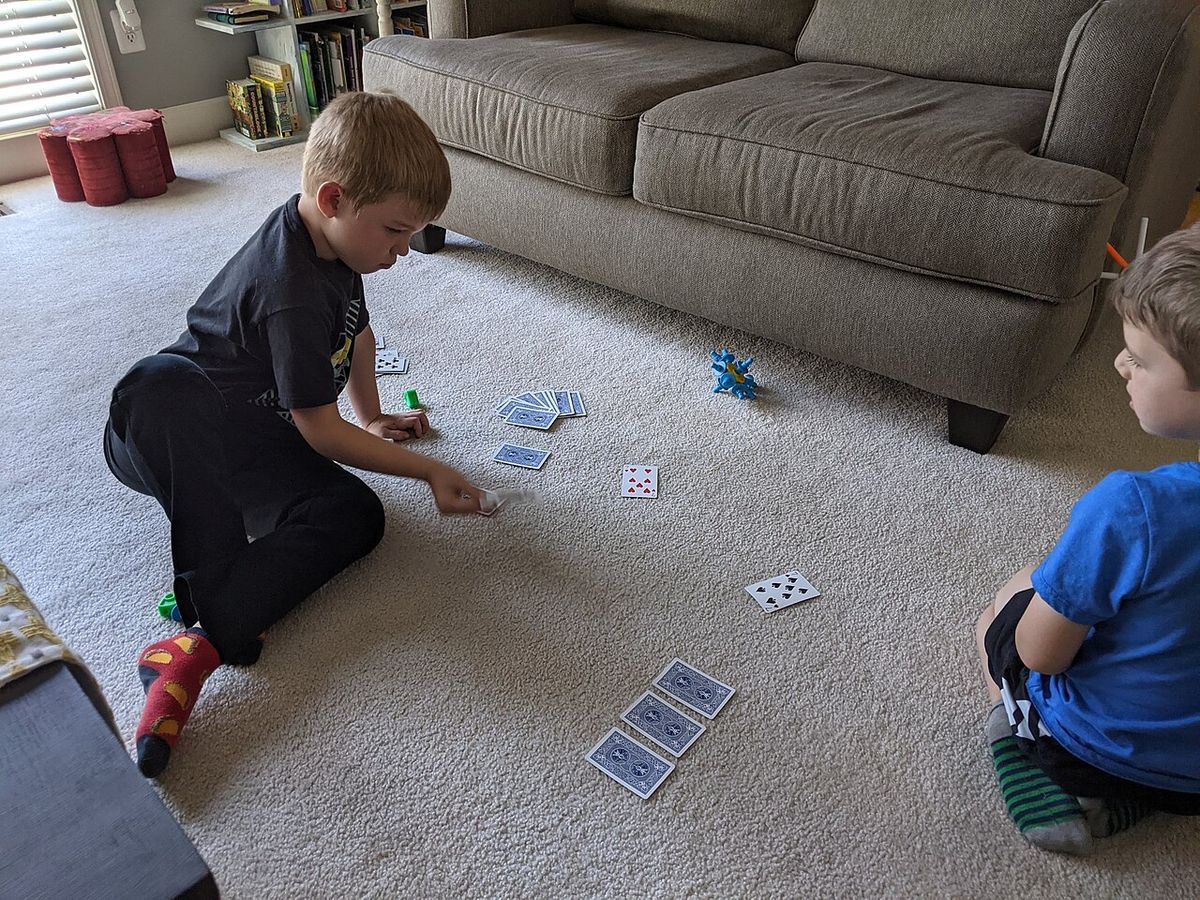
The standard two-player version of War uses a full deck of 52 playing cards with suits ignored for ranking. The cards are ranked from high to low as Ace, King, Queen, Jack, 10, down to 2. The deck is shuffled and divided evenly between the two players, resulting in each receiving 26 cards dealt one at a time face down. Each player forms their cards into a neat, face-down stack, or stockpile, in front of them. Play proceeds in a series of battles where both players simultaneously reveal the top card of their stack. The player who reveals the higher-ranking card wins the battle, taking both cards and placing them face down at the bottom of their personal stack. The game continues in this fashion with players revealing their new top cards for each subsequent battle. The core mechanic provides no opportunity for player choice, as outcomes are determined solely by the random order of the cards. The game's length is unpredictable and can be considerable, as the lead can shift back and forth many times before one player accumulates all 52 cards. This complete reliance on chance is a defining characteristic that separates War from games involving strategy or skill.
The War Mechanic and Resolution
The game's namesake event occurs when the two cards revealed in a battle are of equal rank, such as two Jacks or two 7s. This triggers a "war." To resolve it, each player places their next card face down on top of the tied battle cards. They then place a second card from their stack face up on top of the face-down card. The player whose new face-up card is higher now wins the entire pile of six cards, adding them to the bottom of their stack. If these new face-up cards are also equal in rank, the war escalates. The process repeats: each player adds another face-down card followed by another face-up card, with the winner of that comparison taking all cards on the table, which would then total ten cards. This can theoretically continue multiple times if ties persist. A critical ambiguity in many rule sets involves a player running out of cards during a war. Common variants dictate that a player who cannot fulfill the required face-down and face-up card plays immediately loses the game. Other variants allow a player to use their final card as the face-up card for the remainder of that war, while some rules require the player with more cards to supply the extra cards needed for the conflict. This lack of a universal rule for card depletion is a common point of house rule negotiation before play begins.
Multiplayer and Solitaire Variations
While primarily a two-player game, War can be adapted for three or four participants. In a three-player game, the 52-card deck is divided as evenly as possible, giving each player 17 cards with one card left out. In a four-player game, each receives 13 cards. Gameplay mirrors the standard version, with all players simultaneously revealing a card each round. The player revealing the single highest card wins all cards played that round. If two or more players tie for the highest card, only those tied players enter a war. All players, including those not tied, must still contribute the required face-down and face-up cards to the war pile. The tied player with the highest face-up card after the war resolution wins the entire accumulated pile. Players who run out of cards are eliminated, and the game continues until one player collects all cards from the others. The game is not typically played as a solitaire game, as its fundamental structure requires at least one opponent. However, some digital implementations allow for play against a computer opponent, simulating the traditional mechanics. The dynamics change significantly with more players, as the potential for multiple ties and larger war piles increases the volatility and can shorten the overall game length.
Common Variants and Related Games
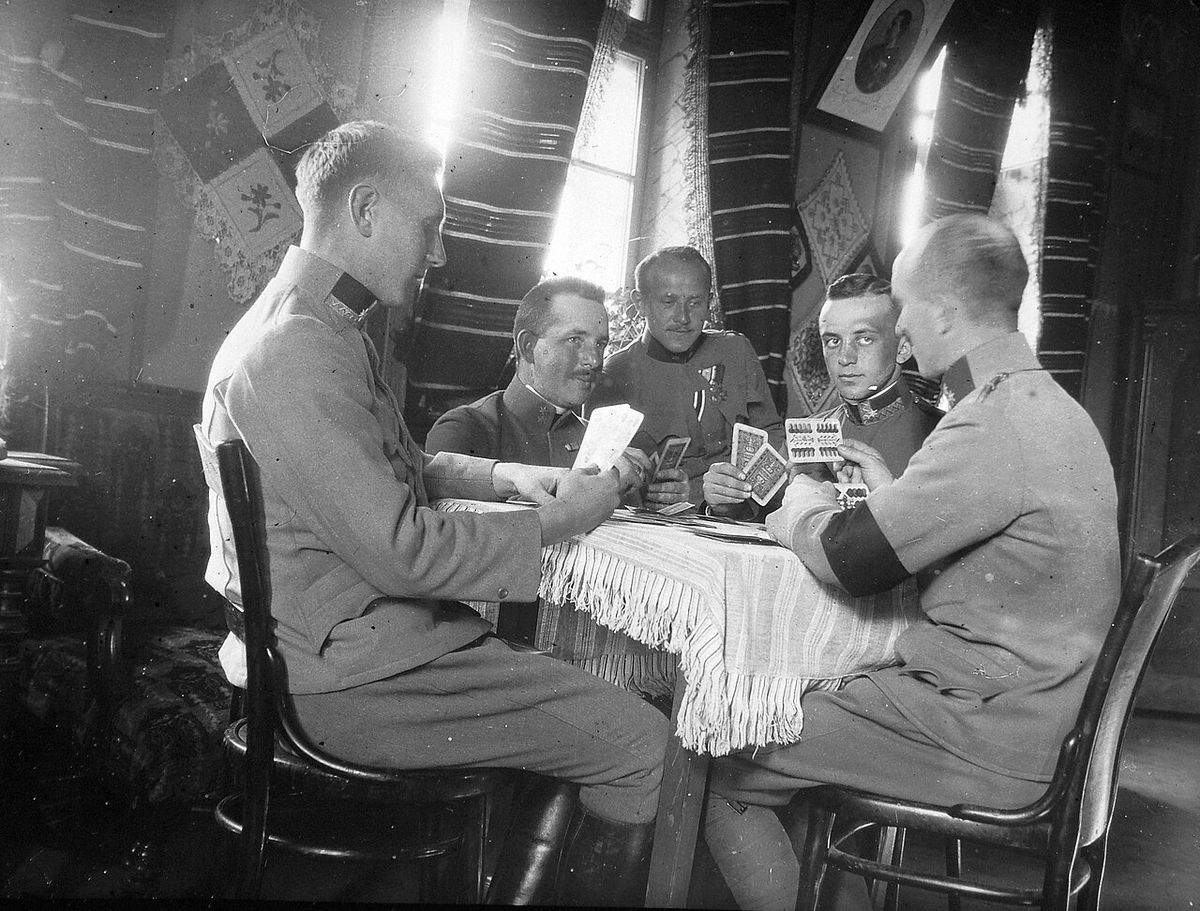
As a widely known and simple game, War has spawned numerous regional and house-rule variations that modify its basic procedures. These variants often aim to shorten the game or introduce minor elements of choice. Several recorded variants have distinct rules and names. Casino War is a commercialized version played for money in casinos, following a similar compare-cards structure but with defined betting rounds. The Three Cards variant dictates that during a war, each player places three cards face down instead of one before revealing the comparison card. Prisoners of War is a multiplayer variant where a player winning a battle may take one opponent's card as a "prisoner" to play later instead of drawing from their deck. The German games Bettelmann ("Beggar Man") and Tod und Leben ("Death and Life"), documented as early as 1833, use a 32-card Skat pack. In Tod und Leben, one player uses the red suits and the other the black suits. Other creative twists include Automatic War, where playing a Two of any suit immediately triggers a war, and Peace, the inverse of War where the lowest card always wins. The Underdog variant allows the losing player of a war to steal the victory if one of their three discarded cards is a Jack.
Notable related shedding-type card games include Beggar-your-neighbor, Egyptian Ratscrew, Slapjack, and Snip Snap Snorem. These games share a similar fast-paced and comparative style with War. They all use a standard playing card deck and have simple comparative mechanics. This makes them accessible to beginners. The existence of these games shows how the basic compare-and-capture concept can be expanded.
Analysis and Cultural Place
Game scholars and designers have debated whether War qualifies as a game in the formal sense, as it contains no strategic decisions for players to make. Game designer Greg Costikyan has noted that since all outcomes are determined by random chance, it fails to meet some definitions of a game. However, a subtle element of potential agency exists in the order a player returns won cards to the bottom of their stack. This decision, while often unspecified in rules, can influence future card sequences, especially in smaller decks where card counting becomes feasible. Despite this, the dominant experience is one of pure luck. In Canada, War holds a place as a common childhood pastime, often serving as a first introduction to card games before moving on to more complex titles like Crazy Eights or Go Fish. Its simplicity makes it accessible, requiring no numerical skill or complex rule memorization. The game's presence is reinforced by its inclusion in many compendiums of card games and its availability in digital formats online and in app stores, allowing for quick, automated play. It is frequently stocked by Canadian retailers like Meeplemart and Board Game Bandit as part of their broad card game offerings, often situated alongside more strategic titles.
The deck is divided evenly among the players. In a two-player game, each player receives 26 cards. For a three-player game, each player gets 17 cards. In a four-player game, each person receives 13 cards. This distribution is a fundamental starting point for any game of War.
| Number of Players | Cards Dealt to Each Player | Cards Remaining/Excluded |
|---|---|---|
| 2 | 26 | 0 |
| 3 | 17 | 1 |
| 4 | 13 | 0 |
This distribution ensures the game can accommodate small groups. The two-player version remains the most common configuration. The objective of the game is to win all of the cards. The combination of a certain outcome and unpredictable duration creates a unique pastime.
The standard game of War begins with a specific distribution of cards based on the number of players. In a two-player game, each player receives 26 cards from a standard 52-card deck. For a three-player game, each player is dealt 17 cards, leaving one card excluded. In a four-player game, each person receives 13 cards. This distribution is a fundamental starting point for any game of War. The two-player version remains the most common configuration.
- In a two-player game, each player receives 26 cards.
- In a three-player game, each player gets 17 cards.
- In a four-player game, each person receives 13 cards.
- In a three-player game, one card is left out from the 52-card deck.
- The two-player version is the most common configuration.
The standard game of War begins with a specific distribution of cards based on the number of players. In a two-player game, each player receives 26 cards from a standard 52-card deck. For a three-player game, each player is dealt 17 cards, leaving one card excluded. In a four-player game, each person receives 13 cards. This distribution is a fundamental starting point for any game of War.
- In a two-player game, each player receives 26 cards.
- In a three-player game, each player gets 17 cards.
- In a four-player game, each person receives 13 cards.
- In a three-player game, one card is left out from the 52-card deck.
War in the Context of Modern Card Gaming
The contemporary tabletop and card game market, which includes many titles popular in Canadian game stores and cafes, is defined by strategic depth, player agency, and thematic integration. Games like Dominion, Arkham Horror: The Card Game, and The Crew: Quest for Planet Nine represent this modern ethos. In contrast, War is a purely procedural, luck-based activity. Notably, the name "War" is also used for many complex, strategic card games, which can cause confusion. For instance, War of the Ring: The Card Game is a licensed, team-based strategy game set in J.R.R. Tolkien's Middle-earth, with a 2026 expansion titled Hope and Despair adding story cards. Similarly, titles like Summoner Wars, 1812: War on the Great Lakes Frontier, and Gray: The Civil War Card Game are strategic, card-driven wargames. These games share only the thematic concept of conflict with the simple card game War. The enduring simplicity of the card game War ensures its continued recognition, even as it occupies a fundamentally different niche from the strategic card games that dominate hobbyist shelves today. Publications like Wargamer's 2026 list of the best card games highlight titles such as The Fox in the Forest, Coup, and Monikers, which are celebrated for their design and strategic elements, further illustrating the divide.
Examples of strategic card games that use "War" in their title include War of the Ring: The Card Game and Summoner Wars. Other examples are 1812: War on the Great Lakes Frontier and Gray: The Civil War Card Game. There is also a two-player card game with customizable decks called War. These games involve strategic decision-making and deck construction. They contrast with the elementary compare-and-capture mechanic of the traditional War card game.
Gameplay Considerations and Strategic Debate
The debate over War's status as a true game centres on its complete lack of meaningful decisions. Players do not choose which card to play, when to play it, or how to respond to an opponent's move. The sequence of events is predetermined by the initial shuffle and the subsequent order of won cards. The only potential point of influence, as noted by Costikyan, is the order in which a player adds captured cards to the bottom of their stack after a win. If a player returns cards in a deliberate, non-random order, they can theoretically create advantageous future sequences. This effect is more pronounced with smaller decks, where tracking card distribution is easier, but it can still have a minor impact in a standard 52-card game. Most casual players, especially children, do not employ this tactic, adhering to the spirit of pure chance. The game's finiteness is mathematically guaranteed. One player will eventually collect all cards, but the path to that conclusion is entirely stochastic. This combination of guaranteed conclusion and zero strategy creates a unique profile within the world of card games, making it an object of both nostalgic affection and analytical criticism. The game's simplicity is its greatest strength for young learners and its greatest weakness for those seeking a challenging pastime.
Questions about War (card game)
What are the basic rules for the War card game for two players?
Two players split a standard 52-card deck evenly, each getting 26 cards in a face-down stack. Each round, both players reveal their top card simultaneously. The player with the higher-ranking card wins both cards and places them at the bottom of their stack. Aces are high, and suits do not matter. If the two revealed cards are of equal rank, a war occurs. For a war, each player places one card face down, then one card face up. The player with the higher face-up card wins all six cards on the table. If those are also equal, the war repeats with additional cards. The game ends when one player has won all 52 cards.
What happens in War when players run out of cards during a war?
Standard rules are often unclear on this point, leading to common house rules. In one variant, a player who cannot place the required face-down and face-up cards during a war immediately loses the game. Another variant allows a player to use their last card as the face-up card for the remainder of that specific war. Some rules state that the player with more cards must provide the necessary cards to continue the war if their opponent cannot. It is best for players to agree on which rule to use before starting the game.
Can you play the War card game online?
Yes, many websites and digital app stores offer versions of War that can be played online against a computer opponent. These digital implementations automate the dealing, card comparison, and war resolution, faithfully following the standard rules. They provide a convenient way to play the game without a physical deck and can manage the often lengthy and repetitive gameplay automatically. Searching for "War card game" in an app store or online will yield numerous options for browser-based or downloadable versions.
What is Casino War, and how is it different?
Casino War is a gambling card game based on the simple comparison mechanic of the children's game. It is played for money against the house in a casino setting. Players place a bet and are dealt one card each, as is the dealer. If the player's card is higher, they win even money on their bet. If the dealer's card is higher, the player loses. If the cards tie, the player can either surrender half their bet or go to "war" by placing an additional bet equal to their original one to receive a new card. The casino version has structured betting rounds and defined house edges, making it a formalized game of chance for adults.
Are there strategic card games also called 'War'?
Yes, the term "War" is commonly used in the titles of many complex, strategic card and board games, which can be a source of confusion. These are entirely different from the simple children's card game. Examples include War of the Ring: The Card Game, a thematic team strategy game. Summoner Wars, a tactical dueling game. And historical wargames like 1812: War on the Great Lakes Frontier or Gray: The Civil War Card Game. These games involve deck construction, resource management, and strategic decision-making, sharing only the broad theme of conflict with the classic card game of War.
How do you play War with three or four players?
For three players, deal 17 cards to each (52 divided by 3 leaves 1 card leftover). For four players, deal 13 cards each. All players reveal their top card simultaneously each round. The single highest card wins all cards played that round. If there is a tie for the highest card, only the tied players enter a war. In the war, all players (including those not tied) must still contribute one face-down and one face-up card to the central pile. The tied player with the highest subsequent face-up card wins the entire pile. Players who run out of cards are eliminated, and play continues until one player holds all the cards.
Sources and further reading
- War (card game) (Wikipedia)
- War (bicyclecards.com)
- The 15 best card games in 2026 - Wargamer (wargamer.com)
- War Games (boardgamebliss.com)
- Wargame Board Games | Board Game Bandit Canada (boardgamebandit.ca)
- War (bicyclecards.com)
Checked by the Nosy Mag desk. Last updated 2026-11-10.