Mahjong
Mahjong is a tile-based game of skill, strategy, and chance, traditionally played by two to four players using a set of 144 tiles. Originating in 19th-century China, the game has evolved into numerous regional variants and has become a global pastime, enjoyed both socially and in competitive tournaments. In Canada, the most popular version is Cantonese or Hong Kong style Mahjong, with clubs and university societies fostering a growing community of players. While the game itself is not typically offered as a live casino table game in North America, its themes and mechanics have inspired a range of popular online slot and casino games available to Canadian players.
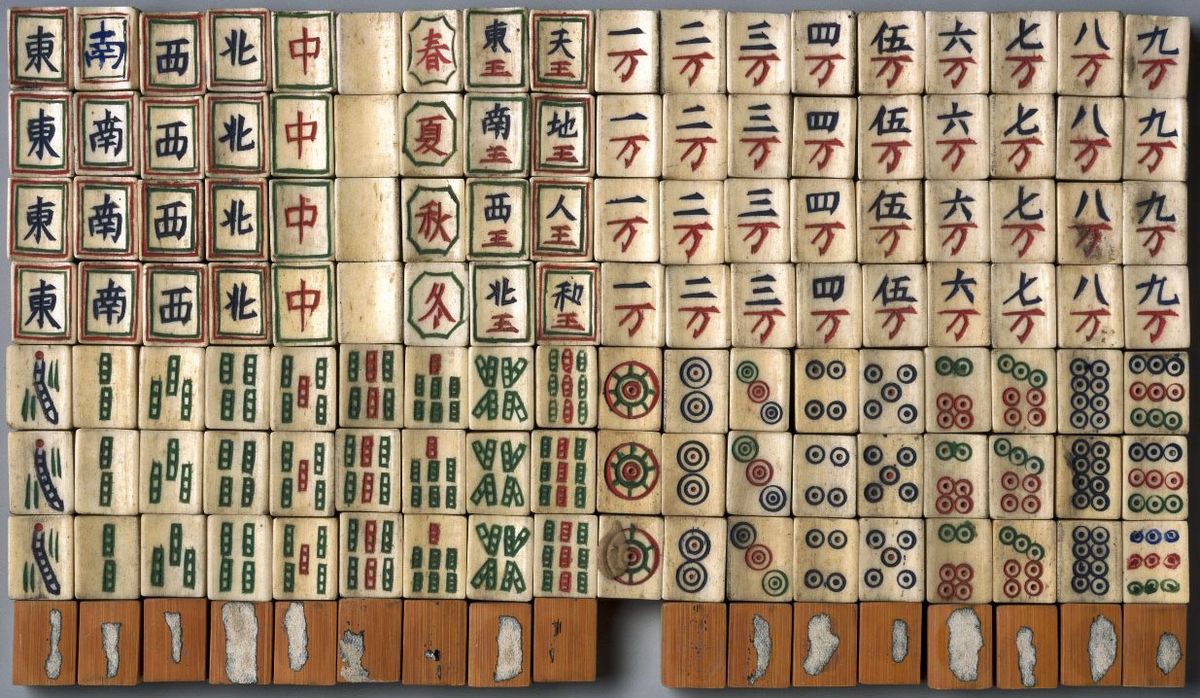
Gameplay and Basic Rules
Mahjong is a rummy-like game where players draw and discard tiles to complete a legal hand. A standard set contains 144 tiles, though regional variations may exclude or add certain tiles. The tiles are divided into three suits of numbered tiles: circles (dots), bamboo (bams), and characters (craks), each with ranks one through nine. There are also honour tiles representing the four winds (East, South, West, North) and three dragons (red, green, white). Bonus tiles, known as flowers and seasons, are used in some variants. The objective is to be the first to complete a hand of 14 tiles, which must consist of four melds and one pair, known as the eye. A meld can be a pung (a set of three identical tiles), a kong (a set of four identical tiles), or a chow (a sequence of three consecutive tiles in the same suit). Players take turns drawing a tile from the wall and then discarding one, proceeding in anti-clockwise order beginning with the dealer, who holds the East wind position. A key strategic element is the ability to claim another player's discard to complete a meld, under specific conditions known as calling. The game ends when a player declares a winning hand by calling Mahjong, at which point scores are calculated based on the composition and value of the hand.
Scoring systems vary widely between regional rule sets, adding layers of complexity. In Hong Kong style, popular in Canada, points are exponential and can be stacked, with the winner receiving payment from all other players. The game requires constant attention, memory, and probabilistic calculation, offering cognitive benefits similar to games like chess or bridge. While the basic draw-and-discard mechanic is consistent, the specific criteria for legal melds, winning hands, and scoring differ moderately to radically across the many global variations of the game. Special hands that do not follow the typical pattern of four melds and a pair, such as seven different pairs or 13 orphans, are also possible in some rule sets.
History and Global Spread
Mahjong evolved from Chinese money-suited card games popular in the 18th and 19th centuries, with the conversion to tiles likely occurring around the 1870s. The earliest surviving tile sets from that period, found in cities like Fuzhou, Shanghai, and Ningbo, differed from modern sets. The game's popularity grew rapidly in the late Qing dynasty, particularly after the end of the First Sino-Japanese War in 1895. Despite later bans on gambling in China, including a complete prohibition during the Cultural Revolution from 1966 to 1976, mahjong remained a deeply ingrained cultural pastime and was officially rehabilitated as a competitive sport in 1998 with the creation of Chinese Official rules.
The game spread to the West in the early 20th century. The first mahjong sets in the United States were sold by Abercrombie & Fitch starting in 1920, with the company eventually selling 12,000 sets. Joseph Park Babcock's simplified 1920 rulebook, known as the red book, fueled an American fad. Standardization came with the formation of the National Mah Jongg League (NMJL) in 1937, which now has 350,000 members. In the United Kingdom, the classical game was revived by Alan D. Millington's 1977 book, The Complete Book of Mah-jongg. The game also became a central part of cultural bonding for Chinese American communities and for suburban American Jewish women in the mid-20th century. Japanese popular culture has embraced the game through manga and anime series like Saki and Akagi. The international competitive scene was formalized with the creation of Chinese Official rules in 1998, leading to the first World Mahjong Championship in 2002. The World Mahjong Organization was founded in Beijing in 2006 to oversee global competition.
Mahjong in Canada and Competitive Play
In Canada, mahjong is enjoyed both as a social activity and a competitive pursuit. The most commonly played variant is Cantonese or Hong Kong style mahjong. University clubs, such as those at the University of Toronto and the University of British Columbia, have introduced the game to a younger generation. Tristan Choa, president of the University of Toronto Mahjong Society, has highlighted the game's capacity for bringing people together. The Canadian Mahjong Association runs the national championship known as the Maple Cup, contributing to the game's organized competitive scene within the country.
Globally, mahjong tournaments are held regularly across Asia, Europe, and North America. Major international events include the World Mahjong Championship, first won by Japan's Mai Hatsune in 2002, and the Open European Mahjong Championship, first held in the Netherlands in 2005. The World Series of Mahjong, an annual event in Macau, was co-founded with Canadian involvement in 2007. In the United States, large tournaments are held in Las Vegas and Atlantic City, often hosted by organizations like the National Mah Jongg League and Mah Jongg Madness, with events attracting hundreds of participants. The third Open European Mahjong Championship in 2009 had 152 participants, and the first World Mahjong Championship under the WMO was held in Chengdu in 2007 and won by Li Li from China.
The competitive rules used in international tournaments, known as Chinese Official rules or Guobiao Mahjong, emphasize pattern-based scoring with 81 defined combinations. These rules were designed to dissociate the game from illegal gambling, promoting it as a mind sport. In tournament settings, players are often grouped in teams, and the rules prohibit gambling, drinking, and smoking at the table. This formalized structure has helped mahjong gain recognition as a game of skill comparable to chess or bridge. Other major tournaments include the Mahjong International League's World Mahjong Sports Games and the World Series of Mahjong.
Mahjong as a Theme in Casino and Online Gaming
While traditional mahjong is not commonly offered as a live table game in North American casinos, its themes and tile-matching mechanics have been widely adapted into online casino games, particularly video slots. These games are legally available to Canadian adults (19+, or 18+ in Alberta, Manitoba, and Quebec) through regulated online casino sites. These mahjong-themed slots combine Chinese-inspired aesthetics with modern slot features like cascading wins, free spins, and bonus rounds. Several prominent titles have been released in recent years, each with distinct mechanics and payout structures.
| Game Title | Developer/Release | Key Mechanics | RTP | Maximum Win |
|---|---|---|---|---|
| Mahjong 88 | BetMGM | 8x8 grid, Cluster Pays, Fortune Frog meter | 96.62% | $250,000 |
| Mahjong Ways 2 | PG Soft (2020) | 4-5-5-5-4 grid, 2,000 paylines | 96.95% | 100,000x bet |
| Mahjong Wins Super Scatter | Pragmatic Play (2025) | 4-5-5-5-4 grid, 2,000 lines, Super Scatter feature | 95.5% | 100,000x bet |
| Mahjong Ways 3 | PlayStar (2023) | 4-5-5-5-5-4 grid, Cluster Pays engine | 1,000x bet |
These games are purely games of chance, unlike the skill-based traditional tile game. A skill-based mahjong slot machine was approved by the Nevada Gaming Commission in late 2019 by manufacturer Synergy Blue, featuring a jackpot of 10,000 times the max bet, but it did not see widespread adoption in casinos. The primary appeal of mahjong-themed casino games lies in their familiar cultural motifs and engaging bonus features, rather than replicating the strategic play of the original game. Players should be aware that the Return to Player (RTP) rate and availability may differ between jurisdictions.
Cultural Impact and Popularity
Mahjong holds a significant place in global popular culture, reflecting its journey from Chinese teahouses to international living rooms. In the mid-to-late 1800s, it was part of the nightlife in Shanghai and later reached the royal palace in Beijing. Its introduction to America in the 1920s created a fad celebrated in popular songs and high-society gatherings. The game experienced a resurgence in popularity during the COVID-19 pandemic, trending on platforms like TikTok as a means of social connection and mental engagement for younger generations. The game's portrayal in media has further boosted its profile, with the 2018 film Crazy Rich Asians leading to increased tourist interest in mahjong in Singapore.
Beyond entertainment, mahjong has been studied for its cognitive and therapeutic effects. Research in Hong Kong has suggested benefits for individuals with dementia or cognitive memory difficulties, leading to the development of Mahjong therapy. Conversely, a 2007 study noted that prolonged play could, in rare cases, trigger epileptic seizures, possibly due to the intense mental focus required. The game's social and mental aspects continue to drive its popularity, with dedicated clubs and even hotel events now common in many countries, including Canada and the United States. The cultural footprint of mahjong is vast and includes several key appearances in media and history.
- Early 20th Century: The game was banned in China due to gambling associations but the ban was lifted during Chinese New Year, ironically adding to its popularity.
- 1920s America: Hit songs like Since Ma Is Playing Mah Jong by Eddie Cantor were recorded during the mahjong fad.
- 1966 to 1976: Mahjong was completely banned in China during the Cultural Revolution due to its association with capitalism.
- Japanese Media: Manga and anime such as Saki, Akagi, and Pon no Michi revolve around the game.
- Hong Kong Cinema: Movies frequently include mahjong scenes, forming a subgenre of gambling films.
- Video Games: Series like Like a Dragon allow players to engage with mahjong mini-games.
As of 2010, mahjong is the most popular table game in Japan. An estimated 7.6 million players and 8,900 parlors generated sales of about 300 billion yen as of 2008. The game's superstitions, such as beliefs in lucky seats or clothing, also form an integral part of its cultural experience. Over 47% of Chinese adults believe in feng shui, which influences many players' rituals.
Getting Started with Mahjong
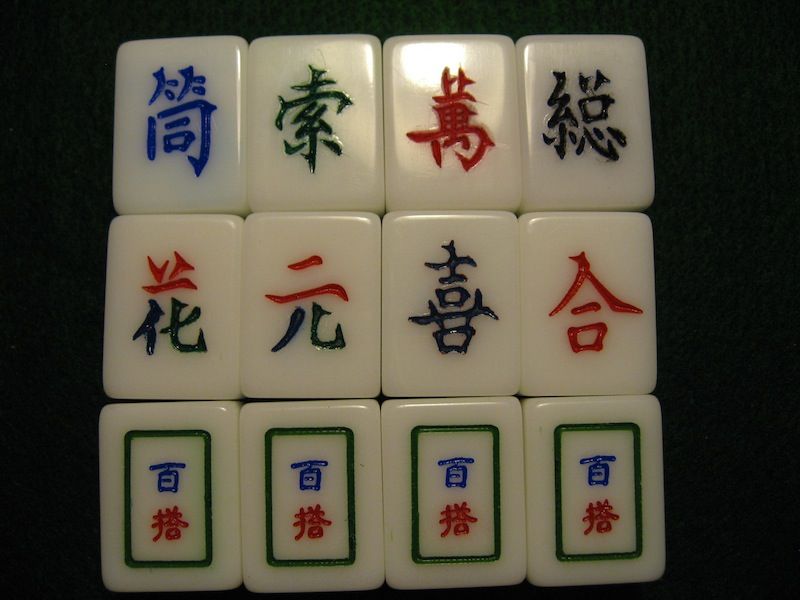
For Canadians new to mahjong, the first step is to acquire a tile set. Mass-produced plastic sets are readily available online at various price points, while antique and artisan-crafted sets made from materials like bone or ivory are prized by collectors. A full set contains 144 tiles, though some modern variants use fewer. The essential equipment also includes two dice for determining seating and breaking the wall. While scoring sticks are traditional, players can use any agreed-upon method to track points. Learning to play is best done with a group, and the most straightforward approach for beginners in Canada is to learn Cantonese or Hong Kong style rules, which are widely played.
The initial setup and first round involve a specific sequence of actions. Players start by shuffling, or washing, the tiles face down and building them into a square wall. Seating is determined by a draw of the four wind tiles. The basic sequence of play involves drawing and discarding tiles to form melds until one player completes a 14-tile winning hand. Finding a local club, a university society, or an experienced player to guide you is highly recommended over relying solely on written rules. To begin a game, players typically follow these steps.
- Shuffle all tiles face down on the table, a process called washing or the twittering of the sparrows.
- Each player builds a wall 17 tiles long and 2 tiles high in front of them, then pushes the walls together to form a square.
- Determine the dealer (East) by rolling dice and drawing wind tiles.
- The dealer rolls dice to determine which player breaks the wall, and that player rolls again to find the exact break point.
- Starting with the dealer, players take turns drawing four tiles at a time until each has 12 tiles, then each draws one last tile for a 13-tile hand (the dealer starts with 14).
- The dealer discards a tile to begin the game, and play proceeds anti-clockwise with drawing and discarding.
For those interested in deeper study or competition, resources are plentiful. The National Mah Jongg League publishes an annual card of standard hands for American play. The official international competition rules (Guobiao) are available from the World Mahjong Organization. Numerous books, websites, and video tutorials explain the rules through infographics and clear instructions. Whether played casually for fun or pursued competitively, mahjong offers a rich and rewarding experience that combines social interaction with intellectual challenge.
Questions about Mahjong
What are the basic rules of mahjong for a beginner?
Mahjong is played with 144 tiles by two to four players. The goal is to be the first to complete a legal hand of 14 tiles by drawing and discarding. A winning hand must consist of four melds (sets of three identical tiles, four identical tiles, or a sequence of three consecutive tiles in the same suit) and one pair (two identical tiles). Players take turns drawing a tile from the wall and discarding one, and they may claim another player's discard to complete a meld under specific conditions. In Canada, beginners are often advised to start with Cantonese or Hong Kong style rules, which are the most popular local variant. Special winning hands that do not follow this pattern, such as seven different pairs, also exist.
Is mahjong a gambling game?
Mahjong is fundamentally a game of skill, strategy, and chance, similar to rummy or chess. While it can be played for money, it is not solely a gambling game and is widely enjoyed as a social and competitive pastime without wagering. In China, official tournament rules were created in 1998 to dissociate the game from illegal gambling, promoting it as a mind sport. In Canada and elsewhere, many people play mahjong purely for recreation, mental exercise, and social bonding, though gambling on the game does occur in some contexts. The game was banned in China during the Cultural Revolution from 1966 to 1976 due to its gambling associations.
Can you play mahjong in casinos?
Traditional mahjong is not typically offered as a live table game in North American casinos. However, mahjong-themed casino games, primarily online video slots, are widely available at licensed online casinos for Canadian adults. These games, such as Mahjong 88 or Mahjong Ways 2, use the game's visual themes and tile symbols but operate on slot machine mechanics. A skill-based mahjong slot machine was approved in Nevada in 2019 but did not see widespread adoption. In some other regions, like the United Kingdom, traditional mahjong is played in certain casinos. In Japan, there are thousands of mahjong parlors, some of which operate as gambling establishments.
What is the most popular version of mahjong in Canada?
The most popular version of mahjong played in Canada is Cantonese or Hong Kong style mahjong. This variant features exponential scoring where points can be stacked, and it uses the full set of 144 tiles including flowers and seasons. Canadian university clubs and social groups often play this style. For competitive play, some players may also engage with American Mah Jongg rules governed by the National Mah Jongg League or the international competition rules (Guobiao) used in world tournaments. The Canadian Mahjong Association organizes tournaments like the Maple Cup using these variants.
How do you score in mahjong?
Scoring in mahjong varies significantly by rule set. In Hong Kong style, points are assigned to different hand patterns and combinations, such as pungs of honour tiles or completing a hand without any chows. Points are exponential. For example, one point might be worth two dollars, and winning hands can multiply that base value. The winner receives payment from all other players, with the player who discarded the winning tile typically paying double. In American Mah Jongg, scoring is based on a specific annual card of hands published by the National Mah Jongg League. International tournament rules use a fixed set of 81 scoring patterns. A minimum faan value, often three, is usually required to win a hand in Hong Kong style.
Where can I buy a mahjong set and learn to play in Canada?
Mahjong sets can be purchased online from various retailers, ranging from affordable plastic sets to more expensive antique or artisan versions. To learn the game, the best approach is to find a local group, club, or university society, such as the University of Toronto Mahjong Society. Many communities have social clubs where players gather. Online resources, including rule websites with infographics and video tutorials, are also helpful. For beginners, starting with the widely played Cantonese or Hong Kong style rules is recommended, and playing with experienced players provides the most effective learning. The World Mahjong Organization and the National Mah Jongg League also provide official rulebooks and resources.
Sources and further reading
- Mahjong (Wikipedia)
- Play Mahjong 88 at BetMGM Casino (casino.betmgm.com)
- Why Isn't Mahjong Played as a Casino Game? (lasvegasadvisor.com)
- Top Mahjong Casino Games | Where to Play for Real Money 2026 (slotcatalog.com)
- The beginner's guide to the greatest pastimes: Mahjong (cbc.ca)
- The Rules of Mah Jong (Mahjong) (mastersofgames.com)
Checked by the Nosy Mag desk. Last updated 2026-11-10.