Kings in the Corner
Kings in the Corner, also known as King's Corners, is a multi-player patience or solitaire-style card game for two to four players using a standard 52-card pack. The objective is to be the first player to shed all of one's cards by building descending, alternating-colour sequences on a central tableau. The game is a popular family pastime across Canada, blending elements of classic solitaire with interactive, turn-based strategy. Its straightforward rules and engaging gameplay make it accessible for players aged seven and up, often serving as an introduction to more complex card games. Available as both a traditional card game and a commercial boxed set, Kings in the Corner remains a staple of family game nights and casual gatherings.
Game Overview and Equipment
Kings in the Corner is fundamentally a shedding game where players aim to discard their entire hand. The game requires only a standard deck of 52 playing cards with the jokers removed, making it an inexpensive and portable option. A commercial version of the game, produced by Jax Games, includes a unique fold-away control centre, playing chips, and custom playing cards, though the game is fully playable with any deck. This commercial set is designed for two to six players, expanding the traditional player count of two to four found in the classic rules. The inclusion of a chip-based scoring system in the boxed version adds a structured competitive element, with players vying to be the first to reach 100 points over multiple rounds.
Setup and Initial Deal
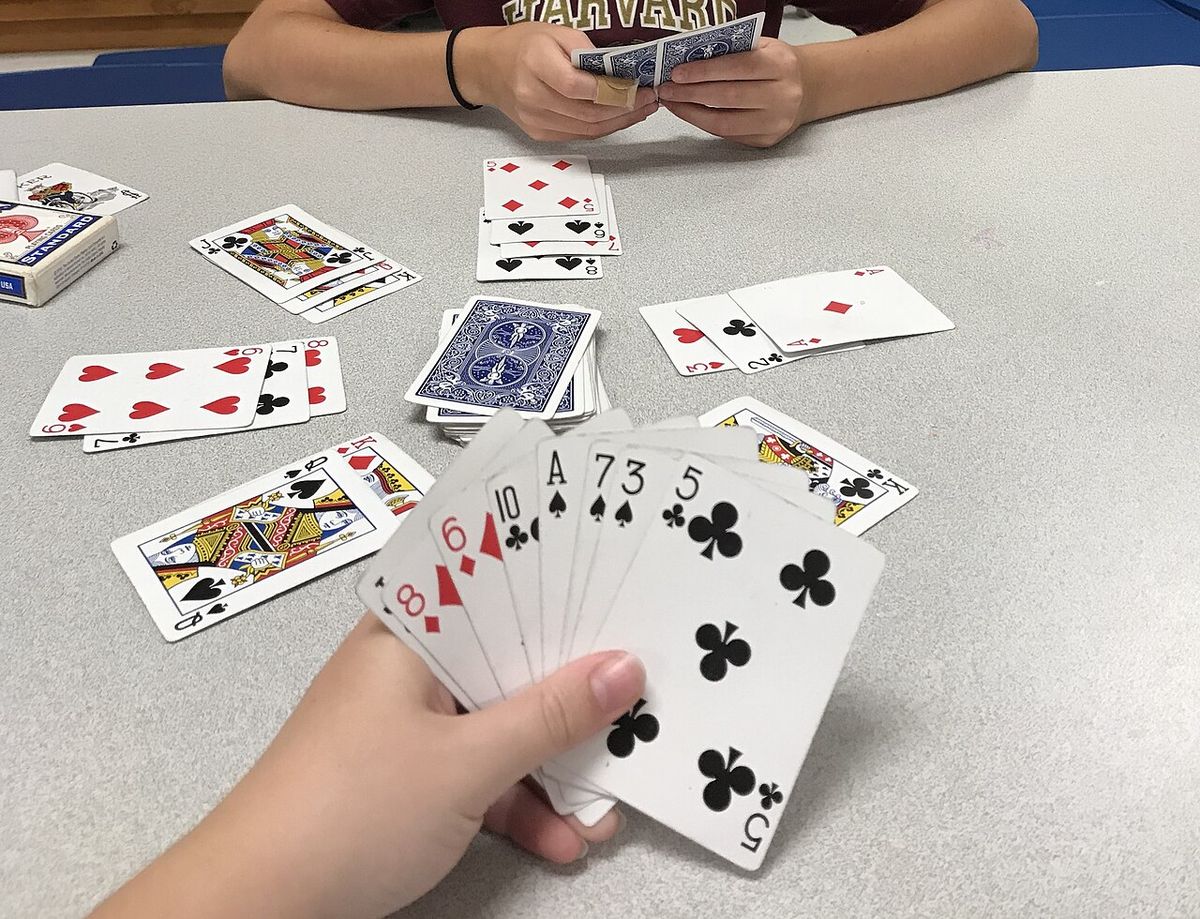
To begin a hand, players first determine the dealer. This is typically done by having each player draw a single card at random from the deck, with the player drawing the highest card becoming the first dealer. The dealer then shuffles the deck and deals seven cards face down to each player. The remaining deck is placed face down in the centre of the table to form the stock pile. Next, the dealer turns the top four cards from the stock face up and places them in a cross pattern around the stock pile. These four cards are positioned to the north, south, east, and west of the stock, creating the initial foundation piles. This layout leaves four empty diagonal spaces in the corners of the cross, which are reserved exclusively for Kings.
- Seven cards dealt face down to each player.
- The remaining deck placed face down as the stock pile in the centre.
- Four cards turned face up from the stock to form the initial foundation piles.
- These four cards are placed in the north, south, east, and west positions around the stock.
- Four empty diagonal corner spaces are left open for Kings.
Core Rules of Play
Play proceeds clockwise, starting with the player to the left of the dealer, known as the eldest hand. On a player's turn, they may perform any number of allowable moves in any order before ending their turn. The primary action is to play cards from one's hand onto the foundation piles or corner piles. Cards must be played in descending numerical order and in alternating colours, similar to solitaire rules. For example, a red nine can be played on a black ten, and then a black eight could be played on that red nine. A player may continue playing as many eligible cards from their hand as possible during their turn. If a player holds a King, they may place it in any empty corner space, thereby activating that corner as a new foundation pile where further cards can be played. A key strategic move allows a player to move an entire foundation pile onto another pile, provided the bottom card of the moving pile is one rank lower and the opposite colour to the top card of the destination pile. If any of the four original foundation piles becomes empty, a player may play any valid card from their hand directly onto that empty spot.
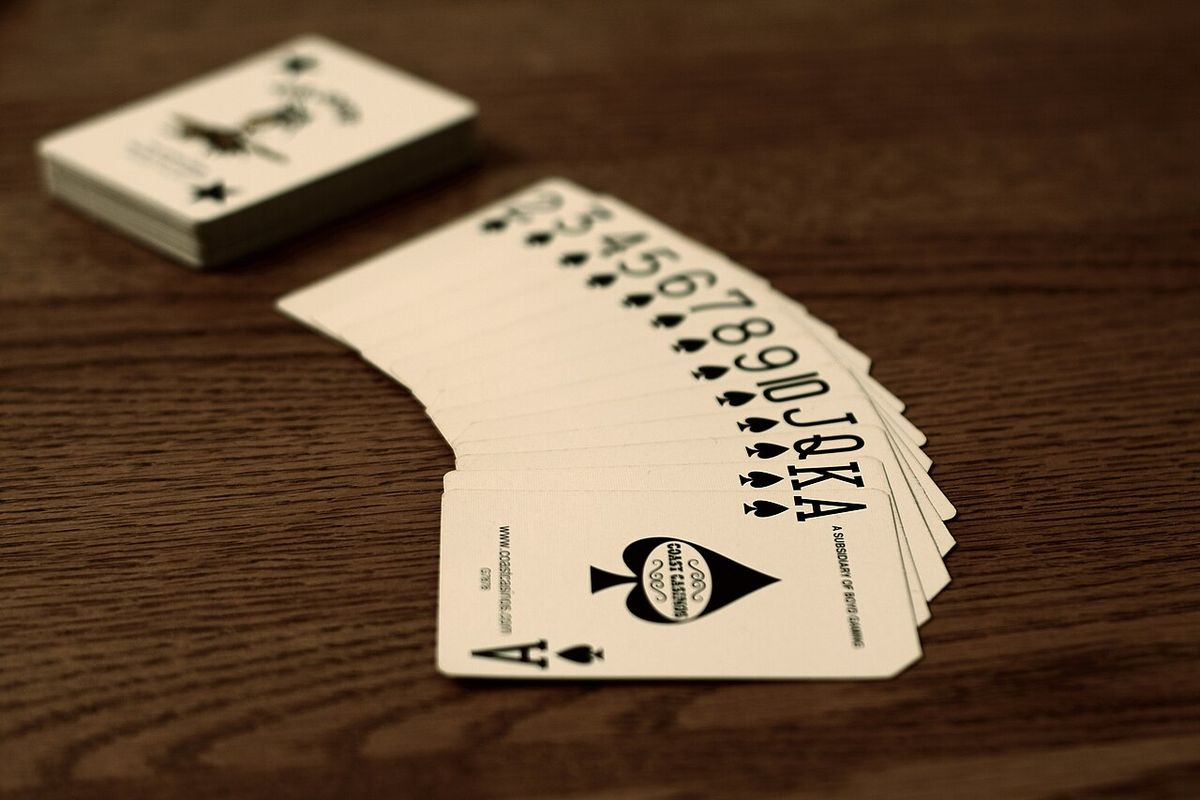
Once a player can no longer or chooses not to make any more plays, their turn ends. In the standard rule, the player must then draw one card from the stock pile. An alternate rule allows a player who cannot play to draw from the stock until they find a playable card, play it, and then draw one final card to end their turn. If the stock pile is exhausted, play continues without drawing. A player is not permitted to pick up cards they have already played onto the tableau. The following list details the rank of cards used in the game, from highest to lowest.
- King (highest, worth 10 points in scoring)
- Queen (worth 2 points)
- Jack (worth 2 points)
- 10
- 9
- 8
- 7
- 6
- 5
- 4
- 3
- 2
- Ace (lowest, worth 1 point)
Winning a Hand and Scoring Systems
The most immediate way to win is to be the first player to play all cards from their hand onto the tableau, thereby winning that individual hand. In casual play, this often concludes the game. For longer sessions, players frequently use a points system to determine an overall winner across multiple rounds. When playing with points, players receive penalty points for cards left in their hand when another player goes out. A common scoring system assigns one point for each numbered card and ace, two points for each Queen or Jack, and ten points for each King. Players agree on a target score at the outset, such as 25 or 50 points, and the first player to reach or exceed that threshold is eliminated. The game continues until only one player remains. The commercial Jax Games version introduces a chip-based economy. At the start of each round, each player contributes one chip to a central pot. If a player cannot make a move on their turn, they must add another chip to the pot. The hand's winner takes all chips in the pot, plus one chip from each opponent for every card remaining in those opponents' hands. The winner records their chip total as their score, and the first player to accumulate 100 points wins the entire game.
| Card Rank | Point Value |
|---|---|
| King | 10 |
| Queen | 2 |
| Jack | 2 |
| 10, 9, 8, 7, 6, 5, 4, 3, 2 | 1 |
| Ace | 1 |
Strategy and Skill Development
While luck of the draw plays a role, Kings in the Corner rewards strategic planning and observation. Effective players must visualize patterns and plan sequences several moves ahead, similar to solitaire. A key strategic decision involves when to play a King from one's hand. Playing a King early can open a new corner pile for future plays, but holding it may block opportunities to play lower cards of the same suit. Managing the movement of entire foundation piles is another advanced tactic, as it can free up empty foundation slots for critical cards from your hand. Players must also pay close attention to opponents' moves, as a pile moved by one player could create a new opportunity for another. The game helps develop deductive reasoning and pattern recognition skills, making it a valuable and enjoyable educational tool for children. Its blend of simple rules and deeper strategy ensures it remains engaging for adults as well.

Variations and Commercial Version
The game has several common rule variations that groups can adopt. One variation concerns drawing when a player cannot play. Instead of drawing just one card, the player draws until they get a playable card, plays it, and then draws one more card to end their turn. Another scoring variation involves players collecting chips or tokens for each corner pile they complete by building a sequence down to an ace, with the player owning the most corners at the end declared the winner. The most prominent commercial iteration is the Kings in the Corner game by Jax Games. This boxed set includes a patented fold-away control centre with tabbed stalls to hold the foundation and corner piles neatly. It comes with 80 playing chips, custom cards, and complete instructions. This version formalizes the chip-pot mechanics and is marketed for 2 to 6 players, ages 7 and up. The game is also available to play online on platforms like BoardGameArena, allowing for digital matches against players worldwide.
- A unique fold-away control centre with tabbed stalls.
- 80 playing chips used for betting and scoring.
- A deck of custom playing cards.
- Complete printed instructions for play.
- Designed for 2 to 6 players.
- Recommended for ages 7 and up.
Place in Canadian Game Culture
Kings in the Corner holds a familiar place in Canadian homes as a classic, easy-to-learn card game that requires no specialised equipment. Its resemblance to solitaire makes it a comfortable next step for individuals wanting to transition to multi-player games. The game is frequently passed down through families, learned at summer cottages, community centres, and during holiday gatherings, as noted in contemporary customer reviews mentioning Christmas holiday play. Its commercial availability in major toy and game retailers across Canada ensures its continued presence. The game's emphasis on family-friendly interaction, strategy over pure chance, and relatively short playtime aligns well with the preferences of many Canadian families seeking screen-free entertainment. As a hybrid of patience and competitive play, Kings in the Corner occupies a unique niche in the country's recreational landscape. The game is often featured in family game collections and is recommended by sources like Bicycle Cards in 2026 as a fun twist on solitaire perfect for all ages.
Questions about Kings in the Corner
What are the basic rules of Kings in the Corner?
The basic rules involve dealing seven cards to each player and setting up four face-up foundation cards in a cross. On your turn, you play cards from your hand onto these piles or new corner piles started by Kings. Cards must be played in descending order and alternating colours. You can move entire piles and play on empty foundation spots. You end your turn by drawing a card from the stock. The first player to get rid of all their cards wins the hand.
How do you score in Kings in the Corner?
Scoring is typically used over multiple hands. When one player goes out, others count penalty points for cards left in hand: number cards and aces are 1 point, Queens and Jacks are 2 points, and Kings are 10 points. Players often play to a target score like 25 or 50, where the first to reach it is out. The last player remaining wins. The Jax Games version uses chips, where the winner gets the pot plus chips for opponents' leftover cards, playing to 100 points.
Can you play Kings in the Corner online?
Yes, Kings in the Corner is available to play online on digital board game platforms. As noted, one such platform is BoardGameArena, which hosts an online implementation. There have also been open-source digital versions and solitaire adaptations available historically, though specific links may change over time. These online versions allow players to enjoy the game remotely.
What age is Kings in the Corner appropriate for?
Kings in the Corner is recommended for ages 7 and up. The rules are simple enough for children to grasp, focusing on number sequencing and colour matching. The commercial version by Jax Games is explicitly marked for ages 7+. The game helps develop skills like pattern visualization and deductive reasoning, making it both entertaining and educational for school-aged children while remaining challenging for teenagers and adults.
How many people can play Kings in the Corner?
Kings in the Corner is a card game for two to four players using a standard 52-card pack. The game is described as a multi-player patience or solitaire style game for this player count. Some commercial versions, like the Jax Games boxed set, expand the game to accommodate two to six players. The standard rules and setup with a cross shaped tableau of four foundation cards are designed for the smaller group. This player range makes it suitable for family play, with notes indicating it is great for all ages and a fun group game.
What is the difference between Kings in the Corner and solitaire?
The primary difference is that Kings in the Corner is a multi-player, competitive game while classic solitaire is a single player puzzle. Both games share the solitaire style mechanic of building descending sequences in alternating colours on foundation piles. However, Kings in the Corner involves two to four players taking turns to shed their own seven card hands onto a shared central tableau. It introduces interactive rules like moving entire foundation piles and the special placement of Kings in the empty corners of the layout. The objective is to be the first player to get rid of all their cards, creating a race against other players rather than a solitary puzzle solving challenge.
Sources and further reading
- Kings in the Corner (Wikipedia)
- Kings Corner (bicyclecards.com)
- Kings in the Corner, The Traditional Gameplay of Solitaire with a Twist, ... (amazon.ca)
Checked by the Nosy Mag desk. Last updated 2026-11-10.