Contract bridge
Contract bridge, commonly known simply as bridge, is a trick-taking partnership card game played with a standard 52-card deck by four players in two competing pairs. The game distinguishes itself through a structured auction phase where partners communicate via coded bids to establish a contract, specifying the number of tricks they commit to win and the trump suit, followed by a play phase where the declaring side attempts to fulfill that contract. Its blend of logic, probability, and partnership communication has secured its status as one of the world's most intellectually rewarding card games. In Canada, bridge enjoys a dedicated following, with clubs operating in community centres and online platforms providing accessible play for enthusiasts of all ages.
Historical Development and Etymology
The game of bridge is a member of the family of trick-taking games and is a derivative of whist. Its modern form evolved through several distinct stages in the late 19th and early 20th centuries. The first major departure from whist was 'Biritch' or Russian Whist, documented in an 1886 rulebook by English financier John Collinson based on games played within the Russian community in Constantinople. Biritch introduced key concepts like a 'no trumps' option, the dummy hand, and scored points above and below a line. The name 'bridge' itself may derive from 'Biritch', thought to be a transliteration of the Russian word for a diplomatic clerk or announcer, or from the Galata Bridge in Constantinople, which British soldiers crossed to play cards. Auction bridge emerged in 1904, introducing a competitive auction to decide the contract, but its scoring lacked strategic depth as only tricks taken, not tricks bid, counted toward game.
The modern game of contract bridge was fundamentally defined by innovations in scoring pioneered by Harold Stirling Vanderbilt in 1925. Vanderbilt's crucial change was that only the number of tricks specifically contracted for during the auction would score toward game. He also introduced the concept of vulnerability, increasing rewards and penalties for a side that has won a game. These rules created the strategic core of the modern game. Contract bridge rapidly supplanted all earlier forms. While its peak popularity in North American households was in the 1940s, the game maintains a global following. In 2005 the ACBL estimated there were 25 million players in the US. As of 2015, the average age of contract bridge players in the US was 71. The game rose in popularity online during the COVID-19 pandemic.
Fundamental Rules and Game Structure
Bridge is played by four players divided into two partnerships, with partners sitting opposite each other, conventionally designated by the compass points North-South and East-West. A standard 52-card deck is used, with each player receiving thirteen cards. Each deal consists of two consecutive phases: the auction and the play. The objective is for one partnership to accurately estimate and then successfully win a specific number of tricks they have contracted for during the auction. The game is won by the partnership accumulating the highest score over a series of deals, with scoring systems varying between social and tournament play.
The auction phase begins with the dealer and proceeds clockwise. On a player's turn, they must either pass, bid, or, if the last bid was by an opponent, double or redouble. A bid consists of a number from one to seven and a denomination. The number indicates a promise to win at least that many tricks in excess of six, meaning a bid of 1 promises seven tricks. Each subsequent bid must be higher, with rank determined first by the number and then by the denomination's hierarchy. The auction concludes after three consecutive passes following any bid, with the final bid becoming the contract. If all four players pass initially, the deal is passed out and not played.
The play phase commences after the auction. The player in the winning partnership who first named the contract's denomination becomes the declarer. The opponent to the declarer's left makes the opening lead. The declarer's partner then becomes the dummy, placing their entire hand face-up on the table. The declarer then controls the play of both their own hand and the dummy's cards. Play proceeds clockwise, with each player required to follow suit if possible. A trick is won by the highest card of the suit led, unless a trump suit is in play. The winner of each trick leads to the next. The declarer's goal is to win at least the number of tricks contracted for.
Scoring Systems and Key Concepts
Bridge scoring rewards successful contracts and penalizes failures, with significant bonuses for ambitious bids. The core score comes from contract points, earned for each odd trick. These points are scored below the line toward winning a game. A contract in clubs or diamonds scores 20 points per odd trick. A contract in hearts or spades scores 30 points per odd trick. A no trump contract scores 40 points for the first odd trick and 30 for each subsequent odd trick. If a contract is doubled, these point values are doubled. If redoubled, they are quadrupled. A partnership wins a game upon accumulating 100 or more contract points below the line.
Bonuses are awarded separately, above the line. These include a premium for making any doubled or redoubled contract, and overtrick bonuses. The most significant bonuses are for slams. A small slam earns 500 points if not vulnerable or 750 if vulnerable. A grand slam earns 1000 points if not vulnerable or 1500 if vulnerable. In rubber bridge, a side that wins two games wins the rubber, earning a 500-point bonus if the opponents won one game, or a 700-point bonus if they did not. If the declaring side fails to make its contract, the defenders score points for each undertrick, with penalties increasing if the side is vulnerable or if the contract was doubled or redoubled.
The concept of vulnerability is central to bridge strategy. In rubber bridge, a partnership becomes vulnerable after winning its first game. In duplicate bridge, vulnerability is predetermined for each board. Being vulnerable increases the penalties for undertricks but also increases the bonuses for making slams and doubled contracts. The two primary scoring methods for tournament play are matchpoints and International Matchpoints. These methods compare results across different tables playing the same hands.
Primary Variations: Rubber and Duplicate Bridge
The two main forms of bridge are rubber bridge and duplicate bridge, catering to social and competitive play respectively. Rubber bridge is the classic social format, often played in homes and casual clubs. In this variation, the cards are freshly shuffled and dealt for each hand, and play continues until one partnership wins two games, completing a rubber. The scoring is cumulative across the rubber. This format emphasizes the long-term flow of a session and the tactical decisions around becoming vulnerable.
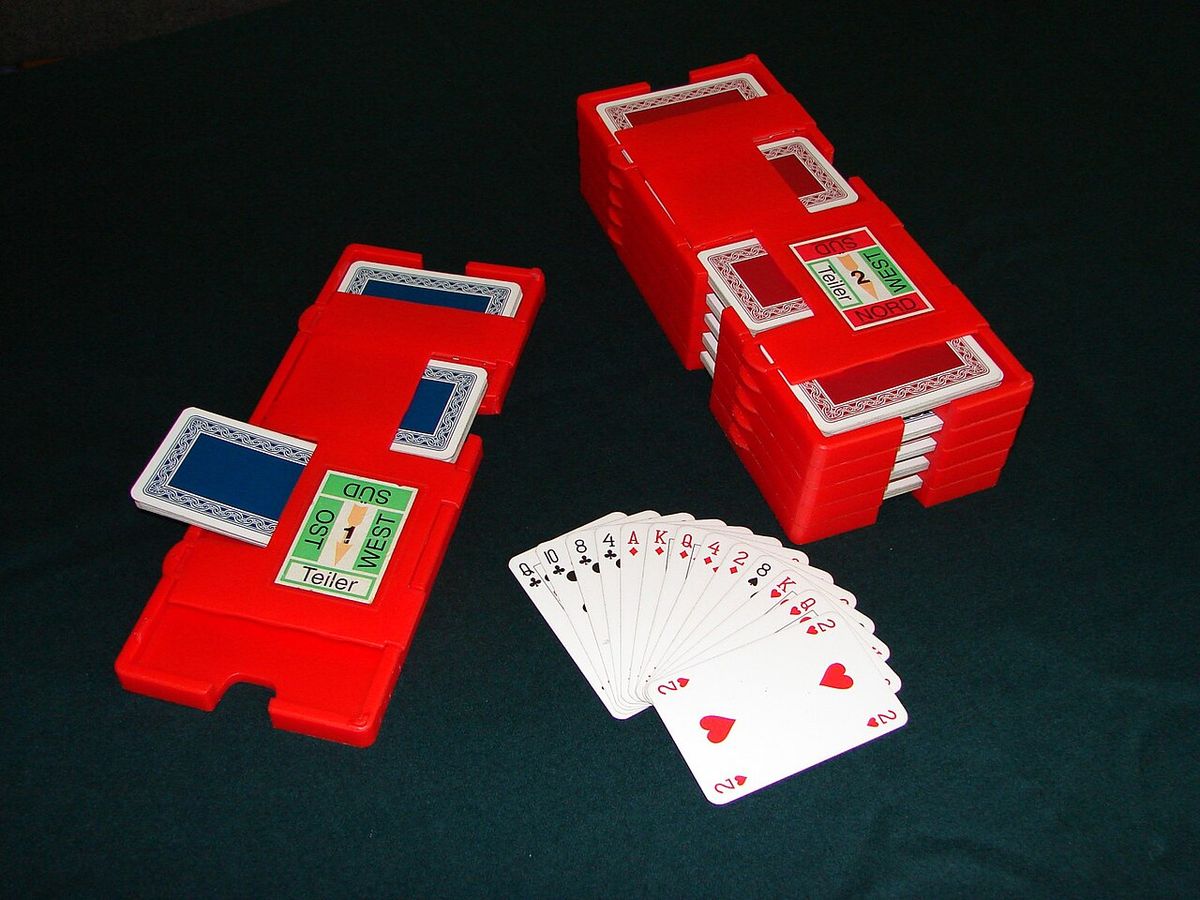
Duplicate bridge is the standard for club games, tournaments, and online competitive play. Its defining feature is that the same pre-dealt hands are played by multiple pairs in succession. After playing a board, each pair places their cards back into a labelled slot. This method eliminates the luck of the deal, as success depends entirely on how well a partnership performs with the same cards compared to others. Scoring is comparative, using either matchpoint or IMP scoring. Common duplicate formats include pairs events and team events. Other popular variations include Chicago bridge, a four-deal form with predetermined vulnerability, and solitaire or single-dummy bridge, which is played alone against a computer or robot.
- Rubber Bridge: Social format. Fresh deals. Play to two games. Cumulative scoring.
- Duplicate Bridge: Competitive format. Pre-dealt hands. Comparative scoring. Standard in clubs.
- Chicago Bridge: Four-deal variant. Fixed vulnerability rotation. Common in casual play.
- Solitaire Bridge: Single-player practice. Player acts as declarer against a simulated defence.
Bidding Systems and Partnership Communication
Bidding is the language of bridge, a coded conversation where partners exchange information about their hand strength and distribution to find the optimal contract. Because players may not use any other means to convey information, a vast array of bidding systems and conventions have been developed. These systems assign specific meanings to bids beyond simply suggesting a suit to play in. The most common systems in North America are Standard American, which includes the widespread Standard American Yellow Card, and 2/1 Game Forcing. In the United Kingdom and many Commonwealth countries, the Acol system is predominant.
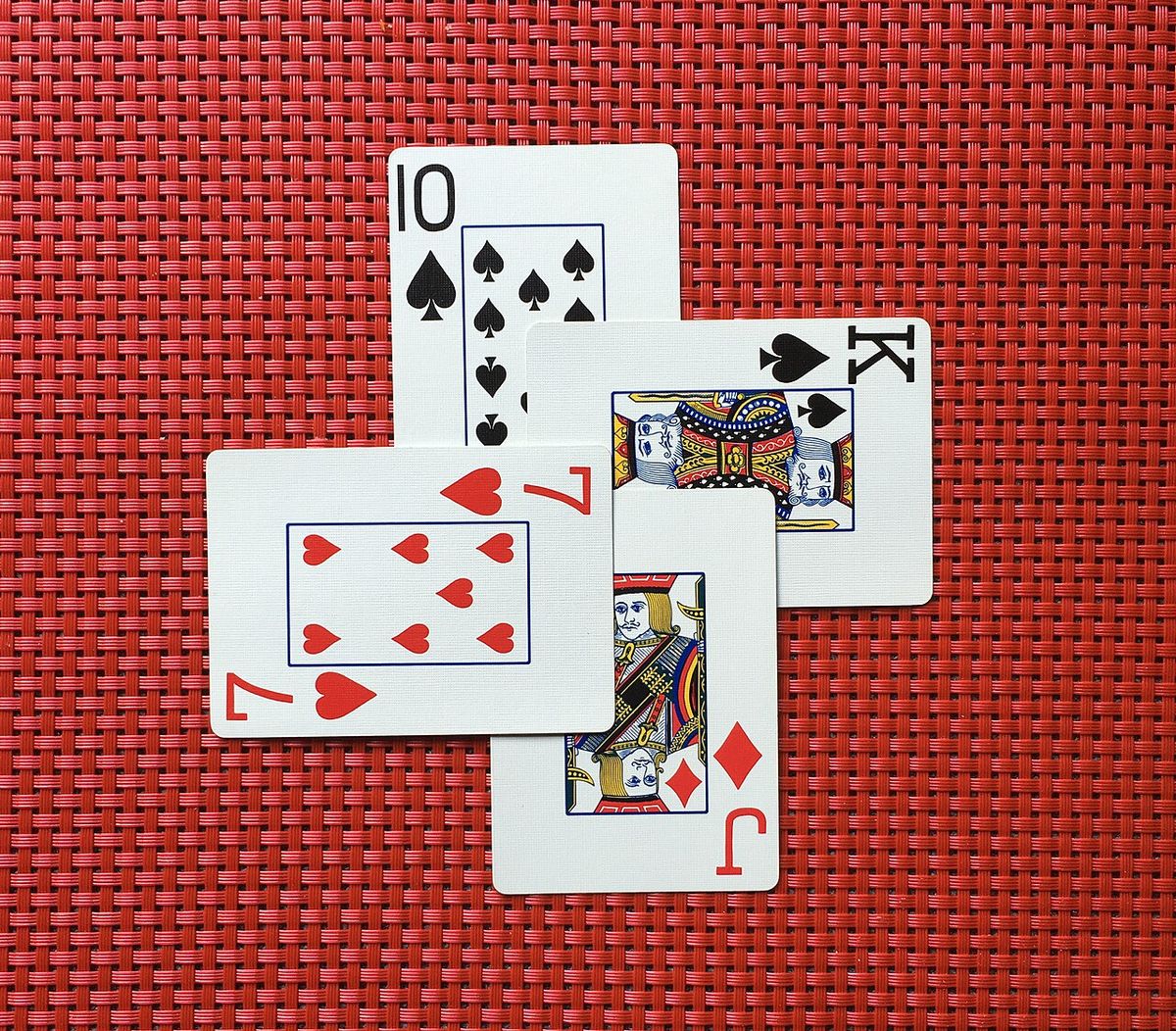
Hand evaluation is the foundation of all bidding. The most basic measure is High Card Points, where an ace counts as 4 points, a king as 3, a queen as 2, and a jack as 1. With 40 HCP in the deck, an average hand holds 10. Most systems require around 12-13 HCP to open the bidding. Players also adjust for distribution, adding points for long suits and short suits in the partner's presumed trump suit. SAYC is a natural system designed for clarity, where bids generally promise length in the suit named. The 2/1 system builds on SAYC with the key rule that a two-level response in a new suit to a one-level opening bid is forcing to game, allowing more space for slam exploration. Acol features a lighter opening style and a different approach to notrump ranges and major suit bidding.
- Standard American Yellow Card (SAYC): Natural system. Common for beginners and online play. No artificial forcing bids beyond standard ones.
- 2/1 Game Forcing: Modern tournament standard. A 2/1 response forces auction to game. Allows detailed slam investigation.
- Acol: British standard. Features light opening bids and a weak no trump in its common form.
- Basic Natural: Foundation system. Bids show suits naturally. Ideal for learning core concepts.
Beyond the overarching bidding systems, there are countless conventions designed for specific situations. Examples include Stayman, which is used for finding major suits after a notrump opening, and Blackwood, which is used for asking for aces. There are also various defensive bidding methods. All such partnership agreements must be fully disclosed to the opponents, which is typically done using a convention card. The complexity and depth of bidding theory make bridge a lifetime study for many enthusiasts.
Bridge in Canada and Online Play
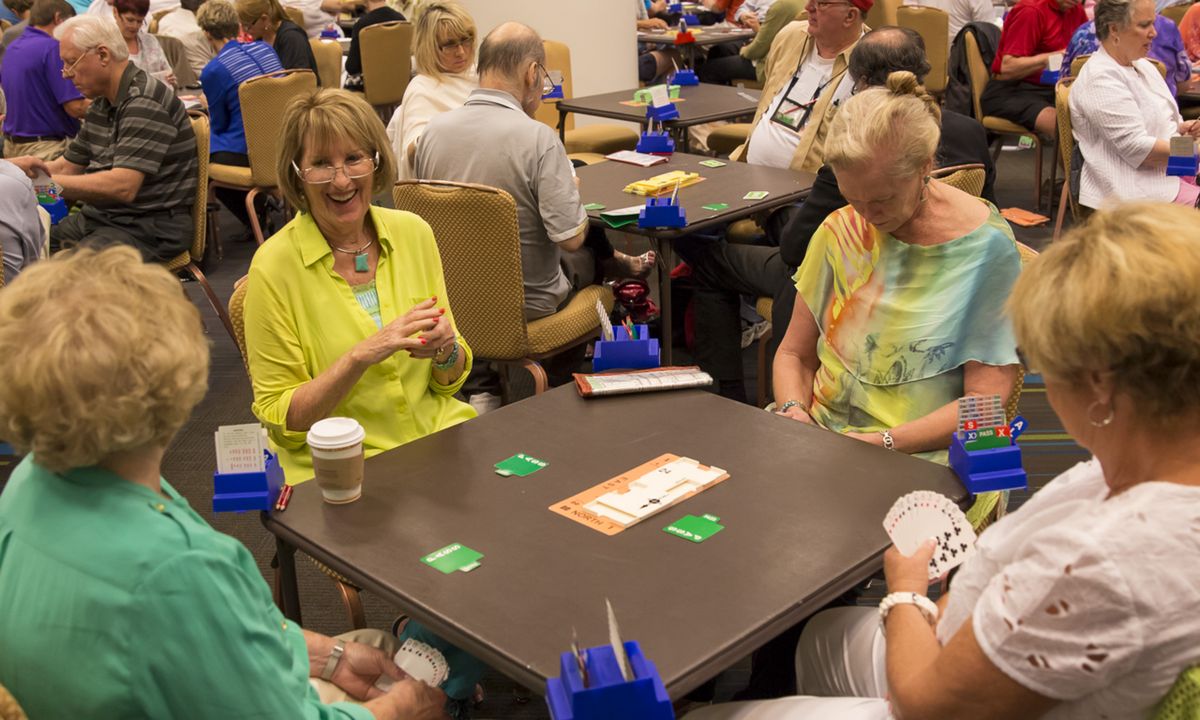
Bridge maintains an active community across Canada, with clubs operating in cities and towns, often affiliated with seniors' centres and community organizations. For instance, the Nepean Seniors Recreation Centre in Ottawa hosts regular contract bridge games, welcoming both established partnerships and individual players. The game's social and cognitive benefits make it particularly popular among retirees, but it attracts players of all ages. Nationally, players are organized under the American Contract Bridge League which sanctions clubs and tournaments throughout North America, including Canada, awarding masterpoints for competitive success.
The growth of online platforms has greatly expanded access to bridge, allowing players to enjoy the game at any time from their own homes. Numerous websites and applications now facilitate play, from casual free games to serious tournament competition. These platforms often use sophisticated artificial intelligence to provide robot partners and opponents, enabling solo practice or full games without needing to coordinate with other people. Popular sites include Bridge Base Online, a major hub for free and competitive play. Funbridge offers an AI partner named Argine and comparative tournament play. And Bridge Champ, associated with the ACBL. The COVID-19 pandemic accelerated the migration to online play, with virtual clubs and lessons becoming commonplace.
| Platform/Resource | Primary Features | Access |
|---|---|---|
| Bridge Base Online | Daily games, tournaments, robot players, social play | Browser, desktop client |
| Funbridge | AI partner (Argine), individual challenges, league tournaments | Browser, mobile apps |
| ACBL (Bridge Champ, Clubhouse) | Sanctioned games awarding masterpoints | Various platforms |
| Local Bridge Clubs | In-person duplicate games, social play, lessons | Community centres nationwide |
For those seeking to learn bridge, many resources are available online. These resources include interactive lessons, bidding practice tools, and hand analysis software. National and local bridge organizations frequently run teaching programs and newcomer games. The game's enduring appeal lies in its combination of deep social interaction and a thriving online ecosystem. Together, these elements support an active and intergenerational community of players across the country.
Questions about Contract bridge
How do you play contract bridge for beginners?
Bridge is played by four players in two partnerships using a 52-card deck. Each player is dealt 13 cards. The game has two phases: bidding and play. In the bidding phase, players take turns making calls to exchange information and compete for the contract, which specifies how many tricks their side will try to win and the trump suit. The highest bid wins. In the play phase, the winning side's declarer tries to win the contracted tricks, with their partner's hand placed face-up. Players must follow suit if possible. The goal is to fulfill your contract through accurate bidding and skillful card play.
Can you play bridge online for free?
Yes, numerous platforms offer free online bridge play. Sites like Bridge Base Online and Funbridge provide free access to games against robots or other players. Many platforms offer a set number of free deals daily or unlimited free play in certain modes. These sites typically run in a web browser or via downloadable apps. They are excellent for practice, with some offering tutorials and hand analysis to help players improve their game without financial commitment.
What is the difference between contract bridge and duplicate bridge?
Contract bridge is the overarching game with its core rules. Duplicate bridge is a specific variation designed for competitive tournament and club play. The key difference is that in duplicate bridge, the same pre-dealt hands are played by multiple pairs in succession, with the cards preserved in a board. This eliminates luck of the deal, as scores are compared across all pairs who played the same cards. Rubber bridge, the common social form, uses fresh deals each hand and scores a running total until a side wins two games.
How is bridge scored?
Scoring involves contract points for tricks bid and made, plus bonuses. Contract points are scored below the line: 20 per trick for clubs/diamonds, 30 per trick for hearts/spades, and 40 for the first trick then 30 for others in no trump. The first side to reach 100 points below the line wins a game. Bonuses above the line include points for overtricks, for making a doubled contract, and for slams. If a contract is failed, the defenders score points for each undertrick, with penalties higher if the declaring side is vulnerable or if the contract was doubled.
What are the basic rules of bidding in bridge?
Bidding starts with the dealer and moves clockwise. A player may pass, bid, or double/redouble an opponent's bid. A bid consists of a number and a denomination. The number promises to take that many tricks plus six. Each new bid must be higher than the last, ranked first by number, then by suit rank. The auction ends after three consecutive passes following a bid. The final bid becomes the contract. Bids convey information about hand strength and suit length using agreed-upon systems like Standard American or Acol.
Where can I find a bridge club or game in Canada?
Bridge clubs are widespread across Canada, often listed through the American Contract Bridge League website, which sanctions clubs and tournaments. Many community and seniors' centres, like the Nepean Seniors Centre in Ottawa, host regular games. To find a game, you can search online for 'bridge club' with your city name, check community centre program guides, or use the 'Find a Club' tool on bridge organization websites. For newcomers, many clubs offer beginner lessons and partnership services.
Sources and further reading
- Contract bridge (Wikipedia)
- Play Contract Bridge online from your browser (en.boardgamearena.com)
- Play Bridge (acbl.org)
- Contract Bridge, Nepean Seniors Centre (nepeanseniorscentre.ca)
- How to Play Bridge: Rules, Bidding Systems & Strategy (2026 Guide) (bridgecardgameclassic.com)
- 247 Bridge (247bridge.com)
- Bridge Game Online, Play This Free Online Card Game (games.aarp.org)
Checked by the Nosy Mag desk. Last updated 2026-11-10.