Anand points to travel advisories for China risk, cites arbitrary detention concerns
The foreign minister spoke in Shenzhen as Canada's advisory warns of risks including arbitrary detention and travel bans.
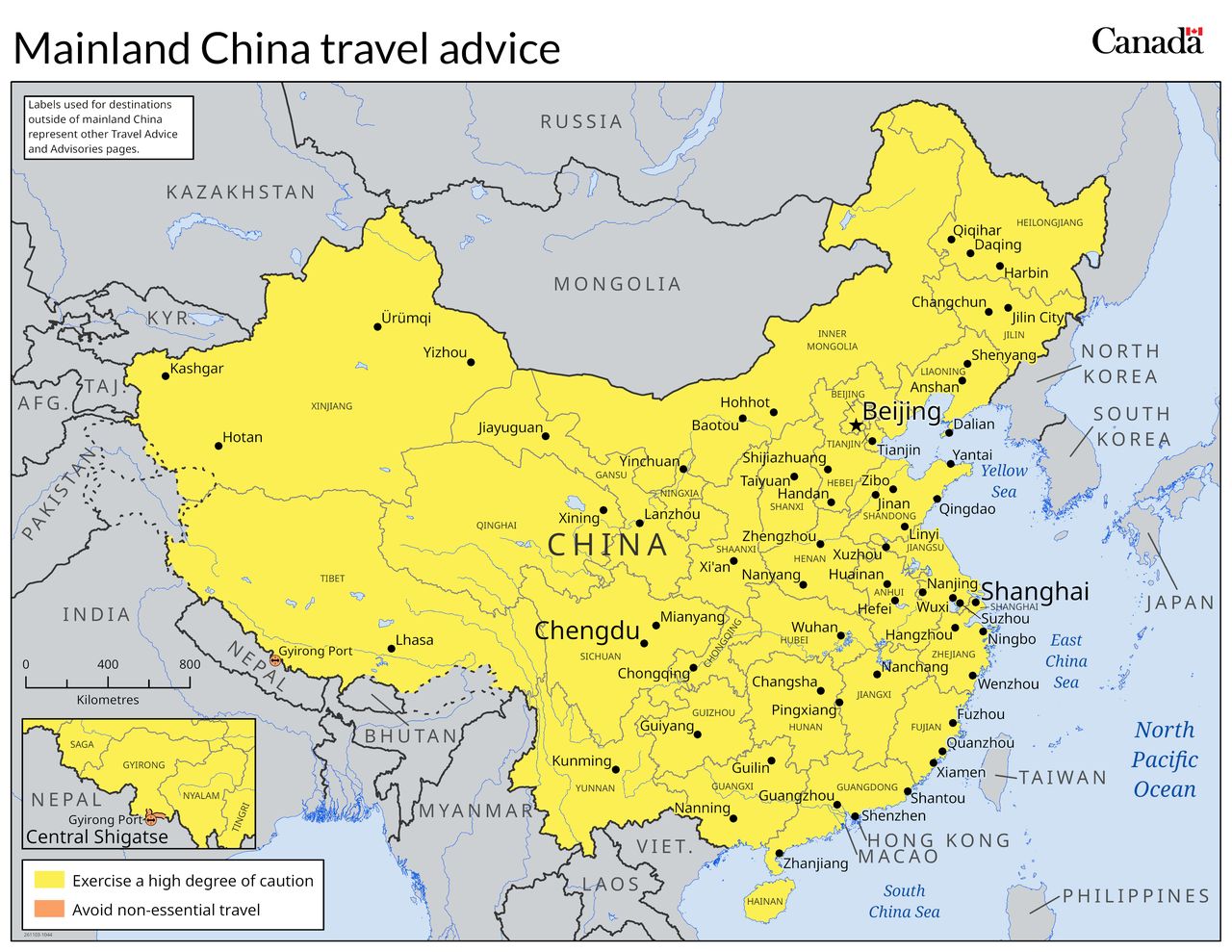
SHENZHEN · Foreign Affairs Minister Anita Anand highlighted Canada's travel advisories as a tool for citizens to evaluate risks when visiting China, including the potential for arbitrary detention. She made the remarks while attending the Asia-Pacific Economic Cooperation summit in Shenzhen. Anand declined to state directly whether China is safe for Canadian travellers. "At Global Affairs Canada we have travel advisories. We are ensuring that those are always accurate," she told reporters. The government's advisory for China currently recommends travellers exercise a high degree of caution.
The advisory warns that Canadians in China face risks of arbitrary detention or being prevented from leaving the country. It states that business travellers have been detained and had passports confiscated due to commercial disputes. "Disputes are often costly and prolonged, and you may be subject to a travel ban restricting you from leaving the country until the matter is resolved," the advisory reads. Foreign drivers can also face harsh penalties, with police able to detain suspects for years until a traffic accident case is closed.
Jeff Nankivell, head of the Asia Pacific Foundation of Canada, said China's justice system presents specific concerns. "There are unusual risks for China that we do not see in other countries. And so you have to take the travel advisory quite seriously, and make your own assessment as to whether there are factors in your case that could put you at risk," Nankivell said in an interview. He noted the system falls short on international standards for corruption and transparency. Students, academics or business travellers face a constant risk of arbitrary consequences from authorities.
READ MORE: U.S., China, Russia pledge nuclear risk talks after historic trilateral summit
READ MORE: Canada's foreign minister confronts Russian counterpart at G20 meeting
The advisory details that foreigners suspected of a crime can have passports withheld or be detained for up to 37 days without charges. Canadians detained on national security grounds, such as "upsetting social order," could be held for six months before a formal arrest and face a closed trial. Particular warnings are issued for the Xinjiang region, citing reports of extrajudicial internment and forced labour camps. The advisory notes that family members of Canadian citizens with Chinese citizenship have been detained there.
Nankivell said business disputes pose a persistent high risk. "That you've had a falling out with a local partner, or you have local partner you know who is a bad actor and has access to friends in the local justice system and is able to to get you detained," he explained. He also described scenarios where a student in a bar during a fight could be swept up in a mass detention. While he considers a major diplomatic crisis like the 2018 detention of two Canadians for over 1,000 days unlikely, he said the precedent makes a repeat more possible.
Anand said she raised the treatment of Canadians in China during a Tuesday meeting with Chinese Foreign Minister Wang Yi. "I raised human rights, democratic principles including freedom of the press, the treatment of Canadians in China, transnational repression, and the importance of these fundamental principles to our country and to our people," she said. She argued that maintaining dialogue helps address issues as they arise but would not say if it prevents detentions. Anand noted initiatives to strengthen people-to-people ties, including more flights and China dropping its visa requirement for Canadian tourists.
With files from The Canadian Press, CityNews and The Spec