Mega Millions
Mega Millions is a major American multi-jurisdictional lottery game known for its record-breaking jackpots. It began in 1996 as The Big Game with six participating states and has since expanded to be offered in 45 states, the District of Columbia, and the U.S. Virgin Islands. The game is of interest to many Canadians, who can participate by purchasing tickets while physically present in a participating U.S. jurisdiction or through authorized courier services. Drawings are held twice weekly, on Tuesday and Friday evenings at 11:00 p.m. Eastern Time, with a minimum advertised jackpot of $50 million under the format that began in April 2025.
Gameplay and Prize Structure
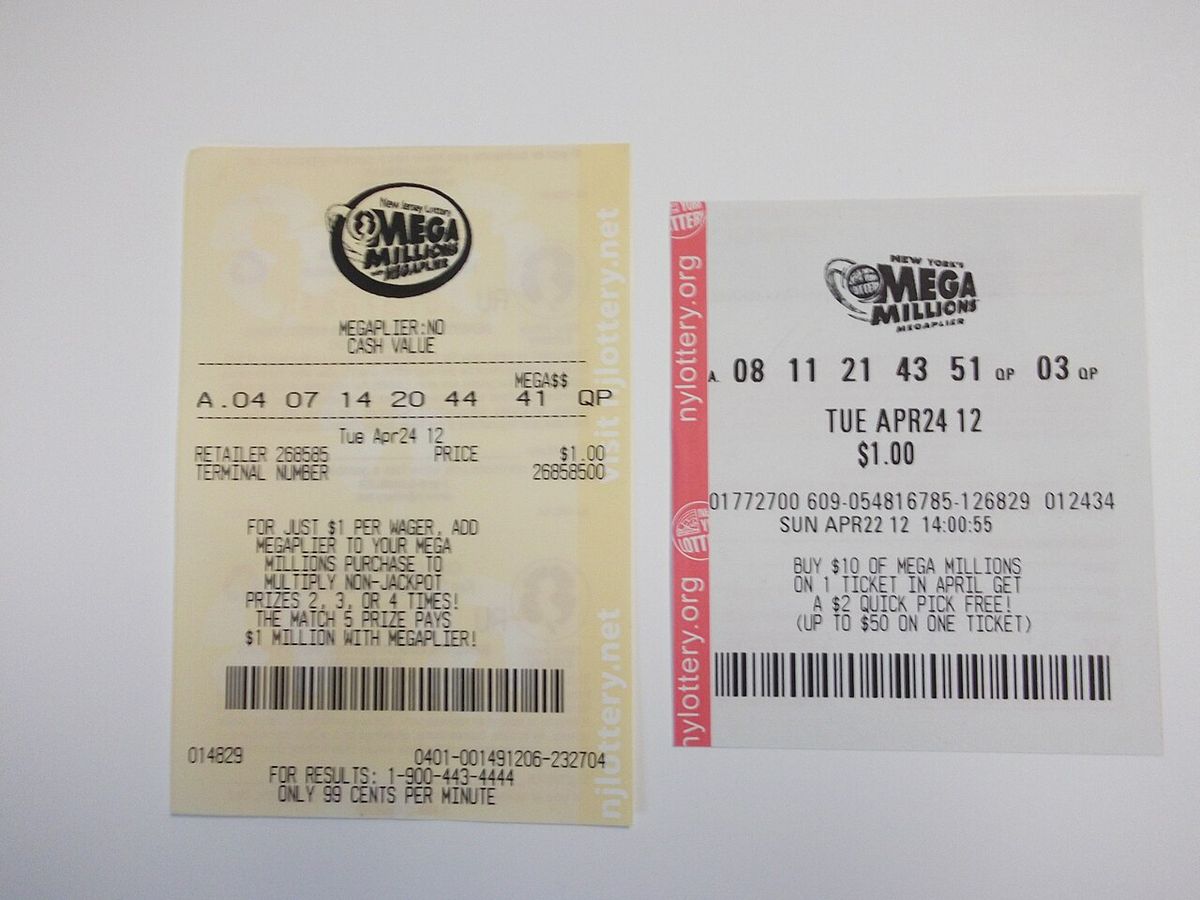
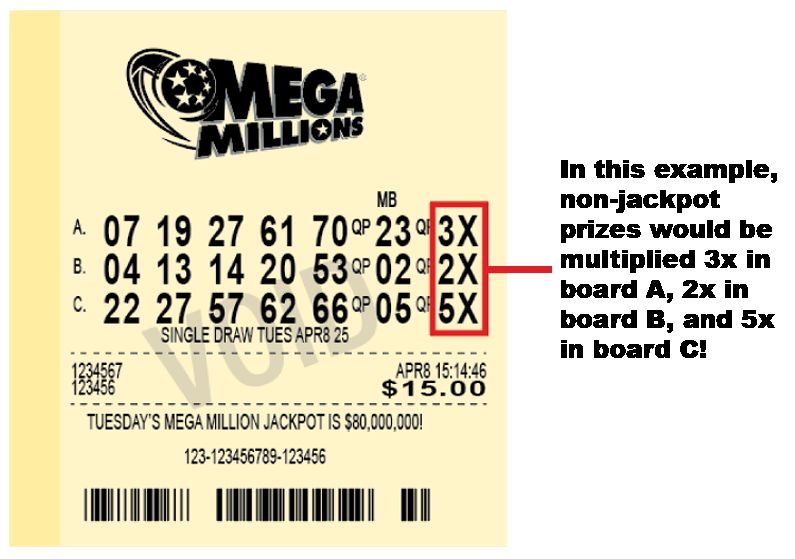
To play Mega Millions, a participant selects five numbers from a pool of 70 and one Mega Ball number from a separate pool of 24. A ticket matching all six numbers wins the jackpot. Each game costs $5, a price point established in April 2025. This cost includes a built-in multiplier feature that applies to all non-jackpot prizes. The multiplier, randomly generated for each ticket, can be 2, 3, 4, 5, or 10. A 10x multiplier on the second-place prize of $1 million can result in a $10 million cash win. The advertised jackpot is the annuity value, paid in 30 graduated annual payments that increase by five percent each year. Winners almost always choose the cash option, which is the approximate present value of the annuity. If no ticket matches all six numbers, the jackpot rolls over with a minimum increase of $10 million per drawing.
The odds of winning the Mega Millions jackpot are approximately 1 in 290,472,336 under the current matrix. The overall odds of winning any prize are about 1 in 23. The prize tiers are structured so that roughly 75 percent of the prize pool is allocated to the jackpot. The second prize for matching the five white balls but not the Mega Ball is $1 million. Lower-tier prizes range from $2 for matching just the Mega Ball up to $10,000 for matching four white balls and the Mega Ball. All these base prizes are subject to the random multiplier included with each $5 play.
Historical Development and Key Changes
Mega Millions originated as The Big Game, with tickets first sold on August 31, 1996, in Georgia, Illinois, Maryland, Massachusetts, Michigan, and Virginia. The first drawing was held on September 6, 1996. The game was conceived by Michigan Lottery Commissioner Bill Martin and Illinois Lottery Director Desiree Rogers, following discussions with lottery directors from Georgia and Virginia. Initially a weekly Friday draw, a Tuesday drawing was added in February 1998. In May 2002, with the addition of Ohio and New York, the game was renamed The Big Game Mega Millions, before permanently becoming simply Mega Millions in February 2003. The logo featuring a gold ball with six stars was introduced to represent the six founding members.
The game has undergone several significant format and price changes throughout its history. A major expansion occurred in 2010 when an agreement with the Multi-State Lottery Association allowed for the cross-selling of Mega Millions and Powerball tickets across most U.S. jurisdictions. This dramatically increased the player base and potential jackpot sizes. Other key changes include a price increase from $1 to $2 per play in October 2017, accompanied by a matrix change to 5/70 + 1/25. The most recent overhaul took effect in April 2025, raising the price to $5 per play, incorporating the multiplier into the base cost, adjusting the matrix to 5/70 + 1/24, and increasing the starting jackpot to $50 million. The temporary 'Just the Jackpot' option, introduced in 2017, was discontinued in this 2025 update.
- August 31, 1996: Ticket sales begin for The Big Game.
- May 17, 2002: First drawing under The Big Game Mega Millions name.
- January 31, 2010: Cross-sell expansion with Powerball begins.
- October 28, 2017: Price increases to $2. Matrix becomes 5/70 + 1/25.
- April 7, 2020: Starting jackpot temporarily reduced to $20 million due to COVID-19.
- April 5, 2025: New $5 format begins, with multiplier included.
Participation and Jurisdictional Expansion
Mega Millions is administered by a consortium of its 12 original member lotteries, with drawings supervised by the Georgia Lottery and broadcast from the studios of WSB-TV in Atlanta. The game's expansion has been steady. After its initial six-state launch, early joiners included New Jersey in 1999, Washington in 2002, Texas in 2003, and California in 2005. The landmark 2010 cross-sell agreement made the game available alongside Powerball in most lottery jurisdictions, leading to rapid growth. States like Montana, Nebraska, and Oregon joined in early 2010. More recent additions include Florida in May 2013 and Mississippi, which began selling lottery tickets in November 2019 and joined Mega Millions on January 30, 2020. As of 2026, Mega Millions is offered in 47 lottery jurisdictions, encompassing 45 states, the District of Columbia, and the U.S. Virgin Islands.
The only U.S. states not offering any lottery, and thus not participating in Mega Millions, are Alabama, Alaska, Hawaii, Nevada, and Utah. The multiplier feature, originally called the Megaplier and introduced in Texas in 2003, is now offered in all jurisdictions except California. The 'Just the Jackpot' option, which offered two plays for $3 but eligibility only for the jackpot, was introduced in 2017 but was discontinued with the 2025 format change. The game's hosts for the televised drawings are Carol Blackmon, John Crow, and Adria Wofford.
Record Jackpots and Notable Wins
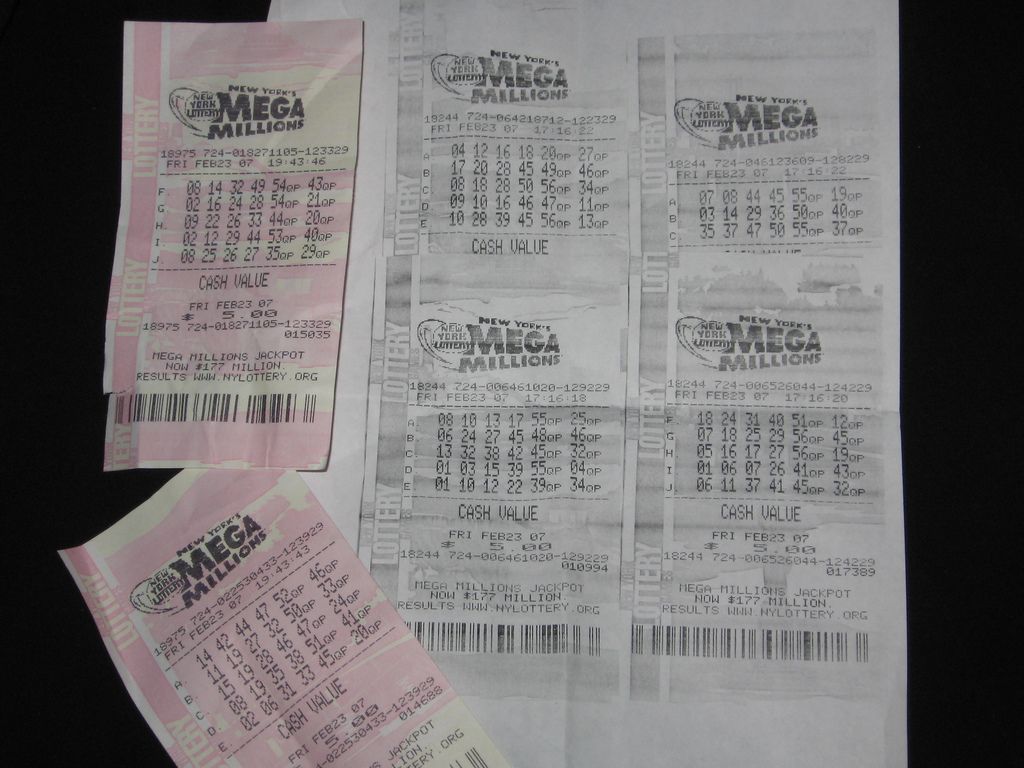
Mega Millions is famous for producing some of the largest lottery jackpots in world history. The size of jackpots has grown due to higher ticket prices, broader participation, and adjusted odds. The largest Mega Millions jackpot to date was $1.602 billion, won on August 8, 2023, by a single ticket sold at a Publix supermarket in Neptune Beach, Florida. The winner chose the cash option of $794.2 million. The second-largest jackpot of $1.537 billion was won on October 23, 2018, by a ticket sold in South Carolina and claimed anonymously in March 2019. Other historic wins include a $1.35 billion jackpot from the January 13, 2023, drawing, won by a ticket sold in Maine, and a $1.34 billion jackpot from July 29, 2022, won in Illinois.
In 2026, the lottery continued to see significant prizes. A jackpot of $803 million was won on July 28, 2026, by an anonymous player with a ticket purchased in Bradenton, Florida. Earlier that year, on March 17, 2026, a $60 million jackpot was awarded. The table below lists the top Mega Millions jackpots as of 2026.
| Jackpot Amount | Date Won | Location of Winning Ticket |
|---|---|---|
| $1.602 billion | August 8, 2023 | Neptune Beach, Florida |
| $1.537 billion | October 23, 2018 | South Carolina |
| $1.35 billion | January 13, 2023 | Maine |
| $1.34 billion | July 29, 2022 | Illinois |
| $1.22 billion | December 27, 2024 | Cottonwood, California |
| $1.13 billion | March 26, 2024 | New Jersey |
| $803 million | July 28, 2026 | Bradenton, Florida |
How Canadians Can Participate
While Mega Millions is an American lottery, Canadian adults aged 19 and older (18 in Alberta, Manitoba, and Quebec) are eligible to play if they purchase a ticket within a participating U.S. jurisdiction. The most straightforward method for Canadians is to buy a ticket in person while travelling in the United States. Tickets must be purchased from an authorized retailer in one of the 45 participating states, the District of Columbia, or the U.S. Virgin Islands. The original paper ticket must be kept secure, as it is the only valid proof of purchase for claiming a prize. For those not travelling, several online courier services operate by purchasing official Mega Millions tickets on behalf of clients within the U.S.
These services provide a scanned image of the physical ticket as proof of purchase. It is crucial for players to verify the legitimacy of such services, as Mega Millions does not endorse them and participants assume any associated risks. Canadians cannot buy tickets directly from the official Mega Millions website, and Canadian provincial lottery corporations like the Ontario Lottery and Gaming Corporation or Loto-Québec do not sell Mega Millions tickets. Another option is to have a trusted friend or family member in the U.S. purchase a ticket on one's behalf, though this requires significant trust.
- In-Person Purchase: Buy from a U.S. retailer while physically present.
- Online Courier Service: Uses a third party to buy a real ticket in the U.S. on your behalf.
- Authorized Purchase: Have a trusted friend or family member in the U.S. buy a ticket for you.
Drawings are held at 11:00 p.m. Eastern Time on Tuesdays and Fridays. Ticket sales cut-off times vary by state and retailer but are always before the draw time. Canadians should account for time zone differences, as the 11:00 p.m. ET draw occurs at 8:00 p.m. Pacific Time and 9:00 p.m. Mountain Time.
Claiming Prizes and Tax Implications for Canadians
Winning tickets must be claimed according to the rules of the U.S. state where they were purchased. For jackpots and major prizes, this typically requires an in-person claim at the lottery headquarters of that state, though some states may allow claims via mail or through legal representation. Canadians who win should immediately seek advice from a lawyer and a cross-border tax professional familiar with both U.S. and Canadian law. The claim process and deadlines vary significantly by state, and missing a deadline can result in forfeiting the prize. The lottery provides winners with the option of a lump-sum cash payment or an annuity paid over 30 years.
The tax treatment of Mega Millions winnings for Canadians involves two primary layers. First, the U.S. Internal Revenue Service withholds a mandatory 30 percent federal tax on gambling winnings for non-resident aliens. Second, the state where the ticket was purchased may impose an additional state tax, which can range from zero to over eight percent. After these U.S. taxes are paid, the remaining funds can be brought to Canada. Importantly, lottery winnings are generally not considered taxable income in Canada. However, any investment income generated from the winnings, such as interest or dividends, is subject to Canadian taxation. Players should consult the Canada Revenue Agency and IRS guidelines for the most current information.
Questions about Mega Millions
Can Canadians legally play Mega Millions?
Canadian adults can legally play Mega Millions if they purchase a ticket while physically inside a participating U.S. jurisdiction. Another method is using a reputable online courier service that buys an official paper ticket on the player's behalf within the United States. Canadians cannot buy tickets directly from the official Mega Millions website. They also cannot purchase tickets from Canadian provincial lottery sites.
How much does a Mega Millions ticket cost?
As of the format change in April 2025, a single Mega Millions play costs US$5. This price includes the base game and a built-in multiplier that can increase non-jackpot prizes. Previously, the price was $2 from 2017 to 2025 and $1 before that. The multiplier, formerly an add-on called the Megaplier, is now automatically part of every $5 ticket.
When are the Mega Millions draws and how can I watch?
Mega Millions draws are held twice a week, every Tuesday and Friday, at 11:00 p.m. Eastern Time. The drawings take place at the WSB-TV studios in Atlanta, Georgia, and are supervised by the Georgia Lottery. They are broadcast on various television stations in participating jurisdictions and are often streamed on official state lottery websites. In Canada, this corresponds to 8:00 p.m. Pacific Time.
What was the largest Mega Millions jackpot ever won?
The largest Mega Millions jackpot in history was $1.602 billion, won on August 8, 2023. The single winning ticket was sold at a Publix supermarket in Neptune Beach, Florida. The winner chose the cash option, receiving a lump sum payment of $794.2 million before taxes. This is one of the largest lottery prizes ever awarded worldwide.
What are the odds of winning the Mega Millions jackpot?
The odds of winning the Mega Millions jackpot are determined by the game's matrix. Under the format that began in April 2025, players must match five white balls drawn from a pool of 70 and one gold Mega Ball drawn from a separate pool of 24. This specific combination results in long odds for the top prize. The overall chance of winning any prize in the game is more favourable, though still low. These odds are a mathematical function of the number pool and are fixed regardless of the jackpot amount or the number of tickets sold.
What happens if a Canadian wins a Mega Millions jackpot?
A Canadian who wins a Mega Millions jackpot must claim the prize in the United States jurisdiction where the ticket was purchased, following that state's specific procedures. The winnings are subject to a mandatory 30 percent federal withholding tax for non resident aliens, and there may be additional state level withholding taxes depending on where the ticket was bought. After taxes are withheld, the remaining funds can be transferred to Canada. In Canada, lottery winnings are generally not considered taxable income, so no further income tax is levied on the prize money itself by the Canadian government.
Sources and further reading
- Mega Millions (Wikipedia)
- Important Dates - 2026 St-B Mega Million Choices Lottery (stbmegamillionchoices.ca)
- Yes, Canadians can enter the US$1.1 billion Mega Millions lottery. Here's ... (globalnews.ca)
- Mega Millions Canada: Play Online & Buy Tickets (lottosphoto.com)
- Winning Numbers (olg.ca)
- Mega Millions lottery hits record $1.6B after no winners in Friday's draw (cbc.ca)
Checked by the Nosy Mag desk. Last updated 2026-11-10.