44th Manitoba general election
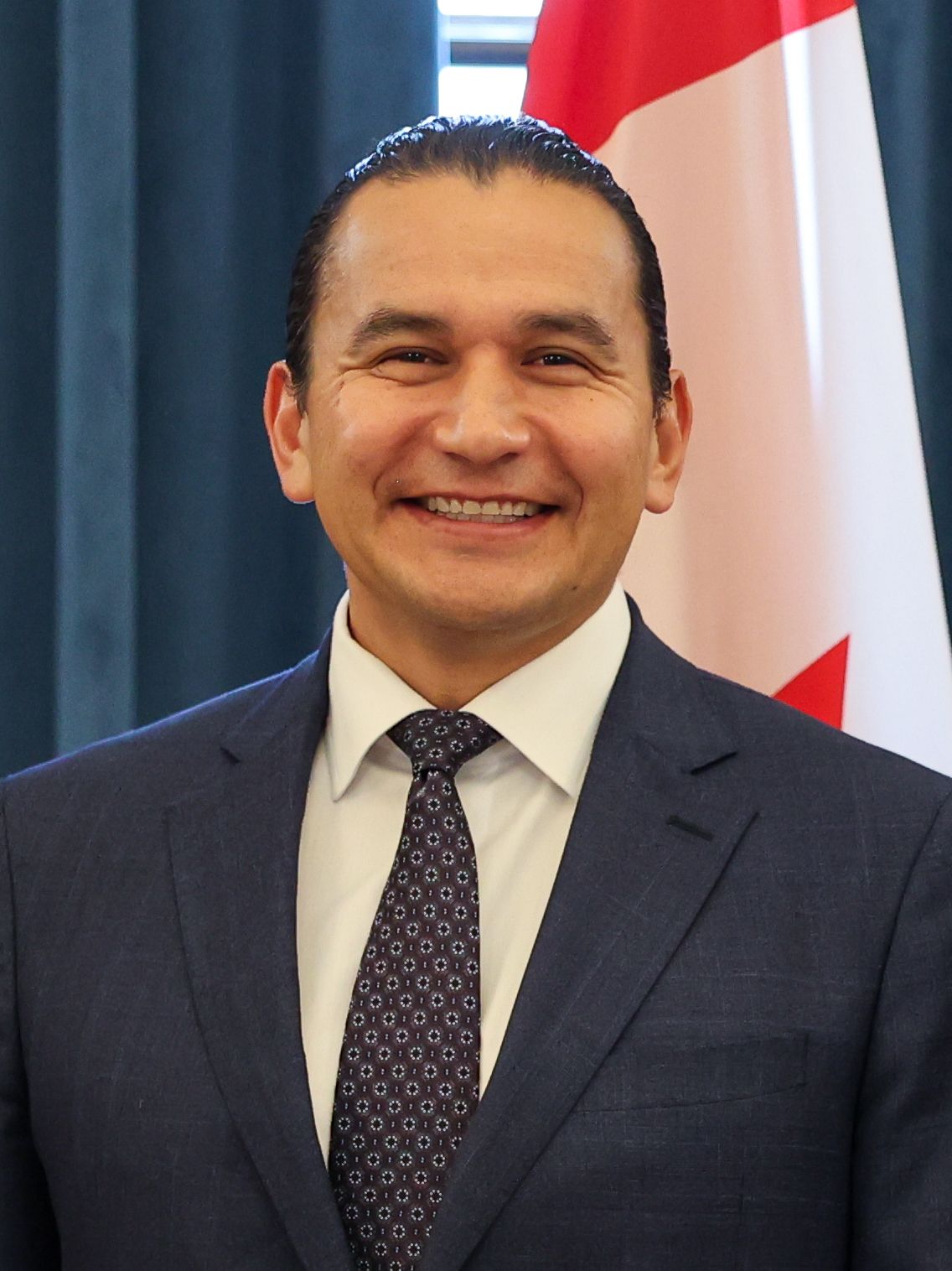
The 44th Manitoba general election will be held on or before October 5, 2027. It will elect 57 members to the Legislative Assembly of Manitoba using the first-past-the-post electoral system. The election follows the 2023 vote that resulted in an NDP majority government led by Premier Wab Kinew. The campaign will determine whether the New Democratic Party retains its mandate or if the Progressive Conservative Party, under interim leader Konrad Narth, can regain power after its 2023 defeat.
Legal Framework and Timing
Manitoba's Elections Act mandates that a general election must be held no later than the first Tuesday of October in the fourth calendar year following the previous election. The premier retains the prerogative to call the election earlier than this fixed date. The election will be administered by Elections Manitoba, the province's independent, non-partisan electoral management body. All 57 electoral divisions across the province will be contested, with the candidate receiving the most votes in each division winning the seat. Prospective candidates can be nominated under The Election Financing Act before the election is called, becoming official candidates once the writ is issued and they meet all criteria in The Elections Act.
Political Context and Pre-Election Changes
The political scene leading into the 2027 election has been shaped by significant leadership changes, by-elections, and caucus movements since the 2023 vote. The New Democratic Party, led by Premier Wab Kinew, won a majority government in 2023, ending nearly seven years of Progressive Conservative rule. The PC party entered a period of transition, with leader Heather Stefanson resigning in January 2024. Obby Khan was elected PC leader in April 2025 but resigned in September 2026, after which Konrad Narth became interim leader. The Manitoba Liberal Party, reduced to a single seat in 2023, saw interim leader Cindy Lamoureux serve after Dougald Lamont's resignation. The Liberal leader Dougald Lamont resigned on election night in 2023 after losing his Saint Boniface seat.
Several by-elections have altered the composition of the legislature ahead of the general election. The NDP gained the former PC stronghold of Tuxedo in a June 18, 2024 by-election with candidate Carla Compton, following the resignation of former premier Heather Stefanson. The party held Transcona on March 18, 2025 with Shannon Corbett after the death of minister Nello Altomare, making Corbett the first woman elected as MLA for Transcona. The NDP also held The Pas-Kameesak on July 21, 2026 with Jennifer Flett following the death of Amanda Lathlin, the first First Nations woman ever elected in Manitoba. The PCs held Spruce Woods on August 26, 2025 with Colleen Robbins after incumbent Grant Jackson resigned to run federally.
Caucus changes include the removal of NDP MLA Mark Wasyliw from caucus on September 16, 2024. He continues to sit as the independent MLA for Fort Garry. PC MLA Bob Lagassé announced on March 10, 2026, that he was leaving the PC caucus to sit as an independent and would run as an independent in Dawson Trail in the next election. Former PC leader Obby Khan resigned as a PC party member on September 29, 2026, becoming an independent MLA for Fort Whyte. These shifts have increased the number of independent MLAs from zero after the 2023 election to three entering the 2027 campaign period.
Multiple incumbent MLAs have announced they will not seek re-election in 2027. From the Progressive Conservative caucus, Doyle Piwniuk (Turtle Mountain) announced his decision on November 12, 2025. Kelvin Goertzen (Steinbach), the 23rd premier of Manitoba, announced on December 10, 2025, that he would not run again. Ron Schuler (Springfield-Ritchot) announced his retirement on December 17, 2025, and Richard Perchotte (Selkirk) declared on March 5, 2026. These retirements open several constituencies for new candidates and represent a significant turnover of experience within the PC caucus ahead of the election.
Prospective Candidates and Nominations
Under The Election Financing Act, prospective candidates may be nominated before an election is called, becoming official candidates once an election is called and they meet all criteria in The Elections Act. Elections Manitoba publishes a list of official candidates, including name, registered party, and official agent. As of preparations for the 2027 election, numerous prospective candidates have been identified across party lines, indicating early campaign organization. The list includes incumbent MLAs, former candidates, ministers, and new nominees from the NDP, PC, Liberal, and independent camps.
The list of prospective NDP candidates includes Premier Wab Kinew. It also includes key ministers such as Tracy Schmidt in Rossmere, who became Minister of Education and Early Childhood Learning on January 23, 2025. Another key minister is Mike Moyes in Riel, who became Minister of Environment and Climate Change on that same date. Other notable prospective NDP candidates include by-election winners Shannon Corbett in Transcona and Carla Compton in Tuxedo. The list also includes incumbents like Jim Maloway in Elmwood, Matt Wiebe in Concordia, and Adrien Sala in St. James. The party has named prospective candidates for open PC seats, such as Rick Pauls in Turtle Mountain.
Prospective PC candidates include interim leader Konrad Narth in La Verendrye and incumbent MLAs like Wayne Ewasko in Lac du Bonnet, who served as interim party leader from January to April 2025. The party has acclaimed Rick Wowchuk as its candidate again in Swan River. Wowchuk was first elected in 2016 and sponsored a successful resolution to add “O Canada” to the daily ceremonies of the Manitoba Legislature. New PC nominees include Michael Zwaagstra in Steinbach, Adam McAllister in Springfield-Ritchot, and Danial Sprintz in Tuxedo. Prospective Manitoba Liberal Party candidates include interim leader Cindy Lamoureux in Tyndall Park, and Jasbir Singh in Seine River.
- Glen Simard (NDP) in Brandon East
- Lisa Naylor (NDP) in Wolseley
- Renée Cable (NDP) in Southdale
- Kathleen Cook (PC) in Roblin
- Bob Lagassé (Independent) in Dawson Trail
- Jodie Byram (PC) in Agassiz
- Lauren Stone (PC) in Midland
- Diljeet Brar (NDP) in Burrows
Candidate acclamations have already begun, such as the PC party's reacclamation of Rick Wowchuk in Swan River. Wowchuk, an educator of 35 years, has received awards including the Parkland Sports Council Volunteer of the Year and the Canadian Wildlife Federation Youth Mentor Award. His advocacy helped bring a new CT scanner to Swan Valley Health Centre and a new Cancer Care Centre in Russell. Similar nomination processes will unfold across all 57 ridings as parties finalize their slates for the official campaign period.
Key Issues and Electoral Dynamics
The 2027 election will be contested on a range of provincial issues, with the governing NDP seeking to defend its record since 2023 and the opposition parties offering alternative platforms. Key issues are likely to include healthcare delivery and wait times, education funding, economic management, climate change policies, and affordability concerns such as housing and cost of living. The performance of Premier Wab Kinew's ministry, particularly in fulfilling 2023 campaign promises, will be central to the NDP's re-election bid. The government's handling of the civil service and its relationship with Indigenous communities will also be subjects of scrutiny.
The Progressive Conservative Party will aim to rebuild voter trust after its 2023 defeat and present a renewed policy agenda under its eventual permanent leader. The party must address the challenge of multiple high-profile retirements and present a cohesive team to the electorate. The Manitoba Liberal Party, under interim leader Cindy Lamoureux, will strive to regain official party status by winning at least four seats, a significant challenge from its current single-MLA position. The presence of independent candidates, such as Bob Lagassé and Obby Khan, adds another dimension to local contests and could influence close races.
Regional dynamics will be a major factor in the election outcome. The NDP will seek to maintain its strength in Winnipeg, where it holds most seats, and make inroads in rural and northern Manitoba. The PCs will focus on holding their traditional rural strongholds in areas like Westman, Parkland, and the south, and winning back urban seats lost in 2023 such as Tuxedo. The Liberals will concentrate resources on select Winnipeg constituencies like River Heights and Fort Garry where they have historically been competitive. Voter turnout, which can fluctuate in Manitoba elections, will be critical for all parties in determining the result in marginal ridings.
The election follows a period of significant by-election activity that tested party support between general elections. The NDP's victory in the traditionally PC-held riding of Tuxedo in 2024 demonstrated its ability to compete in affluent urban areas. The PC hold on Spruce Woods in 2025 confirmed its continued strength in certain rural regions. These local contests provide indicators of shifting voter allegiances and organizational strength that will shape the strategies for the 2027 province-wide campaign. The parties' ability to fundraise, recruit volunteers, and execute ground games will be tested across all regions.
Electoral Administration and Preparedness
Elections Manitoba is responsible for administering the election impartially and efficiently. Preparations involve updating electoral rolls, ensuring accessibility at polling stations, recruiting and training election officials, and implementing public education campaigns. The agency also manages the candidate nomination process, political financing regulations, and the enumeration of voters. Following the 44th general election, Elections Manitoba has acknowledged the need to address barriers faced by Indigenous electors, indicating a focus on improving accessibility and participation. The agency prepares briefing materials for legislative committees on electoral matters as part of its accountability and planning functions.
The election will use the traditional first-past-the-post system where the candidate with the most votes in each constituency wins, regardless of whether they achieve an absolute majority. Advance voting options will be available in the days leading up to election day, providing flexibility for electors. Elections Manitoba provides official information on voting locations, candidate lists, and identification requirements through its website and public communications. The integrity and transparency of the electoral process are paramount to maintaining public confidence in the democratic outcome. All election data, including results, is considered open data that is machine-readable and freely shared for public use.
Elections Manitoba operates under a fixed legislative timeline that requires the election to be called within a specific window. The Chief Electoral Officer appears before parliamentary committees, such as the Senate Standing Committee on Legal and Constitutional Affairs, to discuss electoral administration and reforms. The agency's work includes coordinating with the federal government on electoral district data, as federal electoral districts were last proclaimed in 2023. Ensuring that all eligible voters, including those in remote Indigenous communities, have equal opportunity to vote is a stated priority for the administration of the 44th general election.
Comparison of Seat Standings and By-Election Results
The composition of the Legislative Assembly has changed since the 2023 general election due to by-elections and caucus changes. For example, the Tuxedo by-election on June 18, 2024, was won by New Democrat Carla Compton, taking the seat from the Progressive Conservatives. The Transcona by-election on March 18, 2025, was won by New Democrat Shannon Corbett, who held the seat for the NDP. The Spruce Woods by-election on August 26, 2025, was won by Progressive Conservative Colleen Robbins, who held that seat. These results provide a snapshot of the political situation as parties prepare for the 2027 general election.
| Party | By-election Gains/Losses | Caucus Changes | Net Change |
|---|---|---|---|
| New Democratic Party | +1 (Tuxedo) | -1 (Wasyliw) | 0 |
| Progressive Conservative Party | -1 (Tuxedo) | -1 (Lagassé), -1 (Khan) | -3 |
| Manitoba Liberal Party | No by-elections contested | 0 | 0 |
| Independent | 0 | +1 (Wasyliw), +1 (Lagassé), +1 (Khan) | +3 |
Historical Significance and Precedents
This election will mark the first test for Premier Wab Kinew's leadership in a general election context, as he became premier following an election victory rather than a party leadership convention. The Manitoba Liberal Party faces the ongoing challenge of rebuilding from its historic low of one seat, a situation it has faced since the 2023 election. Several milestones and firsts from the preceding term will frame the historical context of the election. The 2023 to 2027 legislative term saw the election of Shannon Corbett as the first woman MLA for Transcona in the March 2025 by-election. The term also included the service of Amanda Lathlin, the first First Nations woman ever elected in Manitoba, until her death in office on March 21, 2026. The period was marked by significant by-election activity, with four held between 2024 and 2026, testing the government's popularity mid-term. The resignation of a sitting premier, Heather Stefanson, from her legislature seat in 2024, leading to an opposition victory in that by-election, is a rare event in Manitoba politics that will be studied in the lead-up to 2027.
The election will use electoral district boundaries that were last reviewed and confirmed prior to the 2023 election. There is no indication of a boundary redistribution before 2027, meaning the 57 constituencies will remain unchanged. The election will be conducted under the same legal framework as 2023, with any legislative amendments to The Elections Act or The Election Financing Act requiring passage before the writ is issued. The outcome will determine the political direction of Manitoba for the subsequent four-year term, with implications for federal-provincial relations and intergovernmental cooperation on shared priorities such as healthcare funding and infrastructure projects.
Questions about 44th Manitoba general election
When is the 44th Manitoba general election?
The 44th Manitoba general election must be held on or before October 5, 2027. This date is set by Manitoba's Elections Act, which requires an election by the first Tuesday of October in the fourth year following the last election. The premier has the authority to call the election earlier than this fixed date. The previous election was held on October 3, 2023.
How many seats are being contested in the Manitoba election?
Voters will elect 57 members to the Legislative Assembly of Manitoba, one for each electoral division in the province. The election uses the first-past-the-post system, where the candidate with the most votes in each riding wins the seat. This number of seats has been consistent for several elections. The party that wins a majority of seats, 29 or more, will form the government.
Who is the premier leading into the 2027 election?
Premier Wab Kinew of the New Democratic Party will lead his party into the election. Kinew became premier after his party won a majority in the October 2023 election. His government, the Kinew ministry, was sworn in on October 18, 2023. He will be seeking a second mandate from voters in the 2027 election.
Who is leading the Progressive Conservative Party for the election?
As of late 2026, the Progressive Conservative Party is led by interim leader Konrad Narth. He assumed the role on September 29, 2026, following the resignation of Obby Khan as party leader. The party will need to hold a leadership convention to select a permanent leader before the election. Former leader Heather Stefanson resigned in January 2024.
Which MLAs have said they are not running again in 2027?
Several Progressive Conservative MLAs have announced they will not seek re-election. These include Doyle Piwniuk (Turtle Mountain), Kelvin Goertzen (Steinbach), Ron Schuler (Springfield-Ritchot), and Richard Perchotte (Selkirk). Their decisions create open nominations in those constituencies. No NDP or Liberal MLAs have made similar public announcements as of the available information.
Where can I find a list of official candidates?
Elections Manitoba publishes the official list of candidates, which includes their name, registered party, and official agent. This information becomes available after the election is called and candidates are officially nominated. Prospective candidate information can be found on the Elections Manitoba website, where you can filter by electoral division or party affiliation. The list is updated as nominations are finalized.
Sources and further reading
- 44th Manitoba general election (Wikipedia)
- Who are the Candidates? (electionsmanitoba.ca)
- PCs reacclaim Rick Wowchuk in Swan River ahead of next ... (discoverwestman.com)
Checked by the Nosy Mag desk. Last updated 2026-10-22.