Live dealer poker
Live dealer poker is an online casino game format that combines the convenience of internet play with the authentic atmosphere of a physical card room. It involves human dealers operating real tables in a studio, with the action streamed in real time to players via high quality video feeds. This format is distinct from traditional online poker played against other participants via software, as players compete directly against the house or dealer in casino style poker variants. For Canadian adults, live dealer poker offers a regulated and immersive gambling experience available through licensed online casinos and gaming platforms across most provinces.
Definition and Distinction from Online Poker
Live dealer poker refers to casino style poker games where a human dealer operates a physical table in a dedicated studio or casino floor. The game is streamed live to players through an online casino interface, allowing participants to place bets and make decisions via a digital control panel. This format replicates the social and visual elements of a land based casino, including the sight of cards being shuffled and dealt, which many players find adds to the game's trustworthiness. It is fundamentally different from the peer to peer online poker offered on sites like GGPoker or PokerStars, where players compete against each other in games of skill like Texas Hold'em or Omaha. In live dealer poker, the player is always competing against the house or the dealer, following specific casino game rules with fixed payouts. The outcome is determined by the cards dealt and the player's decisions against a dealer's qualifying hand, not by outmanoeuvring other contestants. This makes it a game of chance with an element of strategy, rather than a pure skill based contest.
Common Live Dealer Poker Variants
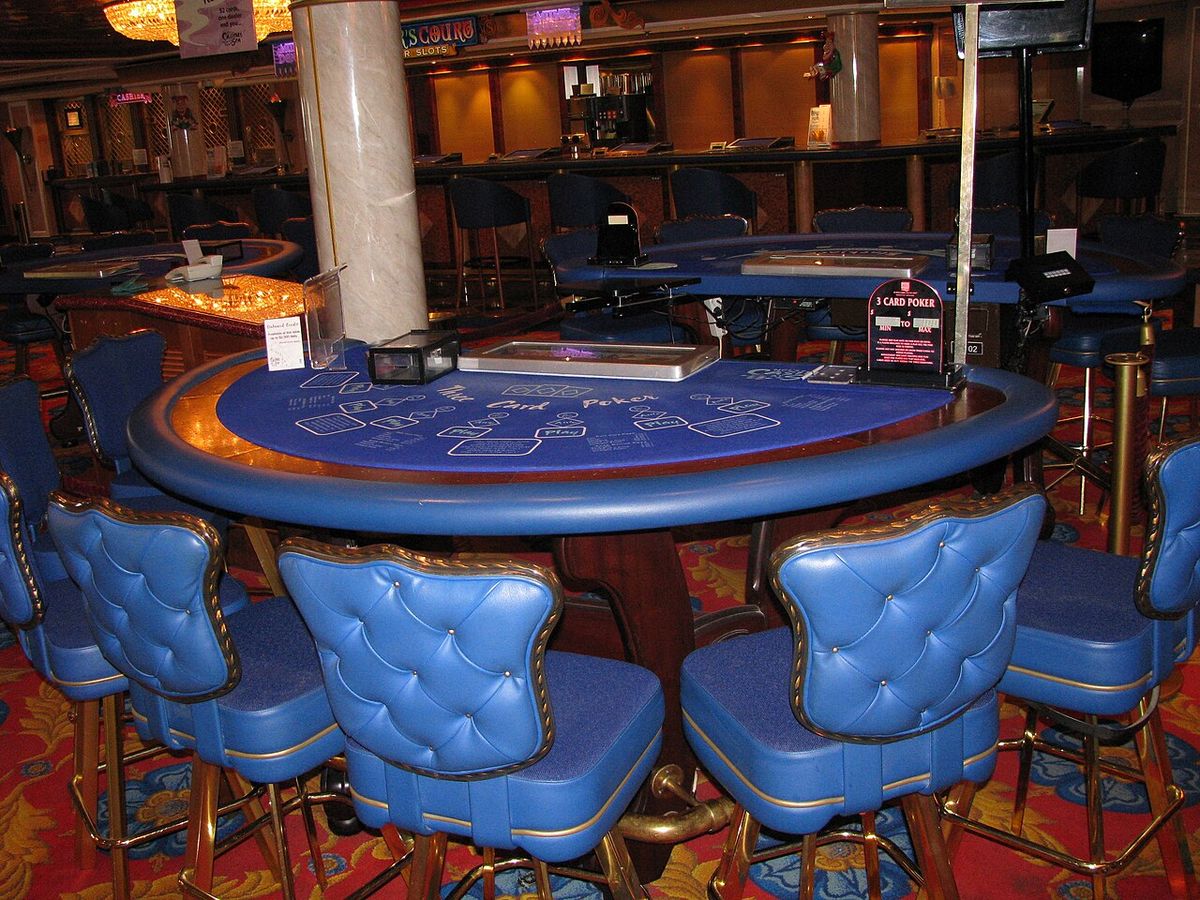
Several poker based casino games have been adapted for the live dealer format, each with distinct rules and betting structures. Casino Hold'em, also known as Live Casino Hold'em, was the first such game to be widely offered and remains a staple. In this variant, players make an Ante bet to receive two hole cards and see a three card flop, then decide whether to make a Call bet to see the turn and river and the dealer's cards. Ultimate Texas Hold'em is another popular adaptation where players can make larger raises after seeing the flop, with payouts based on beating the dealer's hand. Three Card Poker is a faster paced game where players and the dealer each receive three cards, with payouts for pairs, flushes, and straights. Caribbean Stud Poker, introduced by Evolution in 2015, involves players receiving five cards and deciding to fold or call after seeing one of the dealer's cards. Playtech later launched a similar game called Casino Stud Poker. These games often feature optional side bets, such as a progressive jackpot bet added to Caribbean Stud in January 2017, which can pay out up to 1000 to 1 for a royal flush. Other niche variants include Royal Poker, which offers options to swap or buy cards to improve a hand.
Technology and Player Experience
The core technology enabling live dealer poker is high definition video streaming from professionally equipped studios, often located in international gaming hubs. Providers like Playtech and Evolution Gaming operate these studios, employing trained dealers who follow strict procedural protocols. Players access the games through a web browser or mobile app on their device, where the live video feed is embedded alongside a digital betting interface. This interface allows players to place chips on virtual betting spots, choose actions like fold or call, and sometimes interact with the dealer via a chat function. Multiple camera angles are typically available, including overhead views of the table and close ups of the dealer and cards. The software ensures game integrity by displaying the shuffle and deal transparently, and results are determined by the physical cards, not a random number generator. This tangible aspect is a key selling point for players concerned about the fairness of purely digital games. The experience is designed for adults, with age verification required, and responsible gaming tools such as session timers and deposit limits are integrated into the platforms.
Availability and Legal Status in Canada
The availability of live dealer poker for Canadian players depends on provincial regulations and the licensing of online casino operators. Under the Criminal Code of Canada, provinces have the authority to regulate gambling activities within their borders. As of 2026, Ontario is the only province with a fully regulated online gambling market that includes live dealer games through its iGaming Ontario framework. Residents of Ontario can access live dealer poker exclusively through licensed operators like FanDuel Casino, which hosts PokerStars games, and partypoker Ontario, where players compete only against others within the province. In other provinces, such as British Columbia, Alberta, Manitoba, and Quebec, players can legally access live dealer games offered by offshore online casinos that are licensed in other jurisdictions, such as Malta or Gibraltar. These offshore sites are considered safe and legal for Canadian adults to use, provided they adhere to international security standards. The minimum age to play is 19 years old across most of Canada, though it is 18 in Alberta, Manitoba, and Quebec. Players should always verify that a site is licensed and uses reputable live dealer software providers before participating.
Comparison with Traditional Online Poker
Live dealer poker and traditional online poker cater to different player preferences and involve distinct mechanics. Traditional online poker, as offered by sites like GGPoker, PokerStars, and 888poker, is a game of skill where players compete against each other in cash games or tournaments. The software uses a random number generator to deal cards, and gameplay is significantly faster, allowing for hundreds of hands per hour. In contrast, live dealer poker is a player versus house casino game with a much slower pace, dictated by the physical dealing of cards and the streaming process. The social dynamic also differs, traditional online poker involves interaction with other players through chat functions, while live dealer poker focuses on the interaction with the dealer and the replication of a casino environment. Financially, traditional online poker involves winning chips from opponents, which can be withdrawn as profit, whereas live dealer poker offers fixed payouts for winning hands against the dealer, with the house retaining a statistical edge. Popular traditional online poker variants like Texas Hold'em and Omaha are rarely offered in a live dealer format against the house, as they are designed for multi player competition.
Leading Platforms and Game Providers
Canadian players can access live dealer poker games through several major online casino platforms and dedicated software providers. FanDuel Casino in Ontario provides access to live dealer tables as part of its integrated gaming offering. Other international casino sites that accept Canadian players, such as Jackpot City Casino, LeoVegas, and DraftKings Casino, also feature live dealer poker sections. The games themselves are supplied by a handful of specialized software companies that operate the streaming studios. Evolution Gaming is a market leader, having launched Caribbean Stud Poker in 2015 and continuously expanding its live poker portfolio. Playtech is another major provider, offering live Casino Hold'em and Casino Stud Poker. These providers ensure games are fair, professionally presented, and available around the clock. When choosing a platform, players should consider the variety of poker games offered, the quality of the video stream, the betting limits available, and the overall reputation of the casino site. It is also advisable to check for responsible gambling resources, as reputable sites provide tools like deposit limits and self exclusion options.
- FanDuel Casino (Ontario): Hosts PokerStars live dealer games under the provincial iGaming Ontario framework.
- partypoker Ontario: Offers live dealer poker exclusively to residents within the province.
- Jackpot City Casino: An international site with a mobile app and live dealer sections accessible in many Canadian provinces.
- LeoVegas: Provides live dealer poker games for real money in Canada, Latvia, and Malta.
- DraftKings Casino: Features live dealer poker tables for games like Ultimate Texas Hold'em and Three Card Poker.
- Evolution Gaming: Leading software provider that launched Caribbean Stud Poker in 2015.
- Playtech: Major provider offering live Casino Hold'em and Casino Stud Poker.
Key Features and Gameplay Mechanics
Live dealer poker games share several common features and gameplay mechanics that define the experience. The betting interface is standardized, typically displaying virtual chips and betting areas that correspond to the physical table. Players must place an initial Ante bet to receive cards, and then decide on subsequent actions like Fold, Call, or Raise based on the game variant. For example, in Casino Hold'em, a Call bet is typically twice the Ante. Dealer qualification rules are crucial, the dealer must have a minimum hand, such as a pair of fours in Caribbean Stud, for the main bet to be in action. If the dealer does not qualify, the Ante bet usually pays even money and the Call bet is pushed. Side bets are a prominent feature, offering higher payouts for specific card combinations. A common example is the '5+1 Bonus' bet in Caribbean Stud, which can pay up to 1000 to 1 for a royal flush. Payouts for the main game are fixed, for instance, a straight might pay 5 to 1 on the Ante bet in Casino Hold'em. The game proceeds at a deliberate pace, with the dealer waiting for all players to act via their interfaces before revealing cards or proceeding to the next street.
- Ante Bet: Mandatory initial bet to receive cards and see the initial community cards or dealer's upcard.
- Call/Raise Bet: Secondary bet made after seeing initial cards, often at a fixed multiple of the Ante.
- Fold: Decision to forfeit the hand and lose the Ante bet.
- Dealer Qualification: Rule requiring the dealer to have a minimum hand (e.g., Ace-King or a pair) for the main bet to be contested.
- Side Bet: Optional bet on specific card combinations, often with progressive jackpots.
- Payout Table: Fixed odds paid for winning hands, displayed on the game interface.
- Chat Function: Allows limited text communication with the dealer.
- Game History: Display of recent hand outcomes for player reference.
The combination of these mechanics creates a structured game where strategy involves knowing when to call or fold based on the odds of beating a qualifying dealer hand. This strategic decision is the core player action in the game. Unlike traditional poker, bluffing against other players is irrelevant in this format. The optimal strategy for this game is mathematically derived to minimize the house edge. Players are advised to follow this strategy for the best statistical outcome.
Payouts and House Edge
Understanding the payout structure is essential for players, as it defines potential returns and the inherent house edge in live dealer poker games. Payouts are fixed and displayed on the game interface, rewarding players for achieving specific poker hands against a qualifying dealer. The house edge varies between game variants and is influenced by the specific rules and pay tables used by the software provider. For example, the optional side bets often carry a higher house edge but offer the potential for large jackpots, such as the 1000 to 1 payout for a royal flush on the Caribbean Stud bonus bet. The following table illustrates typical payout examples for common winning hands in a game like Casino Hold'em, though exact figures can differ slightly between providers.
| Player Hand | Example Payout on Ante Bet | Notes |
|---|---|---|
| Royal Flush | 100 to 1 | Highest possible payout on main bet in many variants. |
| Straight Flush | 20 to 1 | Very rare hand with a significant multiplier. |
| Four of a Kind | 10 to 1 | Strong hand with a solid payout. |
| Full House | 3 to 1 | Common for strong hands after the river. |
| Flush | 2 to 1 | Standard payout for a flush. |
| Straight | 1 to 1 | Even money payout. |
| All Other Wins | 1 to 1 | Pays even money when player beats dealer. |
| Dealer Does Not Qualify | 1 to 1 (Ante only) | Call bet is returned as a push in this scenario. |
These payouts are for the main Ante and Call bets. Side bets, like the progressive jackpot in Caribbean Stud, have their own separate pay tables offering much larger but far less frequent prizes. The house edge is built into these pay tables, meaning the casino pays out slightly less than the true odds of achieving each hand over the long term. This mathematical advantage ensures the game's profitability for the operator while providing players with clear and consistent reward potential.
Considerations for Canadian Players
Canadian adults interested in live dealer poker should consider several factors related to legality, safety, and personal responsibility. First, confirming the regulatory status in one's province is essential, Ontario residents must use provincially licensed sites, while others may access internationally licensed operators. Players should verify that a site holds a reputable licence from a jurisdiction like the Malta Gaming Authority or the UK Gambling Commission, and that it uses secure encryption for financial transactions. It is also important to check that the live dealer games are provided by established studios like Evolution or Playtech to ensure game integrity. From a practical standpoint, a stable and fast internet connection is required for a smooth video stream without lag, which could affect the timing of bets. Players should familiarize themselves with the specific rules and payout tables of each poker variant, as these can vary slightly between providers. Managing one's bankroll is crucial, as these are games of chance with a built in house advantage. Reputable sites offer responsible gambling tools, and players are encouraged to use them. In Ontario, resources like ConnexOntario provide support for those with gambling concerns, offering free and confidential assistance to individuals and their families.
Questions about Live dealer poker
Is live dealer poker legal in Canada?
Yes, live dealer poker is legal for adults in Canada, but the regulatory framework varies by province. Ontario has a fully regulated market where such games are offered exclusively through operators licensed by iGaming Ontario. In other provinces, Canadian adults can legally access live dealer poker games offered by offshore online casinos that are licensed in reputable international jurisdictions. The minimum age is 19 in most provinces, and 18 in Alberta, Manitoba, and Quebec. Players should always ensure they are using a licensed and secure platform.
What is the difference between live dealer poker and online poker?
Live dealer poker is a casino game where you play against the house, facilitated by a real human dealer streamed from a studio. The games are variants like Casino Hold'em or Caribbean Stud, with fixed payouts. Traditional online poker, such as on GGPoker or PokerStars, involves playing against other people in skill based games like Texas Hold'em tournaments or cash games. The former uses physical cards and a live video feed, while the latter uses software and a random number generator to simulate the game at a much faster pace.
Which live dealer poker games are most commonly available?
The most commonly available live dealer poker games are Casino Hold'em, Ultimate Texas Hold'em, Three Card Poker, and Caribbean Stud Poker. Casino Hold'em was the first to be widely offered. Caribbean Stud Poker was introduced by Evolution in 2015 and later featured a progressive jackpot side bet from January 2017. These games are provided by major software studios like Evolution Gaming and Playtech, and they feature standard casino rules where the player competes against the dealer's hand for fixed odds payouts.
Can I play live dealer poker on my mobile device in Canada?
Yes, most online casino platforms that offer live dealer poker games are optimized for mobile play through web browsers or dedicated apps. The live video streams and betting interfaces are designed to work on iOS and Android smartphones and tablets. A stable internet connection is required for a good experience. Platforms like partypoker Ontario and FanDuel Casino provide mobile access, allowing players to join live tables from anywhere within a province where online gambling is permitted.
Do I need special software to play live dealer poker?
No special software is typically required beyond a modern web browser or a casino's mobile app. The live dealer games are streamed directly through the casino website or app interface. The video player and betting controls are integrated into the page. Some platforms may recommend using certain browsers for optimal performance, but generally, no separate downloads are needed for the live streaming component, unlike some downloadable poker clients for traditional online poker.
Are live dealer poker games fair and secure?
Live dealer poker games offered by licensed casinos and reputable providers are considered fair and secure. The use of physical cards dealt by trained dealers in a monitored studio provides transparency that the game is not manipulated by software. Leading providers like Evolution and Playtech are subject to independent audits. Licensed casinos use encryption to protect player data and financial transactions. Players should always choose sites regulated by recognized authorities and look for games from established live dealer studios to ensure integrity.
Sources and further reading
- Best Online Poker Sites Canada November 2026 - LiveScore (livescore.com)
- Live Poker, Play Live Online Casino Games, Livedealer.org (livedealer.org)
- Online Poker Canada | Best Sites for Canadian Players 2026 (pokernews.com)
- Play Online Poker | PokerStars™, Trusted for 20+ Years (pokerstars.com)
- GGPoker: Play Online Poker at The World's Biggest Poker Room (ggpoker.com)
- Online Poker Canada | Best Sites for Canadian Players 2026 (pokernews.com)
Checked by the Nosy Mag desk. Last updated 2026-11-18.