Blackjack variants
Blackjack variants are distinct rule sets applied to the classic card game of twenty-one, each altering the mathematical edge between the player and the casino. For Canadian players, understanding these variations is crucial for informed play, whether at land-based casinos in provinces like Ontario or through regulated online platforms. The specific rules of a variant, such as deck count, dealer behaviour on soft 17, and surrender availability, directly impact the house edge and a player's expected return. This guide examines the blackjack variants most commonly available to Canadians, detailing their rule differences and strategic implications.
Understanding Rule Variations and House Edge
The fundamental appeal of blackjack lies in its blend of chance and strategy, but the precise odds are dictated by a set of codified rules. Variations in these rules create different blackjack variants, each with a calculable house edge. Key rule changes include the number of decks in play, whether the dealer must hit or stand on a soft 17, the availability of surrender options, and restrictions on doubling down or splitting pairs. For instance, a rule requiring the dealer to hit on soft 17 increases the house edge compared to a rule where the dealer stands. Similarly, allowing players to double down on any first two cards or after splitting a pair improves the player's expected return.
The payout for a natural blackjack is another critical variable. The traditional 3:2 payout is a standard feature of classic blackjack, but some modern variants, particularly those using fewer decks or offering other player-friendly rules, may reduce this to a 6:5 payout. This single change significantly increases the house edge. According to analysis from resources like The Wizard of Odds, playing on a 6:5 blackjack table instead of a 3:2 table can more than double the house advantage. Canadian players should always verify the posted rules of any blackjack table, whether physical or digital, as these details are more consequential to long-term results than aesthetic elements like table graphics or branding.
Other impactful rules involve splitting and resplitting pairs. The ability to resplit aces, though rare, offers a substantial benefit to the player. More commonly, variants differ on how many times a player may split other pairs, often allowing up to three splits to create four separate hands. Late surrender, where a player can forfeit half their bet after the dealer checks for blackjack, is a valuable option that reduces the house edge. Early surrender, which is rarer and more favourable, allows forfeit before the dealer checks for blackjack. These granular rule differences collectively define each blackjack variant and must be understood for optimal strategy adaptation.
Classic and Regional Variants
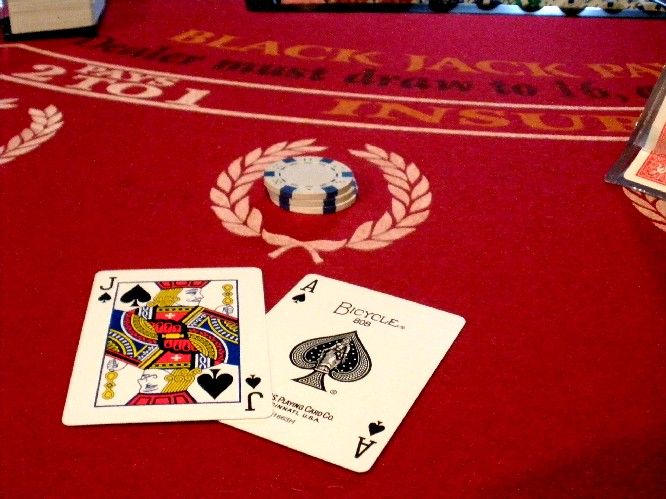
Classic blackjack, often labelled as Vegas Strip or Atlantic City Blackjack in online lobbies, serves as the entry point for most Canadian players. This variant typically uses multiple decks, often six or eight, and features common rules like the dealer standing on soft 17, a 3:2 payout for blackjack, and the option for players to double down on any first two cards. Atlantic City Blackjack, originating from New Jersey's gaming scene, specifically includes the late surrender option and allows players to split hands up to three times. These rules create a relatively low house edge, making classic variants a forgiving and strategic choice for newcomers and experienced players alike.
European Blackjack is a prevalent variant in Canadian online casinos and some land-based venues, particularly noted in Alberta. Its most defining rule is the 'no-hole-card' procedure, where the dealer receives only one initial card face up. The dealer's second card is not dealt until after all players have completed their hands. This rule eliminates the dealer peeking for blackjack and affects strategy, particularly around insurance and surrender decisions. European Blackjack is usually played with two decks, which slightly improves odds compared to games with more decks. Early surrender is more commonly available in this variant, providing a strategic tool against a dealer's strong upcard.
Pontoon is another variant found in some Canadian offerings, sharing similarities with Spanish 21 but using standard decks. In Pontoon, both of the dealer's cards are typically dealt face down, adding an element of mystery. A player's two-card 21 is called a 'pontoon' and usually pays 2:1. The 'five-card trick', a hand of five cards totaling 21 or less, often beats all other hands except a pontoon. These unique rules require a dedicated strategy chart distinct from classic blackjack.
- Vegas Strip Blackjack: Dealer stands on soft 17, 3:2 blackjack payout.
- Atlantic City Blackjack: Features late surrender, split up to three times.
- European Blackjack: Two decks, dealer no-hole-card procedure.
- Pontoon: Both dealer cards face down, 'pontoon' pays 2:1.
Innovative and Side Bet Variants
Blackjack Switch is an innovative variant where players must place two equal bets and are dealt two separate hands. The defining feature is the option to switch the second card dealt between the two hands after seeing the initial deal, unless the dealer has a blackjack. This ability to improve hand potential comes with balancing rule adjustments. A player blackjack in Switch typically pays only even money (1:1) instead of 3:2. Another key adjustment is that if the dealer finishes with a total of 22, it results in a push against all player hands except a natural blackjack. This rule dramatically alters the risk profile. The game is usually played with six to eight decks, and optimal strategy must account for the switching option.
Double Exposure Blackjack, also known as Zweikartenspiel, turns the tables by dealing both of the dealer's initial cards face up. This massive information advantage for the player is balanced by several rule penalties to maintain the house edge. Typically, the dealer wins all ties except for a tied blackjack, player blackjacks may pay less than 3:2, and players cannot surrender. Doubling down is often restricted to specific totals like 9, 10, or 11. These compensatory rules mean that while the player has perfect information about the dealer's starting hand, the adjusted payouts and tie rules create a complex and high-variance game that requires a completely unique basic strategy.
Many modern variants incorporate proprietary side bets to increase action. Common examples include bets on whether the player's first two cards will form a pair, whether the dealer will bust, or whether the player's hand will beat the dealer's by a certain margin. Progressive blackjack variants link a small side bet contribution to a growing jackpot, which can be won by receiving specific card combinations like four aces of the same suit. These side bets universally carry a significantly higher house edge than the main blackjack game itself. While they offer the potential for large payouts, they are generally considered poor value from a strict mathematical standpoint and are separate from the core strategy of the base game.
Live Dealer and Digital Formats
Live dealer blackjack has become immensely popular among Canadian players, replicating the social atmosphere of a physical table through high-definition video streams. Studios from providers like Evolution Gaming broadcast real dealers shuffling and dealing physical cards from multi-deck shoes in real time. Players make decisions via a digital interface, with the action translated by optical card recognition or manual input. This format appeals to those who trust the transparency of physical cards over software-generated outcomes. The rules of live dealer games can vary, but they often mirror classic variants like Infinite Blackjack, which allows an unlimited number of players to participate on the same hand, or Lightning Blackjack, which incorporates random multipliers for enhanced payouts.
Random Number Generator (RNG) blackjack is the standard digital format found at online casinos. These games use certified software algorithms to simulate the random dealing of cards from a virtual shoe. RNG games offer greater variety in terms of rule sets and themes, and they allow for much faster gameplay as there is no human dealer delay. Players can often find single-deck, multi-hand, and exotic variants more readily in RNG form. The house edge for RNG games is mathematically predetermined and audited by independent testing agencies, providing assurance of game fairness, though the specific edge depends entirely on the programmed rule set of the chosen variant.
The performance of live dealer games is contingent on stable internet connectivity. Canadian players using major telecom providers like Rogers, Bell, or Telus in urban centres like Toronto, Montreal, or Vancouver generally experience smooth streams. Players in rural areas or on mobile networks may encounter occasional buffering, which can affect the pace of play. For this reason, many live dealer tables offer features like 'bet behind' or 'unlimited seating' to ensure players are not locked out if a table is full. Choosing a table with a betting limit and rule set that matches one's bankroll and strategy preference is as important in the live format as in any other.
| Format | Key Features | Common Variants |
|---|---|---|
| Live Dealer | Real human dealer, physical cards, real-time stream | Infinite Blackjack, Lightning Blackjack, Classic |
| RNG (Software) | Algorithmic card dealing, faster pace, wide variety | Single-Deck, Multi-Hand, Blackjack Switch, Pontoon |
| Mobile-Optimized | Responsive design or dedicated apps for smartphones/tablets | All major variants available in mobile-friendly formats |
Strategic Adaptation for Different Variants
Basic strategy in blackjack is a set of statistically optimal decisions for every possible player hand against the dealer's upcard. However, this strategy must be adjusted for the specific rules of the variant being played. For example, in European Blackjack with the no-hole-card rule, the strategy for when to take insurance or surrender changes because the dealer does not check for blackjack until after players act. Resources like The Wizard of Odds provide distinct strategy charts for variants like European Blackjack, Double-Deck games, and games where the dealer hits on soft 17. Canadian players should seek out and study the chart corresponding to their chosen game's exact rules. The availability of surrender is a powerful strategic tool. Early surrender, sometimes offered in European variants, should be exercised in specific situations against a dealer's strong upcard. Late surrender, more common in Atlantic City rules, also provides value but is used in a slightly narrower set of circumstances.
Doubling and splitting rules also demand strategic tweaks. In variants that allow doubling after splitting, it is often correct to split more pairs, such as 2s, 3s, 6s, 7s, and 9s, against a wider range of dealer upcards. When resplitting aces is not allowed, the strategy for splitting aces becomes more conservative. In Blackjack Switch, the optimal strategy revolves around the switching decision, which requires evaluating the potential of two hands simultaneously to see if swapping the second cards creates a stronger overall position. This complex decision-making process benefits from dedicated practice, which many online casinos offer through free-play or demo modes of the game.
- Use variant-specific basic strategy charts from authoritative sources.
- Adjust splitting strategy based on rules for resplitting and doubling after split.
- In Blackjack Switch, analyze both hands holistically before deciding to switch cards.
- Avoid insurance and most side bets, as they carry a high house edge.
- Practice new variants in free-play mode before wagering real money.
Selecting a Variant in Canada
For Canadian players, the choice of blackjack variant involves considering personal preference, bankroll management, and strategic comfort. Beginners are best served starting with classic variants like Vegas Strip or Atlantic City Blackjack, which have widespread strategy resources and a moderate house edge. Players should always verify that the game pays 3:2 for blackjack and that the dealer stands on soft 17, as these are indicators of a player-favourable rule set. Checking for the late surrender option provides an additional strategic advantage. These games are abundantly available at both online casinos and land-based establishments across provinces like Ontario, British Columbia, and Alberta.
Players seeking a different challenge might gravitate towards European Blackjack for its two-deck play and unique no-hole-card dynamic, or to Blackjack Switch for its interactive and strategic card-switching mechanic. It is crucial to understand the rule trade-offs in these games, such as the even-money blackjack payout in Switch or the push on dealer 22. Enthusiasts interested in side bets or progressive jackpots should recognize that these are separate wagers with higher volatility and a greater built-in house advantage, designed for occasional entertainment rather than core strategy. These side bets often feature prominently during promotional periods like long weekends.
Regardless of the variant chosen, responsible play is paramount. Blackjack is a game of chance with a built-in mathematical advantage for the casino. Players should only gamble with funds they can afford to lose, set strict time and loss limits, and never chase losses. Understanding the rules and odds of any blackjack variant is the first step toward informed and measured participation in this classic casino game.
Questions about Blackjack variants
What is the main difference between European and American blackjack?
The most significant difference is the dealer's card procedure. In European Blackjack, the dealer receives only one card face up initially, with the second card dealt after players complete their hands. This 'no-hole-card' rule changes strategic decisions around insurance and surrender. American blackjack typically deals the dealer one face-up card and one face-down card, peeking for blackjack if the upcard is an ace or ten-value card. European Blackjack also commonly uses two decks, while American variants often use six or eight.
How does Blackjack Switch work?
In Blackjack Switch, a player must place two equal initial bets to receive two separate hands. After the initial deal of two cards to each hand, the player has the option to switch the second card dealt between the two hands, aiming to create stronger totals. This advantage is balanced by rule adjustments: a player blackjack typically pays only even money (1:1), and if the dealer finishes with a total of 22, it results in a push against all player hands except a natural blackjack. The game is played with six to eight decks.
What blackjack variant has the lowest house edge?
The house edge depends on the specific combination of rules. Generally, classic variants with player-friendly rules like dealer stands on soft 17, 3:2 blackjack payout, late surrender allowed, and the ability to double after splitting offer some of the lowest edges, often around 0.5% or less with perfect basic strategy. Single-deck games can have a very low edge but often compensate with 6:5 blackjack payouts, which increases the edge. It is essential to evaluate all rules together, as a single unfavourable rule can significantly raise the house edge.
Is live dealer blackjack different from RNG blackjack?
Yes, they are distinct formats. Live dealer blackjack streams a real human dealer from a studio, using physical cards and shoes. Players interact via a digital interface, and the outcome is determined by the physical deal. RNG (Random Number Generator) blackjack is entirely software-based, using certified algorithms to simulate card dealing. Live dealer offers a social, realistic experience but is subject to stream quality, while RNG offers faster play and a wider variety of rule sets and game themes. The underlying blackjack variant rules apply equally to both formats.
Should I take the insurance bet in blackjack?
Most experts and strategy guides recommend avoiding the insurance bet. Insurance is a side bet offered when the dealer's upcard is an ace, wagering that the dealer has a ten-value card in the hole for a blackjack. It pays 2:1 but is statistically a poor bet for players not counting cards. The house edge on insurance is high, typically over 7% in a multi-deck game. Basic strategy players should consistently decline insurance, as it increases long-term expected loss.
Where can I play European Blackjack online in Canada?
Many licensed online casinos available to Canadian players offer European Blackjack in their game libraries. It is commonly found in both RNG (software-based) and live dealer formats. Players should look for casinos licensed by provincial authorities like the Alcohol and Gaming Commission of Ontario (AGCO) or reputable international bodies. Before playing, it is advisable to review the specific game rules on the casino site, as implementations can vary slightly between software providers in terms of deck count and surrender availability.
Sources and further reading
- Guide to Blackjack Variant Rules and Your Odds | BetMGM CA (betmgm.ca)
- Blackjack Variants: From Classic to Exotic for Canadian Players (bwo-researches.com)
- Blackjack casino canada | rules, Yogavita Little Italy (yogavitacle.com)
- Blackjack Rule Variations (wizardofodds.com)
- Guide to Blackjack Variant Rules and Your Odds | BetMGM CA (betmgm.ca)
- Variations of blackjack to play whilst in Canada (canadatakeout.com)
Checked by the Nosy Mag desk. Last updated 2026-11-20.