U.S. military prepares for potential space combat around the moon, sparking global concerns
Top U.S. military officials announce plans to extend warfare capabilities to cislunar space amid growing tensions with China and Russia, while raising questions about international space treaties.
The United States military has signaled a dramatic expansion of its strategic vision, with senior defense officials now preparing for potential combat operations extending beyond Earth's orbit to the region surrounding the moon. This development comes as part of a broader shift in military priorities that challenges decades of international agreements maintaining space as a peaceful domain.
Military leaders outline new space defense strategy
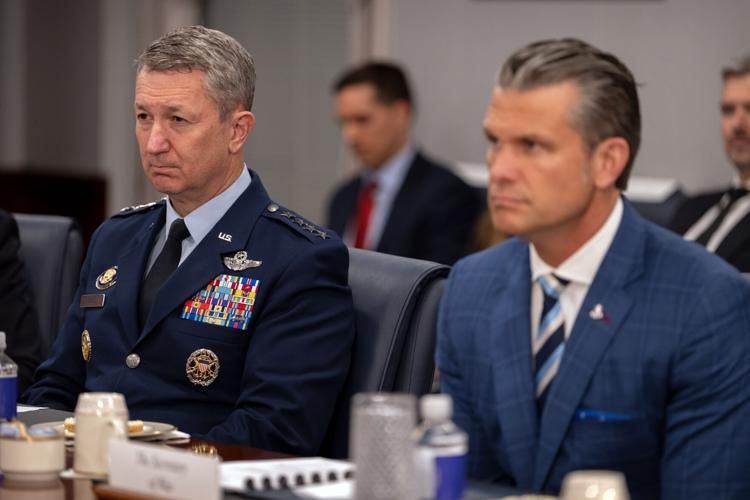
Gen. Dan Caine, chairman of the Joint Chiefs of Staff, articulated this strategic shift during his address at the Air, Space and Cyber Conference near Washington. He emphasized the need for American forces to adapt to future conflicts that could span "from the seabed to cislunar space" - referring to the vast area between high Earth orbit and lunar orbit. This statement builds upon recent revelations from Air Force Secretary Troy Meink, who confirmed the U.S. has already deployed "on-orbit space control weapons," though specific details about these systems remain classified.
Lt. Gen. Gregory Gagnon of the Space Force provided additional context, explaining that as humanity advances deeper into space, the military branch created in 2019 must evolve to protect national interests. The Space Force plans to double its personnel to approximately 25,000 within five years, with significant growth focused on combat operations through Combat Forces Command. Gagnon framed these developments as necessary deterrents, stating "We have capabilities in the military because we are preparing to defend the nation."
Growing tensions in the space domain
The U.S. military's announcements come amid increasing geopolitical tensions regarding space activities. Gagnon specifically highlighted China's establishment of military space troops in 2024 as evidence of growing threats, using the country's official designation, the People's Republic of China. This reflects broader concerns within the U.S. defense establishment about potential adversaries extending terrestrial conflicts into the space domain.
China responded to these developments through foreign ministry spokesperson Guo Jiakun, who reiterated the country's official stance opposing space militarization. "China always upholds the peaceful use of outer space, maintains outer space security and opposes the weaponization, militarization and an arms race in outer space," Guo stated. The spokesperson urged the United States to reconsider its military expansion in space, framing it as a destabilizing development.
Legal and diplomatic implications
These military preparations raise significant questions about compliance with the 1967 Outer Space Treaty, which remains the foundational framework governing space activities. Both the United States and China are signatories to this agreement, which explicitly designates celestial bodies like the moon for "exclusive peaceful purposes" and prohibits the placement of nuclear weapons in space. The treaty also establishes liability principles for damage caused by space objects.
Recent diplomatic efforts to strengthen space governance have faced challenges. In 2024, Russia vetoed a U.S.-Japanese resolution at the United Nations that sought to reinforce prohibitions against space-based weapons of mass destruction. A subsequent Russian proposal for a comprehensive ban on all space weapons similarly failed to gain sufficient support. This diplomatic gridlock leaves critical questions unanswered about how existing treaties apply to emerging military technologies in space.
Technological and strategic considerations
Extending military operations to cislunar space presents unprecedented technical challenges. The moon orbits approximately 384,400 kilometers from Earth, requiring entirely new capabilities for surveillance, communication, and potential weapons deployment. While several nations have demonstrated anti-satellite capabilities from Earth-based systems, operating in the lunar environment would demand technological advancements beyond current military space assets.
Military analysts observe that these announcements serve multiple purposes. Beyond addressing genuine security concerns, they represent strategic signaling to both allies and potential adversaries about U.S. capabilities and intentions in space. However, the lack of transparency regarding specific space weapons systems has raised concerns about verification and the potential for misinterpretation that could lead to escalation.
Historical context of space militarization
The current developments must be understood within the broader history of space militarization. While the Outer Space Treaty established important principles in 1967, military applications of space technology have existed since the dawn of the space age. Navigation, communication, and reconnaissance satellites have long served dual civilian and military purposes. However, the explicit deployment of weapons in space and preparations for combat operations around the moon represent a qualitative shift in how nations approach space security.
This shift occurs as more actors gain access to space capabilities, creating a more complex security environment. Commercial space activities continue to grow while national space programs expand beyond traditional space powers. These developments make the question of space governance increasingly urgent as the domain becomes more crowded and contested.
Global response and future outlook
The international community faces difficult questions about how to respond to these developments. Some nations may feel compelled to develop their own space military capabilities, potentially triggering an arms race. Others may push for renewed diplomatic efforts to strengthen space governance frameworks. The coming years will likely see intense debate about how to balance national security interests with the preservation of space as a global commons.
The situation presents a fundamental paradox for space security. While military leaders frame these developments as necessary for deterrence, the very act of preparing for space conflict may make such conflicts more likely by creating new points of tension and potential miscalculation. Without clear rules or verification mechanisms for space weapons, the risk of unintended escalation increases. How the international community addresses these challenges will shape whether space remains a domain for peaceful cooperation or becomes an extension of terrestrial rivalries.
Why this matters
The U.S. military's public acknowledgment of preparations for space combat around the moon marks a watershed moment in space security. These developments challenge long-standing norms against space weaponization and raise profound questions about the future of space exploration and utilization. While framed as defensive measures, they risk undermining decades of international space cooperation and could trigger costly arms competition beyond Earth's atmosphere.
The strategic implications extend beyond military considerations. Civilian space exploration, scientific research, and commercial activities could all be affected by increasing militarization. The decisions made in coming years about space governance will have lasting consequences for how humanity utilizes and explores the final frontier. As nations handle these complex issues, they must balance legitimate security concerns with the preservation of space as a shared resource for all humankind.