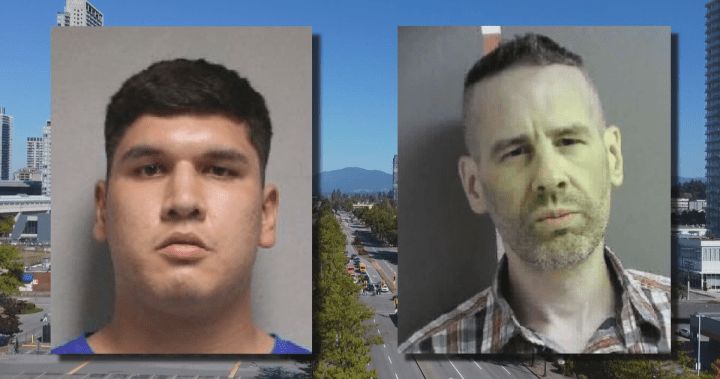
Surrey mayor voices concerns after two high-risk offenders released into community
Surrey's mayor says two high-risk offenders released days apart are 'not welcome' as police emphasize supervision measures amid public safety concerns.
Surrey Mayor Brenda Locke has voiced strong objections after two designated high-risk offenders were released into the community within a 48-hour period, stating they are not welcome in the city. The Surrey Police Service issued public notifications about both individuals, reigniting debates about public safety and offender reintegration in British Columbia's second-largest municipality, which has seen multiple high-risk placements this year alone.
Offenders with violent histories
Jonathon Anders Muzychka, 49, is a designated high-risk offender with a documented history of violent offenses against people and property crimes. According to police records, he will be living in Surrey under strict court-imposed conditions including electronic surveillance. Historical reports from the Winnipeg Free Press reveal Muzychka was convicted of killing a man during a 2008 robbery. Following his arrest, he managed to escape from jail, demonstrating early patterns of non-compliance with authorities. In 2021, Victoria police issued a warrant for his arrest after he failed to return to his halfway house, further illustrating his history of evading supervision.
Skylar Wayne Pelletier, 26, is the second high-risk offender now residing in Surrey. His criminal record includes violent and sexual offenses against women. Currently under a five-year federal supervision order for convictions including sexual assault, assault, and break and enter, Pelletier told Global News he had been living at a Surrey facility for several days. When questioned about whether community members should be concerned about his presence, Pelletier responded
"I don't know, it's what they think, right? It's up to them. It's not my decision. I don't make decisions for them, right?"His statement underscores the complex relationship between offender rehabilitation and public perception of safety.
Municipal leadership responds
Mayor Locke expressed significant concerns about the consecutive placements, telling reporters
"It feels to me like there's an extraordinary number coming to Surrey, so that is a concern". Her comments reflect growing frustration in a city that has received multiple high-risk offender placements in recent months. This marks at least the fourth such case since February, when 58-year-old high-risk sex offender Marinus Willemse was placed in Surrey, only to breach his release conditions within weeks. In April, another high-risk offender, Nathanial Odorjan, was placed in the community but disappeared less than a month later and remains at large.
Police monitoring protocols
Staff Sgt. Lindsey Houghton of the Surrey Police Service acknowledged the unusual timing of two high-risk offenders being released in such close succession but emphasized this was coincidental rather than indicative of a pattern. He detailed the department's comprehensive monitoring approach:
"We meet them and advise them that our officers are checking in on them". The supervision protocol includes electronic monitoring, coordination with parole officers, and mandatory check-ins for offenders required to report to police. Houghton explained that officers work closely with bail and parole supervisors to verify compliance with all court-ordered conditions.
Rehabilitation perspectives
The New Vision Society, which operates reintegration programs for offenders, defended the supervised release approach. Jackson Leathem from the organization explained their philosophy:
"We're trying to give these individuals a chance to rehabilitate, to learn new life skills, to change their thinking, their behaviour, be able to grapple with emotions better". Leathem emphasized the importance of providing opportunities for rehabilitation, stating
"It's important to give these people a fighting chance at rebuilding a new life for themselves". However, recent cases of offenders breaching conditions have tested public confidence in such programs.
Previous cases raise concerns
The placement of Marinus Willemse in February serves as a cautionary example. The 58-year-old, with multiple convictions including child abduction and sexual assault with a weapon, violated his release conditions within a month, prompting his transfer to Winnipeg where another police warning was issued. Similarly concerning was the case of Nathanial Odorjan, a 42-year-old with a history of offenses against women and girls, who disappeared after being placed in Surrey in April and remains wanted by authorities.
Systemic challenges
These cases highlight ongoing tensions within Canada's correctional system between rehabilitation goals and public safety concerns. While technological advancements like electronic monitoring and structured supervision orders represent improvements in offender management, they remain vulnerable to non-compliance. The concentration of high-risk placements in certain municipalities like Surrey raises questions about the equitable distribution of social service responsibilities across jurisdictions.
Moving forward
The situation presents complex challenges for law enforcement, justice officials, and community leaders. Pelletier's comments about preferring to stay in the community rather than return to jail reflect the personal stakes for offenders undergoing rehabilitation. Meanwhile, Mayor Locke's strong stance illustrates the pressures on municipal leaders to balance constitutional requirements with constituent safety concerns. The effectiveness of Surrey's current monitoring systems will be tested in the coming months as authorities work to prevent further breaches while supporting rehabilitation efforts.