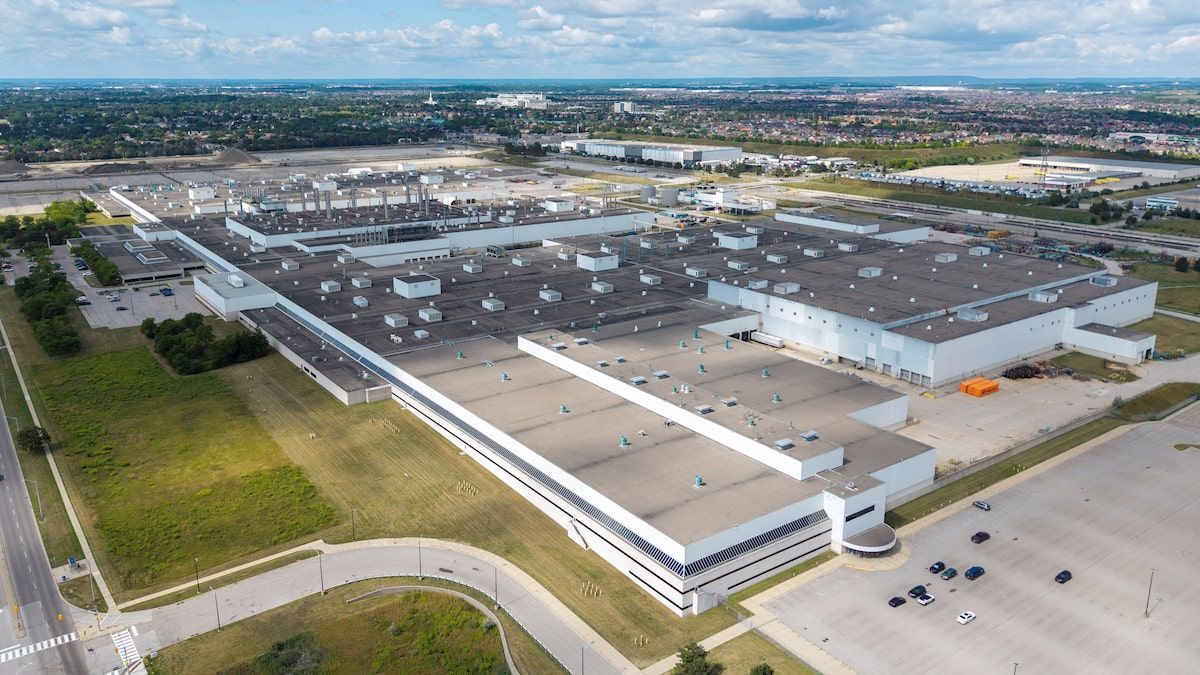
Unifor demands federal intervention as Stellantis moves to sell idled Brampton plant to defence firm
Canada's largest private sector union urges Ottawa to block the potential sale of Stellantis' shuttered auto plant to a defence contractor, warning of catastrophic job losses and long-term damage to the country's automotive manufacturing sector.
Canada's auto workers union is mounting an urgent campaign to stop the sale of a shuttered Stellantis assembly plant in Brampton, Ontario, warning the federal government that allowing the facility to be converted from automotive to military vehicle production would permanently alter Canada's industrial landscape. The proposed deal with defence manufacturer Roshel has sparked a high-stakes confrontation between labour, government and corporate interests that could redefine the future of manufacturing in the region.
Union sounds alarm over plant sale
Unifor national president Lana Payne has escalated pressure on the federal government with a strongly worded letter to Industry Minister Mélanie Joly demanding immediate intervention to prevent Stellantis from selling the idled Brampton facility to Roshel. The union leader framed the proposed deal as an existential threat to Canada's auto sector, warning it would eliminate more than 2,000 well-paying auto manufacturing jobs while creating ripple effects throughout Ontario's industrial heartland.
Payne's letter outlines how the loss of passenger vehicle production capacity would leave Canada's automotive supply chain permanently diminished. She emphasized that defence manufacturing cannot replace the economic value of auto production, noting that thousands of additional jobs at parts suppliers and service providers depend on the plant remaining in automotive use. The union estimates the total employment impact could extend to more than 10,000 jobs when accounting for indirect effects across the regional economy.
"There is no comparable economic replacement for this work. Canada's economy will be worse-off as a result," Payne wrote, calling the potential sale "a disaster-scenario for the Canadian auto industry and the broader industrial economy."
Plant's troubled history
The Brampton Assembly Plant's uncertain future stems from a series of corporate decisions that began when Stellantis halted production in 2023. Originally slated for conversion to build next-generation Jeep models, the facility saw retooling begin in early 2024 before being abruptly paused in early 2025. The situation worsened when Stellantis announced it would move Jeep Compass manufacturing to the United States - a decision Unifor maintains violates its current collective agreement.
Stellantis Canada CEO Trevor Longley defended the proposed sale to Roshel as the most viable option after evaluating multiple scenarios for the idled facility. The company maintains the defence manufacturer represents the best opportunity to restore sustainable operations while preserving the site's manufacturing capabilities. However, union officials counter that the shift to non-automotive production represents a fundamental betrayal of commitments made to workers and governments.
Government pressure mounts
Payne's letter raises pointed questions about whether the memorandum of understanding with Roshel violates previous commitments Stellantis made to the Canadian government when relocating Jeep production. She demanded Joly clarify whether Ottawa was consulted about the potential sale and what conditions were attached to previous government support for the automaker.
Industry Minister Joly adopted a cautious public stance, telling reporters the government would prioritize protecting Canadian workers while continuing negotiations with Stellantis. She described ongoing talks as "difficult and bumpy" but stopped short of committing to block the sale outright. Joly emphasized the government's preference for maintaining automotive production at the site through a new model commitment from Stellantis.
"We want a new model from Stellantis at the Stellantis plant, and we'll put maximum pressure to make that happen," Joly said, adding the government would seek financial repayment if commitments aren't met.
Defence firm's job promises
Roshel CEO Roman Shimonov outlined ambitious plans to transform the facility into a dual-purpose manufacturing hub that would maintain some automotive production while establishing a Canadian Centre of Excellence for Defence Manufacturing. The company's proposal includes pledges to prioritize hiring laid-off Unifor workers through federal procurement programs and create over 2,000 jobs by 2026.
The defence manufacturer's plans include developing new domestic capabilities in ballistic steel production and positioning Canada as a player in the growing global armoured vehicle market. However, labour experts note that defence manufacturing typically requires different skill sets and offers different wage structures than auto assembly work, raising questions about whether displaced workers could smoothly transition to the new roles.
Collective bargaining at impasse
The plant's uncertain future has become the central obstacle in contract negotiations between Unifor and Stellantis, which began earlier this month. The union declared an impasse last Friday after failing to reach a tentative agreement by its internal deadline, with the current contract set to expire on September 20.
Payne argues the proposed sale has poisoned negotiations by demonstrating Stellantis' willingness to abandon its Canadian manufacturing footprint. Ontario Premier Doug Ford aligned himself with federal calls for maintaining auto production at the site, though he noted the province hasn't provided direct funding for the Brampton facility. The political dimension adds complexity to an already fraught labour dispute with national economic implications.
Broader implications for Canadian industry
The potential conversion of a major auto plant to defence manufacturing represents a critical test for Canada's industrial policy at a time of global supply chain realignment. While Roshel's proposal offers some job retention, it would mark the permanent loss of passenger vehicle production capacity just as governments invest heavily in electric vehicle transition.
The standoff highlights tensions between short-term job preservation and long-term economic transformation, with the automotive sector's decline in some regions potentially being offset by growth in defence and other advanced manufacturing sectors. However, labour advocates warn that accepting such transitions without resistance could accelerate the erosion of Canada's industrial base and bargaining power with multinational corporations.
Accountability questions loom
The controversy raises difficult questions about how governments should enforce accountability from automakers that have received substantial public subsidies in recent years. With Stellantis having benefited from various forms of government support, critics argue the company has a responsibility to maintain automotive production capacity in Canada rather than pursuing what Unifor calls an "abandonment" of its commitments.
The outcome could establish important precedents for how Canada manages industrial transitions in an era of geopolitical uncertainty and economic nationalism. As other manufacturers reconsider their global footprints, the Brampton plant's fate may influence whether Canada can maintain its position in high-value manufacturing sectors or becomes increasingly reliant on niche markets like defence production.