Canada's Recognition of Palestine Hinges on Reforms, Here's Where They Stand
A year after Canada recognized Palestine under reform conditions, progress remains contested amid ongoing conflict and economic blockade.
In September 2025, Prime Minister Mark Carney announced Canada's official recognition of the State of Palestine, marking a pivotal shift in Canadian foreign policy. The decision represented a carefully calibrated approach that sought to balance support for Palestinian self-determination with demands for institutional reforms. Carney framed the move as contingent upon receiving credible commitments from Palestinian President Mahmoud Abbas regarding governance changes, telling reporters the recognition was 'predicated on the Palestinian Authority's commitment to much-needed reform.'
The Reform Framework
Carney's announcement established three core reform requirements that would shape Canada's engagement with the nascent Palestinian state. First, the Palestinian Authority (PA) committed to fundamental governance restructuring, explicitly excluding Hamas from any future governmental role. Second, Abbas pledged to hold general elections by 2026, which would mark the first Palestinian national vote in twenty years. Third, the PA vowed to pursue demilitarization, including ending controversial payments to families of Palestinians imprisoned for attacks against Israelis.
The specific terms of these commitments were outlined in a letter from Abbas to Carney, though the Canadian Privy Council has declined to release the document, citing standard diplomatic protocols regarding sensitive correspondence. Palestinian Ambassador Feda Abdelhady later characterized these reforms as part of a broader democratic renewal, telling The Canadian Press in August 2026 that the changes were designed to 'boost democracy for Palestinians.'
Implementation Challenges
The Palestinian Authority's July 2026 financial ministry report claimed substantial progress, asserting completion of 30 out of 33 promised legal and social-system reforms over an eighteen-month period. These included measures to strengthen judicial independence and modernize investment regulations. However, the report simultaneously acknowledged severe limitations caused by Israeli economic policies, particularly the withholding of tax revenues Israel collects on the PA's behalf for Palestinian imports and consumption.
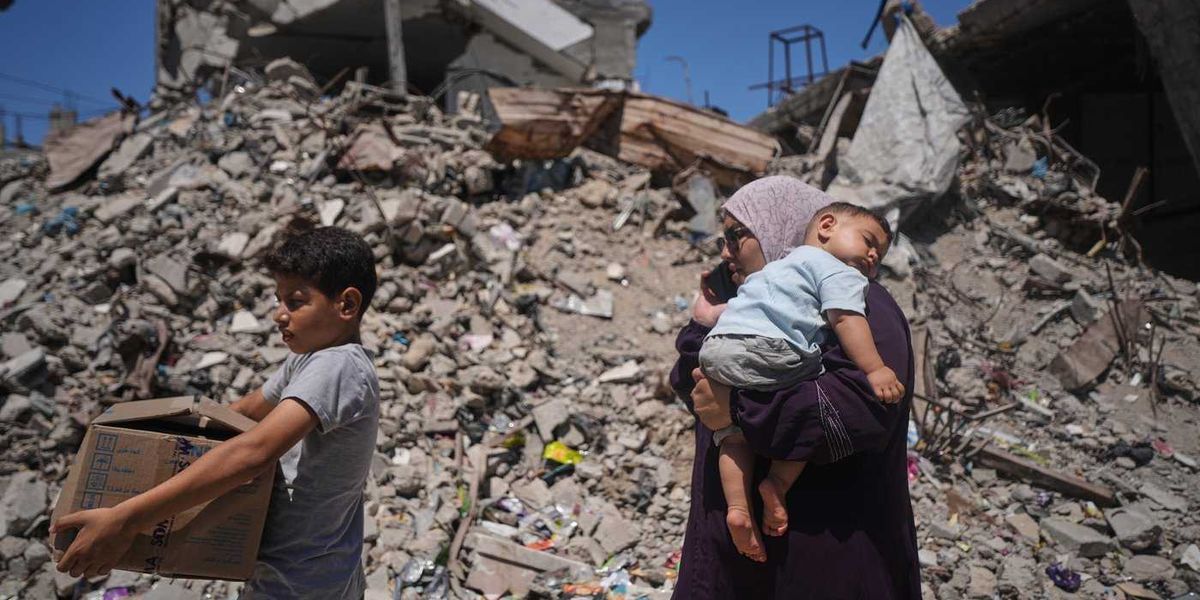
Ambassador Abdelhady articulated the fundamental paradox facing reform efforts: 'We could do the most incredible job of implementing reforms from textbooks and curriculum and everything else, but the occupation remains.' She emphasized how daily survival struggles in Gaza, where basic infrastructure has collapsed, make comprehensive governance changes extraordinarily difficult. Since October 2023, Israeli restrictions have included canceling thousands of Palestinian work permits, blocking export routes, and capping financial transfers, measures that have crippled the PA's operating capacity.
The Election Dilemma
The electoral component of Canada's recognition conditions has proven particularly fraught. The PA has not held national elections since 2006, when Hamas's victory in legislative voting precipitated a violent schism that left Fatah controlling parts of the West Bank while Hamas governed Gaza. Carney's announcement specified that any 2026 elections must exclude Hamas participation, a demand complicated by the group's continued influence, especially in Gaza.
In fall 2025, the PA leadership established two prerequisites for elections: a one-year post-ceasefire cooling period following Gaza's current conflict, and Israeli guarantees against arresting candidates in East Jerusalem and the West Bank. The single electoral test case, a municipal vote in Deir al-Balah during April 2026, provided little reassurance to skeptics like Israeli Ambassador Iddo Moed, who dismissed PA efforts as showing 'regression' rather than progress.
Demilitarization Controversies
The demilitarization requirement has generated intense debate on all sides. A key flashpoint involves the PA's longstanding practice of providing stipends to families of Palestinians imprisoned or killed by Israeli authorities, including those convicted of violent attacks. Israel brands this system as 'Pay for Slay,' arguing it incentivizes terrorism. In February 2025, Abbas pledged to overhaul the program by transitioning to a needs-based welfare system called Tamkeen.
While the PA cites an upcoming independent audit showing substantial compliance with this reform, Israel maintains the old system persists. The change has also sparked domestic backlash in the West Bank, where some view it as abandoning those traditionally honored as resistance figures. The PA contends full demilitarization requires reciprocal security guarantees, possibly involving international peacekeepers, given ongoing Israeli military operations in Palestinian territories.
Education Reforms and Reciprocal Criticisms
Canadian officials emphasized curriculum reform as another precondition for recognition, seeking elimination of alleged antisemitic content from PA educational materials. An analysis by Israeli research group Impact-SE of September 2025 textbooks identified problematic passages, including one framing the 1972 Munich Olympics attack as legitimate resistance. Their report also noted the absence of Holocaust education in PA curricula.
The PA responds by highlighting parallel issues in Israeli education. A 2012 Hebrew University study found Israeli textbooks frequently excluded positive depictions of Arabs, while maps used by both sides often omit the other's existence entirely. This reciprocal criticism underscores how education systems reflect and reinforce each society's competing historical narratives.
International and Domestic Reactions
Israel's government has been Canada's most vocal critic regarding the recognition decision. Ambassador Moed dismissed the PA as fundamentally unserious about peaceful coexistence, arguing that Palestinians 'don't live up to their commitments' despite extensive international support. He characterized Canada's move as premature given the lack of election timelines and contested demilitarization progress.
Academic perspectives offer more nuanced assessments. York University law professor Heidi Matthews interprets Canada's approach as attempting to substantively support Palestinian state capacity, distinguishing it from decades of humanitarian-focused policies. She notes how Carney's announcement included concrete funding for institutional strengthening, a shift aligned with the International Court of Justice's July 2024 advisory opinion urging concrete steps toward Palestinian self-determination.
Conversely, University of Ottawa researcher Jeremy Wildeman critiques the reform conditions as fundamentally misplaced, arguing they ignore Israel's overwhelming power over Palestinian life. He contends Canada should prioritize stabilizing the humanitarian situation before demanding governance changes from an authority systematically weakened by occupation policies.
The Broader Implications
Canada's conditional recognition represents a novel middle path in international engagement with the Palestinian question. By tying statehood to specific reforms, Ottawa seeks to influence the character of a future Palestine while avoiding the pitfalls of unconditional recognition that might empower rejectionist factions. However, this approach risks appearing to legitimize Israeli restrictions when Palestinian governance failures are cited as justification for maintaining the status quo.
The fundamental tension lies in the chicken-and-egg dilemma of statehood versus reform: functional state institutions typically require sovereign control over territory and resources, yet such sovereignty remains contingent on demonstrating institutional capacity. With the PA's reform efforts hamstrung by Israeli economic measures and the continuing humanitarian emergency in Gaza, Canada's recognition policy faces its most serious test, whether it can help break this vicious cycle or will become mired in the conflict's intractable realities.