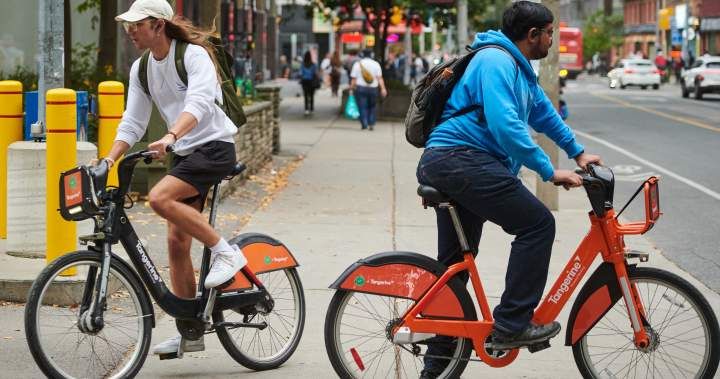
Ontario moves forward with Toronto bike lane removals after court victory
The Ford government is restarting plans to remove bike lanes from major Toronto streets after winning a legal appeal, with work set to begin soon in Etobicoke.
The Ontario government is moving ahead with its controversial plan to remove bicycle lanes from several major Toronto streets after winning a legal battle that had temporarily stalled the project. Work could begin as early as this fall on sections of Bloor Street, Yonge Street, and University Avenue, with the province now seeking contractors to carry out the removals.
The court decision that cleared the way
In mid-August 2024, the Ontario Court of Appeal overturned a lower court ruling that had blocked the bike lane removals. The earlier decision had found that eliminating cycling infrastructure violated the Canadian Charter of Rights and Freedoms. The appeal court's reversal allows Premier Doug Ford's government to proceed with plans first announced in late 2024 to restore road space for vehicles at the expense of dedicated bike lanes.
The affected areas include portions of three major downtown arteries: Bloor Street between Sherbourne Street and Shaw Street, Yonge Street between Bloor Street and Davisville Avenue, and University Avenue between Front Street West and Bloor Street West. The changes will also extend north along the roadway that becomes Queen's Park Crescent and then Avenue Road.
Immediate work planned for Bloor West
Transportation Minister Prabmeet Sarkaria announced Tuesday that the province has issued a request for proposals from companies interested in redesigning the streets. The government indicated work would start immediately on a short section of Bloor Street West in Etobicoke where minimal design changes are needed.
"We're keeping our promise," Sarkaria said in a statement. "Under Premier Ford's leadership, we're getting people and goods moving again and giving commuters back more of their time." The government's stated goal is to improve traffic flow by converting bike lane space to additional vehicle lanes where possible.
Mixed approaches to lane changes
The request for proposals outlines two potential approaches contractors could take. In some locations, bike lanes may be completely removed to create more space for cars. In others, the lanes may be reconfigured or narrowed to accommodate both cyclists and additional vehicle capacity. The exact changes will vary by location based on existing road widths and infrastructure.
The province has not released a detailed timeline for all removals beyond the initial Bloor West section, but indicated the Etobicoke work would begin in the near future. The broader project will require coordination with the City of Toronto, which originally installed many of the bike lanes as part of its cycling network expansion.
Background of the cycling infrastructure battle
The bike lanes in question were installed by Toronto municipal governments between 2016 and 2023 as part of efforts to promote cycling and improve road safety. Their removal represents a fulfillment of campaign promises by Premier Ford, who has consistently prioritized car traffic flow in his transportation policies.
This marks the second major confrontation between the province and Toronto over cycling infrastructure. In 2021, the city removed bike lanes on University Avenue that had been installed during the pandemic, following pressure from the provincial government. The current plan affects a much more extensive network of bike routes along major commuter corridors.
Reactions and next steps
Cycling advocates have condemned the move as a step backward for road safety and environmental sustainability. The court challenge that temporarily blocked the removals was brought by a coalition of cycling groups and environmental organizations. With the legal avenue now exhausted, opponents have few remaining options to stop the project.
The provincial government maintains that the changes will benefit the majority of commuters who rely on cars, particularly as Toronto continues to experience significant traffic congestion. The request for proposals process typically takes several weeks, meaning contractors could be selected and work could begin before the end of the construction season.
Why this matters
The bike lane removals represent more than just a change in road configuration - they symbolize an ongoing philosophical divide in urban transportation policy. The Ford government's insistence on prioritizing vehicle traffic reflects a particular vision of urban mobility that favors personal automobiles over alternative transportation methods.
This decision will have lasting implications for Toronto's streetscape and could influence future infrastructure investments. The removal of established bike lanes may discourage cycling as a commuting option, potentially increasing vehicle traffic in the long run. It also sets a precedent for provincial intervention in municipal transportation planning, raising questions about local decision-making autonomy.
The practical effects will extend beyond commuters to businesses along the affected routes and the broader community. The changes come as many cities worldwide are moving in the opposite direction - expanding cycling infrastructure to reduce emissions and improve public health. Toronto now finds itself going against that global trend at the provincial government's direction.