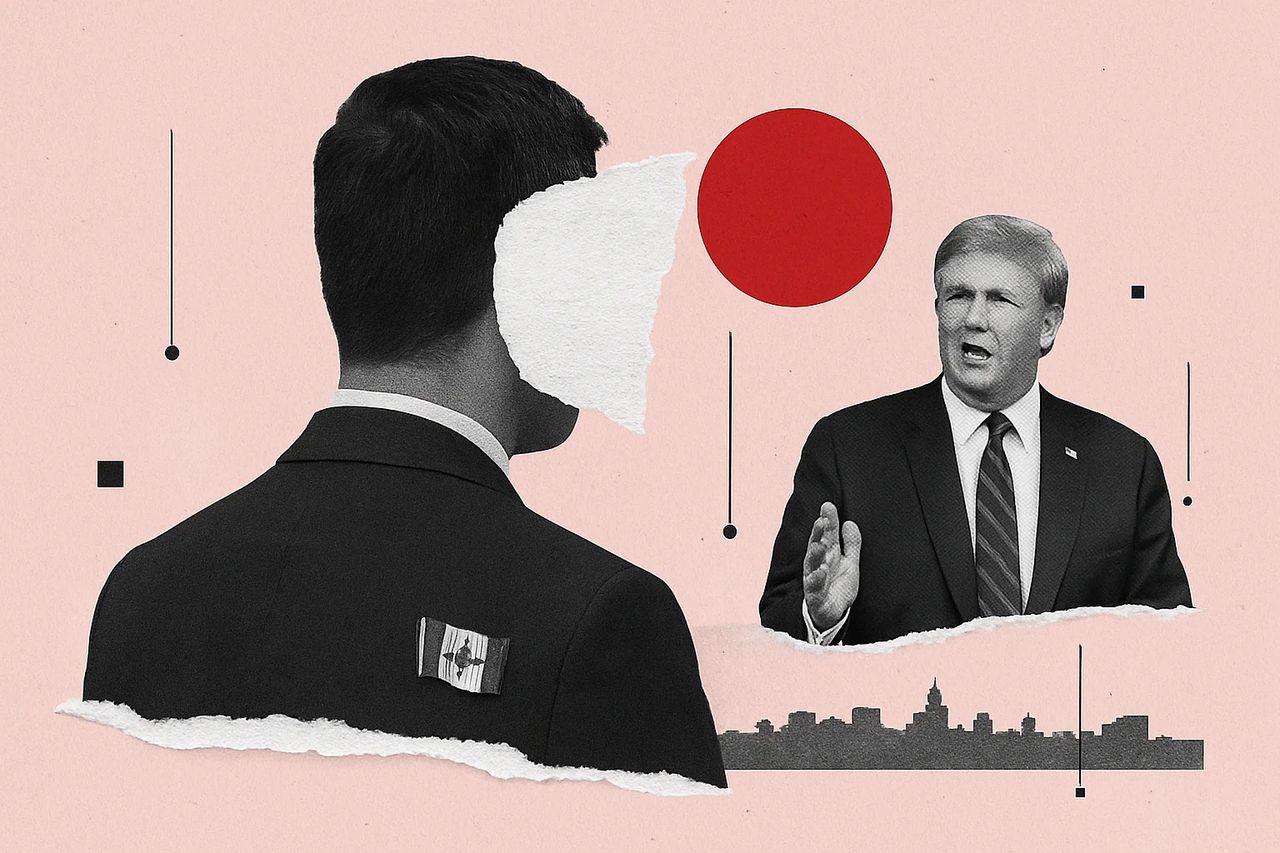
Canada directs diplomats to avoid U.S. midterm candidates after interference claims
The directive comes as the Trump administration accuses Canadian politicians of trying to influence the upcoming American elections.
Explainer
Canadian diplomats in the United States have been directed not to meet with or attend events involving candidates in the upcoming U.S. midterm elections. The directive came in a memo sent midday Tuesday by Glen Linder, assistant deputy minister for the Americas at Global Affairs Canada. The memo instructs diplomats to avoid being photographed with candidates or having their names appear in public communications if they are in the same space. The instructions are described as a routine, risk-averse approach during an election period in a host country. The guidance was issued as officials from the Trump administration have accused Canadian politicians of potential interference in the American elections. Prime Minister Mark Carney and Industry Minister Mélanie Joly have both disputed the suggestion of Canadian meddling. The U.S. Embassy in Ottawa released a list of quotes from Canadian politicians this week, which it said indicated plans to influence American politics.
What does the diplomatic memo say?
The memo, obtained by The Canadian Press, provides specific instructions to members of the foreign service in the United States. It states that if diplomats find themselves “in the same physical space” as a candidate or elected official, they should avoid being photographed or having their name or position appear in any public communications materials. Meetings with other elected officials who are not candidates can proceed if necessary, but they must be discussed in advance with senior officials. Global Affairs Canada said the instructions are similar to those in place during election periods in Canada, when public servants are expected to avoid contact with elected officials except in exceptional circumstances. The memo says, “Especially in view of heightened sensitivity, we need to take our obligation of non-partisanship extremely seriously and take a very risk-averse approach.” A source told CBC News that the government also advised diplomatic staff to be careful with their social media activity and not to pick sides.
READ MORE: Trump administration accused of hypocrisy over Canadian election interference claims
READ MORE: U.S. embassy accuses Canadian politicians of plans to influence American politics
What accusations has the Trump administration made?
The U.S. Embassy in Canada released a statement on Wednesday listing several instances it alleged could amount to “potential” interference. The statement referenced Canada’s consul general in Boston, Bernadette Jordan, appearing at a Canada-U.S. trade event with Democratic candidates last week. It also quoted comments from Industry Minister Mélanie Joly about Canada’s counter-tariff strategy, including targeting “politically sensitive states.” Joly is quoted five times in the embassy’s list.
U.S. Ambassador to Canada Pete Hoekstra warned earlier this month that American officials are “closely watching” Canadian politicians for signs of election interference. He told Canadian politicians to keep their “nose out” of American politics in the weeks before the midterms. Hoekstra said if any actions by Canadians end up amounting to election interference, the United States will respond. The embassy’s statement concluded by saying, “Americans decide America’s elections.”
How have Canadian officials responded?
Prime Minister Mark Carney denied the allegations during a news conference on Parliament Hill on Wednesday. “The United States initiated a series of trade actions. We've responded to those to protect Canadian jobs, to protect Canadian companies and develop our economy,” Carney said. “All of our actions are in the interest of Canadian workers, Canadian families and the future of this economy.” He was flanked by Industry Minister Mélanie Joly as he announced a $9 billion aid package in response to U.S. tariffs.
Joly pushed back on the assertions last week and again on Thursday. “That is diplomacy, that's what we do,” she told reporters in Toronto, referring to her meetings with both Republicans and Democrats during recent trips. She said she has been to the U.S. in recent months to attract investments and expects to have good news about investments by different American companies to Canada. She also said Canada would never engage in election interference and would “never accept that also being done to us in Canada.”
Has the trade war become an election issue in the U.S.?
The ongoing trade dispute between Canada and the United States has emerged as a pressure point in some American races ahead of the Nov. 3 midterms. The Republican candidate for Michigan's open Senate seat, Mike Rogers, released a campaign ad this month criticizing tariffs. “Here in Michigan we know that Canada is not our enemy. We need to end this tariff war now,” Rogers says in the ad. Republican Senator Susan Collins of Maine has also tried to distance herself from the Trump administration’s tariffs on Canada.
Janice Charette, Canada’s chief trade negotiator to the United States, commented on the political climate during a discussion at the Toronto Global Forum on Thursday. She said Donald Trump will continue to be president after the midterm elections and his administration will still drive trade policy. “The role of Congress and the role of the Senate may or may not change through all of that,” Charette said. “We will remain absolutely focused on what Canada’s objectives are here and pursue them whenever the moment arrives. Canada will continue to work to try to put our best foot forward and make the best case for Canada.”
With files from The Canadian Press, CityNews and CBC News