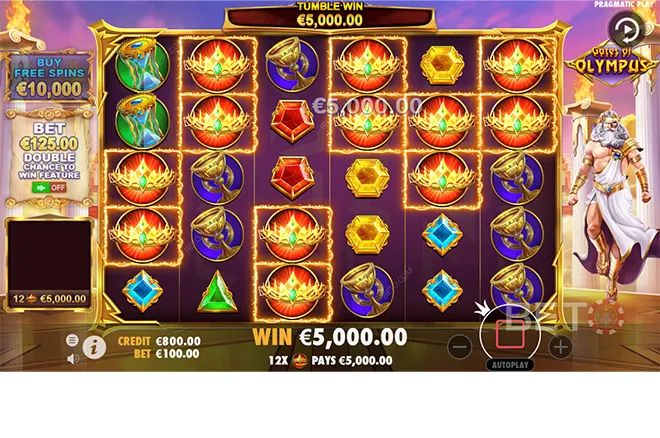
Cascading reels slots
Cascading reels, also known as tumbling or avalanche reels, is a popular slot machine mechanic where winning symbols disappear and are replaced by new ones falling into the gaps. This can create a chain reaction of consecutive wins from a single paid spin, often accompanied by a growing win multiplier. The feature, pioneered by NetEnt's 2011 release Gonzo's Quest, has become a staple in modern online slots, offering Canadian players a dynamic and visually engaging alternative to traditional spinning reels. Its widespread adoption by major developers like Pragmatic Play, Play'n GO, and IGT means it is featured in hundreds of games available on regulated Canadian gaming sites.
Mechanics of the Cascade
The core function of cascading reels is straightforward but creates a distinct gameplay loop. When a winning combination forms on the grid, those specific symbols vanish from the screen. The symbols positioned above these now-empty spaces then fall downwards due to gravity, filling the gaps. Fresh symbols subsequently drop from the top of the grid to occupy the newly vacated positions at the top. This entire process is instantaneous and automatic, triggered by the initial win. If this new arrangement of symbols forms another winning combination, the sequence repeats itself. A single paid spin can therefore yield several wins in quick succession, with the chain reaction continuing until no new winning combinations appear. The random number generator determines the symbols for each new cascade independently, meaning a long chain does not influence the odds of the next cascade resulting in a win.
The typical sequence of events in a cascading reels slot follows a consistent pattern. First, the player places a bet and initiates a spin, which populates the grid with an initial set of symbols. Second, the game evaluates these symbols for winning combinations according to its payline, ways, or cluster pay system. Third, if a win is detected, the symbols involved in that win are removed from the grid. Fourth, the symbols from the rows above these gaps descend to fill the empty positions. Fifth, new symbols are generated by the random number generator and drop into the now-empty top rows. Sixth, the game re-evaluates the new grid for wins, and if another win is formed, the cycle repeats from the third step. This loop continues until a grid configuration produces no winning combinations, at which point the feature ends and the total win for the sequence is calculated.
Naming Conventions and Developer Variations
While the fundamental mechanic is consistent, different software providers use proprietary names for their implementations. NetEnt trademarked the term Avalanche for its version, first used in Gonzo's Quest. Pragmatic Play commonly refers to its mechanic as the Tumble feature, describing it in game documentation as a new game played at no additional cost to the player. Microgaming uses the term Rolling Reels for its implementation. Other studios use terms like tumbling reels or simply cascading reels. The specific name does not inherently dictate the rules, which can vary between games even from the same provider. For instance, the rules governing multiplier progression, symbol removal, or interaction with other features like wilds are defined on a per-game basis. Players should consult the game's information or help page to understand the exact mechanics of the cascading feature in any given slot.
Major software developers have integrated cascading reels into their game design philosophies, often combining them with other signature features. NetEnt's Avalanche feature is frequently paired with expanding wilds and free spin bonuses, as seen in later titles beyond Gonzo's Quest. Pragmatic Play's Tumble feature often works in tandem with random multiplier symbols and a pay anywhere system, as seen in Gates of Olympus and Sweet Bonanza. Play'n GO uses cascades as a core element in its cluster-pay games like Reactoonz 2, where cascades fill a special meter leading to bonus features. This developer-specific approach means that while the visual effect of symbols falling is similar, the strategic depth and win potential can differ greatly from one studio's games to another.
The Role of Progressive Multipliers
A frequent and impactful enhancement to the basic cascade is a progressive win multiplier. This multiplier increases with each consecutive cascade in a sequence, applying to the win value of that specific cascade. NetEnt's Gonzo's Quest provides a clear template, where the multiplier starts at 1x and increases with each Avalanche, capping at 5x in the base game. During its Free Falls bonus round, the multiplier can climb to a maximum of 15x. The rules governing the multiplier are defined by three key parameters: the increment ladder, the maximum cap, and the reset condition. The reset may occur after every spin or only at the conclusion of a bonus feature. This multiplier mechanic significantly shifts the distribution of a game's return to player by allocating a larger portion of the expected return to less frequent, longer chain reactions.
Progressive multipliers in cascading slots follow specific design patterns that players can learn to recognize. The multiplier ladder dictates the value increase for each successive cascade, such as moving from 1x to 2x, then 3x, then 5x. The reset rule determines when the multiplier returns to its starting value, which can happen after every spin, after a non-winning cascade, or only after a bonus round ends. Some games, like Gates of Olympus, feature random multipliers that appear on symbols and can combine, offering values from 2x up to 500x on a single cascade. Understanding these parameters is crucial for gauging a game's volatility and potential payout structure.
Impact on Game Volatility and Win Distribution
Cascading reels with progressive multipliers directly influence a slot's volatility, which describes the frequency and size of payouts. The feature does not alter the game's overall theoretical RTP, which is fixed by its mathematical model. Instead, it changes how that return is distributed across playing sessions. By applying a multiplier ladder, game designers can lower the base value of individual wins while offering the potential for much larger payouts during extended cascade sequences. This creates a wider spread between common, smaller wins and rare, larger wins, characteristic of medium to high volatility slots. Consequently, a larger percentage of the game's total return is contributed by the less frequent chains of three or more cascades, making the gameplay experience more variable and punctuated by moments of higher anticipation. Model A pays every win at a flat 1x multiplier. In Model B, the third win and beyond in a cascade chain would contribute approximately 29.1% of the game's total return, compared to only 12.2% in Model A. This demonstrates how the multiplier mechanic funnels more of the expected payout into the longer, less common sequences. For players, this means sessions on games like Gates of Olympus or Reactoonz 2 may feature longer dry spells punctuated by more significant wins when a long cascade with high multipliers occurs, which is the defining characteristic of high-volatility gameplay.
Integration with Other Slot Mechanics
Cascading reels are rarely a standalone feature and are commonly combined with other popular slot mechanics to create complex gameplay. They work effectively with cluster pays systems, where wins are formed by groups of touching symbols rather than paylines, as the disappearance of a winning cluster creates space for new symbols to potentially form adjacent groups. The mechanic is also frequently paired with the Megaways engine, where the number of symbols per reel changes every spin, creating dynamic win ways. Some games feature multiplier symbols that become sticky on the grid during a cascade sequence, accumulating until the chain ends. Scatter symbols used to trigger bonus rounds can also land during cascades. The specific combination of features alters the game's math and potential, making it essential for players to review the rules for each title.
Notable games that combine cascading reels with other mechanics include a wide range of popular titles available to Canadian players. NetEnt's Gonzo's Quest pairs the original Avalanche feature with a progressive multiplier on a standard 5x3 grid with 20 paylines. Pragmatic Play's Gates of Olympus uses the Tumble feature on a 6x5 grid with a pay anywhere system and random multipliers up to 500x. Sweet Bonanza, also from Pragmatic Play, employs the Tumble Feature alongside multiplier bombs and a free spins bonus round. Play'n GO's Reactoonz 2 is a cluster pays slot where cascades fill a Quantum Leap meter leading to various bonus features. IGT's Da Vinci Diamonds was an early adopter of the cascading reels mechanic, paired with a free spins bonus game. Ancient Fortunes: Poseidon Megaways combines Rolling Reels with the changing-reel Megaways system and a free spins multiplier.
- Gonzo's Quest (NetEnt): The original Avalanche feature with a progressive multiplier, using a standard 5x3 grid with paylines.
- Gates of Olympus (Pragmatic Play): Uses the Tumble feature on a 6x5 grid with a pay anywhere system and random multipliers up to 500x.
- Sweet Bonanza (Pragmatic Play): Employs the Tumble Feature alongside multiplier bombs and a free spins bonus round.
- Reactoonz 2 (Play'n GO): A cluster pays slot where cascades fill a Quantum Leap meter leading to various bonus features.
- Da Vinci Diamonds (IGT): An early adopter of the cascading reels mechanic, paired with a free spins bonus game.
- Ancient Fortunes: Poseidon Megaways: Combines Rolling Reels with the changing-reel Megaways system and a free spins multiplier.
- Big Bass Bonanza (Reel Kingdom/Pragmatic Play): Features cascading mechanics with fisherman symbols that collect cash values during free spins.
- Starburst (NetEnt): While not a pure cascading game, its expanding wilds and respins create a similar chain-reaction effect.
History and Pioneering Titles
The cascading reels mechanic has a clear origin point in the modern online slot industry. Swedish developer NetEnt, founded in 1996, released Gonzo's Quest in 2011. This game was not only the studio's first platinum slot but also the first to introduce the Avalanche feature to a wide audience. Its innovation was the way winning symbols would explode and disappear, allowing new symbols to fall into place, a visual effect reminiscent of the Tetris video game. The game's success pushed the Avalanche feature into the mainstream and started a trend that other developers quickly followed. The mechanic's ability to create multiple wins from one spin and its engaging visual feedback made it an instant hit with players seeking more dynamic gameplay than traditional spinning reels could offer.
Following the success of Gonzo's Quest, other major developers began incorporating their own versions of the mechanic. IGT's Da Vinci Diamonds was another early title to use cascading reels, featuring a Renaissance art theme. Pragmatic Play later refined the concept with its Tumble feature, integrating it into highly volatile games like Gates of Olympus and Sweet Bonanza, which became some of the most played slots worldwide. Play'n GO developed the mechanic further for the cluster-pay genre with the Reactoonz series. The evolution of the feature demonstrates how a single innovative idea can be adapted and expanded upon across the industry. Today, cascading reels are a standard option in the feature toolbox of nearly every major slot developer, and players can filter game lobbies at many online casinos specifically to find slots with this mechanic.
Availability for Canadian Players
Cascading reel slots are widely available to players in Canada through provincially regulated online lottery sites and casinos. These platforms offer games from the major developers who utilize the mechanic, ensuring a secure and legal gaming environment. Players must be of legal age, which is 19 years or older in most provinces, and 18 or older in Alberta, Manitoba, and Quebec. The feature itself is a game mechanic and does not guarantee wins, as outcomes are determined by random number generators. Players should engage with these games as a form of entertainment, setting limits for time and money spent. The dynamic nature of cascading reels, providing multiple outcomes from a single spin, contributes to their enduring popularity in the Canadian online gaming market.
Canadian players can access cascading slots on several types of regulated platforms. Privately operated but provincially regulated casinos, such as those authorized by iGaming Ontario, provide extensive libraries featuring thousands of slots, including many with cascading reels. These sites often allow players to filter games by feature, making it easy to find tumbling reel slots. For example, a casino lobby might have a filter for cascading wins or avalanche slots. It is important for players to verify that a site is licensed by their provincial regulator to ensure game fairness, secure transactions, and access to responsible gambling tools.
Comparison with Traditional Spinning Reels
The introduction of cascading reels represented a significant evolution from traditional slot mechanics. In a standard slot, the reels spin and stop, presenting a single static outcome. Wins are evaluated based on that single layout, and the next outcome requires another spin and another wager. Cascading reels transform this static moment into a dynamic sequence. The initial spin outcome is not final. It is merely the first step in a potential chain of events. This creates a more active and engaging experience, as players watch symbols fall and new wins form without placing additional bets. The visual feedback of disappearing symbols and the anticipation of another cascade add layers of excitement that differ from the discrete, spin-by-spin rhythm of traditional games.
The differences between the two mechanics extend beyond player engagement to affect game mathematics and strategy. Traditional slots with fixed paylines offer predictable ways to win, with volatility controlled by symbol distribution and bonus frequency. Cascading reel slots introduce the variable of consecutive wins, which, when combined with multipliers, can exponentially increase a single spin's payout. This changes the risk-reward profile, as a player's entire session bankroll can be influenced more heavily by a few long cascade sequences. Cascading mechanics can work with various win systems, including paylines, ways to win, and cluster pays, whereas traditional slots are predominantly payline-based. For players, this means cascading slots often feel faster-paced and can deliver more dramatic swings in fortune, which appeals to those seeking high-volatility entertainment.
| Aspect | Traditional Spinning Reels | Cascading Reels |
|---|---|---|
| Win Evaluation | Single outcome per spin | Potential for multiple consecutive wins per spin |
| Symbol Movement | Reels stop spinning | Winning symbols vanish, new symbols fall |
| Player Engagement | Passive between spins | Active observation during cascade sequence |
| Bet Requirement | New bet for each new outcome | Single bet covers entire cascade sequence |
| Common Features | Often standalone with base game and bonus | Frequently paired with multipliers, cluster pays, or Megaways |
| Volatility Profile | Not published | Not published |
| Visual Presentation | Static reel stop | Animated symbol removal and replacement |
Key Considerations for Players
When choosing to play a cascading reels slot, several factors beyond the mechanic itself should influence a player's decision. The game's return to player percentage indicates the theoretical payout over an extended period, with higher percentages generally being more favourable. Volatility reveals how the game pays out. High-volatility cascading slots will have longer dry spells but the potential for larger wins during cascade chains. The maximum win cap dictates the highest possible payout from a single spin, which can range from a few hundred to several thousand times the bet. It is also important to understand the specific rules of the cascading feature, such as how the multiplier progresses and when it resets. Players should review the game's paytable and information screen thoroughly before wagering real money to understand how these elements work together.
Responsible gambling practices are essential when playing any slot machine, including those with cascading reels. Players should only gamble with funds they can afford to lose and set strict limits on deposits, losses, and session time before starting. The engaging nature of cascade sequences, where one spin can trigger a long chain of wins, can be particularly immersive, making it easy to lose track of time and money. It is advisable to take regular breaks and to use the responsible gambling tools provided by licensed casinos, such as deposit limits and self-exclusion options. In Canada, provincial help lines and resources are available for those who may need support. Remember that while cascading reels add excitement and potential, they do not change the fundamental randomness of slot outcomes, and there is no strategy to guarantee a win.
- Check the RTP: Look for the game's theoretical return to player percentage, which is often listed in the game info.
- Understand Volatility: Determine if the game is low, medium, or high volatility to match your bankroll and patience for payout frequency.
- Review Multiplier Rules: Learn how the progressive multiplier works, including its starting value, increment ladder, cap, and reset conditions.
- Know the Max Win: Identify the maximum possible payout, often expressed as a multiplier of your bet.
- Study the Paytable: Examine symbol values, bonus feature triggers, and any special symbols like wilds or scatters.
- Set a Budget: Decide on a loss limit and a session time limit before you start playing.
- Use Demo Mode: Many casinos offer free-play versions to test the game's mechanics without risking real money.
- Play on Licensed Sites: Ensure you are playing on a website regulated by a Canadian provincial authority for fairness and security.
Questions about Cascading reels slots
What are cascading reels in slot machines?
Cascading reels are a slot mechanic where symbols involved in a winning combination disappear from the grid. New symbols then fall from above to fill the empty spaces, potentially creating another winning combination. This process can repeat multiple times from a single paid spin, creating a chain reaction of wins. The feature is also known as tumbling reels or avalanche reels, depending on the game developer.
Do cascading reels increase a slot's RTP?
No, the cascading reels feature does not increase a game's return to player. The RTP is determined by the game's underlying mathematical model. Cascading reels, especially when combined with progressive multipliers, change how that return is distributed. They shift more of the expected payout towards less frequent, longer chain reactions, which increases the game's volatility without altering the overall theoretical payout percentage.
What is the difference between Avalanche and Tumble features?
Avalanche and Tumble are different brand names for the same core cascading reels mechanic. Avalanche is NetEnt's trademarked term, first used in Gonzo's Quest. Tumble is the name commonly used by Pragmatic Play for its version of the feature. While the fundamental action of symbols disappearing and being replaced is identical, the specific rules, such as how multipliers progress, what triggers a reset, or how the feature interacts with bonuses, can vary between individual games, regardless of the name used.
Do I have to pay for each cascade in the sequence?
No, you do not pay for each individual cascade. The entire sequence of cascades is triggered by and funded by the single wager placed on the initial spin. As long as new winning combinations continue to form from the falling symbols, the cascades will continue without any additional cost to the player. The feature ends only when a new layout of symbols fails to produce a win.
Does the win multiplier reset after every spin?
The reset rules for the progressive win multiplier depend on the specific game's design. In many base games, the multiplier resets to 1x after every spin, regardless of whether a cascade sequence occurred. However, during bonus features like free spins rounds, it is common for the multiplier to accumulate throughout the entire bonus without resetting between cascades, only resetting once the bonus round concludes. Players must check the game's paytable or information section for the exact rules.
Sources and further reading
- How Cascading Reels Work in Online Slot Games, BetMGM Casino (betmgm.ca)
- Cascading Reels Slots 2026 - Best Tumble Games (casinocanada.com)
- Online slots Canada: Best casinos in 2026 (dailyhive.com)
- A Look at How Slots With Cascading Reels Work, Online Casino (casino.betmgm.com)
- Explaining Cascading Reels to New Players: A Beginner's Guide ... (anteupmagazine.com)
- Cascading Reels Explained: Tumbles, Avalanches, Multipliers (bets.io)
Checked by the Nosy Mag desk. Last updated 2026-11-20.