Canadian Indian residential school gravesites
The discovery of unmarked graves at former Canadian Indian residential school sites represents a profound and ongoing chapter in Canada's reckoning with its colonial past. Beginning with the 2021 announcement of 215 potential graves at the Kamloops Indian Residential School, numerous First Nations communities have undertaken searches using ground-penetrating radar and historical research, revealing thousands of anomalies indicative of potential burial sites. These investigations stem from a system that operated for over a century, where over 4,000 documented children died while in the care of church-run, government-funded institutions, often buried without proper markers or notification to their families. The findings have spurred national grief, demands for accountability, and complex discussions about memorialization, denialism, and the path toward truth and reconciliation.
The Residential School System and Student Deaths
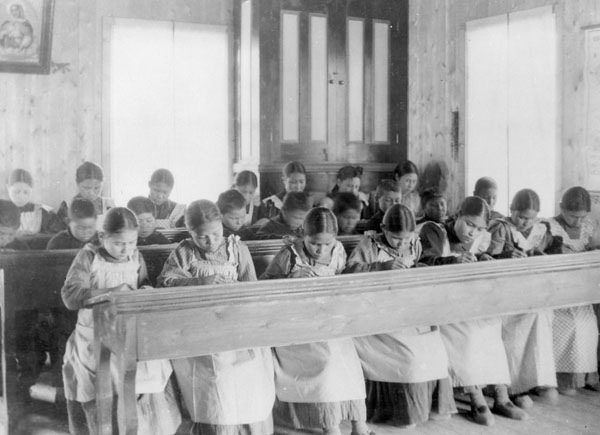
The Canadian Indian residential school system was a network of boarding schools funded by the federal government and administered primarily by Roman Catholic, Anglican, Methodist, Presbyterian, and United churches. Established under laws like the 1876 Act to Promote the Gradual Assimilation of the Indian Tribes of Canada, its explicit purpose was to assimilate Indigenous children by removing them from their families, languages, and cultures. The Truth and Reconciliation Commission, established in 2008, documented the profound neglect and abuse endemic within these institutions. Student mortality was tragically common within the schools, driven by overcrowding, malnutrition, and poor healthcare. The TRC's final report identified records for 4,037 children who died while attending the schools, though it acknowledged its list was incomplete. Commissioners noted that schools were hotbeds for infectious diseases like tuberculosis, with conditions often accelerating their spread. The commission's chair, Justice Murray Sinclair, later estimated the true number of deaths could range between 6,000 and 25,000. In many cases, children who died were not returned to their home communities, and families were frequently left uninformed about the circumstances of their child's death.
Burial practices at the schools were often informal and driven by cost-cutting measures. Many schools maintained on-site cemeteries, but these were frequently unregistered, and grave markers, often simple wooden crosses, deteriorated or were lost over time. This systemic failure to record and maintain burial sites has resulted in the loss of both the locations and the identities of countless children. The TRC's Missing Children and Unmarked Burials Project was initiated to begin addressing this historical erasure, laying groundwork for the ongoing searches by Indigenous communities across the country.
The Search for Unmarked Graves
Beginning around 2018, and accelerating dramatically after May 2021, many First Nations communities initiated searches for unmarked graves on the grounds of former residential schools. The primary non-invasive tool for these investigations has been ground-penetrating radar, a technology that detects subsurface disturbances that may indicate a burial. These searches are typically led by the communities themselves, often in partnership with academic institutions like the University of Alberta's Institute for Prairie and Indigenous Archaeology, and are guided by survivor testimony and historical research. The process involves scanning areas identified through archival work or oral history, with GPR technicians and archaeologists interpreting the resulting data for 'anomalies' or 'potential gravesites'.
Communities generally categorize findings with terms like 'probable', 'possible', or 'likely' based on the strength of the indicators. It is crucial to understand that these anomalies are not confirmed graves until forensic excavation and analysis occur, a step many communities are hesitant to take without consensus due to the spiritual and emotional implications of disturbing burials. As of December 2025, only the site of St. Joseph's Residential School in Fort Resolution has confirmed the presence of human remains based on GPR and cadaver dog information followed by excavation. These searches are supported by federal funding and are linked to the Truth and Reconciliation Commission's Calls to Action, specifically numbers 71 to 76 concerning missing children and burial information.
The National Centre for Truth and Reconciliation is developing the National Residential School Student Death Register and a public Memorial Register to document the children who died. The Government of Canada provides resources for cemetery mapping and the implementation of these calls to action through Crown-Indigenous Relations and Northern Affairs Canada. This includes a $6 million investment announced in Budget 2022. The funding supports the ongoing development and maintenance of the national registers. The registers are continuously updated as new information is reviewed and analyzed from historical documents and community submissions.
Major Site Investigations Across Canada
Investigations have taken place at numerous former school sites from coast to coast, each with its own findings and community-led process. In British Columbia, the Tk’emlúps te Secwépemc First Nation's 2021 announcement of 215 potential graves at the Kamloops Indian Residential School drew international attention and became a catalyst for national awareness. In Saskatchewan, the Cowessess First Nation announced the discovery of 751 potential unmarked graves at the former Marieval Indian Residential School in 2021, which was described as the most significant such discovery to date. These announcements prompted similar searches at dozens of other former school locations.
In Alberta, the Kapawe'no First Nation reported 169 potential gravesites at St. Bernard's Residential School in Grouard in 2022. At Saddle Lake Cree Nation, partial remains have been repeatedly discovered since 2004 in the community cemetery near the former Blue Quills school, with investigators believing they belong to children from the school, potentially from a typhoid outbreak. A 2023 GPR survey at the site identified 19 anomalies, and in October 2023, the remains of a child were found there. In Manitoba, the Sioux Valley Dakota Nation has been investigating cemetery sites at the Brandon Indian Residential School since 2012, a project delayed by the COVID-19 pandemic.
Other notable investigations include the Penelakut First Nation's reference to at least 160 undocumented and unmarked graves at the former Kuper Island school. The Williams Lake First Nation identified 159 potential burial sites at Saint Joseph's Mission. The ʔaq̓am band identified 182 unmarked grave sites in a cemetery next to St. Eugene's Mission School. The Stó:lō Nation has documented that at least 158 of their children died at three residential schools and a hospital. The nation continues to search for unrecorded graves at sites like Coqualeetza and St. Mary's.
Interpretation, Denialism, and Legal Responses
The announcement of potential gravesites has been met with widespread national mourning, memorials, and renewed calls for justice and reconciliation. However, it has also spawned a movement of denialism that questions the existence or scale of the burial sites. Denialists have mischaracterized media reports, claiming a 'mass grave hoax', and in some instances, like at Kamloops, have visited sites with shovels attempting to disprove the findings. Indigenous groups and academics have dismissed these claims, noting that the term 'mass grave' was rarely used in responsible media reporting and that communities have consistently described 'potential unmarked graves'.
The discoveries have had significant social repercussions. Beginning in June 2021, there was a series of arsons and other acts of vandalism against Christian churches. Law enforcement, politicians, and tribal officials speculated this was spurred by anger towards Christians over the schools and gravesites. In October 2022, the House of Commons of Canada unanimously passed a motion calling on the federal Canadian government to recognize the residential school system as genocide. This followed the Truth and Reconciliation Commission's findings and a visit by Pope Francis, who apologized for Church members' roles in the genocide.
Federal Justice Minister David Lametti said in 2023 that he was open to outlawing residential school denialism. His successor, Arif Virani, did not take a position on the issue. The debate continues as communities emphasize the search for truth. This search is a meticulous, trauma-informed process and not a single event. The evidence lies in the historical record, survivor testimony, and the ongoing scientific investigations.
Community-Led Processes and Memorialization
For Indigenous communities, the search for missing children is a sacred responsibility and an act of reclamation. The process is deeply community-led, prioritizing the wishes of survivors and elders, and often proceeds at a deliberate pace. Decisions about whether to conduct forensic excavations are complex, balancing the desire for definitive identification with the cultural and spiritual protocols surrounding the disturbance of the dead. Many communities, like Tk’emlúps te Secwépemc, have stated their investigations are ongoing and will remain confidential to preserve integrity, a stance they reaffirmed on the third anniversary of their initial announcement.
Memorialization is a key component of the healing journey, involving physical monuments, digital records, and ceremonial acts. Communities have erected monuments, house posts, and held ceremonies to honour the children who never returned. For instance, the Stó:lō Nation erected memorial house posts at the sites of St. Mary's and Coqualeetza, and the Tseshaht First Nation plans a ceremony to tear down the old Alberni Indian Residential School building. The National Centre for Truth and Reconciliation's public Memorial Register serves as a digital monument, allowing Canadians to search for and remember the names of the children who died.
The work extends beyond physical searches to include extensive historical documentation and the careful compilation of records. Projects involve interviewing survivors to gather names and stories. At Alberni Indian Residential School, interviews with survivors identified 67 students who died. Painstaking archival research is also undertaken to identify deceased children. For example, local resident Laurie Sommerville worked on identifying the deceased children from Dunbow Industrial School. This combined approach of oral history, archival work, and technological survey aims to restore identity and dignity to the lost children.
Ongoing Challenges and the Path Forward
The path forward involves addressing significant technical, ethical, and financial challenges that shape the investigation and commemoration process. Technically, ground-penetrating radar has limitations, particularly in rocky or difficult terrain, and anomalies require further investigation to confirm their nature. Ethical considerations are paramount, as communities must guide all decisions, from whether to excavate to how to handle any recovered remains, processes that require time, resources, and specialized cultural support. Financially, while federal funding has been allocated, communities often report that securing consistent, long-term resources for the multi-phase work of investigation, memorialization, and healing is an ongoing struggle.
The establishment of official registers is a critical long-term undertaking that requires sustained effort. These tools aim to centralize fragmented information from government, church, and school records. Their completeness relies on continued cooperation from record-holders and the diligent work of researchers. The partnership between Crown-Indigenous Relations and Northern Affairs Canada and the National Centre for Truth and Reconciliation is central to implementing the Truth and Reconciliation Commission's Calls to Action on missing children. The National Centre for Truth and Reconciliation continues to accept and review new information for the registers.
Ultimately, the discovery of unmarked graves is a continuation of the truth-telling process initiated by survivors and the Truth and Reconciliation Commission. It confronts Canadians with the tangible evidence of a system designed to eliminate Indigenous cultures. The discoveries highlight the work that remains to address intergenerational trauma. The searches underscore the resilience of Indigenous communities in seeking truth and honouring their children. They represent a permanent call for Canada to fulfil its commitments to reconciliation, justice, and a more honest historical memory.
Questions about Canadian Indian residential school gravesites
How many children died at residential schools?
The Truth and Reconciliation Commission documented the deaths of 4,037 children in its official register, but noted this was an incomplete count due to missing or destroyed records. Justice Murray Sinclair, the commission's chair, has estimated the true number could be between 6,000 and 25,000. Deaths were caused by disease outbreaks like tuberculosis, malnutrition, neglect, accidents, and in some cases, suicide or exposure while trying to escape. The National Centre for Truth and Reconciliation continues to update the National Residential School Student Death Register as new information is uncovered.
What is ground-penetrating radar and does it confirm graves?
Ground-penetrating radar is a non-invasive geophysical technology that uses radar pulses to image the subsurface. It detects disturbances in soil, which can indicate features like rocks, tree roots, or potential graves. Anomalies detected by GPR are not confirmed graves. They are areas that require further investigation. Confirmation typically requires forensic archaeological excavation, which many communities have not yet undertaken due to cultural protocols and the need for community consensus. As of December 2025, only one site, St. Joseph's in Fort Resolution, has confirmed remains based on GPR information followed by excavation.
Have any mass graves been found at residential schools?
The term 'mass grave' has been a source of confusion and controversy. Most media reports and community announcements have used terms like 'potential unmarked graves' or 'burial sites'. Some sites, like the one investigated at Saddle Lake Cree Nation, have been described by community investigators as containing 'numerous children-sized skeletons' potentially from a disease outbreak, which could constitute a mass burial. However, the widespread public narrative of 'mass graves' often misrepresents the more common reality of individual or rows of unmarked graves in neglected cemeteries, as clarified by Indigenous groups and academics debunking the 'mass grave hoax' claim.
What is residential school denialism?
Residential school denialism is a movement that seeks to minimize, question, or outright deny the well-documented history of abuses and deaths within the residential school system, including the existence of unmarked burial sites. Denialists have falsely claimed the discoveries are a 'hoax', misrepresented technical reports, and in extreme cases, visited sites to physically challenge the findings. In 2023, then-Justice Minister David Lametti said he was open to criminalizing such denialism. Indigenous leaders and scholars reject these claims, emphasizing the overwhelming evidence from survivor testimony, historical documents, and the Truth and Reconciliation Commission.
Why don't communities just excavate the sites to prove there are bodies?
The decision to excavate is deeply complex and rests solely with the affected Indigenous communities. Many view disturbance of the dead as a profound spiritual and cultural violation, and prioritize allowing the children to rest in peace. Excavation is also a traumatic process that can reopen wounds for survivors and intergenerational trauma holders. Communities may choose non-invasive methods first, and only consider excavation if there is strong consensus, clear protocols for ceremonial care, and a plan for identification and reburial. The process is about truth and healing on their terms, not about 'proving' anything to outsiders.
Sources: Wikipedia and current public reporting, checked by the Nosy Mag desk. Last updated 2026-10-20.