Gambling glossary
A gambling glossary is a comprehensive list of terms and definitions used within the betting and casino industries. For Canadians, understanding this specialized vocabulary has become increasingly important since the legalization of single-game sports betting in 2021. This terminology is essential for using legal sportsbooks, understanding game rules, and participating in informed discussions about gambling. A clear grasp of key concepts like house edge, odds formats, and bet types helps players make conscious decisions and recognize the inherent risks involved in wagering activities.
Core Sports Betting Terminology
The foundation of sports wagering involves understanding the basic types of bets and how odds are expressed. A bet or wager is the act of risking money on the outcome of a sporting event. The establishment where these bets are placed is called a sportsbook, which operates legally under provincial regulation in Canada. The odds or lines for these events are set by professionals known as oddsmakers, who determine the favourite, the team expected to win, and the underdog, the team anticipated to lose. When two sides are considered evenly matched, the game is called a pick 'em, indicating no favourite.
The most straightforward bet is the moneyline, where a bettor simply picks which team will win the game outright. Moneyline odds are typically displayed in American odds format, using a baseline of $100. Another fundamental bet is the point spread, which handicaps a game by giving the underdog a virtual points advantage. Betting against the spread, abbreviated as ATS, requires the favoured team to win by more than the spread number for a bet on them to succeed, or the underdog to lose by less than the spread number for a bet on them to win.
A third major bet type is the total, also called the over/under. This is a wager on the combined score of both teams in a game. Bettors choose whether the final total will be over or under a number set by the sportsbook. If the combined score lands exactly on the set total, the bet results in a push, and all wagers are refunded. Other common outcomes include a cover, which means a point spread bet has won, and a chalk bettor, which is slang for someone who consistently bets on favourites. The following list includes other essential sports betting terms every Canadian should know.
- Accumulator/Parlay: A single bet linking two or more selections. All must win for the bet to pay out.
- Prop Bet: A wager on a specific occurrence within a game not directly tied to the final score, like which player will score first.
- Futures/Ante-post: A bet placed well in advance on the outcome of a future event, such as which team will win the Stanley Cup.
- Canadian Line: A bet type specific to hockey that combines a point spread with a moneyline.
- Teaser: A type of parlay where the bettor can adjust the point spreads in their favour, but for lower odds.
- Live Betting/In-Play: Placing wagers on a sporting event after it has already begun.
- Handle: The total amount of money wagered on a particular event or at a sportsbook over a period.
- Closing Line: The final odds offered on an event just before it starts.
Casino Game Fundamentals and Table Jargon
Casino gaming involves its own extensive lexicon, starting with the fundamental concept of the house edge. This is the mathematical advantage the casino holds over the player in any given game, ensuring its profitability over the long term. A player's total gambling budget is referred to as their bankroll, and responsible play involves managing this amount carefully. The physical tokens used in place of cash at table games are called chips, which are purchased from and cashed in at the casino cage. Loyalty rewards offered by casinos are known as comps, short for complimentary items like meals or hotel stays.
Table games each feature specific terminology. In blackjack, a natural is an automatic win achieved by being dealt an ace and a 10-value card as the first two cards. A player may also choose to double down, which means doubling their initial bet after seeing their first two cards in exchange for receiving only one more card. In poker, forced bets made by the two players to the dealer's left are called blinds. The fifth and final community card dealt in games like Texas Hold'em is known as the river. An unintentional behaviour that might reveal the strength of a player's hand is called a tell.
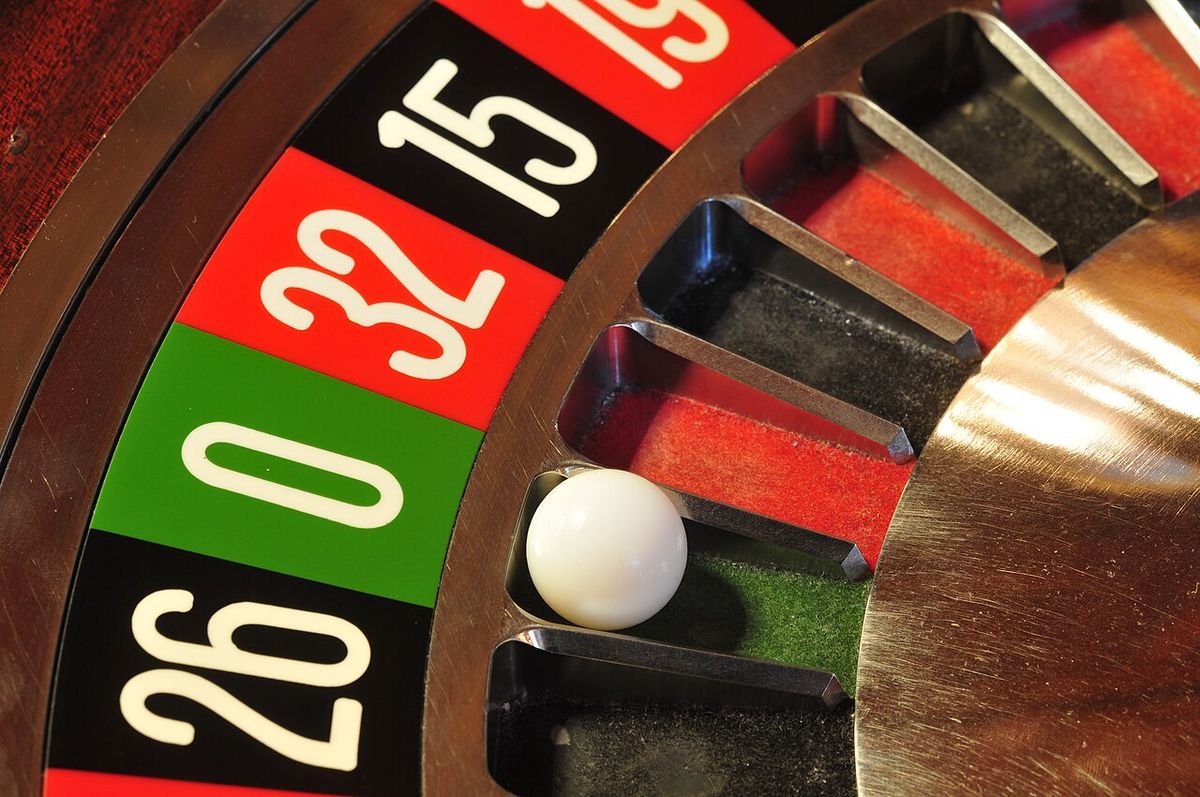
Roulette features inside bets, which are wagers placed on specific numbers or small groups of numbers located on the inside part of the betting layout. The person supervising a section of table games and dealers is called the pit boss. In craps, rolling a two is often called snake eyes. Baccarat revolves around two main betting options: banker and player. An announced bet in table games is one where a player verbally declares their intended wager before placing chips on the table. High rollers are players who consistently make large bets and often receive exclusive perks from the casino.
Slot Machines and Electronic Gaming
Slot machines, historically nicknamed one-armed bandits due to their side lever, are a casino staple governed by specific technology and terms. The core software determining every spin's outcome is the Random Number Generator (RNG), which ensures each result is independent and random. The line on the screen where matching symbols must align for a win is called a payline. Modern machines often feature multiple paylines. A progressive jackpot is a prize pool that increases incrementally as players across a network of machines continue to play, often reaching very large sums.
Electronic gaming machines, which include video slots and video poker, operate independently from each other on the casino floor. A key concept for players to understand is that each spin on a slot machine is an independent event, meaning past results have no bearing on future outcomes. This ties directly into the gambler's fallacy, which is the mistaken belief that if an event has happened more frequently than normal, it is less likely to happen in the future, or vice versa. For example, believing a slot machine is 'due' for a win after a long losing streak is a classic example of this fallacy.
Modern slot machines can create psychological effects through features like losses disguised as wins, where a spin returns less money than was wagered but is celebrated with winning sounds and animations. A near miss occurs when the symbols on a slot machine stop just short of a winning combination, which some players misinterpret as being close to a win. These design elements can influence player behaviour but do not change the underlying randomness of the game. All slot machines in regulated Canadian markets must use a certified RNG to guarantee fair play.
- One-Armed Bandit: A traditional nickname for a slot machine, referencing its historical side lever.
- Payline: The specific line or pattern on a slot machine screen where winning symbol combinations must land.
- Progressive Jackpot: A cumulative prize that grows with each wager placed on a linked network of machines until it is won.
- Losses Disguised as Wins (LDWs): Outcomes where a player wins back less than their original bet, but the machine celebrates as if it were a true win.
- Near Miss: A result where the slot symbols stop one position short of a major winning combination.
- Multi-Line Slot: A modern slot machine that allows players to bet on and activate numerous paylines per spin.
Odds, Probability, and Betting Mechanics
Understanding how odds work is crucial for evaluating any wager. Odds represent the probability of an event occurring and determine the potential payout. American odds, common in Canada and the United States, use a baseline of $100. The implied probability of an outcome can be calculated from the odds. For instance, even money odds of 2.00 in decimal format imply a 50 percent chance of winning.
Several betting mechanics involve combining or modifying standard wagers. An arbitrage bet, or 'arb,' seeks to exploit slight differences in odds offered by different sportsbooks on the same event to guarantee a profit regardless of the outcome. A betting exchange is a platform where bettors wager against each other rather than against a sportsbook, with the exchange taking a commission from the winner. Alternative lines allow bettors to adjust a standard point spread or total for different odds, such as taking a favourite at a higher spread for a better payout.
Asian handicap is a popular form of spread betting primarily used in soccer, designed to eliminate the possibility of a draw by using fractional goal handicaps. The best-price percentage is a term that directly translates odds into an implied chance of winning. A circled game is one where a sportsbook limits the maximum bet amount, often due to uncertain conditions like player injuries. The following table compares common odds formats and their equivalent payouts on a $100 wager.
Odds are fundamental to evaluating any wager as they represent probability and determine payouts. In Canada, American odds using a baseline of $100 are common. Bettors can calculate the implied probability of an outcome from these odds. Several betting mechanics involve combining or modifying standard wagers to create different opportunities.
| Term | Description |
|---|---|
| Arbitrage Bet ('Arb') | Exploits slight odds differences across sportsbooks to guarantee a profit. |
| Betting Exchange | A platform where bettors wager against each other, with the exchange taking a commission. |
| Alternative Lines | Allows adjustment of a standard point spread or total for different odds. |
| Asian Handicap | A form of soccer spread betting using fractional goal handicaps to eliminate draws. |
| Best-Price Percentage | Translates odds directly into an implied chance of winning. |
| Circled Game | A game where a sportsbook limits the maximum bet amount, often due to uncertain conditions. |
Modern and Hybrid Gambling Concepts
Gambling continues to change with technology, introducing new formats that blend with other forms of entertainment. Esports betting involves wagering on professional competitive video gaming tournaments, which are often streamed live on platforms like Twitch. Fantasy sports, where participants draft virtual teams of real athletes to compete based on statistical performance, can sometimes involve prize pools that resemble sports betting. These contests are popular in Canada and require knowledge of both sports and specific fantasy terminology.
A controversial area linked to video games is the loot box, an in-game purchase that rewards a player with a random virtual item. While not classified as gambling in most Canadian jurisdictions, loot boxes share psychological similarities with games of chance, as the buyer does not know the specific value of the item they will receive. Some countries, like Belgium and the Netherlands, have declared certain loot box mechanics to be a form of gambling. The debate centres on whether these digital items, which can sometimes be sold for real money on secondary markets, constitute a game of chance played for value.
Other modern concepts include live dealer casino games, which stream a real human dealer from a studio to players online, blending the convenience of digital play with the atmosphere of a physical table. In sports betting, in-play or live betting has grown enormously, allowing wagers to be placed after a game has started, with odds updating dynamically based on the action. Betting strategies are personalized methods bettors use to try to gain an edge, such as focusing on home underdogs or avoiding teams on the second night of a back-to-back schedule. Bonuses are incentives offered by online operators, like free bets or deposit matches, which usually come with wagering requirements that must be met before winnings can be withdrawn.
- Esports Betting: Wagering on the outcomes of professional video game competitions.
- Fantasy Sports: Contests where participants build teams of real athletes and earn points based on their real-world statistical performance.
- Loot Box: A video game feature where players pay for a randomized virtual item, often compared to a digital scratch card.
- Live Dealer Games: Online casino games where a human dealer is streamed in real time to facilitate play.
- In-Play Betting: Also called live betting, this allows wagers to be placed during a sporting event as the action unfolds.
- Bonus Wagering Requirements: The number of times a bonus amount must be bet before associated winnings can be withdrawn.

Responsible Gambling and Key Principles
Understanding gambling terminology also involves concepts that promote awareness of risk and healthy behaviour. The house advantage is a fundamental principle reminding players that, statistically, the casino or sportsbook has a long-term edge. This is why the phrase 'the house always wins' is a reality over an extended period. Gambling harms refer to the adverse financial, emotional, physical, and social consequences that can affect individuals and their families. These potential consequences highlight the importance of treating gambling as a form of entertainment for adults, not a source of income.
Critical thinking in gambling involves recognizing cognitive errors like the gambler's fallacy and the independence of events. The independence of events means that each game round, dice roll, or slot spin is statistically separate from what happened before. A slot machine's RNG does not have a memory, so a machine is not 'hot' or 'cold.' Dissociation is a state of altered consciousness or being 'in the zone' where a person becomes disconnected from their surroundings. Some fast-paced, repetitive games can encourage this state, which may lead some individuals to lose track of time and money.
Managing one's bankroll is the first step in responsible play, which means pre-determining a loss limit and sticking to it. It is also important to recognize the signs of a loss disguised as a win on modern slot machines, where a celebratory outcome may still result in a net loss for that spin. Setting time limits, taking breaks, and never chasing losses are essential strategies. A clear understanding of the language of gambling empowers individuals to make informed choices and engage more critically with the activity.
Questions about Gambling glossary
What is a 'Canadian Line' in betting?
A Canadian Line is a type of bet offered specifically on ice hockey games. It is a combination of a point spread (or puck line) and a moneyline wager into a single bet. This format accounts for the lower-scoring nature of hockey. If the team wins by exactly one goal, the bet loses. This differs from a standard moneyline bet, where any win would suffice, but typically at lower odds.
What is the difference between a 'push' and a 'cover'?
A 'cover' and a 'push' are opposite outcomes on a point spread or total bet. To 'cover the spread' means a point spread bet has won. For example, if a team favoured by 3.5 points wins by 4 or more, they have covered the spread. A 'push' occurs when the result lands exactly on the point spread or total number set by the sportsbook. If that same team wins by exactly 3 points, the bet is a push, and all wagers are refunded. A push results in no profit and no loss for the bettor, simply a return of the original stake.
What is a 'Random Number Generator' (RNG) in casino games?
A Random Number Generator (RNG) is a computer algorithm used in electronic gaming machines, like slot machines and video poker, to ensure every game outcome is completely random and independent. The RNG constantly generates thousands of number sequences per second, and the exact sequence at the moment a player presses 'spin' determines the result. This technology is rigorously tested and certified by independent auditing agencies and provincial regulators in Canada to guarantee game fairness. It means that no previous spin influences a future one, debunking myths about machines being 'due' for a win.
What are 'comps' at a casino?
Comps, short for 'complimentary,' are free rewards or perks that casinos offer to players, typically based on their level of play and loyalty. Common comps include free meals, hotel room stays, show tickets, or bonus betting credits. Players earn comp points by wagering on games, with slot machines and table games tracking play through player's club cards. These rewards are a marketing tool designed to encourage longer visits and return business. It is important to remember that comps are not 'free' but are funded by the casino's expected profit from a player's gambling activity over time.
What is the 'house edge' in gambling?
The house edge is the statistical advantage that the casino or sportsbook has over players in any given game. This built in mathematical edge ensures that the odds of a player losing are always greater than the odds of winning over the long term. It represents the portion of each bet the operator expects to keep on average. This advantage differs by game and operator but is a fundamental principle ensuring the house always wins in the long run. Understanding the house edge is crucial for recognizing gambling as a form of entertainment with a predictable cost, not a reliable way to make money.
What does 'ATS' mean in sports betting?
ATS is an acronym for Against the Spread. It describes a point spread wager where a bettor places a bet against a point handicap set by oddsmakers to level the playing field. For example, if a team is a 3.5 point favourite, betting on them ATS requires them to win by four or more points to cover the spread. Conversely, betting on the underdog ATS wins if that team wins outright or loses by fewer points than the spread. A push occurs if the margin lands exactly on the spread number, resulting in a refunded wager. This type of bet is central to sports like football and basketball.
Sources and further reading
- Glossary of Betting Terms (canadasportsbetting.ca)
- Sports gambling glossary: How to talk the talk when betting (sportsnet.ca)
- Gambling Dictionary | About Gambling | For the Public (responsiblegambling.org)
- Glossary of Casino Terms (maine.gov)
- Casino Jargon 101 For Canadian Players (netlingo.com)
- Glossary of Betting Terms (canadasportsbetting.ca)
Checked by the Nosy Mag desk. Last updated 2026-11-13.