Murder of Alison Parrott
The murder of Alison Parrott was a high-profile Canadian criminal case involving the 1986 abduction and killing of an 11-year-old Toronto girl. Alison, a promising track athlete, was lured from her home by a deceptive phone call. Her body was found two days later. The case remained unsolved for a decade until advances in DNA technology and the national Violent Crime Linkage Analysis System (ViCLAS) identified the perpetrator, Francis Carl Roy, who was convicted of first-degree murder in 1999. The trial sparked legal and public debate over the rules of evidence. Alison's death led to the creation of the nationwide Stay Alert ... Stay Safe child safety education program.
Early Life and Disappearance
Alison May Campbell Parrott was born on September 28, 1974, in Toronto to civil engineer Peter Parrott and advertising executive Lesley Parrott. An active and athletic child, she attended Gabrielle Roy elementary school and was a dedicated member of the Tom Longboat track-and-field club for youth aged 8 to 12. In the summer of 1986, she won a race and qualified for the International Youth Track Championships in New Jersey, an achievement that was published in the Toronto Star. On the morning of July 25, 1986, Alison was home alone at her family's Summerhill Avenue residence when she received a phone call from a man claiming to be a photographer. The caller instructed her to meet at the University of Toronto's Varsity Stadium for a publicity photo session with her teammates. Alison called her mother at work for permission, and they discussed her subway route, arranging for her to return home by 2:30 p.m. Witnesses reported seeing the 11-year-old travelling alone on the subway, but she never returned. Her parents began inquiring with friends and neighbours by 5 p.m. and contacted the Toronto Police Service at 6 p.m. to report her missing. A massive search involving hundreds of volunteers commenced across the city.
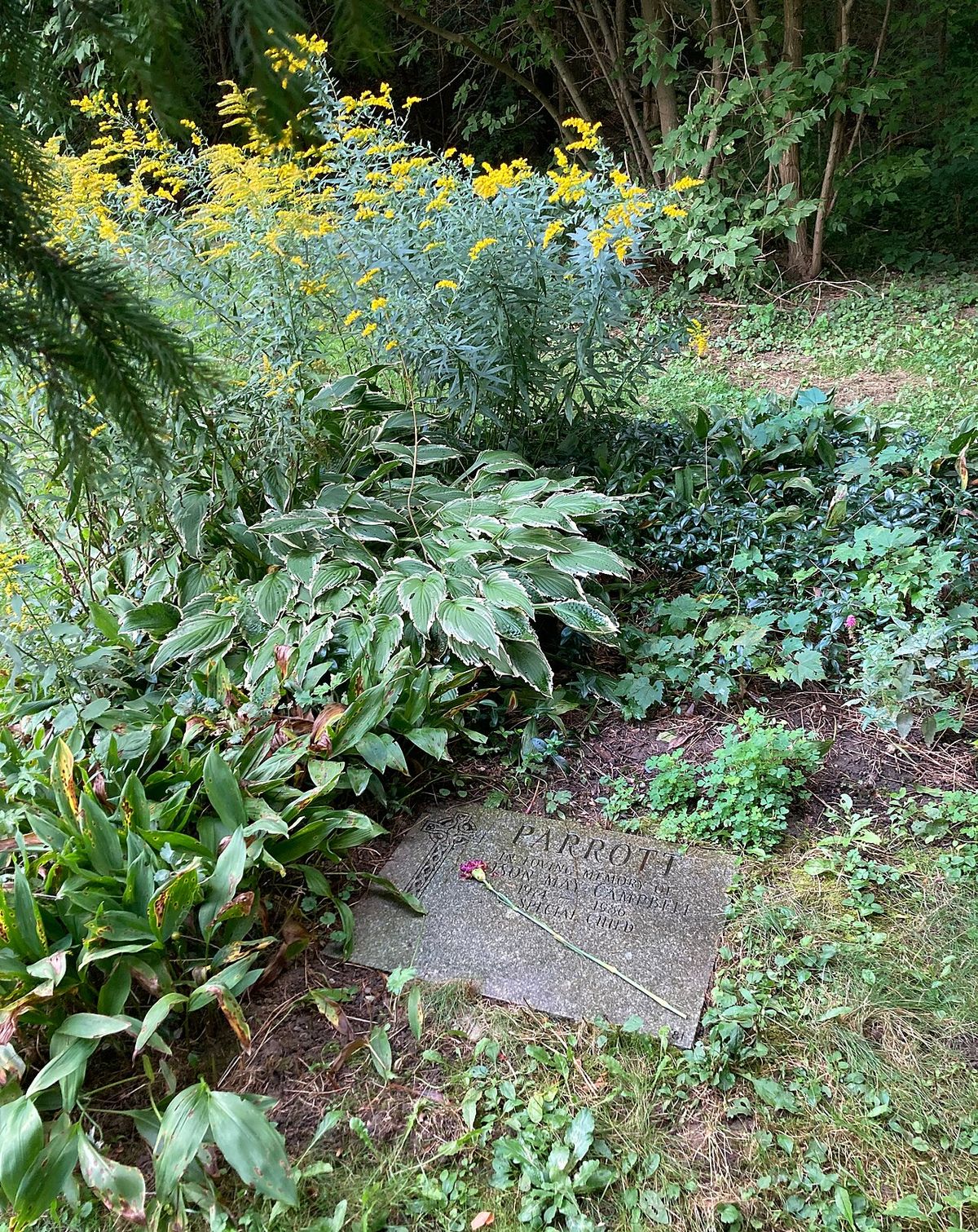
Two days later, on July 27, Alison's body was discovered by two boys in a densely wooded area of Kings Mill Park, near the Humber River below the Old Mill subway station. The autopsy revealed she had been bound, raped, and strangled. Her remains were later cremated and interred at Mount Pleasant Cemetery in Toronto. In her memory, a green space south of David A. Balfour Park was dedicated as The Little Park. The brutal nature of the crime and the victim's young age sent shockwaves through Toronto and across Canada.
Initial Investigation and False Leads
Police immediately launched a major investigation, announcing a $50,000 reward for information leading to an arrest and initially interviewing approximately 18,000 persons. Detectives determined the perpetrator had likely tracked Alison's movements in the weeks before the murder. On July 14, an unidentified male caller had phoned the Parrott home asking for Alison, but she was at summer camp and a babysitter took a message. The caller had also phoned other families with the surname Parrott in an attempt to locate the Alison Parrott who was going to the International Youth Track Championships in New Jersey. Investigators speculated the killer may have gathered details about her training schedule at her athletic club. For a period, police considered the possibility that the culprit was the man then known as the Scarborough Rapist. When that man was identified as Paul Bernardo, police knew they needed another suspect because DNA from semen found on Alison's clothes did not match Bernardo. This exclusion forced the investigation to pursue other avenues, though forensic science at the time lacked the capability for widespread DNA database comparisons. The case grew increasingly complex, and despite the initial belief it would be solved quickly, it soon grew cold.
The Suspect: Francis Carl Roy
Francis Carl Roy, born September 18, 1957, was a First Nations man from Manitoulin Island with a history of violent crime. An avid runner and photography enthusiast, he used the same training facility as Alison's track club, which brought him to the attention of police during their initial round of interviews. Roy had a criminal record dating to 1976 that included convictions for possession of stolen property, petty theft, fraud, assault, breaking and entering, and rape. At the time of Alison's murder, Roy was on parole after serving only two and a half years of a consecutive 11-year sentence for the rapes of a 14-year-old girl and a 19-year-old woman. He told investigators that on the day Alison disappeared, he had gone for a run and then met a friend at a bar. On the day Alison's body was found, July 27, Roy appeared at a police station to confess to assaulting a 20-year-old woman in his apartment two days earlier. He later pled guilty to that assault and was fined $200 plus time served.
Roy moved to Vancouver in 1988 and, claiming to have a psychology degree from the University of Toronto, obtained a job as a youth counsellor with the city without a background check. After a bar fight in 1991, he returned to Toronto. Suspicion fell on him again in 1989 when a man arrested in Vancouver informed police they should consider Roy a suspect in the murders of sex workers in that city earlier that year, though he was never charged. The two Vancouver officers who received this tip did not forget it. In 1996, they submitted the information to the national Violent Crime Linkage Analysis System (ViCLAS) database. Toronto homicide detectives, reviewing cold cases, picked up the file and re-examined Roy's initial police interview and reports from his parole officer. Noticing inconsistencies and deceptions in his story, they placed him under surveillance. Officers collected his DNA from discarded cigarette butts and a coffee cup in Toronto bars, which provided a positive match to the semen found on Alison's body. On July 31, 1996, over a decade after the murder, Francis Carl Roy was arrested and charged with first-degree murder.
Trial, Controversial Evidence, and Conviction
The trial of Francis Carl Roy began in 1999 and lasted one month, followed by six days of jury deliberation. Presiding Justice David Watt made a controversial ruling to exclude key evidence about Roy's past from the jury. Citing a 1988 Supreme Court of Canada decision, Justice Watt exercised his discretion to withhold information he believed would prejudice Roy's right to a fair trial. The excluded evidence included Roy's two prior convictions for rape, the fact that both victims were teenagers, and that one victim had been tricked, abducted and bound, much like Alison. This decision provoked widespread public and media outrage. The Parrott family publicly questioned the ruling, and the controversy prompted Justice Minister Anne McLellan to announce her department would consider changes to the law.
The defence called three witnesses who testified they had seen Alison in the company of a white man on the morning of her disappearance, attempting to suggest another perpetrator. The defence also asserted Roy was not intelligent enough to have committed the crime. Roy took the stand in his own defence, offering an explanation for the DNA evidence. He claimed he discovered Alison's naked body while looking for a place to urinate during a run in Kings Mill Park. He stated he had a sudden urge to insert his finger into her vagina, and because he had masturbated earlier that day, semen on his finger was transferred to her body. The Crown argued this account was implausible and pointed to the overwhelming DNA match. After deliberation, the jury returned a verdict of guilty of first-degree murder on April 13, 1999. Roy was sentenced to the automatic penalty of life imprisonment with no possibility of parole for 25 years. In 2003, the Court of Appeal for Ontario rejected Roy's appeal, in which he claimed police had denied him his right to remain silent during interrogation.
Creation of the Stay Alert ... Stay Safe Program
In May 1987, driven by the tragic loss of her daughter, Lesley Parrott launched the Canada-wide Stay Alert ... Stay Safe child safety program. Aided by colleagues at her advertising agency, the program was specifically designed for children aged seven through ten. Its primary objective was to attune children's instincts to recognize and avoid dangerous situations, whether at home or in public. The program provided practical education on how to respond to potential threats from strangers and other risks. Both Alison and her younger brother had attended an all-day streetproofing seminar the year before her murder, which offered instruction on avoiding potential molesters and abductors. The creation of Stay Alert ... Stay Safe represented a legacy born from tragedy, aiming to prevent other families from experiencing similar loss.
Documentaries and Media Coverage
The murder of Alison Parrott has been examined in several documentary television programs. The fourth episode of season 1 of Cold Case Files, titled Answer in the Box. Maternal Instinct, followed Alison's disappearance and the subsequent investigation. The second episode of season 3 of Exhibit A: Secrets of Forensic Science, titled Killer in a Box and hosted by Graham Greene, revisited the forensic details of the case. The 2007 documentary Forgiveness: Stories For Our Time included Alison Parrott's murder as one of the cases examined. Global News also featured an episode titled Alison Parrott, Leader of the Pack in its Crime Beat series. These productions have kept the memory of the case alive, often highlighting the role of DNA technology and database linkage in solving a decade-old crime.
Comparative Case and Investigative Context
The investigation into Alison Parrott's murder occurred during a period when several high-profile child disappearances and murders shook Toronto. A notable comparative case is the disappearance of eight-year-old Nicole Morin from her Toronto apartment building in 1985, which remains unsolved. The Parrott case demonstrated both the limitations and eventual triumphs of police work in that era. Initially reliant on traditional methods like mass interviews and tip lines, the investigation ultimately succeeded through the emerging science of DNA profiling and the systematic use of the ViCLAS database. The following table outlines key aspects of the investigative timeline and methods used to solve the case.
| Investigation Phase | Primary Methods | Outcome/Challenge |
|---|---|---|
| Initial Response (1986) | Public search, 18,000 interviews, $50,000 reward | No suspect identified. Case went cold |
| Cold Case Review (1996) | ViCLAS database tip, targeted surveillance, DNA collection | Positive DNA match to Francis Carl Roy |
| Resolution (1999) | Forensic DNA evidence presented at trial | First-degree murder conviction |
The Violent Crime Linkage Analysis System (ViCLAS) is a national database managed by the Royal Canadian Mounted Police. It is designed to identify links between violent crimes by comparing modus operandi, victimology, and forensic evidence. In 1996, two Vancouver officers submitted information about Francis Carl Roy to the ViCLAS database. Toronto homicide detectives reviewing cold cases then picked up the file, which was a key factor in identifying Roy as a suspect in the murder of Alison Parrott.
Questions about Murder of Alison Parrott
Who was Alison Parrott?
Alison May Campbell Parrott was an 11-year-old Canadian girl from Toronto, born on September 28, 1974. She was a promising track athlete who trained at Varsity Stadium and was a member of the Tom Longboat track-and-field club for youth aged 8 to 12. In the summer of 1986, she won her first race and qualified for the International Youth Track Championships in New Jersey. Alison attended Gabrielle Roy elementary school and frequently used public transit in Toronto.
How was Alison Parrott murdered?
On July 25, 1986, Alison was lured from her home by a male phone caller posing as a photographer who asked her to meet at Varsity Stadium. She took the subway to the meeting place but never returned. Two days later, on July 27, her body was found bound, raped, and strangled in a wooded area of Kings Mill Park in Etobicoke. The cause of death was strangulation.
Who killed Alison Parrott and how was he caught?
Francis Carl Roy was convicted of first-degree murder for killing Alison Parrott. He was identified a decade after the crime when Vancouver police submitted a tip about him to the national ViCLAS database in 1996. Toronto cold case detectives then placed him under surveillance, collected his DNA from discarded items, and matched it to semen evidence from the crime scene. He was arrested on July 31, 1996.
What is the Stay Alert ... Stay Safe program?
Stay Alert ... Stay Safe is a Canada-wide child safety program founded in May 1987 by Alison's mother, Lesley Parrott, with help from her advertising colleagues. Aimed at children aged seven to ten, the program teaches them to recognize and avoid dangerous situations. It was created as a direct legacy of Alison's murder.
What was controversial about Francis Carl Roy's trial?
The trial was controversial because Justice David Watt excluded crucial evidence from the jury. This withheld evidence included Roy's two prior convictions for rape, which involved teenagers who were tricked, abducted, and bound in wooded areas, similar to Alison Parrott's case. The judge's decision was based on a 1988 Supreme Court of Canada ruling intended to prevent prejudice and ensure a fair trial. The Parrott family and the public criticized this exclusion of Roy's criminal history.
When did Francis Carl Roy become eligible for parole?
Francis Carl Roy became eligible for parole in 2021. He was convicted of first-degree murder on April 13, 1999 and received an automatic life sentence with no possibility of parole for 25 years. His eligibility date was determined by the length of that mandatory parole ineligibility period. Roy remains incarcerated following his conviction for the 1986 murder of Alison Parrott.
Sources and further reading
- Murder of Alison Parrott (Wikipedia)
- Parrott's Killer Convicted (thecanadianencyclopedia.ca)
- Alison Parrott: Leader of the pack | Globalnews.ca (globalnews.ca)
- Accused takes the stand in Parrott murder case (cbc.ca)
Checked by the Nosy Mag desk. Last updated 2026-10-30.