Concordia University massacre
The Concordia University massacre was a school shooting that occurred on August 24, 1992, at Concordia University in Montreal, Quebec. Valery I. Fabrikant, an associate professor of mechanical engineering, killed four colleagues and wounded a staff member during a rampage on the ninth floor of the Henry F. Hall Building. The incident remains one of Canada's most infamous campus shootings, leading to institutional reforms at the university and contributing to national debates on gun control and academic integrity. Fabrikant was convicted of murder and sentenced to life in prison, where he died in 2026.
The Perpetrator and Preceding Conflict
Valery I. Fabrikant was an associate professor of mechanical engineering who had worked at Concordia University for 13 years, having started as a technician. Throughout his tenure, he exhibited disruptive and aggressive behaviour towards students, staff, and colleagues that was described as ranging from undesirable to intolerable. As early as 1989, two individuals reported him stating, "I know how people get what they want, they shoot a lot of people." His conduct included a 1982 police report filed by a student alleging rape and assault, though this did not lead to a conviction within the university's disciplinary processes. Fabrikant also faced academic challenges related to his teaching and supervision duties, which further strained his relationships within the faculty.
In late 1991 and the spring of 1992, Fabrikant's conflict with the university intensified significantly after he was denied tenure. He responded by levelling allegations of financial mismanagement and improper attribution of research work against members of the engineering department. Concurrently, the university initiated dismissal proceedings against him on grounds of intimidation and harassment of fellow staff members. Fabrikant was also under a contempt of court charge related to his behaviour in a lawsuit he had filed against colleagues concerning credit for professional articles. This combination of professional grievance and personal misconduct created a volatile situation that culminated in the events of August 24.
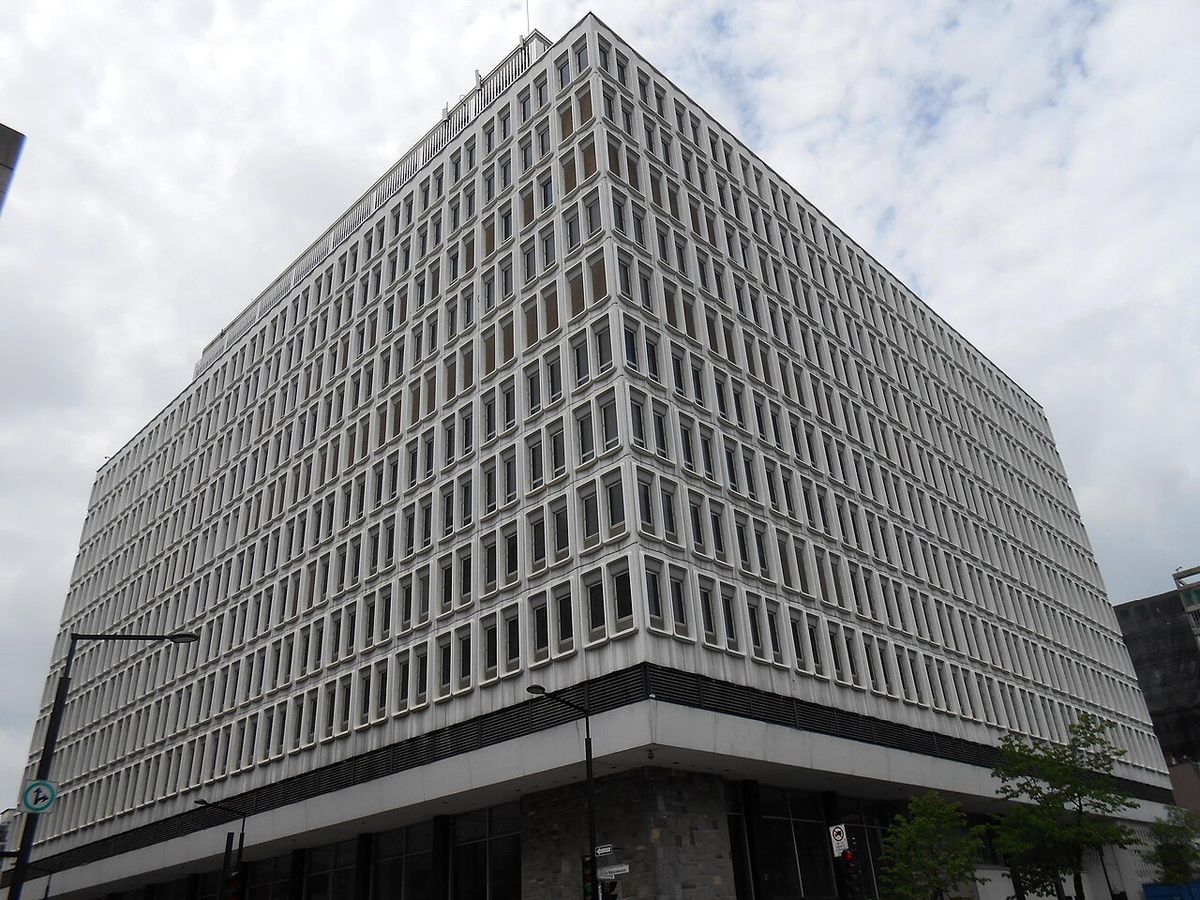
The Shooting Rampage
On Monday, August 24, 1992, shortly after 1:30 p.m., Valery Fabrikant entered the ninth floor of the Henry F. Hall Building carrying a briefcase containing three handguns and a large amount of ammunition. The weapons were a snub-nosed Smith & Wesson .38-calibre revolver, a German-made 6.35mm Meb pistol, and an Argentinian-made 7.65mm Bersa pistol. He first sought out Dean of Engineering Srikanta Swamy and Mechanical Engineering Chair M.O.M. (Sam) Osman, but neither was present. Fabrikant then proceeded to his own office, where he was scheduled to meet with Michael Hogben, president of the Concordia University Faculty Association.
According to police, Hogben attempted to give Fabrikant a letter restricting his access to the faculty association offices due to his distressing behaviour. Fabrikant responded by drawing his .38 calibre pistol and shooting Hogben three times, killing him. Hearing the commotion, professor Aaron Jaan Saber called out from his nearby office. Fabrikant crossed the hall and fired two shots into Saber, who died in hospital the following day. Returning to the hallway, Fabrikant encountered and shot secretary Elizabeth Horwood in the thigh, wounding her. He then moved through the corridors to the office of Phoivos Ziogas, chair of the electrical and computer engineering department, who was speaking with colleague Otto Schwelb. Fabrikant shot Ziogas twice, and Ziogas succumbed to his injuries a month later on September 23.
After a scuffle with Schwelb, who temporarily disarmed him, Fabrikant continued to the dean's office. There, he encountered civil engineering professor Matthew Douglass, who attempted to reason with him. Fabrikant shot Douglass four times, killing him almost instantly. Following the shootings, Fabrikant took a security guard and professor George Abdou hostage, locked himself in an office, and called an emergency operator. He stated he had committed several murders and wanted to speak to a television reporter. After an hour on the phone, when Fabrikant briefly put his gun down to adjust the receiver, Abdou kicked the weapon away and the security guard overpowered him, ending the siege. Urgences-santé forces, led by Paramedic Assistant Chief Anthony DiMonte, coordinated with police using new protocols learned from the 1989 Polytechnique shooting.
Independent Inquiries and Institutional Reforms
In response to the massacre, Concordia University commissioned two major independent inquiries to investigate the circumstances and recommend changes. The first, the Independent Committee of Inquiry into Academic and Scientific Integrity, was chaired by former York University president H. W. Arthurs. Its report, Integrity in Scholarship (commonly called the Arthurs Report), was released in April 1994. The report confirmed the validity of some of Fabrikant's specific allegations regarding financial mismanagement and questionable scholarship practices like improper article attribution within the engineering faculty. However, it concluded his motives were not concern for the public good but rather "the ultimate revenge" of a desperate man.
The second inquiry was conducted by John Scott Cowan, former vice-president of the University of Ottawa. His report, Lessons from the Fabrikant File (the Cowan Report), released in May 1994, studied Fabrikant's employment history and the university's human resource management. Cowan documented years of behavioural problems and identified systemic issues in university environments where disruptive conduct was sometimes excused under academic freedom. He noted many academic administrators lacked management experience and recommended improved training, communication, and procedures for handling difficult faculty members. A journalist team from the Montreal Gazette later discovered Fabrikant had emigrated from the USSR after being fired from multiple posts for threatening behaviour, not as a political dissident as he had claimed.
Based on these findings, Concordia University implemented sweeping reforms to prevent future tragedies and improve institutional governance. The university adopted a new Code of Rights and Responsibilities in December 1995, setting standards of conduct for all members and appointing an Advisor on the Code. A Code of Ethics, with a partial version adopted in April 1995 and the full version in 1997, established guidelines for ethical actions. Strict new financial controls and administrative procedures were implemented for purchasing, contracts, travel expenses, and signing authority. The Internal Audit function was completely restructured to ensure greater accountability. The university established conflict-resolution workshops and resources, including the Peace and Conflict Resolution Series launched in 2003. Fabrikant was formally dismissed from his position 17 days after the rampage.
Trial, Incarceration and Death
Valery Fabrikant's trial was marked by his combative and unrepentant behaviour. He acted as his own lawyer after firing ten court-appointed attorneys, and he called 75 witnesses for his defence. During proceedings, he was rude and hostile to the judges, calling one a "low little crook," and displayed the same attitude towards psychiatrists assessing his fitness to stand trial. The jury deliberated for only seven hours before finding him guilty on June 8, 1993, of four counts of first-degree murder, attempted murder, and two counts of hostage-taking. He was sentenced to life in prison with no chance of parole for 25 years.
Fabrikant served his sentence at Archambault Institution, a medium- and minimum-security prison in Sainte-Anne-des-Plaines, Quebec. He became a prolific litigant, filing numerous lawsuits and appeals from prison. Canadian courts eventually declared him a "vexatious litigant," restricting his ability to file new cases and limiting his computer access in prison. A 2011 Superior Court judgment dismissed a lawsuit he had filed against colleagues in 1992. The Parole Board of Canada denied his applications for release in 2015 and again in 2022. The 2022 decision noted that after 30 years in prison, Fabrikant still did not admit he had attacked innocent people and considered himself no risk to society, an assessment the parole board strongly disagreed with. Valery Fabrikant died in prison on June 27, 2026, at the age of 86. Correctional Service Canada announced his death was due to apparent natural causes.
Victims and Memorial
The shooting claimed the lives of four respected academics and injured a staff member. None of the victims were personally involved in the professional disputes Fabrikant had initiated. Michael Hogben, a chemistry professor and president of the Concordia University Faculty Association, was killed in Fabrikant's office. Aaron Jaan Saber, a mechanical engineering professor, died from his wounds the day after the shooting. Matthew Douglass, a civil engineering professor, was killed in the dean's office. Phoivos Ziogas, chair of the electrical and computer engineering department, died on September 23, 1992, a month after being shot. Elizabeth Horwood, a secretary in the mechanical engineering department, was wounded in the thigh but recovered and was discharged from hospital. To honour the slain professors, Concordia University installed a permanent memorial in the lobby of the Hall Building. It consists of four large granite study tables, with a nearby wall plaque commemorating the event and the lives lost. This memorial is a reminder of the tragedy and a place for reflection within the university community.
Broader Impact and Legacy
The Concordia University massacre had a significant impact beyond the campus, influencing national policy discussions and institutional practices across Canadian academia. In the wake of the 1989 École Polytechnique shooting, Concordia's Board of Governors had already adopted a policy banning firearms on university premises. After the 1992 massacre, the university joined the Coalition for Gun Control, gathering over 200,000 signatures on a petition calling for a ban on private handgun ownership in Canada. In March 1994, Concordia representatives presented this petition to members of Parliament, contributing to the ongoing national debate on firearm regulation.
The event also spurred wider re-examination of ethical standards and accountability within the Canadian scientific research community. The revelations from the Arthurs Report about questionable practices in some production-driven research institutions prompted discussions about the need for clearer guidelines on financial management and authorship credit. The tragedy showed the potential consequences of failing to address toxic workplace behaviour and inadequate conflict management in academic settings. Journalistic coverage of the event and its aftermath also received recognition, with Morris Wolfe's 2002 article on the Fabrikant affair winning a Canadian Association of Journalists Award for Investigative Journalism.
- The university adopted a new Code of Rights and Responsibilities in December 1995.
- A partial version of the Code of Ethics was adopted in April 1995, with the full version adopted in 1997.
- The Internal Audit function was completely restructured.
- Strict new financial controls were implemented for purchasing, contracts, and travel expenses.
- An Advisor on the Code of Rights and Responsibilities was appointed.
- The Peace and Conflict Resolution Series was launched in 2003.
- The university joined the Coalition for Gun Control and presented a 200,000-signature petition to Parliament in March 1994.
- Fabrikant was formally dismissed from his position on September 10, 1992, 17 days after the rampage.
Questions about Concordia University massacre
What happened during the Concordia University massacre?
On August 24, 1992, associate professor Valery Fabrikant entered the Henry F. Hall Building at Concordia University armed with three handguns. He killed four colleagues: professors Michael Hogben, Aaron Jaan Saber, Matthew Douglass, and department chair Phoivos Ziogas. He also wounded staff secretary Elizabeth Horwood. The shooting rampage ended when Fabrikant was overpowered after taking two hostages. The incident is one of Canada's deadliest campus shootings.
Who was Valery Fabrikant and what was his motive?
Valery Fabrikant was a mechanical engineering associate professor who had worked at Concordia for 13 years. He had a long history of disruptive and threatening behaviour, including a 1982 police report alleging assault. His motive was rooted in professional grievance after being denied tenure and facing dismissal. He had accused colleagues of financial mismanagement and stealing his research, though subsequent inquiries found his allegations were driven by a desire for revenge rather than principled whistleblowing.
What were the outcomes of the inquiries launched after the shooting?
Two major inquiries were launched. The Arthurs Report (1994) confirmed some of Fabrikant's allegations about financial and scholarly misconduct but condemned his motives as revenge. The Cowan Report (1994) detailed Fabrikant's years of behavioural problems and criticized the university's management, noting a tendency to excuse disruptive behaviour under academic freedom. These reports led to comprehensive reforms in university ethics, financial controls, and conflict resolution procedures.
What was Valery Fabrikant's legal fate?
Fabrikant was convicted on June 8, 1993, on four counts of first-degree murder, attempted murder, and hostage-taking. He was sentenced to life in prison with no parole eligibility for 25 years. He served his sentence at Archambault Institution in Quebec. He was denied parole in 2015 and 2022, with the parole board citing his lack of remorse and continued risk to society. He died in prison on June 27, 2026, at age 86.
How did Concordia University change after the massacre?
Concordia University implemented extensive reforms after the massacre. Key changes included adopting a Code of Rights and Responsibilities in 1995, a Code of Ethics in 1995 and 1997, and restructuring its Internal Audit function. The university established strict financial controls, conflict-resolution resources like the Peace and Conflict Resolution Series, and joined gun control advocacy. It also presented a 200,000-signature petition to Parliament in 1994 calling for a ban on private handgun ownership.
Is there a memorial for the victims?
Yes. A permanent memorial was installed in the lobby of the Hall Building. It consists of four large granite study tables, symbolizing the four slain professors, accompanied by a wall plaque that commemorates the event. This memorial honours the victims within the university community.
Sources and further reading
- Concordia University massacre (Wikipedia)
- Fabrikant Affair (concordia.ca)
- Valery Fabrikant, perpetrator of 1992 Concordia massacre ... (montreal.citynews.ca)
- Concordia killer in court for 15-year-old lawsuit (cbc.ca)
- Perpetrator of Concordia University massacre dies (cp24.com)
Checked by the Nosy Mag desk. Last updated 2026-10-30.