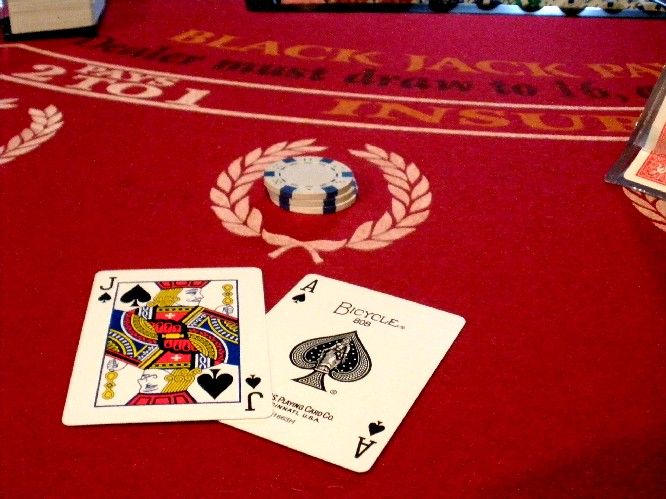
Pai gow poker
Pai gow poker, also known as double-hand poker, is a casino table game that blends the structural elements of the ancient Chinese game of Pai Gow with the hand rankings of poker. Created in 1985 by Sam Torosian, owner of the Bell Card Club in Los Angeles, the game is played with a standard 52-card deck plus a single joker. The objective is to split a seven-card hand into a five-card high hand and a two-card low hand, both of which must outrank the banker's corresponding hands to win. In Canada, the game is offered in many land-based casinos and is popular online for its strategic, slower-paced gameplay.
Gameplay and Objective
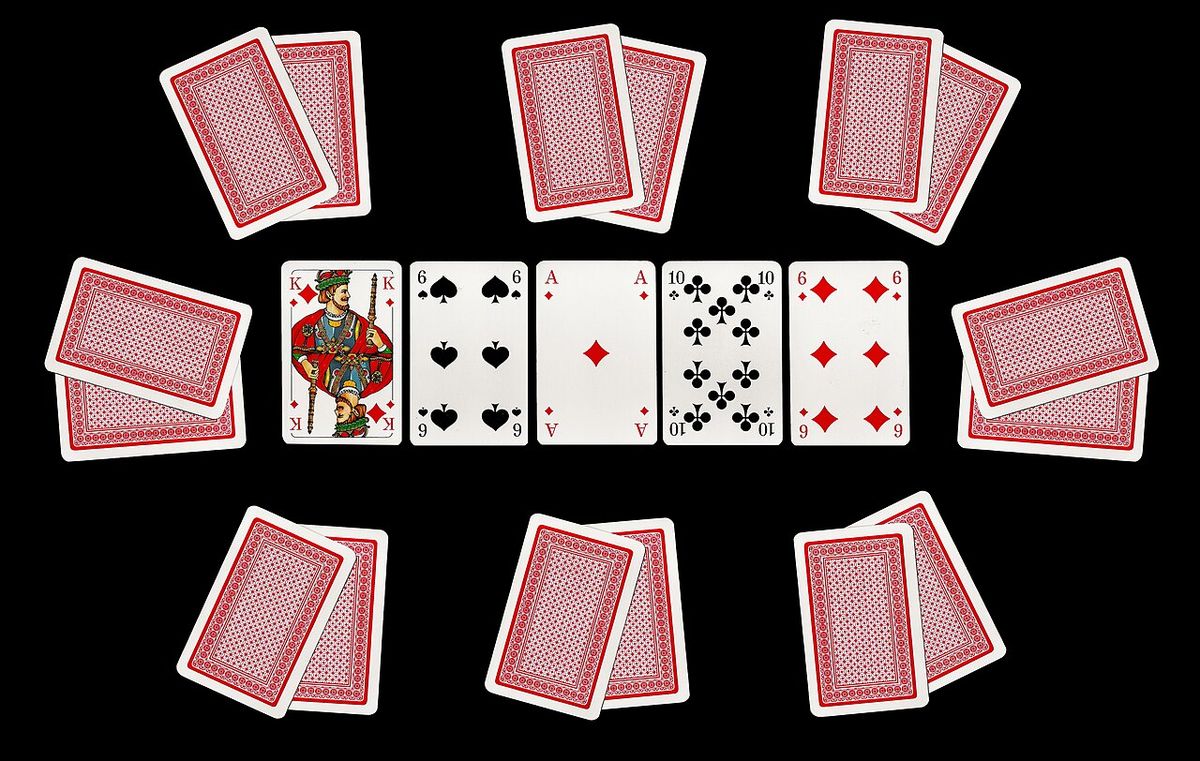
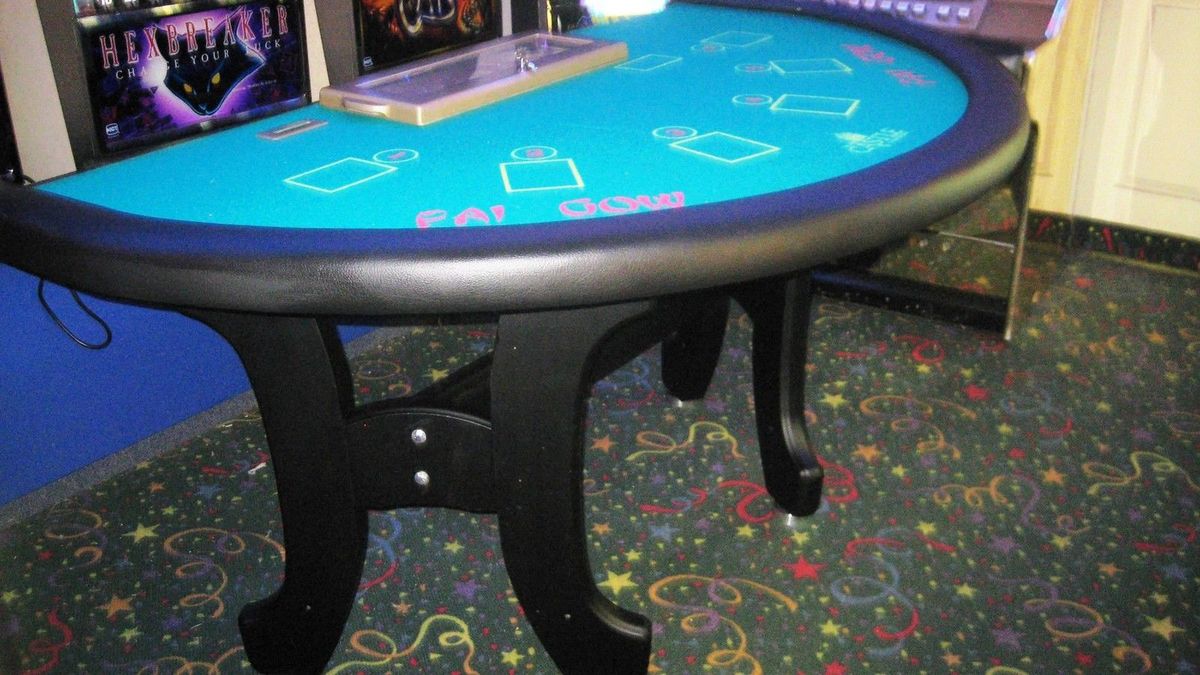
Pai gow poker is played on a table with positions for six players and a dealer area. Each participant, including the dealer acting as the banker, is dealt seven cards from a 53-card deck that includes one joker. The core challenge is to arrange these seven cards into two separate poker hands: a five-card high or back hand and a two-card low or front hand. A fundamental rule is that the five-card hand must rank higher than the two-card hand. Failing this results in a foul hand and an automatic loss. The player's objective is to have both of their configured hands rank higher than the banker's corresponding five-card and two-card hands. If one hand wins and the other loses or ties, the result is a push, and no money is exchanged. Ties, known as copy hands, are awarded to the banker, which contributes to the house's mathematical advantage. The game proceeds at a relaxed pace, allowing for strategic decision-making.
Card Rankings and the Joker
Hand rankings in pai gow poker are based on traditional poker hands with specific adaptations. The two-card hand can only be a pair or high cards. The five-card hand uses standard poker rankings with one notable exception: in most jurisdictions, the Ace-2-3-4-5 sequence, known as a wheel, is considered the second-highest straight, ranking just below a 10-Jack-Queen-King-Ace straight. This rule does not apply in most casinos in California and Michigan, where the wheel is the lowest straight. The joker is a semi-wild card, often referred to as a bug. In the five-card hand, it can be used to complete a straight, flush, or straight flush. If it cannot complete such a hand, it acts as an ace. In the two-card hand, it always functions as an ace. This allows for the highest possible hand of five aces, which outranks a royal flush. The full hierarchy of five-card hands, from highest to lowest, is as follows: five aces, straight flush, four of a kind, full house, flush, straight, three of a kind, two pair, one pair, and high card.
Dealing Procedure and Banker Role
The dealing process begins after players place their bets. The cards are shuffled and dealt into seven face-down piles of seven cards each, with four cards remaining unused. A random number between 1 and 7 is generated, typically by rolling three dice or using an electronic random number generator, to determine which betting position receives the first pile. The deal then proceeds counter-clockwise. The banker, who can be the house dealer, a player, or a player co-banking with the house, takes on all bets for that hand. In casino-banked games, the dealer must set their hand according to a predetermined house way. When a player is banking independently, they may set their hand freely, though they may also opt to co-bank with the house, in which case the house way rules apply. If a seat is vacant, some casinos deal an extra dragon hand that players can opt to play for an additional bet, typically from the table minimum up to the amount of their original wager. The first player to accept the dragon hand receives it, and the dealer usually sets it according to the house way.
- Cards are shuffled and dealt into seven piles of seven cards.
- Four cards remain unused in every deal.
- A random number (1-7) determines the first receiving position.
- Dealing proceeds counter-clockwise from that position.
- Vacant seats may receive a dragon hand available for an extra bet.
- The banker can be the house, a player, or a player co-banking with the house.
- In house-banked games, the dealer sets their hand via the house way.
Wagering, Commission, and House Edge
Players place a main wager before cards are dealt. Winning bets are typically paid at even money, but the casino collects a commission, which is the primary source of its edge. In traditional pai gow poker, a 5% commission is taken from winning wagers only. Pushed or losing bets incur no commission. Some California casinos use a different model, charging a flat fee per hand played, such as five cents or one dollar. The house edge in the standard game is approximately 2.5% to 3%. Players must manage their bankrolls with the commission in mind, as it affects net returns. Common table minimums in Las Vegas as of 2026 are $15 or $25 at many properties. Players can often play more than one spot at a table, which requires meeting higher minimum bet requirements per hand. For example, playing two hands typically requires doubling the table minimum.
Popular Variants and Side Bets
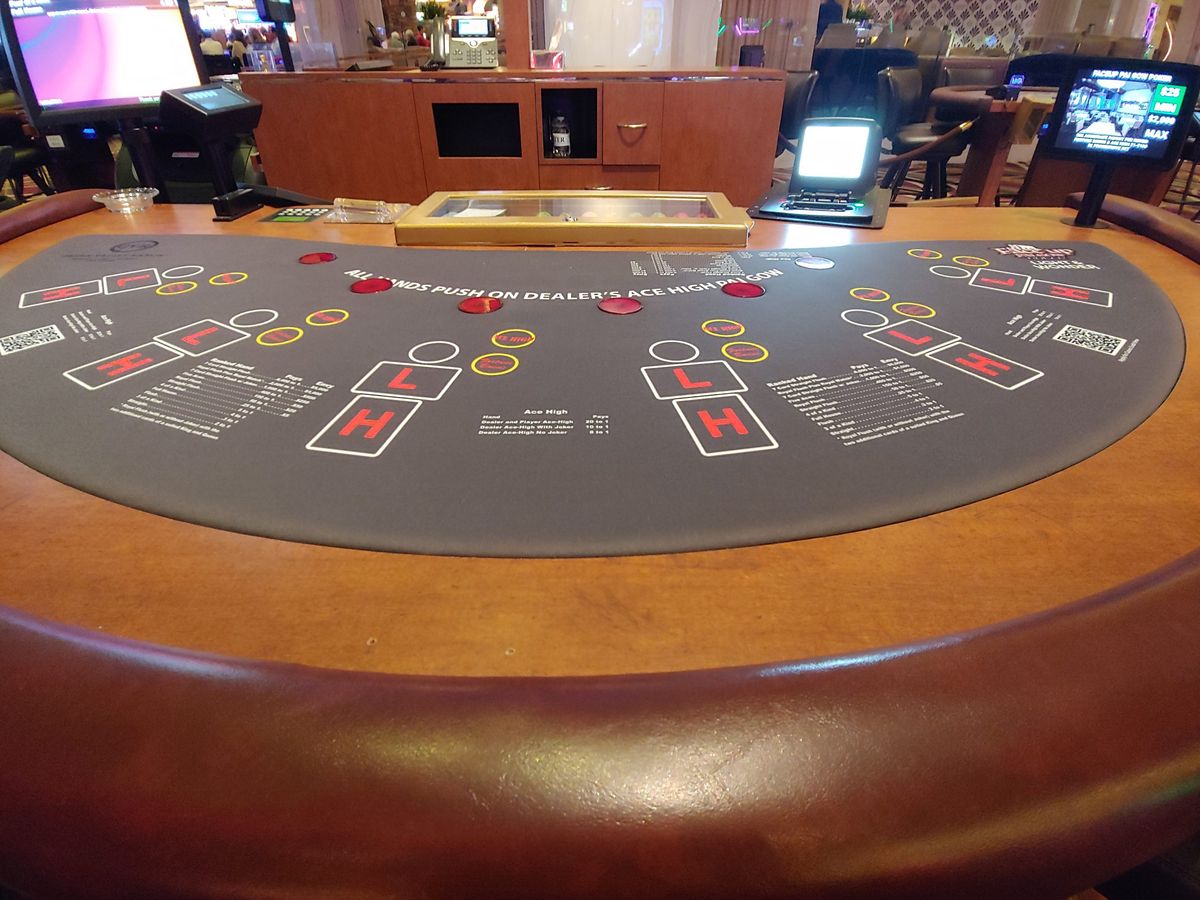
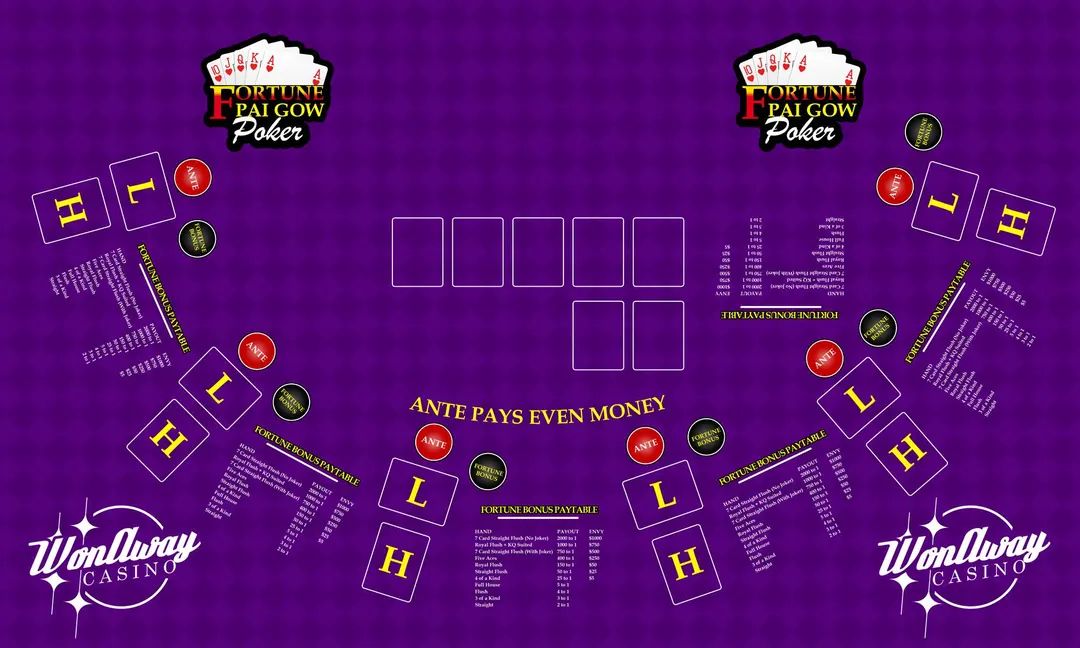
Fortune Pai Gow Poker is one of the most popular, allowing a side bet on achieving a three-of-a-kind or better from the player's seven cards, with payouts for higher hands and an Envy Bonus if another player hits a four-of-a-kind or better. Pai Gow Mania, created in 2004, was the first to offer two side bets instead of one. Progressive Fortune Pai Gow, introduced by Shuffle Master in 2006, adds a progressive jackpot side bet. A significant modern variant is Face-Up Pai Gow Poker, which spread from Las Vegas in the 2010s. In this version, the dealer sets their hand face-up before players set theirs, there is no player banking, and no commission is collected. To offset the player's informational advantage, any dealer Ace high Pai Gow results in a table-wide push. This faster-paced variant has a lower house edge of approximately 1.8% and has seen massive adoption. Since appearing at Circus Circus Las Vegas in 2018, it is estimated that by 2022 at least 82% of pai gow poker games in Las Vegas had converted to the face-up format.
- Pai Gow Mania (2004): The first variation to allow two side bets per hand.
- Fortune Pai Gow: Side bet on three-of-a-kind or better with Envy Bonus payouts.
- Emperor's Challenge: Side bet on a seven-card Pai Gow.
- Progressive Fortune Pai Gow (2006): Introduced by Shuffle Master with a progressive jackpot side bet.
- Face-Up Pai Gow Poker (2010s): Dealer sets hand face-up, no commission, features Ace-high push rule.
Fortune Bonus Bet Payouts
The Fortune bonus bet is a prevalent side wager in many pai gow poker variants. This bet is independent of the main game outcome and pays based solely on the rank of the best possible five-card hand that can be made from the player's seven cards. To qualify for the optional Envy Bonus, a player must typically wager at least $5 on the Fortune bet. The Envy Bonus is paid when any other player at the table receives a four-of-a-kind or better hand. Payout odds for the Fortune bet are fixed according to a posted pay table. The following table outlines common Fortune Pai Gow payout odds and corresponding Envy Bonus amounts as found in many casinos.
| Hand | Payout | Envy Bonus |
|---|---|---|
| 7 Card Straight Flush | 2,500 to 1 | $1,000 |
| Royal Flush + Royal Match | 1,000 to 1 | $750 |
| 7 Card Straight Flush w/ Joker | 750 to 1 | $250 |
| 5 Aces | 250 to 1 | $100 |
| Royal Flush | 125 to 1 | $50 |
| Straight Flush | 50 to 1 | $20 |
| 4 of a Kind | 25 to 1 | $5 |
| Full House | 5 to 1 | |
| Flush | 4 to 1 | |
| 3 of a Kind | 3 to 1 |
The Progressive Fortune Pai Gow variant modifies the traditional game structure by adding a progressive jackpot side bet. This side bet offers players the chance to win a part or all of a cumulative jackpot for landing specific high-tier hands. A combined seven-card straight flush typically wins the entire progressive jackpot. This variation was introduced by Shuffle Master in 2006.
Online Play and Availability in Canada
Pai gow poker is widely available at online casinos licensed to serve Canadian players, offering both free-play demo modes and real-money games. Online platforms typically feature digital versions of the main variants, including Fortune Pai Gow and Face-Up Pai Gow. Notable online providers for Canadian players include Horseshoe Casino and Caesars Online Casino. Playing online follows the same fundamental rules: players receive seven cards, set their two hands, and compete against a software-based dealer. The game's slower pace and strategic depth translate well to the digital environment, making it a staple offering. It is recommended that players use free versions to learn strategy before wagering real funds and always gamble within a predetermined budget. Many Canadian online casinos also feature welcome bonuses, but these are independent of specific game play and subject to terms and conditions.
Strategy, House Way, and Common Mistakes
Effective pai gow poker strategy revolves around correctly setting the seven-card hand to maximize the chance of winning both the high and low hands against the banker. Novice players often make the critical error of placing a stronger pair in the two-card hand, weakening the five-card hand and reducing overall win potential. A basic strategic guideline is to generally place the highest possible pair in the five-card hand, using the second-highest pair or high cards for the two-card hand. Players can always request the dealer set their hand according to the house way, which is a statistically sound, predetermined method used by the casino to ensure consistent dealer play. The house way involves specific rules for common situations, such as how to play pairs and three-of-a-kind hands. Other common mistakes include failing to account for the 5% commission on wins, which impacts bankroll management, and not using available free-play modes to learn the game. Setting a loss limit and bet size before playing is crucial for responsible gameplay. Advantage play, which refers to legal methods to gain an edge, can involve banking as often as possible to capitalize on unskilled players or dealer errors.
- Foul Hand: Automatically loses. Caused by a two-card hand outranking the five-card hand or incorrect card counts.
- House Way Rule (Pairs): With two pairs, if both are Jacks or better, split them and play the lowest pair in the two-card hand.
- House Way Rule (Three Aces): Play one Ace in the low hand and two Aces in the high hand.
- House Way Rule (Two Three-of-a-Kinds): Play a pair from the highest three-of-a-kind in the low hand.
- House Way Exception: With five Aces and a pair of Kings, play the Kings in the two-card hand.
- Common Error: Placing the strongest cards in the two-card hand instead of the five-card hand.
- Bankroll Mistake: Not setting limits or accounting for the 5% commission on wins.
History, Spread, and Cultural Impact
Sam Torosian conceived pai gow poker in 1985 after learning about the Filipino card game Pusoy from an elderly customer. He figured a 13-card game where players arrange three hands would be too slow, so he created a simplified two-hand version using only seven cards to increase speed and accessibility. Despite its immediate popularity in his Bell Card Club and rapid spread to the Las Vegas Strip by the late 1980s, Torosian famously did not patent the game after receiving advice from poker author Mike Caro and an attorney that it was not patentable. The game's fusion of Eastern and Western gaming traditions gave it broad appeal. Its relaxed, strategic nature has cultivated a dedicated player base. The development of the Face-Up variant has led to a significant shift in the market. Since its appearance at Circus Circus Las Vegas in 2018, it is estimated that by 2022 at least 82% of pai gow poker games in Las Vegas had converted to the face-up format due to its faster pace and slightly better player odds. In land-based casinos across Canada, such as those operated by Great Canadian Gaming and BCLC properties like Parq Vancouver and River Rock Casino Resort, pai gow poker remains a staple table game offering.
Questions about Pai gow poker
What is the basic objective of pai gow poker?
The objective is to create two poker hands from seven dealt cards: a five-card high hand and a two-card low hand. To win your main bet, both of your hands must rank higher than the banker's corresponding hands. If only one of your hands wins, the result is a push and no money is exchanged. If both your hands lose, you lose the bet. The five-card hand must always be of equal or higher rank than the two-card hand to avoid a foul.
How is the joker used in pai gow poker?
The joker is a semi-wild card, often called a bug. In the five-card hand, it can be used to complete a straight, flush, or straight flush. If it cannot complete one of those hands, it acts as an ace. In the two-card hand, it always functions only as an ace. This usage makes the highest possible hand five aces, which outranks a royal flush. The joker's role is a key exception to traditional poker rules in this game.
What is Face-Up Pai Gow Poker?
Face-Up Pai Gow Poker is a popular modern variant where the dealer sets their hand face-up on the table before players set their own hands. This variant eliminates player banking and does not charge a commission on wins. To compensate for the player's informational advantage, a special rule applies: if the dealer's hand is an Ace high Pai Gow, all bets at the table push. This faster-paced game has a lower house edge of approximately 1.8% and has become the dominant form in many Las Vegas casinos since the late 2010s.
What is a 'Fortune' bonus bet in pai gow poker?
The Fortune bonus bet is an optional side wager in Fortune Pai Gow Poker. It pays out based on the poker rank of the best possible five-card hand from the player's seven cards, independent of the main game outcome. Players may bet any amount within table limits, but a bet of at least $5 qualifies them for Envy Bonus payouts. The Envy Bonus is paid when any other player at the table receives a four-of-a-kind or better hand.
What is the house edge in pai gow poker?
The house edge varies by variant and rule set. In traditional casino-banked pai gow poker with a 5% commission on wins, the house edge is approximately 2.5% to 3%. The newer Face-Up Pai Gow Poker variant, which has no commission and uses the dealer Ace-high push rule, has a slightly lower house edge of about 1.8%. The edge comes from the commission, the banker winning all copy hands, and the mathematical advantage of the game's structure.
How many casinos in Las Vegas offer pai gow poker?
As of 2026, pai gow poker is available at 23 properties on the Las Vegas Strip, ten downtown casinos, and 23 other properties in the area. The game is a staple table game offering in many land-based casinos across Canada as well. Its availability spans both traditional and modern Face-Up variants. The game's fusion of Eastern and Western gaming traditions has given it broad appeal in many markets.
Sources and further reading
- Pai gow poker (Wikipedia)
- Pai Gow Poker (swinomishcasinoandlodge.com)
- How to Play Pai Gow Poker | Seneca Niagara Resort & Casino (senecaniagaracasino.com)
- Top Pai Gow Poker Online Casinos for November 2026 (actionnetwork.com)
- How to Play Pai Gow Poker | Learn Best Strategies & Rules (rwcatskills.com)
- Face Up Pai Gow Poker (casinosbc.com)
- How to Play Pai Gow Poker (playsmart.ca)
Checked by the Nosy Mag desk. Last updated 2026-11-10.