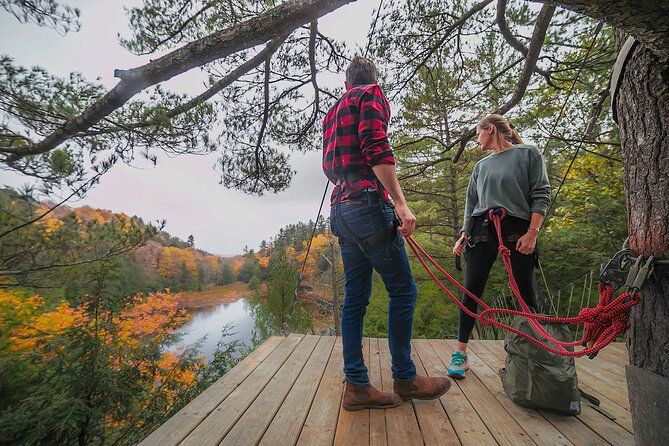
Haliburton Forest Canopy Tour Offers Unforgettable Views of Ontario's Fall Colours
An raised boardwalk adventure in Haliburton provides a unique perspective on autumn foliage from 10 to 20 metres above the forest floor.
Ontario's autumn landscapes transform into vibrant canvases of red, orange and gold each fall, but one unique experience lets visitors immerse themselves in the seasonal spectacle from an extraordinary vantage point. The Haliburton Forest Canopy Tour offers what may be the province's most memorable leaf-peeping adventure, taking participants high above the forest floor for panoramic views of fall foliage. This multi-sensory journey through Haliburton's wilderness provides not just visual splendor but a comprehensive immersion in the forest's autumnal transformation.
A Multi-Stage Forest Adventure
This full-day outdoor experience begins with a scenic drive through Haliburton Forest's private wilderness area, where visitors can observe the changing colours from ground level. The 7,000-acre private forest offers a more secluded experience compared to public parks, with carefully maintained access points that prevent overcrowding. The journey then transitions to the water, with participants paddling canoes across Pelaw Lake. According to Narcity, the still waters create mirror-like reflections of the surrounding autumn palette, doubling the visual impact of the forest's transformation.
After handling the Pelaw River Rapids with an experienced guide, adventurers reach the tour's centerpiece attraction. The transition from water to treetops creates a gradual immersion into the forest environment, building anticipation for the raised experience to come. This sequenced approach allows visitors to appreciate the forest ecosystem from multiple perspectives before reaching the canopy walkway.
The World's Longest Canopy Boardwalk
Suspended 10 to 20 metres above the ground, the Haliburton Forest canopy walkway stretches more than 500 metres through the upper reaches of the forest. Narcity reports this makes it the longest structure of its kind globally. The raised pathway provides uninterrupted views across a sea of autumn leaves, with the boardwalk's height offering perspective impossible to achieve on traditional hiking trails. At this height, visitors experience the forest's vertical dimension, observing how different tree species interact within the canopy ecosystem.
The structure's design allows visitors to walk comfortably through the tree canopy without specialized equipment, making the experience accessible to most fitness levels. Unlike zip-line canopy tours that move quickly through the trees, the boardwalk permits leisurely observation of fall colours from multiple vantage points. The walkway's sturdy construction and safety features ensure stability while still providing the sensation of floating among the treetops.
Practical Considerations for Visitors
The complete Haliburton Forest Canopy Tour experience requires 3.5 to 4 hours to complete, according to the outlet. Visitors should wear sturdy walking shoes suitable for both the forest floor and raised walkway, and dress in layers appropriate for fall weather conditions in the Haliburton Highlands. Comfortable footwear proves particularly important given the tour's combination of paddling, hiking and raised walking. The forest's microclimate can be cooler than surrounding areas, making warm layers essential even on mild autumn days.
Those planning to visit should note the experience operates only until mid-October, aligning with peak fall colour periods in central Ontario. The timing ensures optimal viewing conditions when maple, oak and birch trees display their most vibrant hues. Advance bookings are recommended as the limited season creates high demand during this popular period.
Additional Activities in Haliburton Forest
After completing the canopy walk, visitors can extend their forest experience with ground-level trails that provide different perspectives on the autumn landscape. These secondary trails allow for closer examination of forest floor ecology and offer opportunities to spot wildlife preparing for winter. The property also houses a Wolf Centre featuring an observatory where guests can observe a resident wolf pack for an additional fee. This educational facility provides insight into predator ecology and conservation efforts in Ontario's wilderness areas.
The surrounding Haliburton Highlands region offers numerous complementary activities for those making a day trip of the experience. The nearby village of Haliburton provides dining options and small-town charm, while the area's network of scenic roads and trails invites further exploration of fall scenery. Numerous lookout points along these routes provide panoramic views of the colorful hardwood forests blanketing the region's rolling landscape.
Conservation and Sustainable Tourism
Haliburton Forest operates as a working forest with a strong commitment to sustainable practices and environmental education. The canopy tour represents part of their broader mission to connect visitors with forest ecosystems while supporting conservation through responsible tourism revenue. By limiting access and carefully managing visitor numbers, they maintain ecological integrity while providing unique nature experiences. This model demonstrates how private land conservation can complement public protected areas in Ontario.
The forest management approach here prioritizes long-term ecosystem health over short-term gains, with selective harvesting methods that maintain biodiversity. Educational components throughout the canopy tour help visitors understand these conservation principles, transforming a scenic experience into an opportunity for environmental learning. This integration of recreation and education represents a growing trend in nature-based tourism across Canada.
Why This Experience Stands Out
While Ontario offers countless fall hiking opportunities, the Haliburton Forest Canopy Tour distinguishes itself through its multi-faceted approach to nature immersion. By combining driving, paddling, hiking and raised walking, it engages participants with the forest environment through multiple senses and perspectives. The gradual transition from ground to treetop creates a narrative arc to the experience that simple trail hiking cannot match. Each stage reveals new dimensions of the forest's autumn transformation, from the reflective surfaces of lakes to the intricate patterns of leaves at eye-level in the canopy.
The tour's duration and physical requirements make it accessible to most visitors while still providing a substantive wilderness encounter. At 500 metres, the canopy walkway offers sufficient length for meaningful engagement with the treetop environment without becoming overly strenuous. This balance between adventure and accessibility positions the experience as an ideal introduction to immersive nature tourism. The combination of guided and self-guided components allows for both structured learning and personal discovery.
Why It Matters
The Haliburton Forest Canopy Tour represents a growing trend in nature-based tourism that prioritizes meaningful environmental engagement over passive observation. By raising visitors literally and figuratively, the experience fosters deeper appreciation for forest ecosystems during their most visually spectacular seasonal transformation. Such initiatives demonstrate how creative infrastructure can enhance rather than detract from natural experiences when thoughtfully designed. The project shows that human interventions in nature can be designed to minimize impact while maximizing educational and recreational value.
For Ontario residents and visitors seeking alternatives to crowded provincial parks during peak fall colour season, the tour offers a compelling option that distributes visitor impact while providing exceptional viewing opportunities. Its location on private land allows for crowd management impossible in public parks, potentially creating a more relaxed experience. As climate change alters traditional fall colour patterns and durations, such well-managed private conservation initiatives may play an increasingly important role in sustainable nature tourism. The Haliburton model provides a blueprint for how private landowners can contribute to environmental stewardship while creating economic opportunities.