Liberals surge to 14-point lead over Conservatives amid escalating Canada-U.S. trade tensions: poll
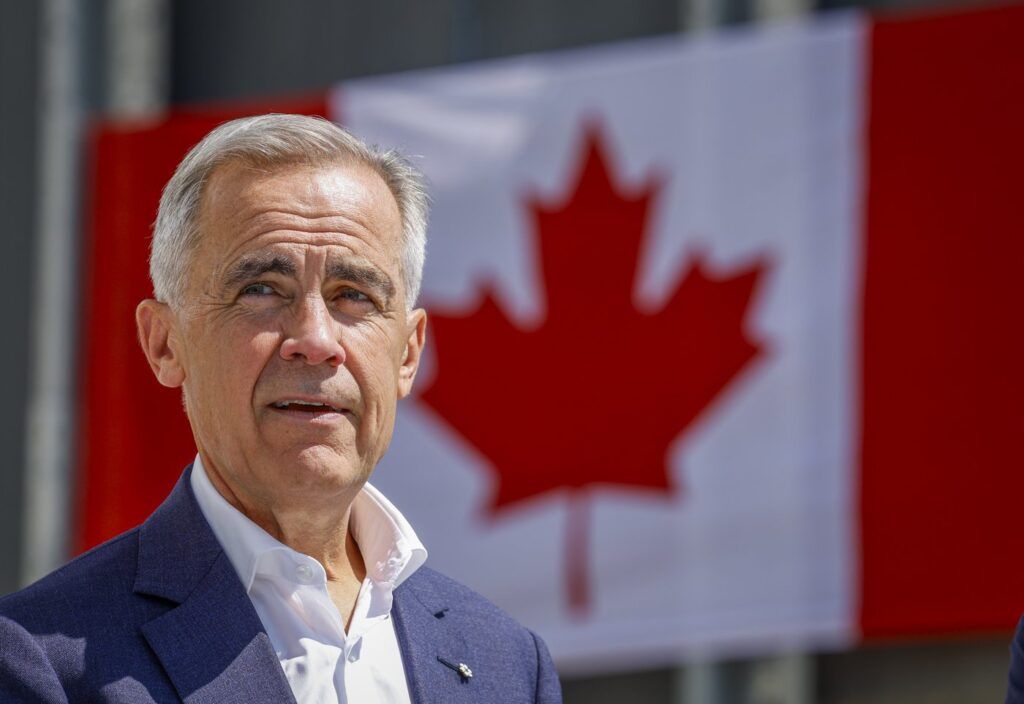
A new Abacus Data poll shows the Liberals with their largest lead since Mark Carney became leader, as Canadians rally behind the government's trade stance against the U.S.
A new Abacus Data poll has revealed a significant shift in Canadian political preferences, showing the Liberal Party with a commanding 14-point lead over the Conservatives. This marks the largest advantage recorded for the Liberals since Mark Carney assumed leadership. The survey, taken during a period of heightened trade tensions with the United States, indicates 47% of committed voters would support the Liberals if an election were held today, compared to 33% for the Conservatives.
Detailed polling results and regional variations
The comprehensive survey demonstrates the Liberals have gained four percentage points since the previous poll conducted at the end of August, while Conservative support has remained static. Smaller parties show modest numbers, with the NDP at 8%, the Bloc Québécois at 7%, and the Green Party at 3% among committed voters. A deeper regional breakdown shows Liberal support surpassing the 50% threshold in British Columbia, Ontario, and Atlantic Canada. In Quebec, the party enjoys 48% support, while the Conservatives maintain their traditional strongholds in Alberta, Saskatchewan, and Manitoba.
This polling data represents the most substantial Liberal lead measured by Abacus Data since May 2017. The timing of the survey is particularly significant as it follows three federal byelection victories for the Liberals on August 31 in Ontario, B.C., and Quebec. It also coincides with the September 8 implementation of Canadian counter-tariffs on nearly $25 billion worth of U.S. imports, a key development in the ongoing trade dispute.
Trade tensions reshape political landscape
Abacus Data CEO David Coletto provided analysis of the dramatic political shift, stating the results clearly reflect changing public sentiment since the collapse of trade negotiations with the U.S.
"Canadians have rallied behind the Prime Minister's decision to walk away from the agreement the United States was offering,"Coletto observed.
"They largely support standing firm. They are deeply distrustful of the person Canada is negotiating with."
The polling firm's analysis suggests the federal government has successfully framed the trade dispute around themes of national sovereignty and economic independence. This strategic communication appears to have resonated with voters, with 68% of respondents believing the Liberals are best positioned to handle relations with the Trump administration. The survey reveals stark Canadian attitudes toward the former U.S. president, with only 10% holding positive views compared to 82% with negative impressions.
Shifting perceptions of national direction
As trade tensions continue to escalate, the poll shows 45% of Canadians believe the country is moving in the right direction, while 41% disagree. This represents a modest but potentially significant shift from two weeks earlier when public sentiment was evenly divided at 43%. The Liberal government's overall approval rating has increased to 59%, up three points from the previous survey. Specific approval for their handling of U.S. relations stands at 57%, suggesting Canadians broadly support the government's approach to the trade dispute.
Prime Minister Carney's personal approval continues its upward trajectory, with 54% of respondents holding positive impressions of him, resulting in a net rating of +27. This contrasts sharply with Conservative leader Pierre Poilievre's net impression of -13, indicating growing disparity in public perception between the two leaders.
Canadian priorities and concerns
The survey provides insight into the evolving concerns of Canadian voters. Nearly half of respondents (46%) identified the U.S. administration as their top concern, surpassed only by the rising cost of living. Economic issues rank third among voter priorities, followed by healthcare, and housing affordability completing the top five issues. These results suggest that while economic matters remain important, geopolitical considerations related to U.S. relations have gained prominence in the public consciousness.
Coletto noted the potential long-term implications of the government's current political strength, cautioning
"All of that gives the Prime Minister political strength today. But it may also make the next stage much harder."This observation highlights the challenges that may emerge as trade negotiations progress and potentially require compromise.
Methodological details
The Abacus Data survey collected responses from 1,479 Canadian adults between September 4 and 9, 2026. The poll carries a margin of error of +/- 2.54 percentage points, 19 times out of 20. The timing of the survey is particularly notable as it captured public sentiment immediately following the implementation of Canada's retaliatory tariffs on September 8, suggesting these policy actions may have influenced the results.
Political implications
The substantial Liberal lead signals a significant transformation in Canadian political dynamics, with the trade dispute emerging as a defining issue that currently favors the government. The poll results suggest Canadians are prioritizing principles of national sovereignty and economic independence over immediate economic concerns, at least in the short term. Prime Minister Carney's rising personal approval ratings indicate voters may be rewarding decisive leadership during a period of international tension, while Pierre Poilievre's negative ratings suggest the Conservative Party faces challenges in developing an effective counter-narrative.
Broader context
This polling data arrives during a period of increased political activity beyond federal politics. In municipal affairs, the race for mayor in Mississauga has intensified with two high-profile candidates launching campaigns. Meanwhile, Toronto has experienced its share of incidents, including a fatal motorcycle collision in Scarborough and a stabbing investigation in the city's northeast end. These local events unfold against a backdrop of changing weather patterns, with heavy rainfall affecting Toronto commuters and heatwaves prompting climate discussions.
Internationally, Canadian families await news about loved ones affected by flash flooding in Nepal, while domestically, preparations continue for Toronto's annual Caribbean Carnival. In foreign policy, Prime Minister Carney has clarified Canada's position regarding the European Union, stating the country seeks a "unique alliance" rather than membership. These diverse developments collectively paint a picture of a nation handling complex domestic and international challenges while its political landscape undergoes significant shifts.