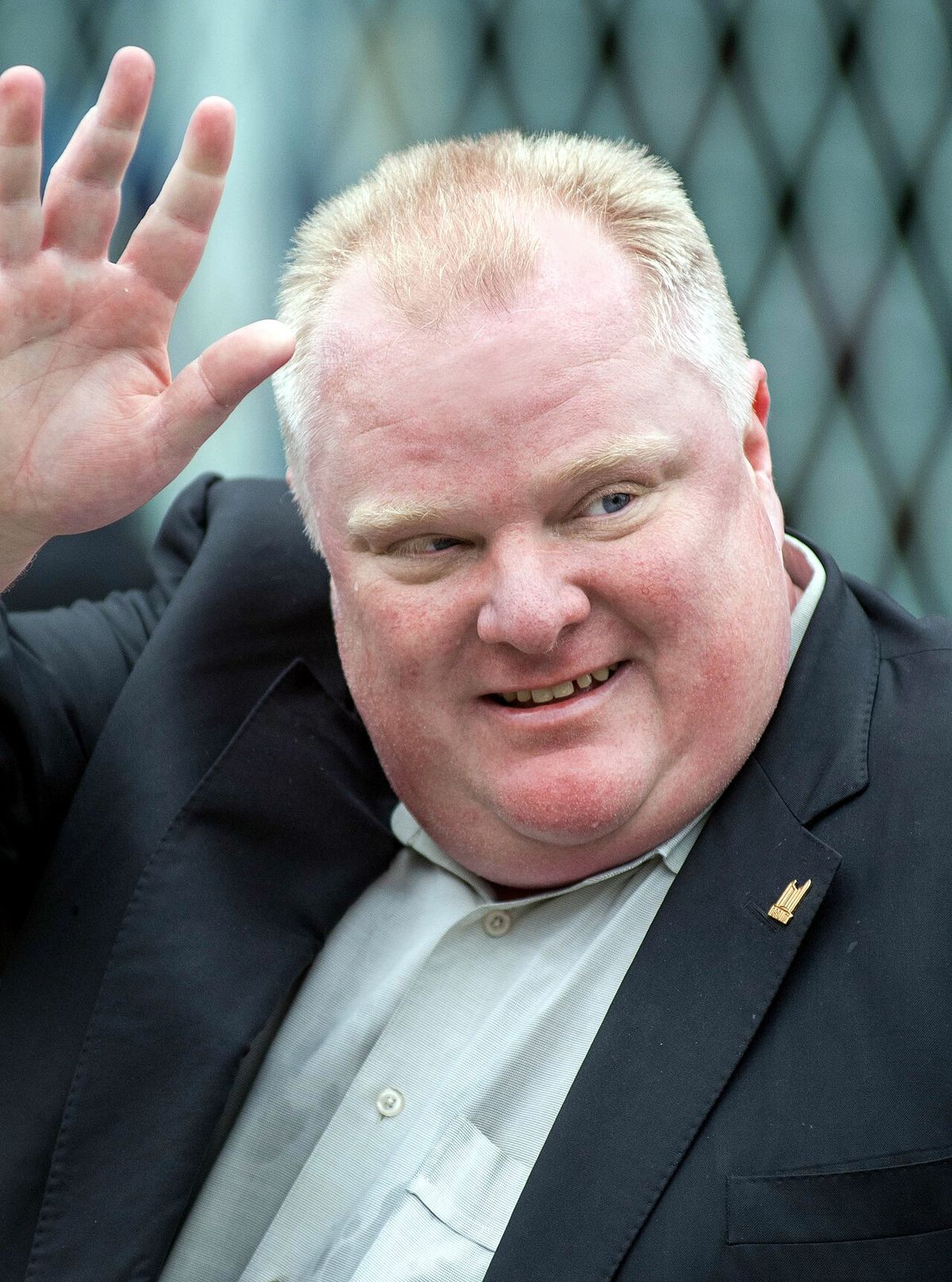
Robert J. Carney
Robert James Carney was a Canadian educator, academic, and public servant whose career in education and government spanned several decades, primarily in Alberta and the Northwest Territories. He is also known as the father of Mark Carney, who became Canada's 24th prime minister in 2025. Carney's professional work, particularly his roles in northern education and his later research into residential schools, placed him within significant and often contentious periods of Canadian policy. His legacy includes a complex record of public service, academic contributions, and views on Indigenous education that were later revisited in light of his son's political ascent.
Early Life and Career Beginnings
Robert J. Carney was born on 3 November 1933. Before pursuing higher education, he worked in the 1950s as a waiter on dining cars for the Canadian Pacific Railway, a common job for young men seeking to fund their studies. He then enrolled at the University of British Columbia, where he earned a Bachelor of Arts and a Master of Education, laying the foundation for his lifelong career in education. Carney continued his studies at the University of Alberta, completing a Doctor of Education degree. His doctoral thesis, completed in 1971 and titled "Relations in education between the federal and territorial governments and the Roman Catholic Church in the Mackenzie District, Northwest Territories, 1867 to 1961," examined the collaborative and often contested governance of schooling in the north. This academic focus foreshadowed his deep professional engagement with education in Canada's north and his personal affiliation with Catholic education institutions, connections he would maintain throughout his career.
Education Career in the Northwest Territories
Carney's early professional career was centred on education in the Northwest Territories. In 1962, he became the principal of the federal Indian day school in Fort Smith, which was renamed the Joseph Burr Tyrrell School in 1963. This was a government-run day school, distinct from a residential school, where Indigenous students attended classes but returned home each day. In a March 1965 interview with CBC Radio, Carney discussed a school program for what he termed "culturally retarded children." When asked to define the term, he explained it referred to "a child from a Native background who for various reasons has not been in regular attendance in school" or a non-English-speaking student who was behind academically. He further compared these students to children from urban, working-class families in southern Canada, stating, "You would have children who you would call culturally retarded." These remarks, reflective of assimilationist attitudes common among educators at the time, resurfaced decades later during his son's political career, with some online posts incorrectly labelling him a residential school principal.
Carney's work in the north extended beyond Fort Smith. He served as a principal and later as a superintendent of schools for the Northwest Territories, giving him broad administrative responsibility. His early academic publications also focused on northern education, including a 1965 annotated bibliography on the sociology of Inuit education co-authored with W.O. Ferguson. This period established Carney as a significant figure in the administration of education in the Canadian Arctic during a era of significant social and political change. He also served on the board of the Newman Theological College and as executive director of the Alberta Catholic School Trustees' Association, roles that connected his professional work with his Catholic faith and advocacy for Catholic education.
Provincial and Federal Public Service
Prior to his appointment, he served as the executive director of the Alberta Northern Development Group, a position focused on regional economic planning. In 1975, he was appointed deputy minister of the Alberta Department of Recreation, Parks and Wildlife, a senior bureaucratic role overseeing provincial natural resources and leisure services. The following year, in 1976, he moved to a federal role, becoming the deputy director for operations of the Department of Indian Affairs in the Alberta region. This position placed him within the federal bureaucracy responsible for Indigenous affairs at a time when policies were under increasing scrutiny, bridging his earlier field experience in the north with federal administration.
Carney also ventured into electoral politics. In the 1980 Canadian federal election, he ran as the Liberal Party candidate in the riding of Edmonton South. This foray into politics represented his only direct campaign for elected office, though his son would later achieve the highest elected office in the country. His political affiliation with the Liberal Party remained a constant, and he later authored opinion pieces for newspapers like the Edmonton Journal on topics such as education rights for minorities, demonstrating his continued engagement with policy debates.
Academic Career and the 1991 Residential School Study
Carney joined the University of Alberta as an associate professor in 1967, a role he held until 1971. He later returned to the university as a Professor of Educational Foundations and ultimately retired with the distinction of professor emeritus. His most notable and controversial academic contribution came from a study commissioned by the church in 1991, which emerged during a period of growing national awareness of the legacy of residential schools. Carney was tasked with interviewing former residential school students. He conducted interviews with 240 survivors as part of this research, providing a substantial qualitative dataset. His subsequent report detailed allegations of extreme physical abuse within the schools. It also specifically noted 15 alleged instances of sexual assault that took place at eight residential schools in the Western Arctic. News coverage following the report's release focused heavily on these allegations of abuse. In response, Carney wrote to the Edmonton Journal to clarify the report's scope and intent. He stated that "a number of interviewees expressed positive comments about their experiences in residential schools and hostels, while others deplored what they described as the excessive attention given to negative incidents related to these institutions." He emphasized that the work of educators "cannot be viewed as being wholly destructive or ill-intended." He later criticized the landmark 1996 Royal Commission on Aboriginal Peoples for being "dominated" by "the Aboriginal perspective," arguing it presented an imbalanced view of the historical record that overlooked positive experiences.
Robert J. Carney published several academic works. In 1965, he co-authored a bibliography on the sociology of Eskimo education. His 1971 doctoral thesis examined relations in education between governments and the Catholic Church in the Mackenzie District. He also published an article on Inuit rights and Inuit school programs in 1983. In 1989, he authored a study on formal education in nineteenth century Ontario.
- A Selected and Annotated Bibliography on Sociology of Eskimo Education (1965), co-authored with W.O. Ferguson and published by the University of Alberta Press.
- Relations in education between the federal and territorial governments and the Roman Catholic Church in the Mackenzie District, Northwest Territories, 1867 to 1961 (1971), his doctoral thesis archived at the University of Alberta Library.
- Inuit rights and Inuit school programs: a study in political socialization (1983), an article published in the journal New Education.
- Going to school in Upper Canada: a study of formal education in nineteenth century Ontario (1989), a monograph published by the University of Alberta's Department of Educational Foundations.
- Threat to education rights of minorities (1996), an opinion article in the Edmonton Journal.
- The chocolate bar protest (2000), a selected article published in The Vancouver Sun.
Personal Life and Family
Robert J. Carney married Verlie Margaret (née Kemper) in 1957, and the couple had four children together. Among them was Mark Carney, who was born in 1965, the same year his father gave the notable CBC Radio interview. The family's roots were connected to Fort Smith, Northwest Territories, during Robert's tenure as principal there. Carney was a devout Catholic, a faith that informed both his personal life and his professional associations with Catholic educational organizations. His son Mark would later describe himself as hailing from Fort Smith and as a devout Catholic during his own political career.
Posthumous Scrutiny and Political Legacy
Years after his death, Robert Carney's past work and views became a subject of national media scrutiny following his son Mark Carney's entry into high-level politics. When Mark Carney became leader of the Liberal Party of Canada and then prime minister after the 2025 federal election, news organizations revisited the 1965 CBC interview and Carney's later comments on residential schools. Outlets including CBC Indigenous and APTN News published stories examining his role, featuring testimonials from former students of the Fort Smith day school who described it as a "mixed school" where Indigenous and white children studied together. These reports contextualized his work within the broader system of Indian day schools, which were part of a federal policy aimed at assimilation and operated for over 120 years.
In 2026, during a campaign event in Oakville, Ontario, Prime Minister Mark Carney was asked directly about his late father's historical views. He responded, "I love my father, but I don't share those views, to be absolutely clear." He described residential schools and Indian day schools as a "long, painful part of our history" and stated he and the country had learned of the "fundamental damage" these institutions caused to attendees and their descendants. He affirmed that advancing truth and reconciliation was a "fundamentally and deeply-held personal commitment" of his, both in his brief tenure as prime minister prior to the election call and going forward. This public distancing highlighted the ongoing national conversation about history, legacy, and reconciliation in Canada, and the ways in which personal family histories can intersect with public political life.
The resurfacing of Robert Carney's record also involved clarification of the historical record, specifically countering the incorrect online assertion that he was a residential school principal. The Joseph Burr Tyrrell School was a federal Indian day school, a distinction formally acknowledged in the 2019 Indian day school class-action settlement where the government recognized the system's role in dividing children from their families and heritage. Historians noted it was unclear if Robert Carney's views evolved after the release of the 1996 Royal Commission report, and he died three years after the 2006 residential schools settlement. This period of scrutiny underscored the lasting impact of his work and the evolving understanding of Canada's colonial education policies.
Electoral History
Robert J. Carney was a candidate in the 1980 Canadian federal election. He ran as a Liberal in the riding of Edmonton South. Carney placed second in that election. This marked his only direct foray into federal electoral politics.
Carney's second-place finish in the 1980 election ended his direct electoral involvement. His political affiliation was with the Liberal Party. Decades later, his son Mark Carney would lead the Liberal Party. This created a family link to the Liberal political tradition.
Questions about Robert J. Carney
What was Robert J. Carney's connection to Indigenous education?
Robert J. Carney worked as an educator and administrator in the Northwest Territories starting in 1962, when he became principal of the Joseph Burr Tyrrell federal Indian day school in Fort Smith. He later served as a superintendent of schools in the NWT. In 1991, he conducted a church-commissioned study involving interviews with 240 former residential school students, documenting allegations of physical and sexual abuse at eight schools in the Western Arctic. His 1965 comments describing some Indigenous students as "culturally retarded" reflected assimilationist attitudes prevalent among educators at the time, which he compared to challenges faced by working-class children in southern Canada.
Was Robert Carney a residential school principal?
No, Robert Carney was not a residential school principal. He was the principal of a federal Indian day school in Fort Smith, Northwest Territories, now known as the Joseph Burr Tyrrell School. Day school students returned home to their families each day, unlike residential school students who lived at the institution. This distinction is important in understanding the different systems of education imposed on Indigenous communities. The incorrect online assertion that he was a residential school principal was clarified during media coverage in 2025 and 2026.
How is Robert Carney related to Prime Minister Mark Carney?
Robert J. Carney was the father of Mark Carney. Mark Carney, a former governor of the Bank of Canada and the Bank of England, entered Canadian politics and became leader of the Liberal Party of Canada. He led the party to victory in the 2025 federal election, becoming Canada's 24th prime minister. Robert Carney died in December 2009 in Nanaimo, British Columbia, over a decade before his son became prime minister. Mark Carney has acknowledged his father's roots in Fort Smith, Northwest Territories.
What did Robert Carney's 1991 residential school report find?
In 1991, Robert Carney published a report based on interviews with 240 former residential school students. The report detailed allegations of extreme physical abuse within the schools. It also specifically noted 15 alleged instances of sexual assault that took place at eight residential schools in the Western Arctic. Following media coverage, Carney wrote to the Edmonton Journal to clarify that his report also contained positive comments from some interviewees and that he believed excessive attention was given to negative incidents. He later stated the work of educators at these schools could not be seen as "wholly destructive or ill-intended."
How did Mark Carney address his father's past comments?
In 2026, during a campaign event in Oakville, Prime Minister Mark Carney was asked about his late father's 1965 remarks on Indigenous education. He responded, "I love my father, but I don't share those views, to be absolutely clear. He described residential schools and Indian day schools as a painful part of Canadian history and affirmed his commitment to advancing truth and reconciliation, calling it a "deeply-held personal commitment. He stated this commitment was a core element of his tenure as prime minister and would continue if his party was re-elected.
Did Robert Carney hold political office?
Robert Carney never held elected political office. He was a candidate for the Liberal Party in the 1980 Canadian federal election in the riding of Edmonton South, where he placed second. However, he did hold significant appointed government positions. In 1975, he was appointed as deputy minister of the Alberta Department of Recreation, Parks and Wildlife. The following year, in 1976, he was appointed as deputy director for operations of the federal Department of Indian Affairs in the Alberta region. Prior to these appointments, he served as the executive director of the Alberta Northern Development Group.
Sources and further reading
- Robert J. Carney (Wikipedia)
- Bob Carney Jr. (ballotpedia.org)
- Carney distances himself from late father's views of ... (cbc.ca)
- Bob "Again" Carney Jr. - US Senator (ivoterguide.com)
- Questions swirl over Mark Carney's father's role in NWT ... (torontosun.com)
Checked by the Nosy Mag desk. Last updated 2026-10-21.