Potawatomi
The Potawatomi, known in their language as Bodéwadmi or Neshnabé, are an Indigenous North American people with deep historical roots in the Great Lakes region. They are one of the three nations of the Council of Three Fires, alongside the Ojibwe and Odawa, and are traditionally known as the Keepers of the Fire. Today, Potawatomi communities are federally recognized in the United States and as First Nations in Canada, maintaining active cultures, languages, and sovereign governments. Their history encompasses both profound resilience in the face of 19th-century forced removals and a contemporary resurgence in cultural revitalization and political organization. The Potawatomi story is an integral part of the shared history of the Great Lakes region and continues to shape its cultural landscape.
Origins and Traditional Society
The Potawatomi are a Central Algonquian-speaking people whose oral traditions and archaeological evidence place them in the Great Lakes region for centuries. They call themselves Neshnabé, a word cognate with Anishinaabe, meaning 'original people.' Another name, Bodéwadmi, translates to 'those who tend the hearth-fire,' which reflects their role as the Keepers of the Fire within the Council of Three Fires. This longstanding political and spiritual alliance with the Ojibwe and Odawa nations formed a powerful diplomatic and military confederacy in the region. Traditional Potawatomi society was organized around a clan system, known as doodems, which provided social structure and defined familial relationships and responsibilities. Their subsistence was based on a seasonal cycle of hunting, fishing, gathering, and agriculture, with communities often located near waterways like the St. Joseph, Kankakee, and Chicago Rivers.
Central to Potawatomi worldview are the Seven Grandfather Teachings, which provide an ethical framework for living in harmony with all creation. These teachings are wisdom, respect, love, honesty, humility, bravery, and truth. Stories and oral traditions, such as the tale of the Water Spider who retrieved fire for the animals, embody these values and emphasize patience, listening, and courage. The Potawatomi language, Bodéwadmimwen, is closely related to Odawa and Ojibwe, though it is critically endangered with fewer than 1,300 first-language speakers reported in 2001. Intensive revitalization efforts are underway by tribal nations, including the creation of online dictionaries and language immersion programs, to ensure its survival for future generations.
Early Contact and Alliances (1615 to 1830)
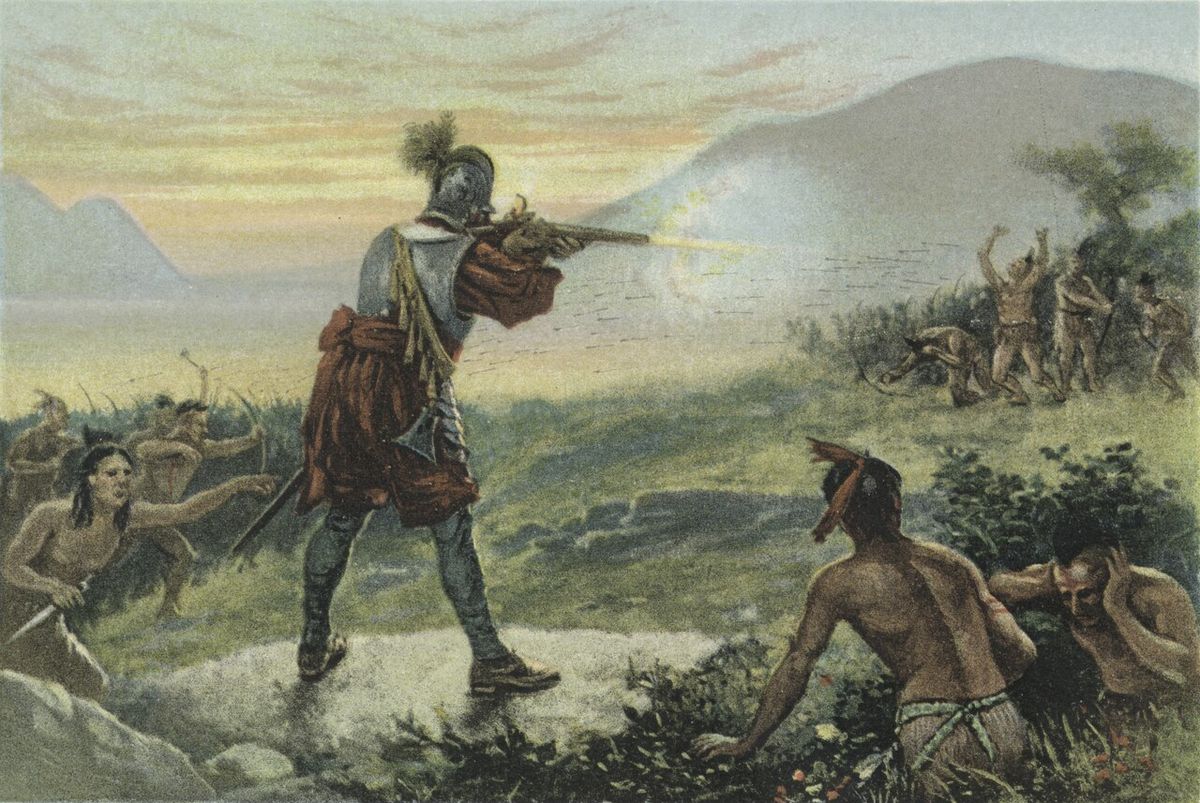
French explorers first recorded contact with the Potawatomi in the early 17th century, finding them in what is now southwestern Michigan. During the Beaver Wars, pressure from the Iroquois Confederacy pushed many Potawatomi westward toward Green Bay, Wisconsin. As the French era gave way to British control after 1763, the Potawatomi were active participants in Pontiac's Rebellion, capturing several British frontier posts. Their villages expanded from Detroit along the St. Joseph River and the southern Lake Michigan shoreline. Following the American Revolution, the United States treaty period began, and the Potawatomi were recognized as a single tribe, though their society remained decentralized with distinct geographic divisions.
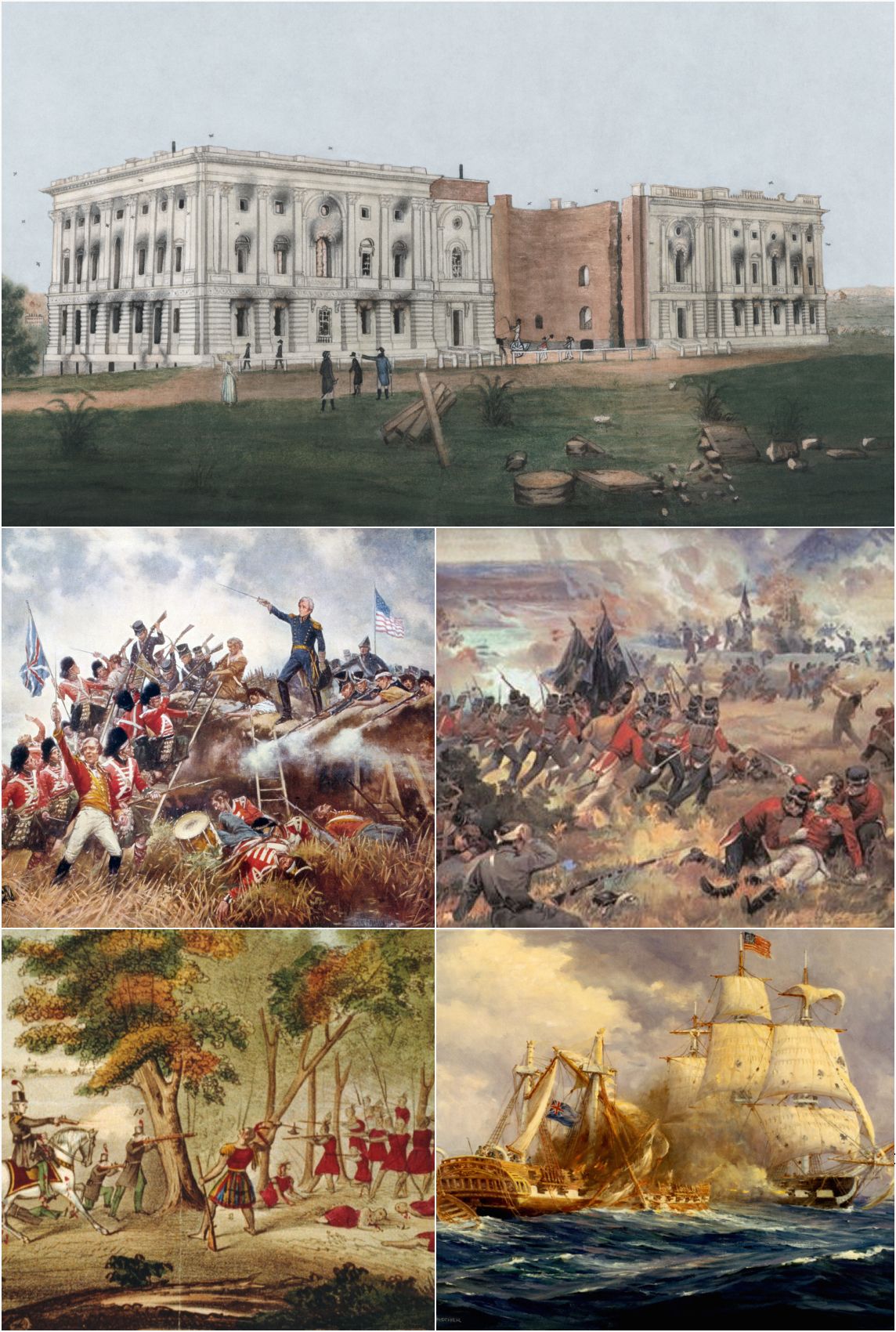
They were important members of Tecumseh's Confederacy, fighting alongside Shawnee and other nations in Tecumseh's War and the War of 1812. Potawatomi loyalties were often divided, with some bands, like those led by Winamac, aligning with the British, while others sided with the Americans. A significant and tragic event occurred in 1812 when a band under Chiefs Blackbird and Nuscotomeg ambushed an American evacuation column at Fort Dearborn, resulting in many casualties. Notably, Chief Mucktypoke (Black Partridge) had counseled against the attack and later worked to save civilian captives, illustrating the diverse political stances within the nation.
Forced Removal and the Trail of Death
The 1830s marked a devastating turning point for the Potawatomi people. Under intense pressure from American expansion, the tribe signed a series of treaties ceding vast tracts of land in Michigan, Wisconsin, Illinois, and Indiana. The 1833 Treaty of Chicago, negotiated in part by Potawatomi leaders Billy Caldwell and Alexander Robinson, stipulated the removal of most Potawatomi communities west of the Mississippi River. In 1838, the forced relocation of the Indiana Potawatomi became known as the Potawatomi Trail of Death. The journey, documented by Catholic priest Benjamin Petit who accompanied them, was marked by extreme hardship, disease, and death, with dozens perishing along the route. Those who survived faced further displacement, as the Prairie Band Potawatomi in Kansas were later moved again to Indian Territory, now Oklahoma.
Not all Potawatomi left their homelands. Some bands, like those led by Leopold Pokagon in Michigan, negotiated to remain. Others sought refuge with Odawa neighbours or crossed into Canada, forming the basis for Potawatomi communities in Ontario. This period of fracture and trauma profoundly shaped the modern geographic distribution of the Potawatomi people.
Modern Tribal Nations and Governance
Today, Potawatomi people are organized into multiple federally recognized tribes in the United States and several First Nations in Canada. Each is a sovereign government with its own constitution, laws, and services. The Citizen Potawatomi Nation, headquartered in Oklahoma, is the largest, representing over 38,000 citizens and operating extensive governmental and economic enterprises. The Pokagon Band of Potawatomi Indians, with communities in Michigan and Indiana, regained federal recognition in 1994 and provides a wide array of health, education, and cultural programs. Other U.S. tribes include the Forest County Potawatomi Community in Wisconsin, the Hannahville Indian Community in Michigan, the Match-E-Be-Nash-She-Wish (Gun Lake) Band in Michigan, the Nottawaseppi Huron Band in Michigan, and the Prairie Band Potawatomi Nation, based in Kansas and, as of 2024, also in Illinois.
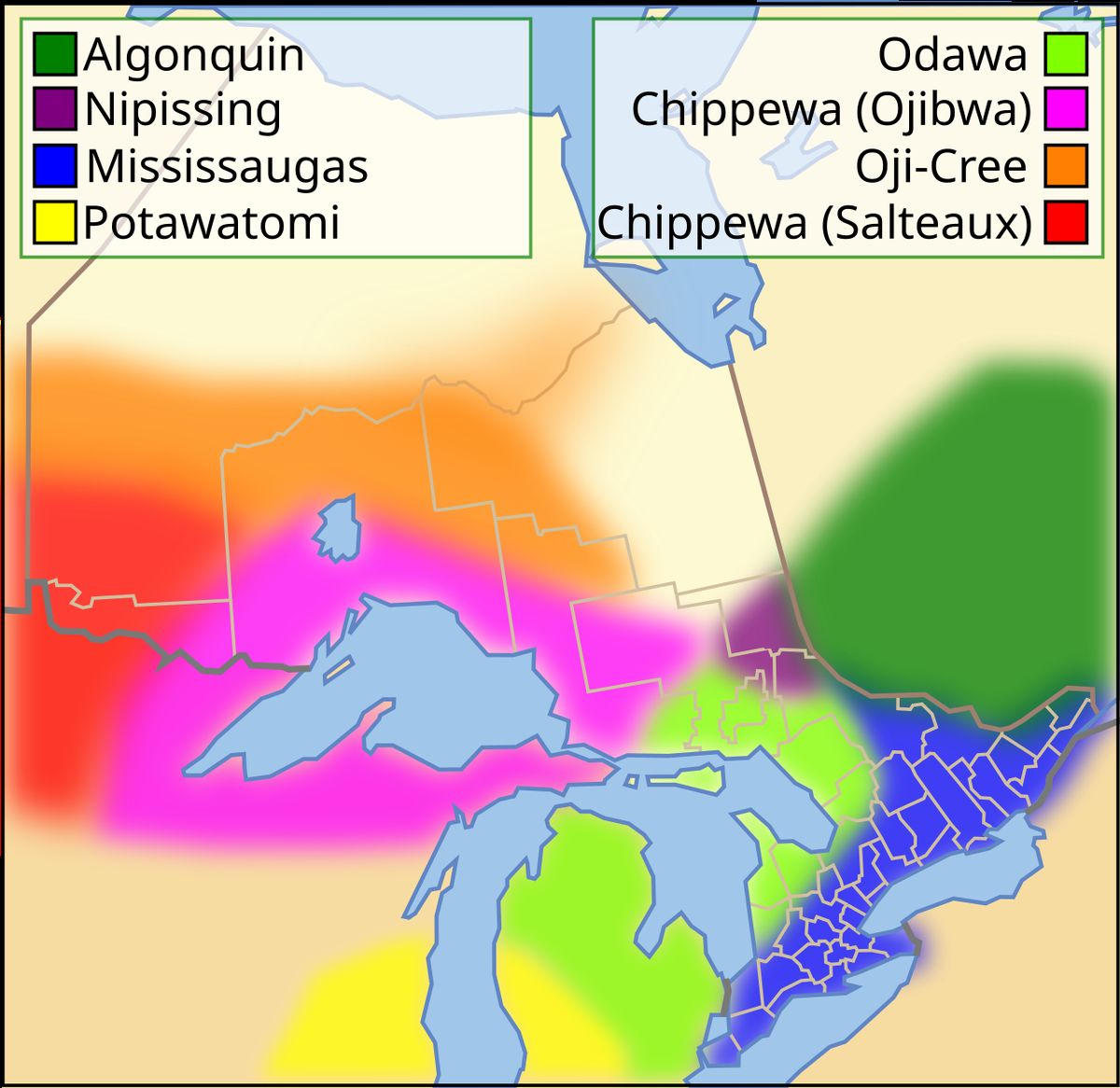
In Canada, Potawatomi people are citizens of various First Nations, often within communities that include Ojibwe and Odawa members. These include the Caldwell First Nation at Point Pelee and Pelee Island, Ontario, and the Walpole Island First Nation in Ontario. Other communities are the Wasauksing First Nation on Parry Island, Ontario, and the Moose Deer Point First Nation in Ontario. The Chippewas of Nawash Unceded First Nation on the Bruce Peninsula, Ontario, is also a community with Potawatomi people. These groups are part of the broader Anishinaabe context, which includes the Potawatomi, Ojibwe, and Odawa peoples.
Cultural Revitalization and Contemporary Life
Potawatomi communities are actively engaged in cultural revitalization, ensuring their traditions are passed to future generations. Language revitalization is a paramount concern, with tribes developing immersion schools, online courses, and digital dictionaries. The annual Potawatomi Gathering, such as the one held in 2025 and 2026, serves as a major cultural and political event where citizens from all bands come together for powwows, ceremonies, and meetings. Powwows, like the Kee Boon Mein Kaa, are active celebrations of dance, song, and community, featuring traditional regalia, drum groups, and social dances. Traditional arts such as black ash basket weaving, led by artists like Kelly Church, beadwork, and pottery remain vital. The teaching of traditional ecological knowledge is also prominent, as exemplified by the work of botanist and writer Robin Wall Kimmerer, author of Braiding Sweetgrass.
The Potawatomi instruct their children in the Seven Grandfather Teachings of wisdom, respect, love, honesty, humility, bravery, and truth. These teachings are directed toward all of their people and all of creation. A key story embodies these teachings, as well as the importance of patience and listening. It follows the Water Spider's journey to retrieve fire so that the other animals can survive the cold. The story shows how the Water Spider listened before acting and then used her skill to bring back a hot coal, and the animals honored her bravery.
Political Organization and Recent Developments
A significant recent development in Potawatomi political life is the formation of the Bodéwadmi Confederation of Tribal Nations. This confederation was formally established in 2025 and expanded in 2026, uniting historically sister tribes in a formal political alliance. During the 2026 Potawatomi Gathering of Nations, Chairman John 'Rocky' Barrett of the Citizen Potawatomi Nation officially signed the Bodéwadmi articles of confederation alongside leaders from other bands, including the Forest County Potawatomi Community. This modern confederation aims to strengthen collective action on issues of shared concern, including treaty rights, cultural preservation, and economic development. This political movement echoes the historic Council of Three Fires, reaffirming unity among the Potawatomi people after generations of separation caused by removal.
Federally recognized Potawatomi tribes in the United States include the Forest County Potawatomi Community in Wisconsin and the Hannahville Indian Community in Michigan. Other tribes are the Match-E-Be-Nash-She-Wish Band of Pottawatomi in Michigan and the Nottawaseppi Huron Band of Potawatomi in Michigan. The Pokagon Band of Potawatomi Indians is in Michigan and Indiana, and the Prairie Band of Potawatomi Nation is in Kansas. The Citizen Potawatomi Nation is located in Oklahoma.
Notable Potawatomi Figures
Throughout history, numerous Potawatomi individuals have played significant roles as leaders, artists, and public figures. Leopold Pokagon (c. 1775 to 1841) was a skilled negotiator who secured the right for his band to remain in Michigan during removal. His son, Simon Pokagon (c. 1830 to 1899), became a noted author and advocate, known as the 'Hereditary and Last Chief' of the Pokagon Band. Contemporary figures include Robin Wall Kimmerer, a distinguished botanist, professor, and writer whose work bridges Indigenous knowledge and scientific ecology. Jeri Redcorn, a Caddo and Potawatomi artist, is credited with reviving traditional Caddo pottery forms.
Angela R. Riley has served as chief justice of the Citizen Potawatomi Nation from 2010 to the present. Simon Pokagon was known as the Hereditary and Last Chief of the Pokagon Band. Leopold Pokagon was the head of the Potawatomi in the Saint Joseph River Valley. Topinabee was also a head of the Potawatomi of the Saint Joseph River Valley. These individuals are part of the history and ongoing contributions of Potawatomi people.
Relationship with the Land and Ethnobotany
The Potawatomi maintain a deep, reciprocal relationship with their traditional homelands, reflected in their extensive ethnobotanical knowledge. Plants are understood not merely as resources but as relatives with whom they share a covenant of care. The trailing arbutus (Epigaea repens) is regarded as the tribal flower, believed to be a direct gift from the Creator. Traditional cuisine includes wild leeks (Allium tricoccum) and velvet-leaf blueberry (Vaccinium myrtilloides), eaten fresh, dried, or preserved. Medicinal knowledge is also profound, with an infusion from the roots of large-flowered bellwort (Uvularia grandiflora) mixed with lard to create a salve for sore muscles. The smoke of New England aster (Symphyotrichum novae-angliae) is used as a reviving fumigant.
The Potawatomi regard Epigaea repens as their tribal flower and consider it to have come directly from their divinity. They consume Allium tricoccum in their traditional cuisine. They mix an infusion of the root of Uvularia grandiflora with lard and use it as a salve to massage sore muscles and tendons. They use Symphyotrichum novae-angliae as a fumigating reviver. They eat Vaccinium myrtilloides fresh, dried, and canned, and they also use the root bark of the plant for an unspecified ailment.
Questions about Potawatomi
What does the name Potawatomi mean?
The English name Potawatomi is derived from the Ojibwe word Boodewaadamii. One of the Potawatomi names for their own people is Bodéwadmi, which means 'those who tend the hearth fire' of the Council of Three Fires. Alternatively, the Potawatomi call themselves Neshnabé, a cognate of the word Anishinaabe, meaning 'original people'. In the context of the Council of Three Fires alliance, they are referred to as Bodéwadmi, meaning 'keepers of the fire', referring to the council fire.
Where are the Potawatomi located today?
Potawatomi people live in communities across the United States and Canada. Major federally recognized tribes in the U.S. include the Citizen Potawatomi Nation in Oklahoma, the Pokagon Band in Michigan and Indiana, the Prairie Band Potawatomi Nation in Kansas and Illinois, and the Forest County Potawatomi Community in Wisconsin. In Canada, Potawatomi are citizens of several First Nations in Ontario, such as the Caldwell First Nation, Walpole Island First Nation, and Wasauksing First Nation. This wide distribution is largely a result of 19th-century forced removals.
What are the Seven Grandfather Teachings?
The Seven Grandfather Teachings are a set of ethical principles central to Potawatomi and other Anishinaabe cultures. They are Wisdom, Respect, Love, Honesty, Humility, Bravery, and Truth. These teachings provide a moral framework for living a good life and maintaining balance and harmony with all of creation. They are often conveyed through stories and oral traditions, guiding individual behaviour, community leadership, and relationships with the natural world. They remain foundational values in contemporary Potawatomi education and governance.
Is the Potawatomi language still spoken?
Yes, but the Potawatomi language is endangered. As of 2001, it was estimated that fewer than 1,300 people spoke it as a first language, primarily elders. However, there are strong and active revitalization efforts across all Potawatomi communities. Tribes have created online language dictionaries, developed smartphone apps, and established immersion schools and adult language classes. The goal is to create new fluent speakers, especially among youth, to ensure the language survives as a living vessel of culture and knowledge.
What is the Bodéwadmi Confederation?
The Bodéwadmi Confederation of Tribal Nations is a modern political alliance formally established in 2025 and expanded in 2026. It unites historically related Potawatomi tribes in a formal confederation to address shared goals and challenges. During the 2026 Potawatomi Gathering, leaders like Chairman John Barrett of the Citizen Potawatomi Nation signed the articles of confederation. This body represents a significant step in rekindling political unity among the Potawatomi people, echoing their historic alliances, and strengthening their collective voice on issues of sovereignty, culture, and economic development.
Sources: Wikipedia and current public reporting, checked by the Nosy Mag desk. Last updated 2026-10-20.