Front de libération du Québec
The Front de libération du Québec (FLQ) was a militant Quebec separatist and socialist group active from 1963 to 1970. It conducted a campaign of bombings, robberies, and kidnappings aimed at achieving Quebec independence through violent revolution. The FLQ's actions, which resulted in at least eight deaths and over 160 violent incidents, culminated in the October Crisis of 1970. The crisis saw the kidnapping of British diplomat James Cross and the kidnapping and murder of Quebec Labour Minister Pierre Laporte, leading to the only peacetime invocation of the War Measures Act in Canadian history.
Origins and founding ideology
The Front de libération du Québec was founded in the early 1960s, emerging from more radical factions within Quebec's burgeoning independence movement. Its principal founders were Quebecers Raymond Villeneuve and Gabriel Hudon, along with Belgian revolutionary Georges Schoeters, who had fought in the resistance during the Second World War. The group's ideology was a fusion of extreme Quebec nationalism, which denounced Anglo-Saxon economic and cultural domination, and Marxist-Leninist revolutionary theory. The FLQ aimed not merely for political separation but for the overthrow of the Quebec government and the establishment of a French-speaking socialist workers' society. Members, known as Felquistes, were organized in clandestine cells and were influenced by anti-colonial struggles in Algeria and Cuba. They adopted the strategy of 'propaganda of the deed', believing that violent actions would inspire a mass uprising. The group's thinking was shaped by the more radical elements of other Quebec independence movements, including the Rassemblement pour l’indépendance nationale and the Comité de libération nationale, which promoted violence to achieve political ends.
First wave of violence in 1963
The FLQ's campaign of violence began with a series of bombings and attacks throughout 1963, marking its first operational wave. On March 7, 1963, the group announced its presence with three Molotov cocktails planted at the armouries of the Victoria Rifles of Canada, the Royal Montreal Regiment, and the 4th Battalion Royal 22e Régiment in Châteauguay. Leaflets outlining the FLQ's aims were distributed widely, calling for the sabotage of federal institutions, English-language media, and businesses discriminating against French speakers. On April 1, 1963, a bomb caused minor damage to a CN rail line between Montreal and Quebec City, a line Prime Minister John Diefenbaker was scheduled to travel. Another bomb detonated at the Department of National Revenue building in Montreal. The escalation came on April 20, when a bomb at the Canadian Army Recruiting Centre in Montreal killed 65-year-old furnaceman William Vincent O’Neil. The FLQ claimed responsibility, and founders Hudon and Villeneuve were later convicted of manslaughter in his death. Further attacks included the placement of at least 12 dynamite bombs in Westmount mailboxes in May, one of which seriously injured Canadian Army bomb disposal expert Walter Leja during defusal.
Subsequent waves and internal evolution
Following initial arrests, the FLQ reorganized in successive waves with shifting membership and tactics. A second wave, calling itself the Quebec Liberation Army, committed a series of robberies between September 1963 and April 1964, stealing approximately $100,000. A third wave, the Revolutionary Army of Quebec, focused on training but was disrupted after a botched robbery at the International Firearms store in Montreal on August 29, 1964, which resulted in the deaths of vice-president Leslie McWilliams and gunsmith Alfred Pinisch. Five members were sentenced to life in prison for these murders. The fourth wave began in July 1965 when Charles Gagnon and Pierre Vallières merged their Popular Liberation Movement with the FLQ, pushing the group toward a more pronounced socialist attitude. This period saw the increasing use of explosives detailed in the FLQ newspaper La Cognée. Tragically, a 15-year-old FLQ member, Jean Corbo, was killed by his own explosive in 1966, and a 64-year-old office worker died in a bombing at the Lagrenade shoe factory. Gagnon and Vallières were arrested in the United States after protesting at the United Nations and were extradited to Canada in 1967.
Escalation toward crisis: 1968 to 1970
By 1968, a new and more aggressive cohort of Felquistes emerged, responsible for 52 bombings in a single year and publishing a new paper called La Victoire. Their most destructive act was the bombing of the Montreal Stock Exchange on February 13, 1969, which caused massive damage and seriously injured 27 people. Later that year, they bombed the home of Montreal Mayor Jean Drapeau. The failed hijacking of an Israeli diplomat and the hijacking of a National Airlines Boeing 727 to Cuba by members Jean-Pierre Charette and Alain Alard in May 1969 demonstrated the group's reach. During this period, the FLQ also lent support to the Taxi Liberation Front, which opposed the Anglo-owned Murray-Hill taxi company. The cells that would trigger the October Crisis began to coalesce, including the South Shore Gang involving Paul Rose, Jacques Rose, Francis Simard, and British radical Nigel Hamer. They purchased a house dubbed 'The Little Free Quebec' as a base, stocked equipment, and debated plans, ultimately settling on high-profile kidnappings to force the release of imprisoned comrades.
The October Crisis and kidnapping operations
The October Crisis began on October 5, 1970, when members of the FLQ's Liberation Cell kidnapped British Trade Commissioner James Richard Cross from his Montreal home. The cell was led by Jacques Lanctôt, who is credited with writing the FLQ Manifesto. Five days later, on October 10, the more militant Chénier Cell, led by Paul Rose, kidnapped Quebec Labour Minister and Vice-Premier Pierre Laporte as he left a meeting. The FLQ issued its manifesto and a list of demands, which included the release of 23 'political prisoners' like Cyriaque Delisle and François Schirm, a $500,000 ransom in gold, the broadcast and publication of their manifesto, the rehiring of 450 Lapalme postal workers, and safe passage to Cuba for the kidnappers. The kidnappers stipulated that the prisoners must be allowed to communicate with each other and with their lawyers before choosing exile. In the following days, the FLQ worked to build public support, resulting in a general strike that closed many French-language schools and a protest rally of over 3,000 students on October 15. The crisis reached its darkest point when, after holding Laporte for a week, the Chénier Cell executed him. On October 17, callers to a radio station announced the murder and disclosed the location of a map leading to his body, which was found in the trunk of a car.
State response and invocation of the War Measures Act
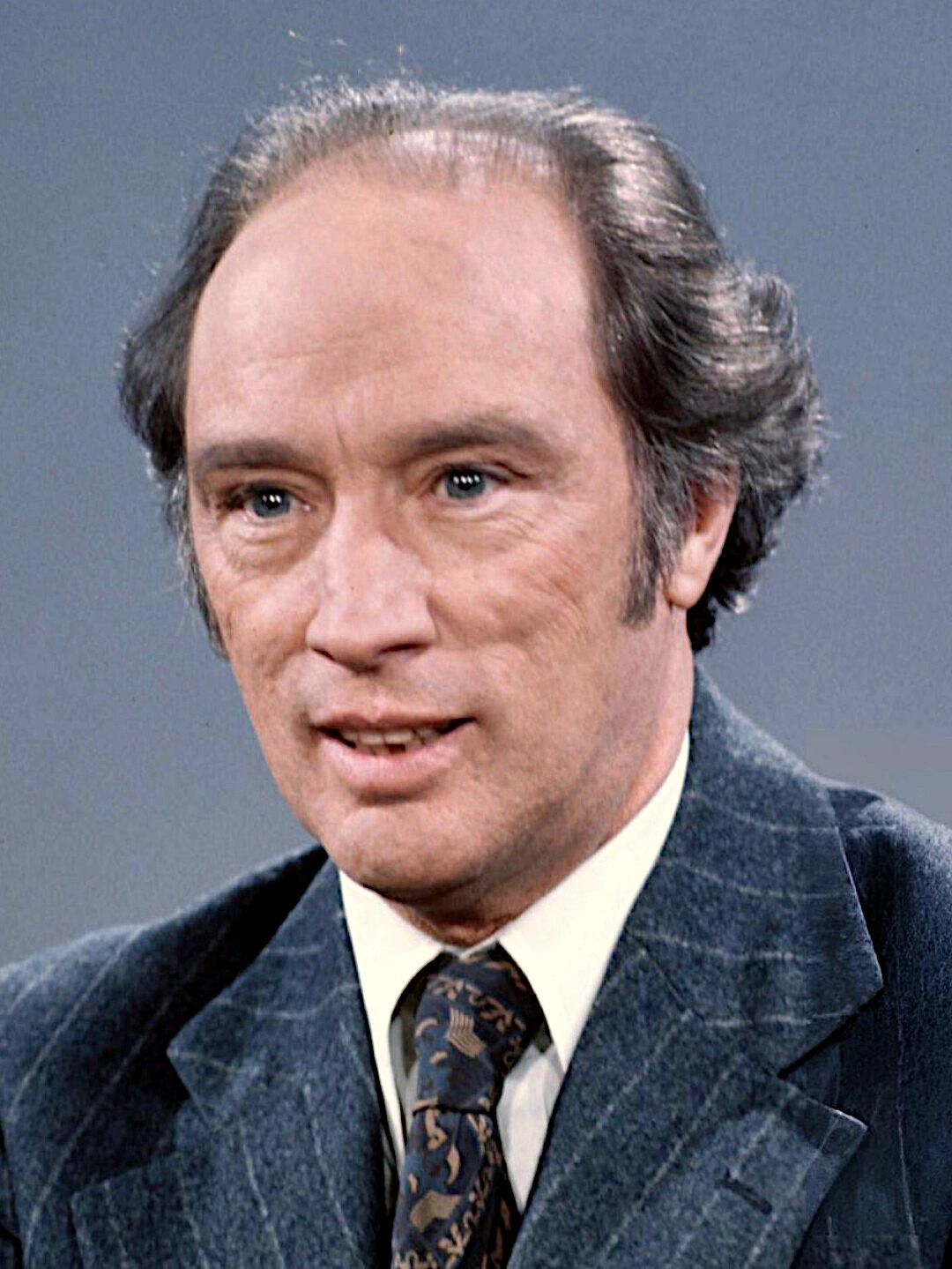
Faced with the kidnappings and Laporte's murder, the federal government under Prime Minister Pierre Trudeau took drastic measures. The Act overrode fundamental rights, allowing arrests without warrant and detention without charge. In an impromptu interview on the steps of Parliament, when asked how far he would go, Trudeau famously replied, 'Well, just watch me.' The Royal Canadian Mounted Police and the Canadian Armed Forces were deployed in Quebec, and the FLQ was declared an unlawful association. Under these emergency regulations, police conducted widespread arrests, detaining 453 people with suspected ties to the FLQ by December 29. Most detainees were released within hours or days, with 435 eventually released without any charges. Only 18 people were ever charged with offences under the regulations. The government's decisive action, while controversial for suspending civil liberties, effectively ended the FLQ's ability to operate and restored order.
Resolution, trials, and the dispersal of members
The crisis resolved in stages following the state crackdown. Police discovered the location of James Cross's captors in early December 1970. His release was negotiated, and on December 3, five FLQ members, Marc Carbonneau, Jacques Lanctôt, Jacques Cossette-Trudel, his wife Louise Lanctôt, and Nigel Hamer, were granted safe passage to Cuba after approval by Fidel Castro. In late December, police found Paul Rose, Jacques Rose, Francis Simard, and Bernard Lortie hiding in a farmhouse in the Quebec countryside. They were tried and convicted for their roles in the Laporte kidnapping and murder. Paul Rose and Francis Simard received life sentences for murder. In July 1980, a sixth person, British radical Nigel Hamer, was arrested upon his return to Canada, pleaded guilty for his part in the Cross kidnapping, and was sentenced to 12 months in jail. By the early 1980s, most imprisoned FLQ members from earlier waves had been paroled or released. Key ideologue Pierre Vallières publicly announced in Le Journal in December 1970 that he had terminated his association with the FLQ and renounced terrorism, advocating for standard political action instead.
Structure, training, and international dimensions
The FLQ operated as a decentralized and fluid network of clandestine cells, which formed and dissolved over time. Notable cells included the Viger Cell, the Dieppe Cell, the Louis Riel Cell, the Nelson Cell, the Saint-Denis Cell, and finally the Liberation and Chénier Cells involved in the October Crisis. Members received various forms of training. Founder Georges Schoeters provided early organizational guidance based on his wartime resistance experience. Some members, including Normand Roy and Michel Lambert, received guerrilla training from the Palestine Liberation Organization in Jordan. The group maintained limited international contacts, and some members found refuge in Cuba after the crisis. The KGB, which had established contact with the FLQ before 1970, later engaged in a disinformation campaign, forging documents to portray the group as a CIA false flag operation. This story gained some limited traction among academic sources before declassified Soviet archives revealed the ruse. Internally, the group was often divided on strategy, a tension evident in the debates between cells before and during the October Crisis.
Lasting impact and historical assessment
The FLQ's violent campaign and its dramatic end during the October Crisis left a profound and complex mark on Canadian society. The events contributed directly to a drastic loss of support for violent means to attain Quebec independence, channelling sovereignist sentiment toward the political party, the Parti Québécois, which formed the government in 1976. The crisis forced a national reckoning on issues of civil liberties, state power, and national unity, debates that continue to inform discussions on emergency legislation. The invocation of the War Measures Act remains the only instance of its peacetime use, setting a significant precedent. Historically, the FLQ is studied within frameworks of Quebec nationalism, left-wing radicalism, and domestic terrorism. The group's failure demonstrated the Canadian public's and the state's capacity to reject and suppress political violence, reinforcing democratic institutions. The FLQ's history serves as a critical case study in the dangers of revolutionary violence and the challenges a liberal democracy faces when confronting an internal terrorist threat.
Questions about Front de libération du Québec
What did the FLQ want?
The FLQ sought to overthrow the Quebec and Canadian governments to establish an independent, socialist, and French-speaking Quebec. Their ideology combined extreme Quebec nationalism with Marxist-Leninist revolutionary theory. They denounced Anglo-Saxon economic and cultural domination, which they termed colonialism. Their goals were outlined in manifestos and through actions aimed at sabotaging symbols of federal authority and English Canadian business interests.
How many people were killed by the FLQ?
The FLQ was responsible for at least eight deaths. The first was security guard Wilfrid O’Neil, killed in a bombing in April 1963. In 1964, two employees of the International Firearms store were killed during a botched robbery. A 1966 bombing at a shoe factory killed a 64-year-old office worker. The most prominent victim was Quebec Labour Minister Pierre Laporte, who was kidnapped and murdered during the October Crisis in 1970. Many more people were injured in the group's numerous bombings.
What happened to the FLQ members after the October Crisis?
Following the October Crisis, key FLQ members were captured and prosecuted. The kidnappers of James Cross were granted safe passage to Cuba in exchange for his release. The kidnappers and murderers of Pierre Laporte, Paul Rose, Jacques Rose, Francis Simard, and Bernard Lortie, were arrested, tried, and convicted. By the early 1980s, most imprisoned FLQ members had been paroled or released. Key ideologue Pierre Vallières publicly renounced the group and its methods, advocating for political action instead.
Why did Prime Minister Trudeau invoke the War Measures Act?
Prime Minister Pierre Trudeau invoked the War Measures Act in response to the kidnappings of James Cross and Pierre Laporte, and the escalating crisis in Quebec. The governments of Quebec and Montreal requested the measure. Trudeau argued that the FLQ's actions constituted an 'apprehended insurrection' that threatened the state. The Act allowed for the suspension of civil liberties, warrantless arrests, and the deployment of the military to restore order and secure the hostages' release.
How is the FLQ remembered today?
Today, the FLQ is primarily remembered as a violent terrorist group whose actions led to tragedy and a national crisis. Its legacy is a subject of historical study regarding Quebec nationalism, political violence, and state response. The October Crisis remains a critical reference point in discussions about Canadian federalism, civil liberties, and emergency powers. The FLQ's failure is seen as having discredited violent separatism, indirectly strengthening the democratic sovereignty movement represented by the Parti Québécois.
Sources: Wikipedia and current public reporting, checked by the Nosy Mag desk. Last updated 2026-10-21.