Freeman on the land movement
The freeman on the land movement is a pseudolegal belief system and anti-government ideology originating in Canada in the early 2000s. Adherents, known as freemen, believe they can declare themselves independent of government authority and statute law, arguing they are bound only by their own interpretation of common law. The movement, which Canadian courts classify under the umbrella term Organised Pseudolegal Commercial Arguments (OPCA), has been involved in numerous criminal and civil cases, causing significant strain on judicial and policing resources. Its influence peaked in the late 2000s and early 2010s but has declined following decisive court rulings that reject its foundational theories as legally baseless.
Core Beliefs and Pseudolegal Theories
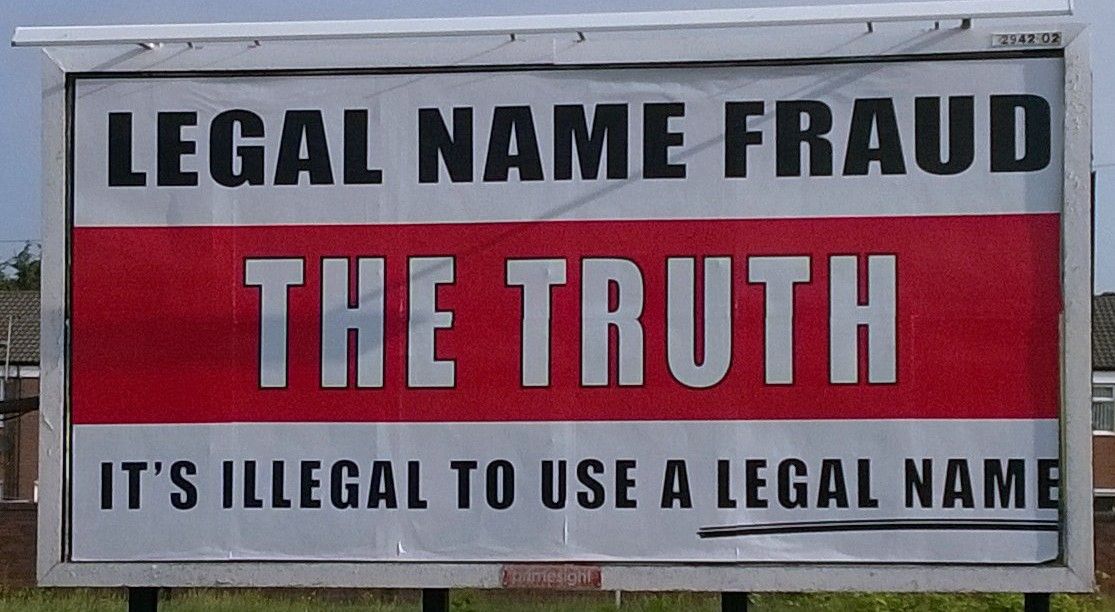
The central tenet of the freeman on the land ideology is the rejection of state authority and statutory law. Adherents claim to be sovereign individuals who are not subject to government jurisdiction unless they explicitly consent. This belief is often grounded in the misinterpretation of historical legal documents like the Magna Carta and a distorted view of Anglo-Saxon common law. A key pseudolegal concept employed is the strawman theory, which posits that the government creates a legal fiction or corporate entity attached to an individual at birth, typically via the birth certificate. Freemen believe they can reject this strawman and thus escape legal obligations, including taxation, licensing, and criminal liability. The movement advocates for schemes to avoid paying taxes, which members consider illegitimate, and encourages the rejection of official documents like driver's licences and health cards. These theories are collectively categorized by Canadian courts and scholars as Organised Pseudolegal Commercial Arguments, a term that encompasses the tactics, documents, and vexatious litigation associated with the movement.
Historical Origins and Precursors
The freeman on the land movement emerged from the confluence of earlier Canadian pseudolaw traditions and ideas imported from the American sovereign citizen movement. In 1937, R. Rogers Smith self-published Alberta has the Sovereign Right to Issue and Use Its Own Credit, which argued that Canada was not an independent nation. In 1945, Walter Frederick Kuhl MP used Smith's theories in a parliamentary speech to argue that the federal government had no taxation authority. An important early figure was Gerrald Hart, a Winnipeg shopkeeper whose anti-tax strategies in the 1950s, including filing defective returns, were detailed in his Hart System of Effective Tax Avoidance. His arguments were later promoted in the 1990s by Murray Gauvreau through the social credit journal Michael. The direct precursor to the freemen was the Detaxer movement, which began around 1998 under the influence of Eldon Gerald Warman. Warman adapted American sovereign citizen concepts, particularly the strawman theory, for a Canadian context, claiming the birth certificate created the government-controlled legal person. He promoted these ideas through his website Detax Canada and nationwide seminars, instructing followers to use disclaimers on tax returns and reject correspondence from the Canada Revenue Agency.
Other notable Detaxer gurus included Russell Porisky, who operated the Paradigm Education Group and taught that people could avoid taxes by declaring themselves natural persons. Porisky was convicted of tax evasion in 2012. In 2016, he was sentenced to five and a half years in prison and ordered to pay C$259,482 in fines. The Detaxer movement declined after 2008 due to repeated court failures. One of the last active gurus was serial litigant David Kevin Lindsay. In 2010, Lindsay unsuccessfully argued before the Supreme Court of British Columbia that he was not a person as defined by tax law but a full liability free will flesh and blood living man. The foundational arguments from these earlier movements were later simplified and repackaged to form the basis of the freeman on the land ideology.
Rise of the Freeman Movement and Key Figures
The freeman on the land movement in Canada crystallized around a single key figure, Robert Arthur Menard, a former construction worker and stand-up comic. Menard became involved in pseudolaw around 2000 during a child custody dispute and began promoting simplified Detaxer theories online through forums, videos, and free ebooks. He coined the term freeman on the land around 2005, having initially used the phrase Freeloader-on-the-Land. Menard's theories claimed that birth documentation allowed state control over individuals and that one could immunize themselves from Canadian law. His only notable personal addition to pseudolegal theory was the argument that the security of the person referenced in Section 7 of the Charter of Rights and Freedoms pertained to the secret birth bond of the strawman. Despite his unsophisticated understanding of law, Menard's skillful use of social media garnered him a significant following. He also launched a financial scheme called the Association of Canadian Consumer Purchasers, offering a debit card in return for a monthly subscription.
Menard's leadership was later challenged by Dean Clifford, who advocated a more confrontational approach. Clifford had a white supremacist and skinhead background. His status grew after a brief jail stint in 2013, which he claimed to have ended using freeman methods, though he was arrested again later that year. In 2015, Clifford was sentenced to three years in prison for drug and weapons offenses. After his release, he operated a company promoting a debt-discharge scheme and was declared a vexatious litigant in Alberta in 2018. Another guru, a Quebec resident known as John Spirit, began marketing pseudolegal services online in 2012. Spirit developed more sophisticated arguments grounded in misinterpretations of international treaties and Canadian case law, asserting that treaties could be used via the Charter to eliminate one's strawman. However, his concepts were also refuted in court.
- Robert Arthur Menard: Primary founder. Promoted theories online and authored With Lawful Excuse (2011). Prohibited from giving legal advice in British Columbia in 2008.
- Dean Clifford: Confrontational guru with far-right background. Jailed in 2015. Declared vexatious litigant in 2018.
- John Spirit: Quebec-based guru who developed arguments using international treaties and Supreme Court jurisprudence.
- Eldon Gerald Warman: Precursor Detaxer leader. Founded Detax Canada circa 1998. Died in 2017.
- Russell Porisky: Detaxer guru. Operated Paradigm Education Group. Convicted of tax evasion in 2012.
- David Kevin Lindsay: Serial Detaxer litigant. Re-emerged during COVID-19 pandemic leading anti-restriction protests.
Impact on the Justice System and Society
The freeman on the land movement has had a tangible and often disruptive impact on Canadian courts, police, and individuals. Adherents are known for engaging in paper terrorism, flooding courts with voluminous, incoherent documents that clog the judicial system and waste public resources. The movement attracted a broad range of followers, including some environmentalists and First Nations people, united by opposition to federal authority. In 2008, Menard was prohibited from appearing in court as counsel or giving legal advice in British Columbia. By 2012, the Canadian Security Intelligence Service reported that freemen were causing a major policing problem, citing violent encounters with police and attempts to create their own corps of peace officers. Notable incidents include a 2013 case in Calgary where a freeman tenant claimed his landlord's property as his own embassy. In 2015, an Edmonton police officer was murdered by a man who adhered to freeman ideology.
The movement's tactics also extended to civil matters, causing significant harm to individuals. In one case, a Canadian court awarded $800,000 in damages to a couple who were defamed by serious false allegations of sexual assault spread through social media by freemen adherents. Lawyers and notaries public have been cautioned by law societies, such as the Law Society of Alberta, not to notarize OPCA documents, as doing so lends a false appearance of authority to legally meaningless papers. Violating court orders or injunctions obtained against freemen can result in findings of contempt of court and immediate imprisonment. The persistent use of these tactics across criminal, family, and foreclosure cases has placed a sustained burden on the administration of justice.
Legal Rejection and the Meads v. Meads Decision
Freeman on the land arguments have been universally rejected as legally baseless by courts across Canada and other Commonwealth nations. The major blow to the movement in Canada came with the 2012 Alberta Court of Queen's Bench decision in Meads v. Meads. Associate Chief Justice John Rooke coined and defined the term Organised Pseudolegal Commercial Arguments (OPCA) to describe these tactics. The decision detailed common characteristics of OPCA litigants, such as the use of bizarre language, the submission of nonsensical documents, and the denial of court jurisdiction. Justice Rooke emphasized that these schemes were invalid and that their promoters, or gurus, exploited followers for financial gain.
The Meads decision has since been cited as authoritative precedent in countless subsequent cases across Canada and in other countries like Australia and the United Kingdom, providing judges with a clear framework to identify and dismiss OPCA arguments efficiently. It has been instrumental in the movement's decline. Other cases have further solidified this judicial stance. In Fearn v Canada Customs (2014), an American freeman's claims that Alberta laws were pretend and that Law Society members were agents of the Vatican were dismissed. In a 2024 UK High Court case, Southwark Council v. Hadjimina, Mr Justice Cotter condemned freeman theories as offensive to the rule of law, stating that individuals cannot simply opt out of statutes enacted by Parliament. These consistent rulings have led to many adherents suffering severe legal, financial, and personal consequences for attempting to implement the movement's ideas.
Decline and Lasting Influence
Since the early 2010s, the freeman on the land movement in Canada has experienced a significant decline. The primary cause has been the unbroken record of failure for its arguments in courts, culminating in the authoritative precedent set by Meads v. Meads. Many individuals who followed the advice of gurus faced imprisonment, heavy fines, loss of property, and family breakdown. The online community Quatloos.com also played a role in discrediting the movement by publishing court documents that revealed gurus like Menard and Clifford were ineffective in court and did not practice their own teachings. The movement's gurus have faced serious legal consequences, with figures like Porisky and Clifford receiving prison sentences, and Menard being restricted from legal practice.
However, the underlying anti-government sentiment and pseudolegal tactics have not disappeared. They have often resurfaced within other contexts and movements. During the COVID-19 pandemic, former Detaxer leader David Kevin Lindsay and others re-emerged as leaders of anti-mask and anti-lockdown protests in British Columbia, blending pseudolegal arguments with public health defiance. The core ideas also persist within the global sovereign citizen movement, as seen in the 2025 analysis of an Australian fugitive who identified as a sovereign citizen. While the distinct freeman on the land label may be less common, the OPCA strategies continue to present a challenge for courts, necessitating ongoing vigilance from the legal community to identify and manage vexatious litigants who deny state authority.
Notable Court Cases Involving Freeman Arguments
The following table lists key Canadian and international court cases where freeman on the land or related OPCA arguments were raised and decisively rejected. Freeman on the land arguments have been argued in the courts of Australia, the United Kingdom, New Zealand, and Ireland but have always been rejected. In Canada, courts and scholars use the technical phrase "Organised Pseudolegal Commercial Arguments" (OPCA) as an umbrella term for these theories and the vexatious litigation based on them. These cases demonstrate the consistent judicial response across different jurisdictions and legal contexts. The arguments are legally baseless and have been rejected in cases ranging from family law and tax disputes to criminal trials.
| Case Name | Year | Jurisdiction | Key Ruling / Outcome |
|---|---|---|---|
| R v Warman | 2000 | British Columbia Provincial Court | Rejected Eldon Warman's claim that court lacked jurisdiction over him. Appeal denied by BC Court of Appeal. |
| Meads v. Meads | 2012 | Alberta Court of Queen's Bench | Landmark decision defining and rejecting all major OPCA/freeman theories. Widely cited as precedent. |
| Fearn v Canada Customs | 2014 | Alberta Court of Queen's Bench | Dismissed freeman's collateral attack on criminal trial. Rejected claims laws were pretend. |
| R v Fearn | 2014 | Alberta Provincial Court | Freeman defendant left trial. Sentenced ex-parte to 4 months jail for weapons smuggling. |
| Lindsay v The Queen | 2010 | Supreme Court of British Columbia | Rejected Lindsay's argument he was not a person under the Income Tax Act. |
| Stamp & Ors v. Capital Home Loans Ltd | 2024 | High Court (United Kingdom) | Addressed freeman theories in a commercial context. Part of ongoing rejection in Commonwealth courts. |
| Southwark Council v. Hadjimina | 2024 | High Court (United Kingdom) | Condemned freeman theories as offensive to the rule of law in a planning enforcement case. |
Questions about Freeman on the land movement
What is a freeman on the land?
A freeman on the land is an adherent of a pseudolegal anti-government movement that believes individuals can declare themselves sovereign and independent from state authority. Followers claim they are bound only by their own consent and a personal interpretation of historical common law, not by statutory laws enacted by governments. They often employ schemes to avoid taxes, reject official documents like driver's licences, and use vexatious litigation tactics in court. Canadian courts categorize these individuals and their arguments under the term Organised Pseudolegal Commercial Arguments (OPCA).
Are freeman on the land arguments legally valid in Canada?
No, freeman on the land arguments are not legally valid and have been consistently rejected by every court in Canada that has considered them. The foundational case is the 2012 Alberta Court of Queen's Bench decision in Meads v. Meads, which systematically refuted all major pseudolegal theories used by the movement. Courts across the country follow this precedent, treating such arguments as legally baseless. Attempts to use these theories have resulted in adverse rulings, fines, and even imprisonment for contempt of court or other criminal offences.
What was the Detaxer movement?
The Detaxer movement was the direct precursor to the freeman on the land movement in Canada, emerging around 1998. Led by figures like Eldon Gerald Warman, it adapted American sovereign citizen concepts, particularly the strawman theory, to a Canadian context. Detaxers claimed that the government created a legal fiction or corporate person attached to an individual via their birth certificate, and that by rejecting this strawman, one could avoid income tax and other legal obligations. The movement promoted these ideas through websites, seminars, and multilevel marketing, but declined after 2008 due to repeated failures in court.
Who is Robert Menard?
Robert Arthur Menard is considered the primary founder of the freeman on the land movement in Canada. A former construction worker and stand-up comic, he began promoting simplified Detaxer theories online around 2000. Menard coined the term freeman on the land around 2005 and gained a following through social media, videos, and free ebooks. His theories focused on birth documentation and claiming immunity from Canadian law. Despite his influence in pseudolegal circles, legal scholars describe his understanding of law as unsophisticated. He was prohibited from giving legal advice in British Columbia courts in 2008.
What is the connection to the sovereign citizen movement?
The freeman on the land movement is a Canadian offshoot of the broader sovereign citizen movement that originated in the United States. Both share core beliefs: the rejection of government authority, the claim that individuals are sovereign, and the use of pseudolegal arguments to justify non-compliance with laws. The Canadian movement imported and adapted American ideas, particularly through the Detaxer movement. While sovereign citizens often have far-right affiliations, Canadian freemen initially attracted a more politically diverse following, including some from leftist, environmentalist, and First Nations backgrounds.
What impact did the Meads v. Meads case have?
The 2012 Meads v. Meads decision was a landmark ruling that critically undermined the freeman on the land movement. Associate Chief Justice John Rooke's comprehensive judgment provided a detailed analysis and rejection of all major OPCA theories, labelling them as legally invalid schemes that exploit followers. The decision gave judges across Canada and other Commonwealth countries a clear framework to quickly identify and dismiss such arguments. It has been cited as binding precedent in numerous subsequent cases, accelerating the movement's decline by demonstrating the inevitable failure of its tactics in a court of law.
Sources and further reading
- Freeman on the land movement (Wikipedia)
- OPCA Litigants, The Phenomenon of Freemen on the Land (lawsociety.ab.ca)
- Freemen-On-The-Land In Civil And Criminal Courts (legal500.com)
- The sovereign citizen challenge (lowyinstitute.org)
- 'Freeman of the land' theories “offensive to the rule of law” (legalfutures.co.uk)
Checked by the Nosy Mag desk. Last updated 2026-10-24.